Recent camping industry research shows that more than 52 million North American households camped in 2025, and a growing number of RV travelers are looking beyond the traditional campground or RV resort experience. Many want private land, longer stays, fewer neighbors, and a quieter outdoor setting where they can relax without the crowds.
For weekend property owners, that shift creates a real opportunity.
Land that sits mostly unused from October through March may already be suitable for one or two RV sites, especially for guests looking for a peaceful off-season stay near a lake, trail system, beach corridor, or other outdoor destination.
This guide is built for landowners who already have space they are not fully using, not for people trying to build a full vacation resort. If you have reasonable road access, a level area for parking, and a few hours to create a listing, you may already be closer to your first booking than you think.
The information here draws on broader trends across the private-land RV hosting market, including hosting behavior seen on platforms like Hookhub.
Key Takeaways
Why the Off-Season Is Actually the Opportunity
Most landowners assume summer is the busiest season for RV travel. In reality, off-season demand is often where private properties become most valuable.
Snowbird RVers actively search for monthly RV sites from October through March as they move toward warmer regions with more sunshine and milder winter weather. Remote workers look for quiet places to stay for 30, 60, or even 90 days at a time. Many travelers are specifically trying to avoid crowded campsites, busy RV parks, and expensive resort-style destinations during peak travel periods.
For many guests, off-season RV travel is less about vacation crowds and more about finding a quiet outdoor escape where they can enjoy sunny mornings, slower routines, and a more relaxed pace.
Recent camping industry demand trends show that travelers are increasingly prioritizing longer stays, outdoor flexibility, and quieter destinations over crowded vacation parks and resort-style experiences.
That matters for hosts because monthly guests create a very different experience from short weekend reservations. Instead of constant booking turnover, registration management, and repeated check-ins, you may host one reliable camper for an entire season.
Private landowners who understand how to accommodate off-season RV demand are filling a growing gap in the market, especially in areas near lakes, trails, beach routes, outdoor recreation zones, and winter travel corridors.
Does Your Property Actually Qualify?
For most weekend landowners, the answer is probably yes.
You do not need to build a luxury RV resort with a swimming pool, splash zone, themed activities calendar, or large restroom facility to attract guests. Most off-season travelers are not searching for a heavily programmed vacation park experience. They are looking for privacy, convenience, and a dependable place to stay.
What matters most is much simpler.
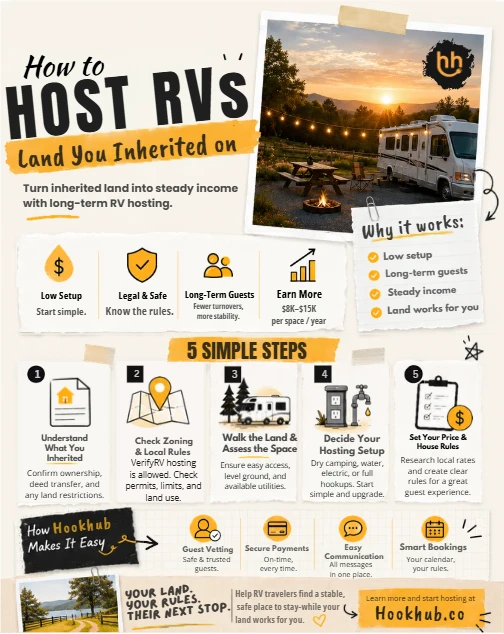
Road access is the first thing to evaluate. Larger RVs need enough space to safely enter, turn around, and park. Tight access roads do not automatically disqualify a property, but guests should know what to expect before arrival.
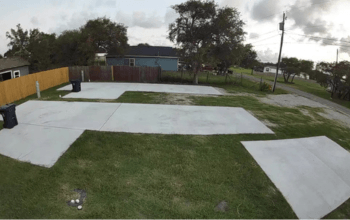
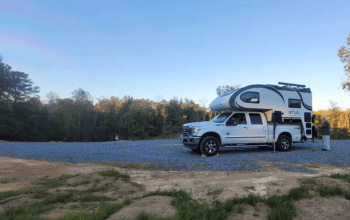
A reasonably level RV site also matters. RV appliances and slide-outs work best when the camper is parked on stable ground. Gravel, packed dirt, or firm grass usually works well for most setups, while deep mud or steep grades can create problems.
Everything beyond those basics, including electric hookups, water access, or additional amenities, simply increases the value of the stay and justifies a higher monthly fee.
Most importantly, many guests already travel self-contained. They bring their own equipment, manage their own utilities, and care more about a quiet property than luxury campground infrastructure.
What Off-Season RV Guests Are Actually Looking For
Understanding the guest matters just as much as understanding the land.
The largest off-season audience is snowbirds: retired or semi-retired RV travelers who head toward warmer regions during winter. These guests typically prioritize quiet surroundings, reliable access, stable utility setups, and predictable monthly pricing. They are not necessarily searching for live music, casino entertainment, or crowded resort activities. A peaceful RV park near a grocery store or lake often matters far more.
Remote workers are another growing segment of long-term RV travelers, reflecting broader RV travel trends as more people choose to live and work from the road for extended periods.
There is also a smaller but valuable group of adventure-focused travelers using an RV as a basecamp for hiking, fishing, kayaking, cycling, or trail access. Properties near a lake, beach corridor, island route, or outdoor recreation area naturally appeal to this audience because the location itself becomes part of the experience.
What ties these groups together is simple: most are not looking for a traditional campground stay. They want a quieter, more personal alternative where they can relax, enjoy the outdoors at their own pace, and maintain a greater sense of privacy during longer stays.
How to Price an RV Site You’ve Never Rented Before
Pricing is where many first-time hosts hesitate.
A common mistake is setting rates too low because the property owner feels uncertain about demand. The problem is that heavily discounted pricing often attracts guests expecting permanent bargain rates rather than long-term stability.
A better approach is to price according to setup type, utility access, seasonal demand, and regional competition.
Dry campsites without hookups often rent successfully during the off-season because many RV travelers are fully self-contained. Adding water access or electric hookups increases convenience and can significantly raise the monthly fee. Properties near beach destinations, lake regions, and popular winter travel corridors also tend to support higher pricing because demand remains strong throughout the season.
Simple upgrades can also improve booking potential quickly. A level gravel pad, motion lighting, better parking access, or a basic electric connection can move a property into a much more competitive pricing tier without requiring a full campground build-out.
Some hosts also use limited-time sale pricing or discounted first-month rates to secure longer reservations earlier in the season. That strategy can help stabilize the calendar before winter demand peaks.
Local Rules Matter More Than Most Hosts Expect
Before accepting your first reservation, spend time understanding local zoning and RV parking regulations in your county or municipality.
Rules vary dramatically depending on the area, property classification, and local ordinances. Some rural counties accommodate monthly RV stays fairly easily, while others may require permits, registration requirements, or occupancy restrictions for private land hosting. Before listing your property, it helps to spend time understanding RV hosting zoning rules in your county or municipality.
This is one of the most common mistakes new hosts make because many assume private property automatically allows RV stays without additional approval.
Checking local requirements early helps avoid unnecessary cancellations, compliance problems, or disputes later. Even a quick conversation with a county planning office can clarify what is allowed, what limitations may apply, and whether your property can legally accommodate long-term RV guests.
Guest Vetting and Privacy Matter Too
For many landowners, the biggest concern is not the RV itself. It is who is parking on the property.
Privacy, security, payment reliability, and respectful guest behavior matter far more than creating a luxury vacation experience. That is why guest vetting plays such an important role in successful hosting.
Structured hosting platforms offer a level of convenience and protection that informal bookings often lack. Identity verification, booking approval controls, secure payment systems, and centralized communication tools help both hosts and guests feel more comfortable before a stay begins.
For property owners managing land remotely, those systems also reduce the stress of handling reservations manually through email or social media messages.
For newer hosts, learning what risks come with RV hosting can make it easier to create clear expectations, house rules, and guest screening standards before accepting bookings.
Where Hookhub Fits Into Off-Season RV Hosting
Managing even a small number of RV sites manually can become surprisingly time-consuming.
Payments, booking requests, calendar updates, guest messaging, arrival instructions, and reservation tracking all add up quickly, especially for weekend property owners who are not living on-site full time.
Platforms like Hookhub help landowners manage RV site bookings and guest communication without needing campground-scale infrastructure.
Hosts can manage calendar availability, reservation requests, payment processing, arrival coordination, and guest communication from one place, making it easier to oversee the property remotely during the off-season.
That structure allows hosts to maintain a simple setup without needing campground-scale systems or resort-level staffing.
For many landowners, the goal is not to build a hospitality business. It is simply to generate reliable seasonal income from property that would otherwise sit unused during slower months.
The Mistakes That Cost Hosts Their First Good Guest
A few avoidable mistakes consistently create problems for first-time hosts.
One of the biggest is overstating amenities. If the property has limited electric access, weak cell signal, seasonal mud, or basic facilities, it is better to explain that clearly upfront. Guests are usually understanding when listings are honest. Problems happen when expectations and reality do not match.
Another issue is failing to create clear house rules. Guests should understand arrival expectations, quiet hours, pet policies, waste disposal rules, parking boundaries, generator usage, and basic Leave No Trace principles before booking. The right guest appreciates clarity, while the wrong guest often filters themselves out early.
Waiting too long to create a listing can also cost hosts valuable bookings. Many snowbird travelers reserve their winter RV sites months ahead of the season. Properties listed too late often miss the strongest booking window entirely.
Many of these issues are avoidable once hosts understand the common mistakes new RV hosts make before their first reservation.
Finally, some hosts overlook what makes their property appealing in the first place. A quiet lakefront RV site attracts a different traveler than a wooded trail-access property or a sunny desert escape. The best listings lead with the strongest feature of the land itself.
Your Land May Have More Off-Season Value Than You Think
A property sitting empty for several months every year generates no return during that time.
Even one RV site earning a few hundred dollars per month can help offset taxes, maintenance costs, utility bills, road upkeep, and other ongoing ownership expenses. Two or three well-managed RV sites can create even more meaningful seasonal income without requiring a full campground operation.
Most importantly, private-land hosting does not need to become complicated.
Many successful hosts simply provide a quiet place to park, clear expectations, honest communication, and a reliable booking process. That simplicity is exactly what many off-season RV travelers are actively searching for today.
For landowners willing to test the idea with one campsite, the opportunity is often far more accessible than it initially appears.
One RV Site Is Enough to Start
There is a version of this that becomes complicated quickly: multiple campsites, expensive amenities, large restroom facilities, themed entertainment schedules, and full RV resort operations.
That is not what most weekend property owners need.
Many successful hosts begin with one level parking area, one honest listing, and one guest looking for a quiet place to stay for the season.
If you are considering whether your property could support even one RV site during the slower months, platforms like Hookhub can help simplify bookings, guest communication, payment handling, and calendar management without requiring campground-scale infrastructure.
For many landowners, the opportunity is not about building a resort. It is about making existing land work harder during the months it would otherwise sit empty.
Frequently Asked Questions
Can I host RVs on private property without building a campground?
In many areas, yes. Hosting one or two RVs on private property is often treated differently from operating a commercial campground or RV resort. Local zoning and county regulations still vary, so always confirm requirements before accepting reservations.
How much should I charge for monthly RV parking?
Monthly RV site pricing typically ranges from $200 to $800 depending on hookups, location, amenities, and regional demand. Properties with electric hookups, water access, beach proximity, or lake access usually support higher pricing.
Do I need electric hookups to attract guests?
No. Many off-season RV travelers are fully self-contained and comfortable with dry camping setups. Electric hookups increase convenience and pricing potential, but they are not required to start hosting.
Are pet-friendly RV sites more popular?
Often, yes. Many long-term RV travelers travel with pets, especially snowbirds and remote workers. If your property can safely accommodate pets, mentioning that clearly may increase booking interest.
When should I list my RV site for winter bookings?
Most off-season guests begin searching in late summer or early fall. Listing before September usually provides the best chance of securing longer winter stays.