
Key Takeaways

Transparent pricing means two different things depending on which side of the RV park industry you are on. For an RV traveler, it means the rate you see before clicking “book” is the rate you actually pay — no resort fees revealed at checkout, no per-pet surcharge buried in the fine print, no reservation processing fee that inflates the total by 20% after you have already committed to the site.
For a campground owner, broker, or investor, transparent pricing means access to honest valuations, real market comparables, verified occupancy data, and a clear picture of a property’s revenue streams — not a listing price unrelated to what the park actually earns.
Both problems are real, and both have gotten worse in recent years. Hidden campground fees have proliferated across the industry, from lock-in-your-site charges to extra vehicle surcharges to late-checkout fees that nowhere appear during the booking process. On the transaction side, campground valuations vary widely depending on who produces them and which metrics they use, making it difficult for first-time buyers and seasoned investors alike to assess whether a listed sale price reflects the property’s true earning potential.
The six platforms below address both problems — three on the traveler-booking side and three on the owner-and-investor transaction side.
For RV Travelers: Transparent Booking Pricing
1. Spot2Nite — Best for Rate Parity Across a Distribution Network
Spot2Nite is a campground booking marketplace that connects outdoor accommodations — private campgrounds, RV parks, and glamping resorts — to a combined audience of over 69 million campers through partnerships with Campendium, Camping World, Roadtrippers, RV Parky, Good Sam, and more than a dozen other outdoor travel platforms.
The transparency mechanism on Spot2Nite is its PMS integration model. Rather than maintaining its own separate pricing database, Spot2Nite pulls live rates directly from each park’s property management system. The rate that appears on the platform is the same rate the campground operates with natively — no markup, no artificial inflation between the park’s own rates and what travelers see through Spot2Nite’s booking engine. That structural rate parity means a traveler searching through any platform in Spot2Nite’s distribution network sees consistent pricing regardless of which channel they use.
The cost structure for operators is also stated clearly: parks connecting through Spot2Nite offer a 12.5% discount on their nightly rates, which covers a 10% commission and a 2.5% transaction fee. Operators know the structure before listing. For travelers, the visible rate already reflects those terms. No hidden layer sits between what the traveler sees and what the campground earns.
Best for: Travelers who want real-time pricing from campground management systems without aggregator markup, consistent rates across multiple booking platforms
2. Campspot — Best for Site-Level Pricing Visibility Before Checkout
Campspot is campground reservation software serving nearly 3,000 parks across the US. At Campspot-powered properties, the pricing architecture lets travelers see the cost of specific individual sites — based on hookup tier, pad type, rig size, and date — before the reservation is finalized. That granularity closes the gap between the advertised nightly rate and what a traveler actually pays for a specific configuration.
The guest experience at Campspot-powered checkout is more comparable to hotel booking platforms than to traditional campground phone reservations. Site-specific pricing means a traveler with full hookup requirements and a large rig sees exactly what that combination costs at that property before submitting payment. The pricing shown reflects the park’s actual tier structure, not a generic headline rate with add-ons disclosed only at arrival.
Best for: Travelers who want to see site-specific pricing across hookup tiers and pad types before confirming, commercial parks with managed amenity structures
3. Hookhub — Best for No-Surprise Private Land Booking Pricing
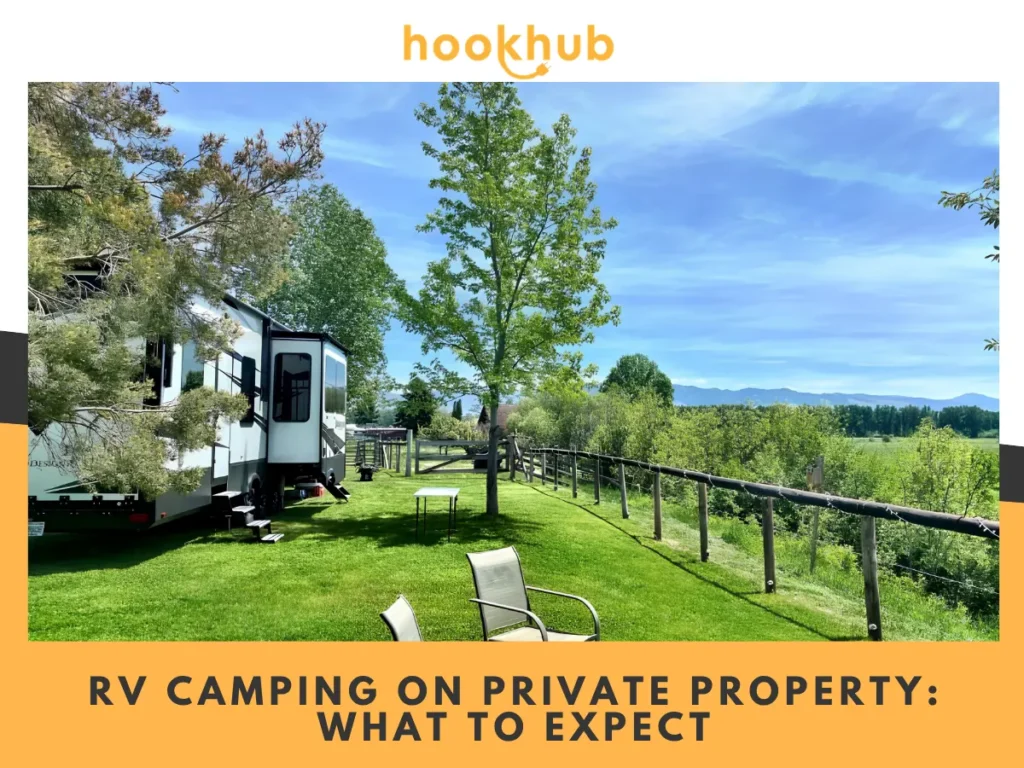
Hookhub produced this guide. Hookhub is a private land marketplace connecting RV travelers with landowners — ranchers, farmers, and rural property owners — who list available space for parking, extended stays, and storage. The pricing structure is transparent by design: individual hosts set their own nightly and monthly rates, no annual membership is required, and travelers pay only for the stays they book.
The fee structure that surprises travelers at commercial booking platforms does not apply here. Parking an RV on private land through Hookhub means the rate the host lists is what you pay — no processing surcharge tacked on at checkout, no resort fee applied after site selection, no electricity overage billed separately at departure. Free insurance is already included in every booking rather than presented as a paid add-on. The host-guest agreement is confirmed before the stay begins, so both sides have clarity before anyone arrives.
For travelers planning long-term private parking, monthly pricing is set directly by the host and stated upfront. No system converts a nightly rate to a monthly equivalent with a membership tier buried in between.
Best for: Travelers who want fully visible pricing with no checkout surprises, private land stays with no membership fees, and transparent monthly arrangements with individual hosts
Coverage: United States
For Campground Owners and Investors: Transparent Transaction Pricing
4. The Campground Connection — Best for Transparent Seller-Controlled Listing Prices
The Campground Connection is a self-service marketplace dedicated exclusively to campgrounds, RV parks, resorts, and marinas available for purchase. The platform’s transparency model puts pricing control in the seller’s hands: park owners and brokers create their own listings, set their own asking prices, and communicate directly with prospective buyers without the platform taking a commission on transactions.
That structure eliminates a common opacity problem in campground transactions, where listing prices are shaped by brokerage incentives rather than transparent seller valuation. A park owner listing on The Campground Connection sets the price they believe the property is worth, uploads the financial details they choose to disclose, and receives buyer inquiries through automated notifications directly to their contact information. Qualified buyers reach sellers directly — the platform connects buyers and sellers without inserting itself into the negotiation or the final number.
For first-time buyers researching what RV parks and resorts actually list for before engaging a broker, The Campground Connection provides an accessible, browsable view of featured campgrounds and their asking prices without requiring any professional engagement.
Best for: Sellers who want full control of their listing price and direct buyer contact, buyers researching campgrounds for sale before engaging professional representation, and FSBO sellers avoiding brokerage commissions
5. The Campground Marketplace — Best for Professionally Validated Property Valuations
The Campground Marketplace is a full-service brokerage operating across North America, including Alaska, Hawaii, Canada, and Mexico. It provides experienced brokers, professional property valuations, and a structured selling process that gives both sides of a campground transaction a clear, documented picture of what a property is worth and why.
The transparency value here differs from that of a self-service listing platform. The Campground Marketplace’s valuation work produces documentation — financial statements, occupancy history, infrastructure assessments covering septic systems, utility connections, and site capacity — that gives prospective buyers the data needed to evaluate a sale price against the property’s actual earning potential. Cap rates, revenue per occupied site, and seasonal occupancy patterns are included in the due diligence package rather than left to the buyer to research independently.
For sellers, the full-service model means the listing price is grounded in a defensible valuation rather than an owner’s estimate. For buyers, proof-of-funds requirements and buyer qualification screening ensure that the seller’s time is spent with parties who can realistically complete the transaction. The result is a buying and selling process in which pricing transparency flows from documented financial and operational data, rather than from negotiation starting points disconnected from real performance.
Best for: Sellers seeking a professionally supported valuation and structured transaction, seasoned investors, and institutional buyers requiring documented financial due diligence, outdoor hospitality properties across diverse geographic markets
6. BizBuySell — Best for Publicly Visible Campground Valuation Benchmarks
BizBuySell is a broad business-for-sale marketplace with a campground category that provides publicly accessible benchmark data that neither specialized campground brokerages nor self-service listing platforms typically publish. According to BizBuySell’s campground valuation data, the median asking price for an established campground is $1,439,500, with revenue multiples ranging from 2.36 to 7.17, and a median multiple of 5.17. Owner earnings data show a median of $167,813 annually.
For a buyer evaluating whether a listed campground’s asking price is reasonable, or a seller trying to understand how their park compares to the broader market, those publicly visible benchmarks are a starting point for transparent price evaluation that does not require engaging a broker or paying a valuation fee. The data is based on actual listings and completed transactions, giving a more grounded reference than industry rule-of-thumb figures.
BizBuySell is not a specialized outdoor hospitality resource and lacks the operational depth that campground-specific platforms offer. Its value is the market visibility layer — understanding where a campground’s asking price sits relative to published transaction data before any formal process begins.
Best for: Buyers and sellers benchmarking asking prices against publicly available transaction data, first-time buyers establishing a realistic acquisition budget, and sellers understanding revenue multiples before engaging a broker
How They Compare for Transparent Pricing
| Spot2Nite | Campspot | Hookhub | Campground Connection | Campground Marketplace | BizBuySell | |
|---|---|---|---|---|---|---|
| Serves travelers | Yes | Yes | Yes | No | No | No |
| Serves owners/investors | Indirectly | Indirectly | No | Yes | Yes | Yes |
| No hidden checkout fees | Yes | Yes | Yes | N/A | N/A | N/A |
| Host/seller controls price | Via park PMS | Via park rates | Yes | Yes | Via brokerage | Seller-set |
| Rate parity across channels | Yes | N/A | N/A | N/A | N/A | N/A |
| Professional valuation service | No | No | No | No | Yes | Benchmarks only |
| Public pricing benchmarks | No | No | No | Listing prices visible | Not public | Yes |
| No commission model | No (12.5% operator) | No | Yes (traveler side) | Yes (no transaction cut) | No (brokerage fees) | Commission-based |
| US and Canada coverage | US and Canada | US and Canada | US only | US, Canada, and more | North America | US focused |
FAQ
What are the most common hidden fees travelers encounter when booking an RV park or campground?
The most frequently reported hidden charges appear at checkout rather than during site selection. Resort fees billed separately from the nightly rate, site lock-in fees that charge extra to guarantee a specific pad after selection, extra vehicle surcharges for tow cars or trailers, and processing fees added to the final total by third-party reservation platforms are among the most common. Day-use fees at state parks, which apply even to registered campground guests but rarely appear during online booking, are another frequent surprise at arrival. Platforms that pull pricing directly from a property management system — where the rate shown is the rate the campground actually charges — eliminate the aggregator markup layer that generates many of these discrepancies.
How do campground investors evaluate whether an asking price is fair?
The standard approach applies a multiple to the park's seller's discretionary earnings — typically net income plus owner compensation plus any non-cash expenses. Based on publicly available transaction data, revenue multiples at campground sales have historically ranged from around 2.4 to 7.2, with the midpoint near 5. A park generating $150,000 in annual owner earnings would fall in the $350,000 to $1,000,000 range under that framework, depending on location, infrastructure condition, occupancy trends, and growth potential. Professional valuations from specialized campground brokerages add documentation of physical infrastructure, septic capacity, site counts, and operational details that determine where within that range a specific property sits.
Can I find private land RV parking with completely transparent pricing and no membership fees?
Yes. Private land through Hookhub operates on a pay-per-stay model with no annual commitment. Hosts list their rates directly, travelers see the full cost before booking, and the platform's included insurance means no add-on coverage is presented as a required purchase at checkout. For travelers frustrated by opaque, membership-based pricing models in which the campground discount requires an annual fee to unlock, private land marketplaces offer a structurally different pricing experience from the ground up.
Pricing transparency in the RV park industry works differently depending on which side of the transaction you are standing on. For travelers, it means the number you see before clicking "book" is the number you pay. For owners and investors, it means the listed asking price can be evaluated against documented earnings, verified infrastructure, and published market benchmarks.
Find transparent, private RV parking near you and see which hosts and rates are available along your route.