
Key Takeaways
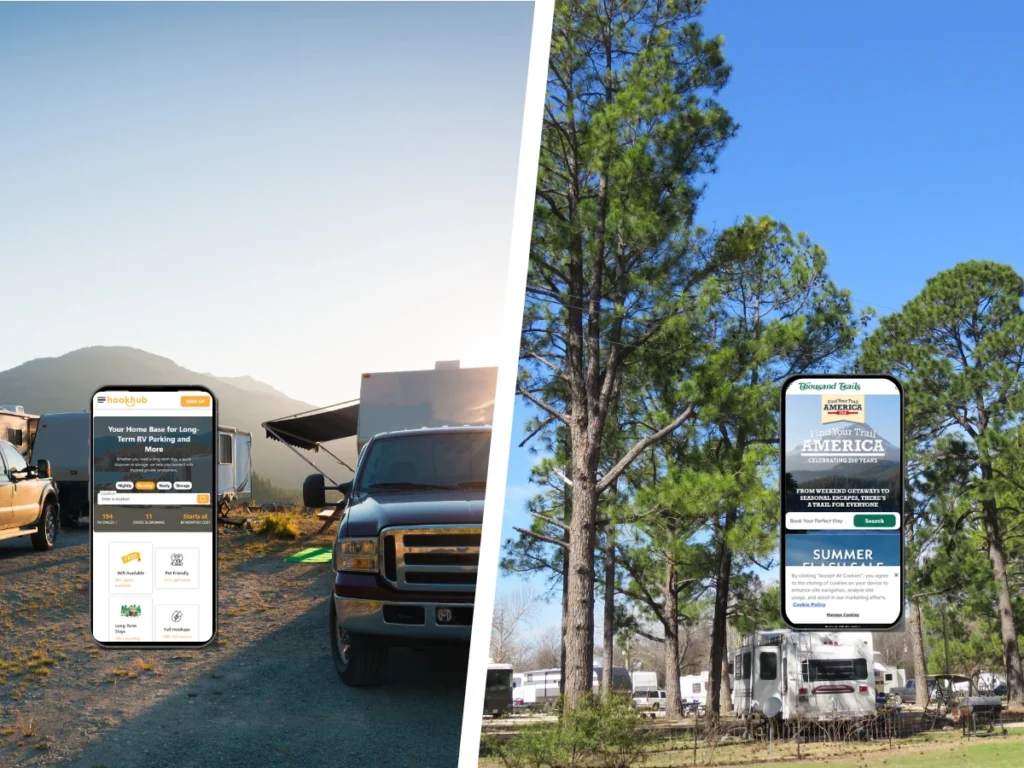
How They Compare
| Feature | Hookhub | Thousand Trails |
|---|---|---|
| Annual membership required | No | Yes |
| Entry cost | None | ~$775/year (Camping Pass) |
| Per-night fee | Host-set rate | $0 after membership |
| Break-even requirement | None | ~15-30 nights/year |
| Private land access | Yes | No |
| Resort amenities | No | Yes — pools, laundry, Wi-Fi |
| Number of locations | Distributed private land | 80+ core parks, 193+ with add-on |
| Geographic coverage | US-wide private land | Strongest on coasts, limited in central US |
| Booking restrictions | None | 7-day out rule, zone limits by tier |
| Booking window | Direct with host | 60-180 days depending on tier |
| Large rig accommodation | Host confirms fit | Varies — older parks may limit access |
| Monthly and long-term stays | Yes — host-set | Limited by stay rules |
| Storage | Yes | No |
| US and Canada | US only | Yes — both |
| Peak season availability | Host-dependent | Competitive — fills fast at popular parks |
| Insurance included | Yes — every booking | No |
| Family amenities | No | Yes — playground, dog park, activities |
| Cost to travel budget | Pay per stay | Annual fee regardless of usage |
Campground and RV park revenue reached an all-time high in 2025 even as overall booking volume declined for the first time, according to the 2026 Outdoor Hospitality Report from RoverPass covered by Modern Campground. Fewer reservations, more revenue — which means nightly rates went up. For the RV traveler who camps frequently, that math makes the appeal of a membership network like Thousand Trails easy to understand. Pay once, camp often, lower your cost per night.
The question that comparison rarely gets asked honestly is this: what does the membership actually cost, what does it restrict, and is there a way to get confirmed private camping without paying for access to a network you may only use part of the year?
What Is Thousand Trails?

Thousand Trails is one of the largest membership-based campground networks in North America, with more than 80 core RV resort locations across the United States and Canada, expanding to 193-plus sites when the optional Trails Collection add-on is included.
The core membership pitch is straightforward. Pay an annual fee. Camp at network parks with no nightly fee afterward. At the $50-per-night rate that commercial parks typically charge for full hookups, the Camping Pass at $775 per year breaks even after roughly 15 to 16 nights. The Journey membership at around $2,000 per year requires closer to 40 nights to clear. Heavy users who camp 100-plus nights annually see the most compelling savings, with effective costs falling well below $20 per night including water, electric, and sewer.
The amenities at Thousand Trails campgrounds reflect their resort-style character. Swimming pools, laundry facilities, Wi-Fi, hiking trails, dog parks, playgrounds, and activities like organized events and miniature golf are standard at most locations. Families with children particularly value the play areas and structured programming. The campground experience at a Thousand Trails property is managed, social, and amenity-rich in a way that appeals to travelers who want consistent infrastructure at every stop.
The restrictions are where the picture gets more complicated. The entry-level Camping Pass locks you into one of five geographic zones. After any stay of five nights or more, the 7-day out rule requires that you leave the Thousand Trails system entirely for a week before returning. The 60-day booking window for Camping Pass holders makes securing spots at high-demand locations — particularly Florida and California parks during snowbird season — genuinely difficult, as popular sites fill at midnight the moment the window opens. Peak-season availability at the most sought-after parks is a recurring frustration documented across the RV lifestyle community.
Park quality also varies considerably. Many Thousand Trails properties were built between the 1970s and 1990s, and the spacing between sites at older parks reflects an era when most rigs ran under 35 feet. Travelers with larger modern rigs occasionally find site access challenging at certain locations.
What Is Hookhub?
Hookhub produced this guide. Hookhub is a private land marketplace connecting RV travelers with landowners — ranchers, farmers, and rural property owners — who offer confirmed parking, extended stays, and storage on private property. No annual membership fee. No booking window tied to a membership tier. No 7-day out rule requiring time away from the platform between stays.
You pay for the stays you book. Each booking includes free insurance, host vetting, and renter screening. Parking an RV on private land through Hookhub means a specific host has confirmed your space, agreed to your stay length, and is expecting you on arrival.
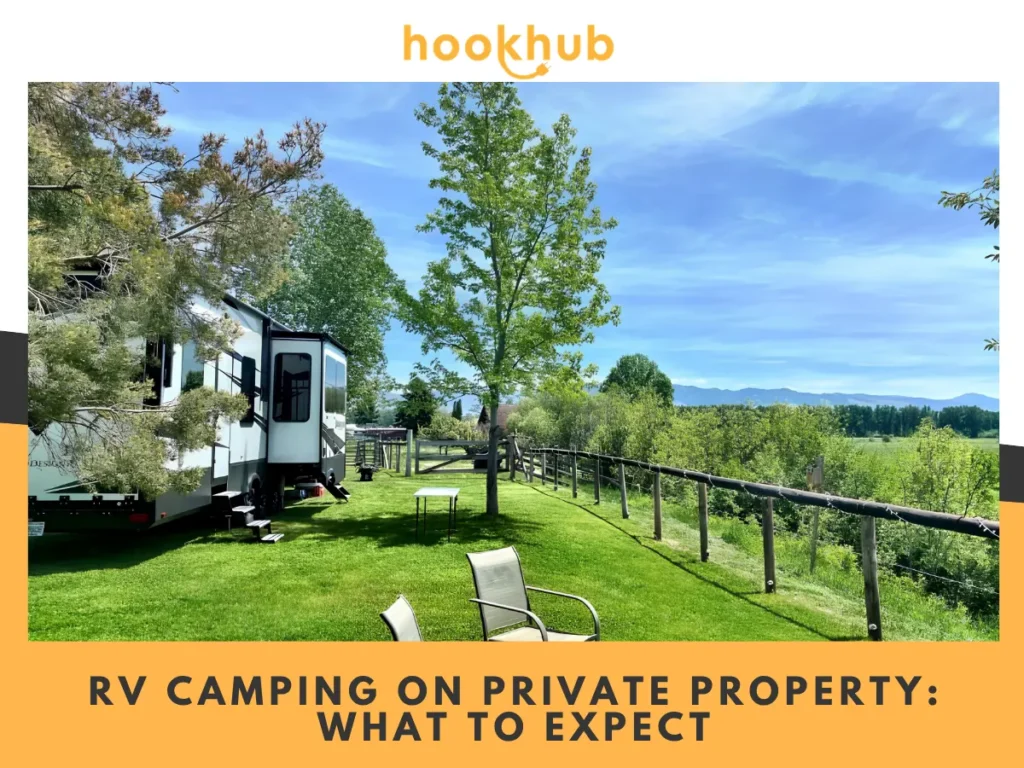
The experience is structurally different from a resort campground. Private rural acreage in Arizona, a working farm in Tennessee, or a coastal property in Texas offers the peace and quiet and open space that resort campground rows cannot replicate. There are no swimming pools or shuttle services. There is land, privacy, a real host relationship, and a confirmed spot that is not competing with 300 other members for the same booking window.
For long-term RV parking — a winter season arrangement, a three-month base camp, a full-year agreement — Hookhub's host-set monthly pricing consistently undercuts what resort campground networks charge for comparable duration stays, without requiring any membership to access.
When Does Thousand Trails Make Sense?
The honest answer is: when you camp frequently enough that the math works, your routes align with park locations, and managed amenities matter to your travel style.
According to RVshare's 2025 travel quality report covered by Modern Campground, 47% of travelers preferred RVs for their accommodation, and quality of camping experience has become a primary driver of destination choice. For families who value a safe, well-kept campground environment with structured programming, easy access to a pool, and a community of fellow RVers at each stop, Thousand Trails delivers that consistently inside its network.
It makes the most sense for full-timers or heavy part-time users camping 50-plus nights annually who primarily travel through regions with strong Thousand Trails coverage — the East Coast of the United States, Florida, California, and the Pacific Northwest. For travelers whose routes run through the central US or rely heavily on states with minimal park presence, the membership's geographic limitations reduce its value significantly no matter how many nights are used.
The calmer experience of lower-cost camping within a fixed network also suits retirees and budget-conscious families who want to reduce campground costs without managing host relationships or researching private land options for each stop.
When Is Hookhub the Better Fit?
Hookhub fits a different traveler profile: someone who values confirmed private space over managed resort amenities, needs long-term or storage arrangements outside what a membership network supports, or wants to avoid paying an annual fee for access to a fixed system that may not align with their actual travel patterns.
The variety of ways to find RV camping that experienced travelers use rarely relies on a single tool. But for anyone whose primary need is a confirmed spot on private acreage — rural, spacious, host-vetted, and free of the 7-day out restrictions that create gaps in a Thousand Trails-based travel plan — Hookhub covers the use case that membership networks were never designed to serve.
Boondocking enthusiasts and travelers who prefer unique experiences in nature over resort-style campground density will also find that private land through Hookhub offers a more comfortable camping environment for their specific style — without the costs of a membership tier that funds amenities they never use.
Can You Use Both?
Yes, and many experienced travelers do. The two tools operate on different land types and serve different nights in a longer trip without competing.
A practical arrangement for a full-timing family: Thousand Trails covers the resort campground stops where the kids want a pool and the adults want a stress-free setup with full hookups at a well-established park. Hookhub covers the extended stay arrangements — the two-month winter base in Arizona, the private ranch stay near a national forest, or the storage spot between trips — where private land access and flexible host terms make more sense than booking through a membership system with nightly restrictions.
Neither tool makes the other irrelevant. The question for each trip is which type of property solves the specific need for those particular nights.
FAQ
Is Thousand Trails worth it if I only camp a few weeks per year?
The break-even math makes the Camping Pass difficult to justify for occasional campers. At the standard $775 annual rate for a single zone, you need 15 or more nights at $50-equivalent commercial campground fees just to cover the membership cost. Casual campers doing 10 nights or fewer per year in a single region rarely recover the membership investment before renewal. For those travel patterns, a pay-per-stay approach — through commercial park direct bookings or private land through Hookhub — tends to produce lower total campground costs with more flexibility and no annual commitment.
Does Hookhub have resort amenities like Thousand Trails campgrounds?
No. Hookhub is a private land marketplace, not a resort network. Listings are individual rural properties where individual hosts make space available for RV stays — farms, ranches, vacant acreage, and rural homesteads. There are no managed pools, laundry facilities, or organized activities. The amenities available at any given Hookhub listing depend entirely on what the host offers and discloses in their listing. Travelers who value resort campground infrastructure at every stop are better served by a network like Thousand Trails. Travelers who prioritize private outdoor space, lower costs, and a direct host relationship find that the absence of managed amenities is not a limitation — it is the point.
Does Thousand Trails cover private land or rural camping?
No. Thousand Trails is a resort campground network. All properties are commercially managed campgrounds with staffed facilities, structured amenity programs, and the density of a resort park environment. The membership does not include private landowner listings, rural acreage, or any property type outside the Thousand Trails and affiliated Encore/RPI networks. For travelers seeking confirmed rural private land outside the commercial campground system, Hookhub is the platform that specifically serves that need.
Thousand Trails turns a membership fee into unlimited camping access at resort-style parks across a managed network. Hookhub turns individual host relationships into confirmed private land stays with no membership required. Both serve real needs. Neither replaces the other for travelers who understand what each one actually delivers.
Find confirmed private RV parking near you and see what hosts are available on your route.