
There’s a moment after your first booking confirmation arrives when hosting suddenly feels real.
You’ve built the listing, uploaded the photos, written the property description, and maybe even refreshed the campsite or RV spot one more time before guests arrive. Then the booking notification comes in and a different question appears:
What exactly do you say to the guest now?
Most first-time hosts underestimate how important this part of hosting actually is. They focus heavily on pricing, amenities, or the listing description itself, while the welcome message gets treated like a small administrative step. In reality, that message often shapes your guest’s entire impression of the stay before they even arrive.
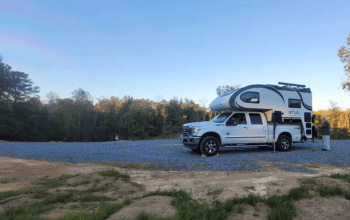
For RV guests especially, arrival matters. They may be towing a camper, driving a large vehicle through unfamiliar roads, coordinating a late check-in, or trying to find a rural property after sunset.
A calm, clear welcome message reduces friction immediately and helps guests feel more confident before they even pull into the driveway.
Why Welcome Messages Matter in RV Hosting
A good welcome message does several things at once without feeling overwhelming.
It reassures guests that someone is actually expecting them. It answers the practical questions that often cause last-minute confusion. It also quietly establishes the tone for the stay itself.
Guests who receive thoughtful communication before arrival tend to:
- respect property rules more consistently
- arrive better prepared
- ask fewer repetitive questions
- leave stronger reviews
- feel more comfortable during the stay
That last point matters especially in private land hosting.
Unlike traditional campgrounds, private RV properties often involve unique layouts, custom arrival instructions, off-grid setups, shared outdoor areas, or rural access roads. Even a beautiful campsite can feel stressful if guests are uncertain about where to park, how to enter the property, or whether they are in the correct spot.
A simple arrival message removes a surprising amount of tension. Many experienced hosts follow guest communication best practices when creating smoother arrival experiences because clear expectations reduce confusion for both guests and hosts.
Clear communication works best when the property itself is prepared for arrival too. Taking time to prepare your property for RV guest stays helps ensure guest expectations match the actual experience.
This is especially true for newer hosts using platforms like Hookhub, Hipcamp, Airbnb, or VRBO. The platform handles the reservation and booking process, but the actual hospitality still comes from the host.
What Guests Actually Need Before Arrival
One mistake many hosts make is assuming guests want long, highly detailed instructions filled with policies, reminders, and formatting.
Most guests are not looking for a corporate welcome packet.
They want clarity.
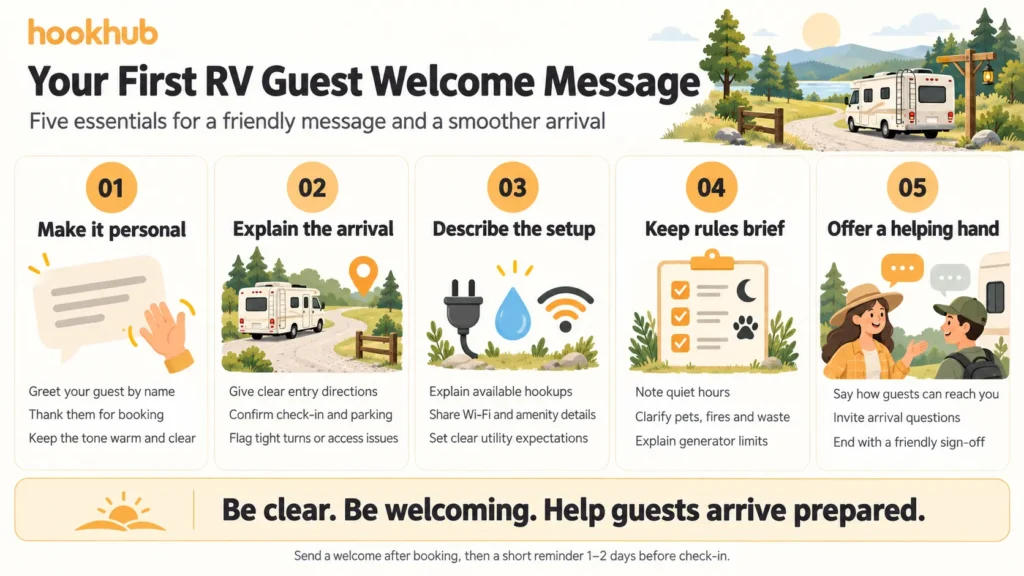
A strong rental welcome letter usually covers only a few things:
- how to get there
- where to park
- what to expect on arrival
- the most important house rules
- how to contact the host if needed
That’s it.
The best messages feel conversational rather than procedural. They sound like someone genuinely preparing another person for arrival on the property.
For example, saying:
“The gravel turnoff is easy to miss at night, so keep an eye out for the wooden fence and solar lantern near the entrance.”
…is far more useful than:
“Please refer to the attached map for entry instructions.”
That small difference creates a more human experience.
Hosts sometimes worry that being warm or conversational feels unprofessional. In reality, the opposite is usually true. Guests remember thoughtful communication because it feels personal.
That personal touch often influences reviews just as much as amenities do.
The Information Every Welcome Message Should Include
A welcome message does not need to follow a rigid format, but there are a few things worth including every time.
Arrival instructions are the most important. Guests should understand exactly how to access the property, where the RV spot or campsite is located, and whether there are any quirks they should know about beforehand. If your property has narrow turns, soft ground after rain, low tree branches, or limited mobile signal, mention it early. Many hosts also use RV guest arrival preparation tips to improve the check-in experience and reduce common arrival-day confusion.
Site setup details also matter. If you offer electric hookups, water access, dump stations, outdoor amenities, cabin access, or Wi-Fi, explain how those systems work in plain language.
Guests appreciate knowing what to expect before arrival rather than discovering surprises during check-in. Even hosts offering dry camping setups can successfully list their land for RV guests with no utilities as long as expectations are communicated clearly upfront.
House rules should stay brief but clear. Quiet hours, fire restrictions, pet expectations, waste disposal, and generator use are usually enough. Guests rarely read large blocks of rules carefully, but they do absorb short reminders placed naturally inside the message.
You should also tell guests how to reach you. Most hosts find that direct communication actually reduces problems rather than creating them. Guests who know they can contact someone if needed generally feel more relaxed and independent during the stay.
The final part is often overlooked: the sign-off.
A simple closing sentence like:
“Hope you enjoy the quiet out here.”
feels much more welcoming than abruptly ending the message after instructions.
It reminds guests they are staying somewhere real, not simply checking into a transaction.
Finding the Right Tone as a Host
New hosts often drift toward one of two extremes.
Some become overly formal:
“Please be advised that check-in shall commence at 3 PM.”
Others become so casual that important details disappear entirely.
The best communication style sits somewhere in the middle: clear, calm, friendly, and confident.
One helpful trick is reading the message out loud before sending it. If it sounds like a customer service script, simplify it. If it sounds like a real host helping someone arrive safely, you are probably close to the right tone.
Many experienced hosts follow Airbnb’s communication recommendations for hosts because conversational, clear messaging tends to create more comfortable guest interactions from the beginning.
This becomes even more important for long-term RV guests or monthly reservations. Longer stays naturally create more interaction between guest and host, so communication should feel steady and approachable from the beginning.
For hosts managing longer RV stays or seasonal snowbird reservations, clear communication becomes even more important because guests begin interacting with the property more like temporary residents than short-term visitors.
Over time, many hosts eventually build a customizable welcome template they can edit slightly for each reservation. Some create a printable welcome book, while others use editable Canva layouts, digital download PDFs, or simple guest information cards they send through an app before check-in.
The format matters less than the clarity itself.
A Simple Welcome Message Template That Actually Works
Most experienced hosts eventually realize they do not need an elaborate rental welcome card or highly designed guest packet to create a good first impression.
Simple usually works better.
A message like this already covers most of what guests need:
Hi [Guest Name],
Thanks again for booking with us. Looking forward to hosting you.
For arrival, use the gravel driveway on the east side of the property and continue toward the open RV spot near the trees. If you pass the red gate, you’ve gone a little too far.
Check-in starts at 3 PM. Water and 30-amp hookups are available at the site, and the Wi-Fi information is posted inside the welcome binder near the seating area.
A couple quick reminders before arrival: quiet hours start at 10 PM, and please avoid open fires if conditions are windy.
If you need anything while traveling in, feel free to message me through the platform or call directly.
Safe travels, and hope you enjoy your stay.
What makes this effective is not the formatting. It’s the balance. The guest receives useful information without feeling overwhelmed.
That matters whether you host a desert campsite, tent setup, camper accommodation, cabin getaway, or full RV rental property.
Common Mistakes That Create Guest Friction
One of the most common mistakes hosts make is waiting too long to send the message. Guests appreciate hearing from a real person shortly after booking confirmation, not only the night before arrival.
Another issue is information overload.
Some hosts create massive welcome documents filled with reminders, rules, policies, maps, checklists, and instructions that guests barely skim. A shorter message with clear priorities usually performs much better.
Many guest issues start with unclear expectations, which is why strong communication early on often prevents problems later when trying to handle difficult RV guests on your property.
Vague directions are another recurring problem in RV hosting. GPS does not always cooperate with rural property entrances, campsites, or outdoor accommodations. If your driveway is difficult to find, explain it clearly. A detailed arrival description prevents stressful late-night phone calls more effectively than almost anything else.
And finally, many hosts forget the emotional side of hospitality entirely.
Guests are not simply reserving parking spaces. They are choosing a temporary experience. Even a short, thoughtful introduction can completely change how welcomed they feel during the stay.
Building a Repeatable Guest Communication System
After hosting a few reservations, patterns start appearing.
Guests ask the same questions. They miss the same driveway turn. They ask whether the water hookup needs a pressure regulator. They wonder where to dispose of trash or whether generators are allowed after dark.
Those repeated questions are useful because they help improve your communication system over time. Many hosts also use Hipcamp hosting resources to refine their hosting workflow, improve guest messaging, and create smoother arrival experiences across multiple reservations.
Over time, many hosts build:
- a reusable welcome template
- a guest welcome PDF
- a simple printable map
- a check-in checklist
- a customizable Canva template
- a digital welcome book for longer stays
Where Hookhub Fits Into the Guest Experience
One reason guest communication feels overwhelming for some new hosts is because they are trying to manage everything manually at once, from the booking and listing process to payment tracking, arrival coordination, and guest messaging.
Platforms like Hookhub help create structure around those moving parts. Instead of spending time manually organizing reservation details or tracking conversations across multiple apps, hosts can focus more on hospitality itself.
That matters because good hosting is usually built on consistency rather than perfection.
For hosts trying to simplify reservations and guest communication, it also helps to start hosting on HookHub with systems that centralize the operational side of hosting from the beginning.
Guests rarely expect luxury-level production. They simply want clear communication, realistic expectations, and a smooth arrival process.
A thoughtful welcome message is often the first sign they made the right booking choice.
FAQ
How long should a rental welcome message be?
Most welcome messages work best between 150 and 250 words. Guests usually read these messages quickly on mobile devices while traveling, so clarity matters more than length.
Should I create a welcome book for RV guests?
For longer stays, yes. A welcome book can include campsite information, Wi-Fi details, nearby recommendations, emergency contacts, maps, and property-specific instructions.
Can I use editable Canva templates for guest communication?
Yes, many hosts create customizable Canva templates, printable PDFs, and digital download welcome cards to streamline communication while still adding a personal touch.
When should I send the arrival message?
Most hosts send an initial welcome shortly after booking confirmation, followed by a shorter reminder one or two days before check-in.
What matters most in a guest welcome message?
Arrival clarity. Guests need to know exactly where to go, how to access the property, and what to expect once they arrive.
Final Thoughts
A good welcome message is not about sounding polished or professional.
It is about making guests feel prepared.
That’s especially true in RV hosting, where arrivals can involve long drives, large vehicles, unfamiliar roads, outdoor setups, and changing travel conditions. A thoughtful message helps guests settle in faster, follow expectations more naturally, and start the stay with confidence instead of confusion.
Over time, even a simple template can become one of the most valuable tools in your hosting workflow.
Because in the end, great hosting usually starts before the guest even arrives.