
Updated 2026.
Overview: Founded by White Mountain locals Caylee Harrington and Evan Lehr, HookHub is designed specifically for RV travelers and landowners. The platform connects RVers with private landowners offering parking spots, whether for overnight stays, long-term parking, or storage. HookHub aims to create a community-driven marketplace, fostering local connections and sustainable travel options.
Quick Answer
- HipCamp is a broad camping marketplace covering tent sites, glamping structures, and some RV spots across private and public land—built for the general camping audience
- Hookhub is an RV-specific private land marketplace for confirmed parking, long-term stays, and storage—built exclusively for RV owners and the landowners who host them
- HipCamp focuses primarily on short-term overnight and weekend stays across all camping types
- Hookhub supports nightly, weekly, and monthly arrangements, with a stronger emphasis on longer-term RV stays and repeatable use
- HipCamp suits general campers and RVers who want a short-term private spot alongside other camping options in one app
- Hookhub suits RVers who need confirmed space, longer stays, hookup access, or storage—and landowners who specifically want to host RVers
Private land has become one of the more reliable alternatives to overcrowded RV parks, and more landowners are opening their properties to outside guests than at any point in the past decade. For RVers trying to find the right parking spot and for property owners trying to choose the right platform to list on, two names come up consistently: HipCamp and Hookhub.
Both involve private property. Both are bookable. But they were designed for different audiences—and that distinction matters more than most comparison articles acknowledge.
There are several ways to find RV parking on private land, but the platform you choose determines not just where you stay, but the type of experience, the level of certainty, and how well that space actually fits your needs.
What HipCamp Does
HipCamp is a camping marketplace that connects landowners and campground operators with people looking for outdoor stays. The platform covers a wide range of camping types—tent sites, RV spots, glamping structures including yurts and canvas tents, cabins, and dispersed camping areas on both private and public land across the United States.
Booking is confirmed through the platform. Landowners create listings, set their own pricing and availability, and receive payouts weekly. HipCamp takes a commission from each booking and handles the payment layer between host and guest.
The audience HipCamp serves is broad. With over 8 million campers on the platform, the majority are general outdoor enthusiasts—tent campers, weekend glampers, and families looking for a private spot with a fire ring and solitude. RV spots exist in the HipCamp database, but they sit alongside tent sites and glamping rentals rather than in a purpose-built RV environment. Filters for RV-specific needs—pad length, hookup availability, and driveway clearance—are present but not the core of how the platform is organized.
HipCamp stays skew short-term: overnight, weekend, and occasionally week-long bookings. The platform is built around the camping trip model rather than the extended stay or long-term parking model.
For RVers passing through a region who want a private, scenic spot for a night or two, HipCamp’s inventory covers that well in areas with active listings.
Where HipCamp Can Fall Short for RVers
The limitation is not that HipCamp lacks RV listings—it’s that RV use is not the primary design layer.
That shows up in practice:
- RV-compatible listings can be inconsistent by region
- Important details (turn radius, slope, true pad length) vary in clarity
- Some listings technically allow RVs, but are better suited for lighter or shorter rigs
- Long-term availability is limited or not structured
Real-World Example
You find a listing that says it supports RVs.
You arrive and realize:
- access is tighter than expected
- the “pad” is more of a general parking area
- hookups are partial or unclear
- the space works—but not comfortably for more than a short stay
For a night or weekend, this is manageable.
For a longer stay, it becomes friction quickly.
What Hookhub Does
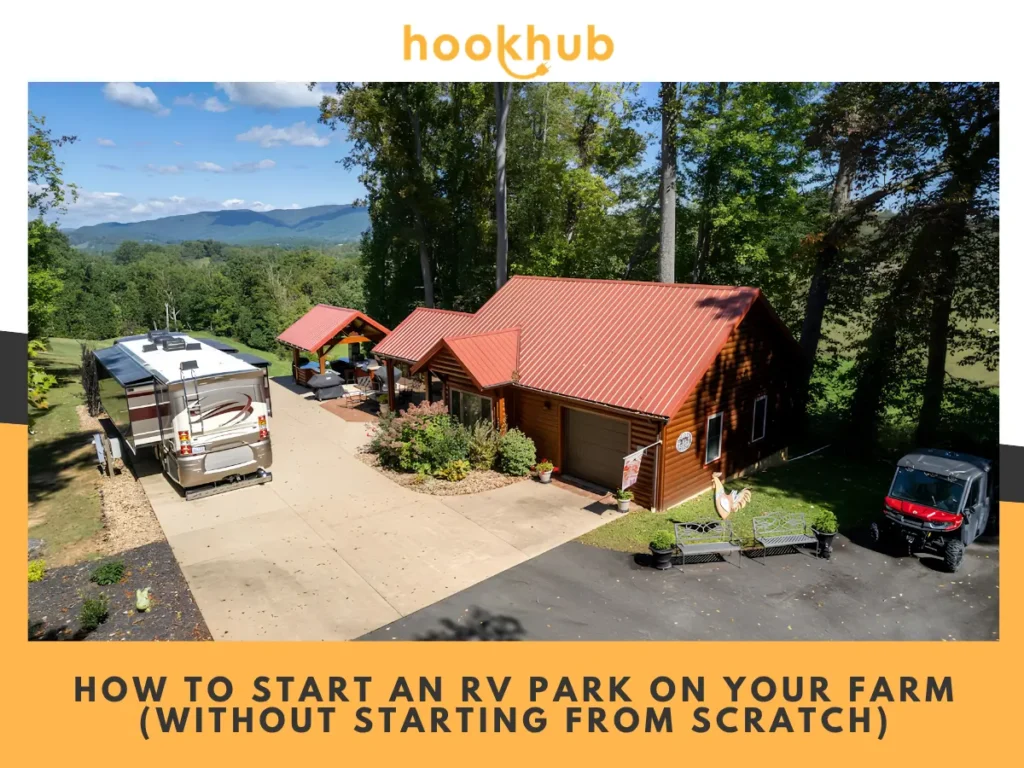
Hookhub is a private land marketplace built specifically for recreational vehicles. Ranchers, farmers, and rural property owners list unused space for RV parking, extended stays, and storage. RVers search listings, filter by hookup availability and amenities, and book confirmed stays through the platform.
The platform has no tent camping inventory, no glamping structures, and no general outdoor stays. Every listing is for a recreational vehicle—parking, hookups where available, and land access for RV guests specifically. That narrow focus is a deliberate design choice, not a limitation. It means RVers searching on Hookhub are not scrolling through tent sites and cabin rentals to find the handful of RV-compatible spots in a region.
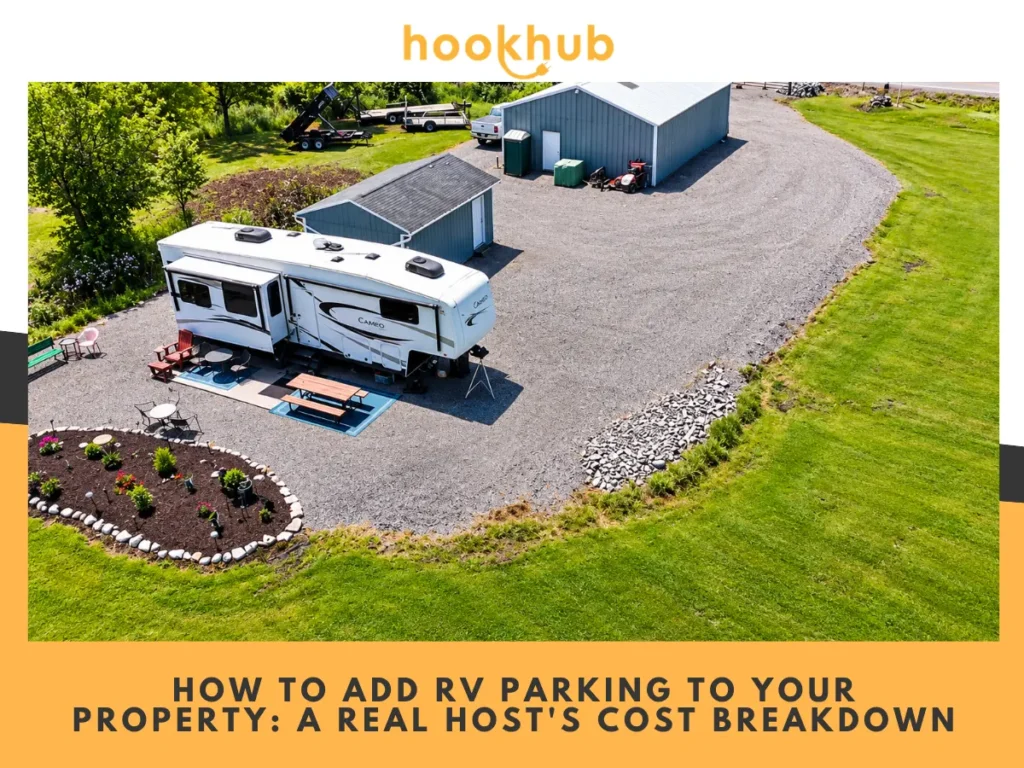
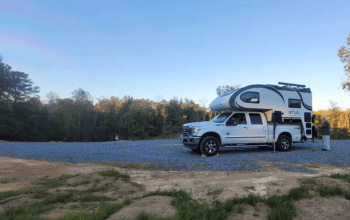
Parking an RV on private land through Hookhub means the host has accepted the booking, the space is confirmed for your rig, and the details—pad dimensions, hookup access, driveway clearance—are settled before arrival. Stays can run from a single overnight to a full month or longer, with monthly pricing that consistently undercuts what commercial RV parks charge for the same duration.
For RVers who need long-term parking—a winter base in the Southwest, a stable spot while working in a region, or storage between trips—Hookhub addresses a use case HipCamp was never designed for.
What That Changes for RVers
Because Hookhub is RV-specific:
- Listings are built around real vehicle needs
- Hosts expect RV guests and prepare accordingly
- Details like access, space, and utilities are more directly relevant
Parking an RV on private land through Hookhub means:
- the host has accepted the booking
- the space is confirmed for your rig
- expectations are aligned before arrival
That level of clarity becomes more important the longer you plan to stay.
Where Hookhub Performs Best
Hookhub is especially useful when your needs extend beyond a simple overnight stop.
This includes:
- Monthly or seasonal stays (30–90 nights)
- Winter snowbird setups
- Temporary relocation or work-based stays
- Larger rigs that require confirmed fit and access
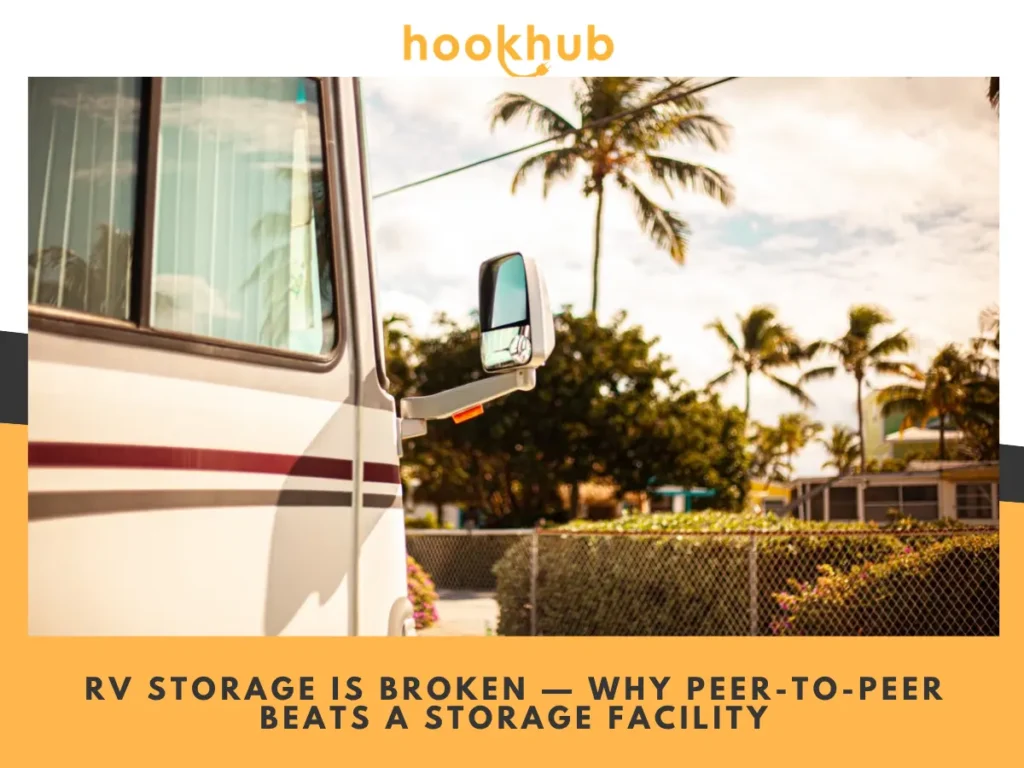
- Storage between trips
While the platform does support short-term stays, its structure naturally supports longer, more stable arrangements that are difficult to coordinate on general camping platforms.
For RVers who need a place to stay, not just a place to stop, that distinction becomes meaningful.
How the Two Platforms Compare
| Feature | Hookhub | HipCamp |
|---|---|---|
| RV-specific platform | ✅ Yes—RV only | ⚠️ Some RV spots among broader inventory |
| Tent camping listings | ❌ No | ✅ Yes |
| Glamping / yurts / cabins | ❌ No | ✅ Yes |
| Confirmed booking | ✅ Yes | ✅ Yes |
| Long-term/monthly stays | ✅ Yes | ❌ Short-term focus |
| Electric hookups | ✅ On select listings | ⚠️ Some listings are not core features. |
| RV storage options | ✅ Yes | ❌ No |
| Filter by RV pad length | ✅ Yes | ⚠️ Limited |
| Host commission model | Platform fee per booking | Commission per booking |
| Audience | RV owners exclusively | All camper types |
| Short-term stays | ✅ Yes | ✅ Yes |
| US coverage | ✅ Yes | ✅ Yes—broader coverage |
| Solitude/private land | ✅ Yes | ✅ Yes |
| Income for landowners | ✅ Yes | ✅ Yes |
Which Platform Is Better for RVers Looking for a Parking Spot?
HipCamp has RV listings—that is not in question. In areas with active HipCamp hosts who accommodate RVers, you can find and book a private spot for a night or a weekend. The experience, when a suitable listing exists in your area, is generally straightforward.
The limitation shows up in two places. First, RV-specific inventory is not evenly distributed across HipCamp’s coverage area. In regions where most hosts cater to tent campers and glampers, the RV options are thin or absent.
Second, the platform’s search and filter architecture is built around the general camping experience. Narrowing results to RV-compatible spots with specific pad lengths, hookup availability, and driveway access requires more manual filtering than an RV-first platform provides by default.
Hookhub’s entire inventory is RV-relevant. Every listing was created by a landowner who specifically wants to host a recreational vehicle. That means amenity details, access requirements, and stay length flexibility are framed around RV use from the start.
For RVers who need more than a casual overnight—a hookup for shore power, a longer stay, or a property that can accommodate a larger rig—Hookhub provides a more direct path to a confirmed, appropriate setup.
Which Platform Is Better for Landowners Who Want to Host RVers?
This is where the comparison becomes genuinely useful for property owners weighing both options.
HipCamp gives landowners access to a larger audience. With millions of campers actively using the platform, the volume of potential guests is higher—but so is the competition from other listings and the breadth of what those guests are looking for. A landowner who lists an RV spot on HipCamp will receive inquiries from a mix of tent campers, glampers, and RVers and may need to manage expectations across a range of guest types.
Hookhub delivers a self-selecting audience. Every guest on the platform is an RV owner—which means no confusion about whether a listing works for tent campers, no requests for glamping structures, and no mismatched expectations about what the space offers. For landowners who want to generate income from a parking area or a stretch of rural property without developing it into a full campsite, Hookhub's RV-specific guest base removes friction on both sides of the booking.
Both platforms allow landowners to earn income from private land through RV hosting. HipCamp's broader audience suits landowners who want to accommodate multiple camping types and maximize nightly bookings. Hookhub's focused model suits landowners who specifically want RV guests and are open to longer, more stable arrangements.
For landowners who want to:
- use existing land
- avoid building full campground infrastructure
- host fewer guests for longer durations
Hookhub’s model supports that approach more directly.
Rather than optimizing for volume, many hosts use it to create:
👉 more predictable occupancy
👉 longer stays
👉 simpler operations
Can You Use Both as a Landowner or an RVer?
For landowners, there is no structural reason you cannot list on both—they serve different guest types without directly competing for the same booking. A property with both a tent camping area and an RV pad could reasonably list both use cases on their respective platforms.
For RVers, the tools belong at different moments. HipCamp works when you want a short, private outdoor stay alongside other camping options in a single app—particularly in areas with scenic private land where HipCamp's host density is strong. Hookhub works when you need confirmed RV-specific space, hookup access, a longer arrangement, or a storage solution that general camping platforms do not offer.
As Escapees RV Club notes in their guide to finding budget-friendly RV camping options, the landscape of private land options for RVers has expanded significantly—and matching the right platform to the right need is what makes the difference between a smooth trip and a frustrating search.
The platforms are not competing for the same moment. HipCamp is a camping marketplace that also includes RV spots. Hookhub is an RV marketplace that happens to be on private land. That distinction determines which one belongs in your planning process.
FAQ
Does HipCamp have suitable options specifically for RVers?
HipCamp includes RV spots in its inventory, but coverage varies significantly by region. In areas with active HipCamp hosts who accommodate recreational vehicles, the options are reasonable for short overnight stays. The platform is not RV-optimized—filters for pad length, hookup type, and driveway clearance require manual navigation alongside tent camping and glamping inventory. For RVers who want a platform built around their specific needs, Hookhub's RV-only focus removes that friction. The HipCamp Journal's guide to hosting on HipCamp gives a clear picture of the type of properties and camping types the platform is designed around.
Can I find long-term RV parking through HipCamp?
HipCamp is built around the short-term camping trip model—overnight stays, weekend visits, and occasional week-long bookings. Monthly arrangements and extended stays are outside what the platform was designed to support. For monthly or long-term private RV parking with confirmed booking and flexible stay length, Hookhub is the purpose-built platform. Search for private long-term RV parking near you on Hookhub to see current host availability in your region.
Can a landowner list on both HipCamp and Hookhub?
Yes—the two platforms serve different guest types and do not directly compete for the same bookings. A landowner with mixed property could list tent and glamping sites on HipCamp while listing an RV pad or parking area on Hookhub, reaching different audiences through each platform. If your land is suited exclusively for RV guests—a cleared parking area, gravel pad, or open rural property without developed camping infrastructure—Hookhub's RV-specific audience is the more direct fit. If you want to accommodate multiple outdoor guest types and maximize listing volume, running both in parallel is a reasonable approach.
HipCamp and Hookhub each fill a real role in the private land space—but they fill different roles for different travelers and different property owners. If your RV trip requires confirmed space, hookup access, or a stay longer than a weekend, Hookhub is where that search starts.
Find private RV parking near you and see what hosts are available across the country.
Final Thought
HipCamp and Hookhub each fill a real role in the private land ecosystem—but they serve different needs.
HipCamp is designed for:
👉 short-term outdoor stays across multiple camping types
Hookhub is designed for:
👉 RV-specific use, including longer stays, confirmed setups, and repeatable arrangements
If your trip is centered around a short stay or experience, HipCamp is often a good fit.
If your needs include:
- reliability
- space
- hookups
- or a place to stay beyond a few nights
Hookhub becomes the more aligned choice.