There’s a version of land ownership most people do not think about until years later.
You bought rural property for the future, as an investment, or maybe as a place you planned to use someday. But for now, the land mostly sits there. Taxes still arrive. Maintenance still costs money. Fences still need repairs. Meanwhile, the property generates little or no return.
For many absentee landowners, RV hosting has quietly become one of the simplest ways to change that.
You do not need to live on the property full-time to host RV travelers successfully. In many cases, the most important part is not being physically present. It is having the right systems, realistic expectations, and a setup that can operate smoothly from a distance.
Most landowners hesitate at this stage, not because the idea sounds unrealistic, but because the process feels unclear. Hosting strangers on rural land while managing everything remotely can feel like a big leap at first. The good news is that many successful RV hosts started in exactly the same position, with unused land, basic infrastructure, and a lot of uncertainty about how it would actually work.
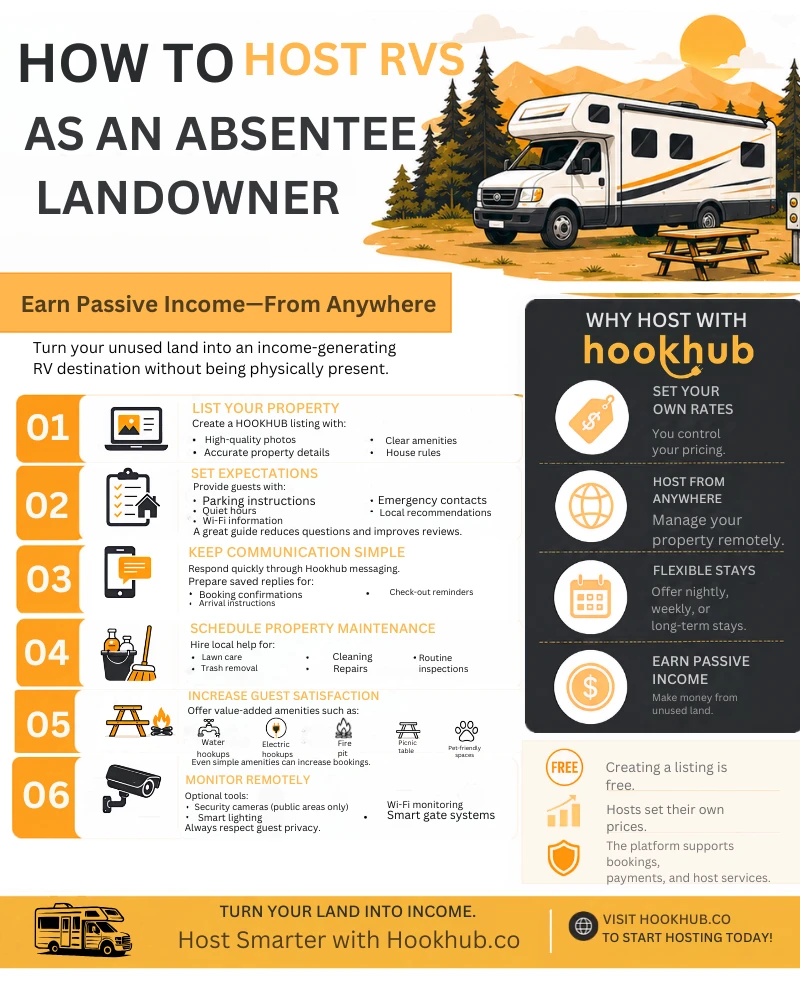
Key Takeaways
Why Private Land Appeals to Modern RV Travelers
RV travel has changed significantly over the last few years. Many travelers are no longer searching only for crowded campgrounds or traditional RV parks packed tightly with neighboring rigs. More RVers are looking for quiet private land stays where they can stay somewhere peaceful, scenic, and less commercial.
For some travelers, the appeal is privacy. Others want convenience, flexibility, or a more relaxed experience than a busy campground can provide. A rural property with open space, mountain views, desert scenery, or easy access to a local destination can be surprisingly attractive to RV guests, even if the setup itself is simple.
This shift creates a major opportunity for absentee landowners because it lowers the barrier to entry. You do not necessarily need to build a fully developed RV park to begin hosting. In many cases, travelers simply want a safe, accessible place to park their RV and enjoy the surrounding area.
Long-term RVers and snowbirds are especially important to understand here. Many are experienced travelers looking for stability rather than luxury amenities. They tend to be more self-sufficient, stay longer, and require less day-to-day involvement from the host. For absentee landowners trying to keep operations manageable, that guest profile is often ideal.
Does Your Property Need Full Hookups?
One of the biggest misconceptions about RV hosting is that a property needs water, sewer, and electrical hookups before it can attract guests.
That is not necessarily true.
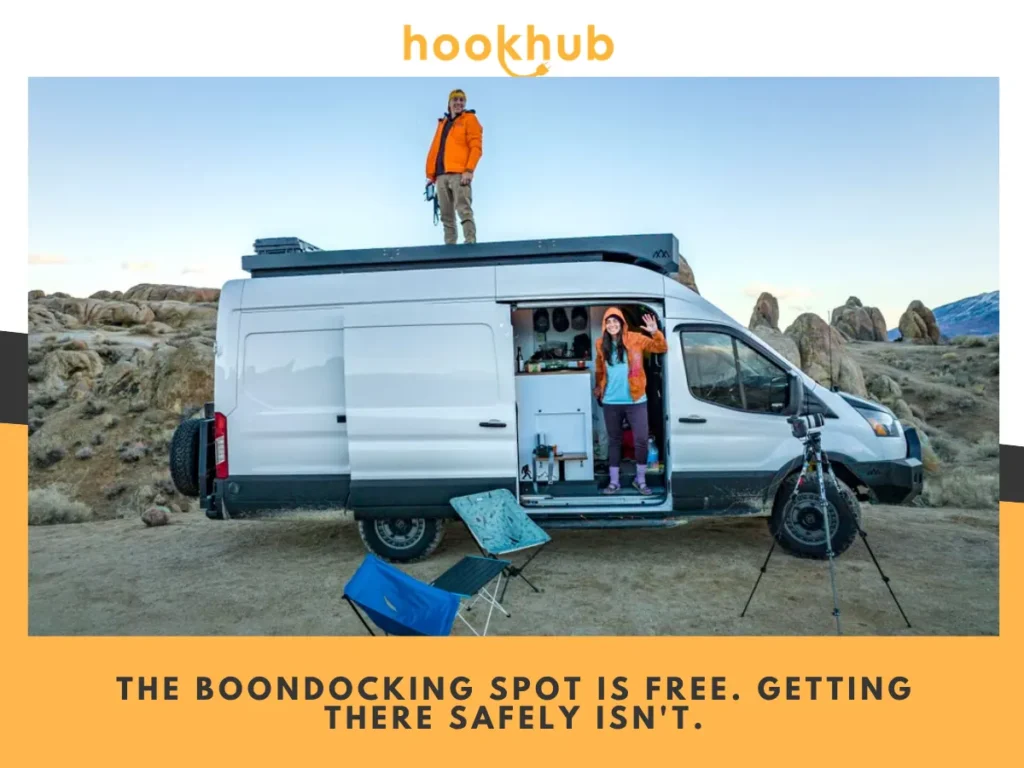
Many RV travelers actively search for dry camping or boondocking stays because they prefer more natural, private environments over highly developed campgrounds. If your property has legal access, a reasonably level parking area, and enough space to accommodate RVs safely, you may already have a workable setup.
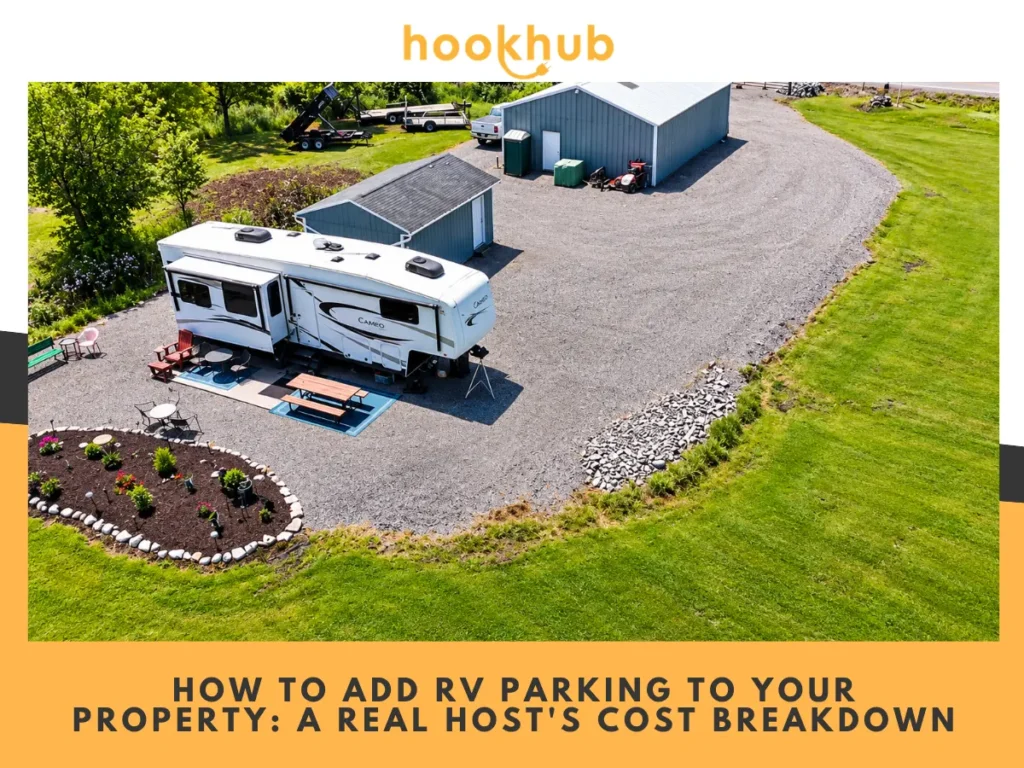
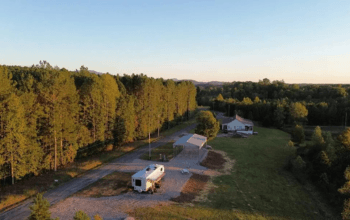
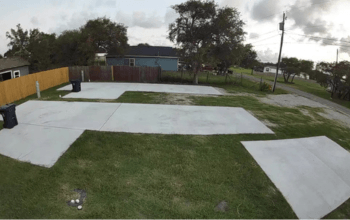
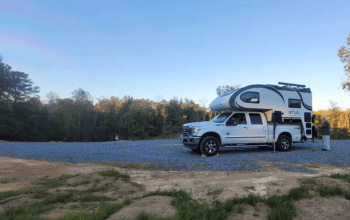
Some of the most successful hosts started with nothing more than a gravel pull-off, an open field, or a cleared section of land near an existing driveway. Instead of investing heavily upfront, they tested demand first and improved the property gradually over time.
That approach is especially practical for absentee landowners. Rather than spending heavily before understanding your local market, you can begin with a simple listing and learn what travelers in your area actually value.
Adding amenities later may increase your earning potential, but it is rarely the requirement many new hosts assume it is.
The Real Challenge of Hosting Remotely
For absentee landowners, the biggest challenge usually is not the property itself. It is managing logistics from a distance.
Most first-time hosts worry about guest arrivals, communication, emergencies, or what happens if problems come up while they are hours away from the property. Those concerns are reasonable, but most become manageable once systems are in place.
Guest access is one of the first things remote hosts solve. Many use gate codes, smart locks, or lockboxes so travelers can arrive independently without needing an in-person handoff. Some absentee hosts also keep a trusted local contact nearby, not to manage the property daily, but simply to help if a physical issue ever requires attention.
Arrival instructions also matter far more than many new hosts expect. Rural properties are not always easy to locate using GPS alone, so clear directions reduce confusion and unnecessary guest messages. Photos, landmarks, gate instructions, and parking guidance all help guests arrive smoothly and confidently.
Communication tends to become easier once expectations are established clearly. Long-term RV travelers are often fairly independent and low-maintenance. Most simply want a responsive host if questions come up during the stay. Platforms like Hookhub centralize messaging and booking management, which makes it much easier for absentee hosts to stay organized remotely.
Strong house rules also prevent many common problems before they happen. Fire safety, visitor limits, waste disposal, pet policies, and quiet hours should all be explained upfront. Most hosting issues come from unclear expectations rather than intentionally difficult guests.
Understanding Local Rules Before You List
This is one area where absentee landowners should slow down and do proper research before publishing a listing.
Because local regulations vary so widely, many landowners spend time researching both county requirements and broader RV industry trends before listing their property. Organizations like the Recreation Vehicle Industry Association (RVIA) also provide educational resources and industry data related to RV travel growth.
Some rural areas allow overnight RV stays with very few restrictions, while others may require permits, business licensing, or compliance with short-term rental rules.
If your property is part of an HOA or governed by CC&Rs, those rules deserve careful review as well before hosting guests.
Fortunately, many rural and agricultural areas remain relatively flexible when it comes to private land RV hosting. Still, verifying local regulations upfront can prevent major headaches later, especially when managing property remotely.
In many cases, a quick conversation with your county planning office is enough to clarify whether overnight RV stays are permitted on your property.
Why Monthly RV Hosting Often Works Best
There is a major operational difference between hosting short overnight stays and hosting long-term RV guests.
For absentee landowners, monthly RV hosting is usually much easier to manage.
Short-term bookings naturally create more turnover. More arrivals mean more coordination, more communication, and more opportunities for scheduling issues or guest misunderstandings. Even when individual stays go smoothly, the workload can add up quickly for a remote host.
Long-term stays simplify the process considerably. Instead of managing several bookings each month, you may only coordinate one guest arrival and one departure over a much longer period. That stability reduces operational stress while also creating more predictable income.
This is one reason snowbird travelers are such a strong fit for absentee RV hosting. In warmer regions like Arizona, Texas, and Florida, many RVers book winter stays months in advance and remain for extended periods. These guests are often experienced travelers who value reliability and consistency more than resort-style amenities.
For remote landowners, that lower-maintenance model is often far more sustainable than constantly managing weekend turnover.
In Arizona especially, demand often rises between November and March as snowbird travelers look for long-term RV stays near Phoenix, Mesa, Tucson, and other warm-weather destinations.
Where Hookhub Fits Into Remote RV Hosting
Many booking platforms were designed primarily around vacation rentals or short-term accommodations. RV hosting on private land operates differently, especially for absentee landowners trying to manage property remotely.
Platforms like Hookhub are structured more specifically around private land RV hosting, which makes certain operational challenges easier to handle from a distance.
One of the most useful features for absentee hosts is guest approval control. Hosts can review booking requests before confirming stays, allowing landowners to screen guests and ask questions before someone arrives on the property.
Guest verification also matters more when the host is not physically present. Knowing that renters complete identity verification through the platform creates an additional layer of confidence for remote property owners.
The platform’s centralized messaging and payment systems simplify communication and financial management as well. Instead of juggling separate payment apps, text messages, and scheduling tools, everything remains organized in one place.
This structure becomes especially valuable for hosts managing RV properties from another city or state. Rather than turning RV hosting into a constant hands-on responsibility, the platform helps create a system that operates more predictably and efficiently.
Building a Strong Listing as a Remote Host
For absentee hosts, the listing itself does a large part of the work.
A detailed, accurate listing answers questions before guests even ask them, which reduces confusion and prevents many common frustrations later.
Photos are especially important when creating a strong RV listing for travelers. Travelers want to understand road access, parking space, nearby scenery, and the overall feel of the property before booking. Even simple smartphone photos can help establish trust and set realistic expectations.
Honesty matters just as much as presentation. If there are no hookups, mention it clearly. If roads become muddy after rain or cell service is unreliable in certain areas, explain that upfront. Travelers generally respond well to transparency. Most negative experiences happen when expectations and reality do not match.
House rules should also reflect realistic remote hosting concerns. Fire restrictions, visitor policies, pet rules, generator use, speed limits, and waste disposal expectations should all be communicated clearly before arrival. These are the types of situations remote hosts eventually run into if expectations are left vague.
What Absentee Hosts Can Realistically Earn
Income varies depending on location, seasonality, property access, and amenities, but RV hosting can create meaningful supplemental income for landowners whose property would otherwise sit unused.
For many absentee hosts, the goal is not necessarily replacing a full-time salary. Instead, RV hosting helps offset property taxes, insurance, maintenance costs, and other long-term carrying expenses associated with rural land ownership.
Even one consistently rented RV space can change the financial picture significantly over time.
Long-term stays often create the most predictable income because they reduce vacancy gaps and minimize operational workload. In high-demand snowbird regions or popular travel corridors, a simple monthly RV setup may remain occupied for large portions of the year.
That combination of lower maintenance and recurring income is exactly why RV hosting continues to appeal to absentee landowners looking for practical ways to monetize unused land.
The Simplest Way to Start
Many landowners delay getting started because they believe everything needs to be perfect first.
They wait for full hookups, expensive upgrades, ideal pricing strategies, or total confidence in every possible scenario. Meanwhile, the property continues sitting unused.
Most successful hosts did not start with perfect setups. They started with workable ones.
A level parking area, safe access, clear instructions, and a realistic listing are often enough to test whether your property appeals to RV travelers. From there, improvements can happen gradually based on real guest feedback and actual demand.
That slower, more practical approach is usually far more manageable for absentee landowners than trying to build a fully developed RV destination immediately.
The first booking tends to teach more than months of overplanning ever will.
Conclusion
Absentee RV hosting is not about building a luxury RV park overnight or creating a perfectly polished campground from day one.
For most landowners, it begins much simpler than that.
A quiet property, reliable access, and a clear hosting system can already provide meaningful value to RV travelers looking for a more private and flexible place to stay. At the same time, it gives landowners an opportunity to turn unused property into a more productive long-term asset.
For many absentee landowners, the biggest hurdle is not the property itself. It is simply becoming comfortable with the idea of hosting remotely for the first time.
The hosts who succeed long-term are usually not the ones with the most elaborate setups. They are the ones who set realistic expectations, stay organized, communicate clearly, and improve gradually over time.
If you have rural land sitting unused and have wondered whether RV hosting could realistically work without living on-site, the answer for many properties is yes. With the right systems and a platform designed for remote management, absentee hosting becomes far more practical than most first-time landowners expect.
FAQ
Do I need to live on the property to host RV guests?
No. Many absentee landowners successfully manage RV stays remotely using gate codes, smart locks, local contacts, and booking platforms that centralize communication and payments.
Can I host RVs without water or electrical hookups?
Yes. Many RV travelers actively look for dry camping or boondocking locations. A level and accessible parking area can still attract guests even without full hookups.
Are long-term RV guests easier to manage remotely?
In many cases, yes. Monthly RV stays usually involve less turnover, fewer guest arrivals, and more predictable communication compared to short overnight bookings.
What legal issues should I check before listing my property?
You should review county zoning regulations, overnight camping rules, HOA restrictions, business licensing requirements, and any local ordinances related to short-term stays or RV use.
How do absentee hosts handle guest problems from far away?
Most remote hosts rely on clear house rules, detailed arrival instructions, centralized messaging systems, and a trusted local contact if a physical issue needs attention.
Is RV hosting enough to fully replace full-time income?
For most landowners, RV hosting works better as supplemental income that offsets taxes, insurance, and maintenance costs rather than replacing a primary salary entirely.