
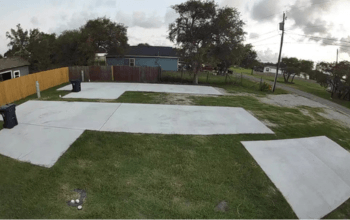
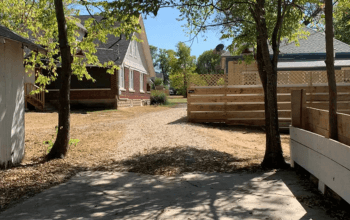
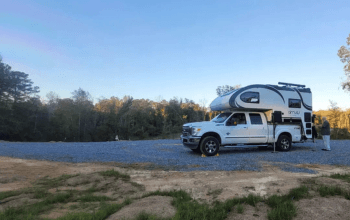
amenities, stop and ask a more useful question: who is this RV site actually for?
After looking at 200 long-term renters, more than 300 inquiries, 104 bookings, RV park pricing, private-property reviews, and real RV specifications, one thing is clear: there is no single perfect RV site.
A feature that is worth $10,000 to one renter may be less valuable than quiet, truck parking, open sky, or an easy driveway to someone else. The smartest investment is not automatically full hookups. It is the investment that solves a real customer’s problem.
Start With the Free Question: Can the RV Actually Use the Property?
Having acreage does not mean the property is ready for RV parking.
Consider a Grand Design Solitude 390RK fifth wheel. It is about 41 feet, 5 inches long and roughly 8 feet, 5 inches wide while traveling. Once parked and the slide-outs are open, it can span about 14 feet, 6 inches wide.
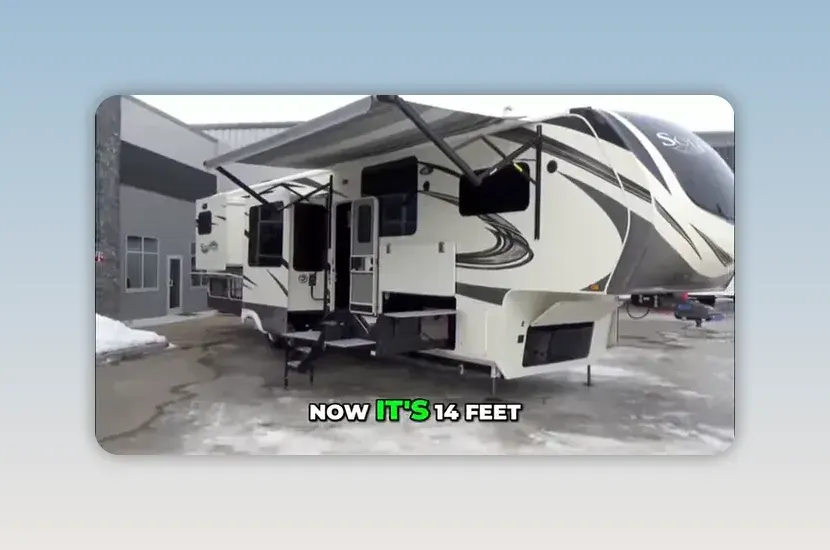
The pad needs room not only for the RV, but also for slide-outs, doors, and usable living space.
That size changes everything. One low tree branch, a narrow gate, a tight turn, soft ground, or a bad driveway can make five acres completely unusable for that renter.
Before spending money on amenities, verify that the largest RV you want to serve can:
- Get through the entrance without clearance issues
- Navigate every turn on the access route
- Reach the pad without getting stuck or damaging the site
- Park level enough for a comfortable stay
- Fully deploy slide-outs and awnings
- Leave the property without an impossible backing maneuver
This is the first and cheapest filter. If the rig cannot access, park, deploy, and exit, no amount of sewer, landscaping, or clubhouse space will fix the real issue.
Do the Math Before Investing in Sewer
Full hookups are a good product. Sewer can absolutely be worth adding. But it is also where the cost can get serious, so do the math before digging the trench.
Current cost data put a new septic system at roughly $3,600 to $12,500. That is not a small upgrade, especially for a single private RV site.
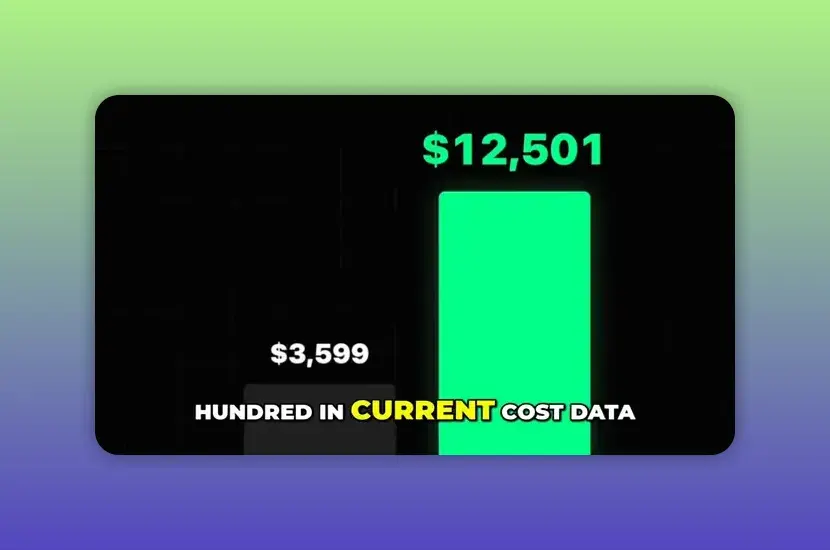
A septic investment needs a clear path to better rent, occupancy, length of stay, or reduced operating work.
Comparing water-and-electric sites with full-hookup sites at five RV parks showed that sewer added roughly 5% to 16% to the monthly price. In individual examples, the increase ranged from about $50 to $225 per month.
That does not mean sewer is a bad investment. Higher rent is only half the equation. The bigger question is whether sewer attracts enough additional renters, improves occupancy enough, or lengthens stays enough to justify the cost.
Ask yourself:
- Will this let me charge more rent?
- Will it materially increase the number of qualified inquiries?
- Will it raise occupancy?
- Will it lead to longer stays?
- Will it make the site easier to operate?
If you cannot answer what the investment will actually produce, you are not ready to spend the money.
Some Long-Term RVers Will Trade Sewer for Other Value
Long-term stays without individual sewer already happen. At the Bureau of Land Management Long-Term Visitor Areas in Arizona, seasonal permits can cover stays from September 15 through April 15. RVers use centralized water, dump facilities, and trash service rather than individual full hookups.
Public land at $180 for a season is not comparable to a private rental business. That is not the point. The point is that some people will trade individual sewer for something they value more:
- Lower monthly cost
- More privacy and space
- A convenient location
- Flexibility and autonomy
Imagine two monthly sites:
- Property A: Full hookups, RVs 15 feet apart, $850 per month
- Property B: Water and electric, dump station nearby, no adjacent RV, $650 per month
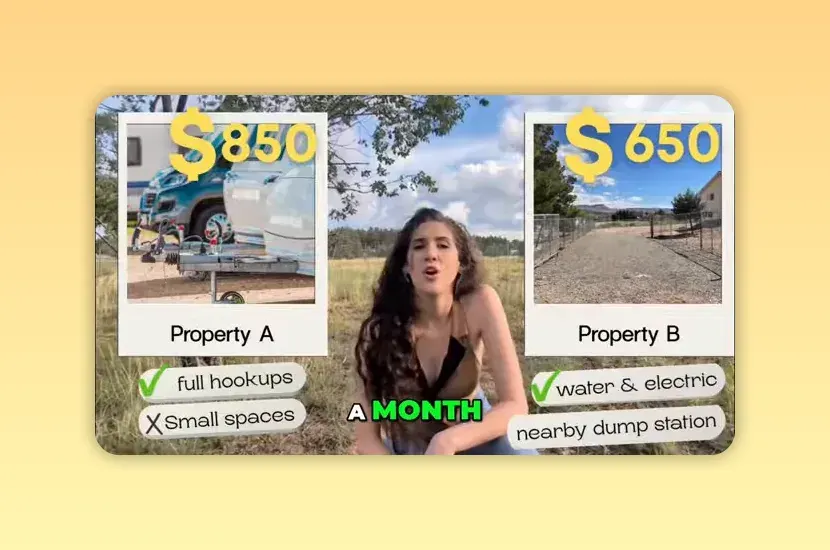
The better site depends on whether the renter prioritizes convenience or privacy and price.
A retiree who wants maximum convenience may choose Property A without hesitation. A self-contained snowbird who wants privacy and saves $200 per month may choose Property B every time.
The customer decides whether a sewer is worth more than price, space, and location. Build the simplest site that serves a real customer well, then let demand tell you what to add.
Monthly RV Stays Are Housing, Not Camping
Once someone stays for a month or three months, this stops being camping and starts becoming housing. That changes what matters.
Monthly renters do not only compare advertised rent. They compare the actual household bill:
- Monthly site rent
- Electricity charges
- Pet fees
- Parking fees
- Additional vehicle or equipment charges
- Any other recurring fees
Published monthly electric rates in the research ranged from approximately 12 to 22 cents per kilowatt-hour. So a renter is not simply comparing $600 against $700. They are calculating what it will really cost to live there.
Vehicle space also matters more than many owners realize. A fifth wheel arrives behind a truck. The fifth wheel becomes the house, and the truck becomes the car. Some parks charge $25 to $50 per month for additional vehicles or equipment.
For a traveling contractor with a truck and work trailer, a practical patch of gravel may matter more than a clubhouse ever could. Clear, honest pricing and enough parking can be a serious competitive advantage.
Internet May Matter, But Your Wi-Fi May Not
The Internet is a hard requirement for some renters. The 2025 RV owner research cited here found that 22% of RV-owner households include someone who works remotely, and 54% of those households reported that someone had worked from the RV.
But remote workers may not need host-provided Wi-Fi. They may rely on cellular data, multiple connections, or their own Starlink equipment.
Compare these two properties:
- Property A: Fast host Wi-Fi, weak cell service, and heavy tree cover
- Property B: No host Wi-Fi, strong Verizon and T-Mobile signal, and clear Starlink sky
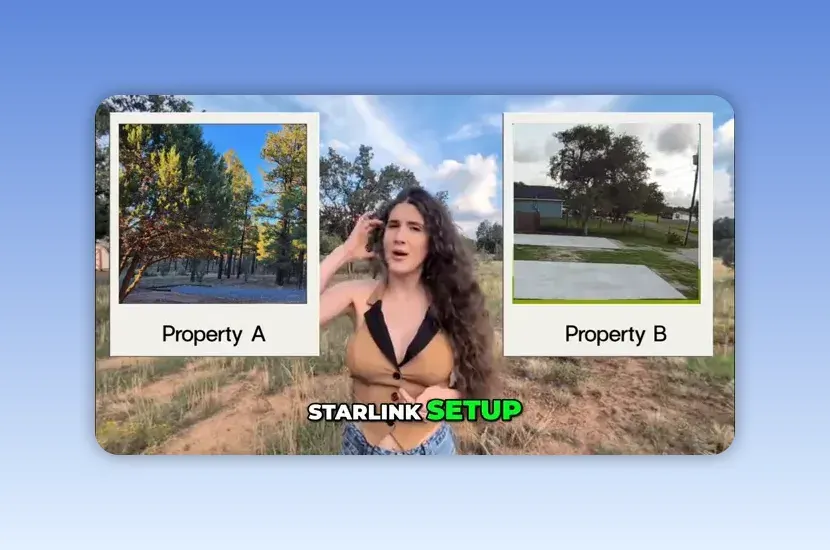
For a remote worker with personal Starlink, reliable cellular coverage and open sky can be more valuable than property Wi-Fi.
A remote worker with their own setup may prefer Property B. In that case, one of the most valuable technology amenities is literally empty sky.
Before spending thousands on outdoor Wi-Fi, test the actual pad:
- Check Verizon, T-Mobile, and other relevant cellular carriers
- Confirm signal strength where the RV will sit, not just at the road
- Check whether trees or buildings obstruct the sky
- Review Starlink availability and coverage for the location
This is cheap information before expensive construction.
Do Not Compete With Every RV Park
Private landowners can look at big RV resorts and think they cannot compete with full hookups, laundry, staff, security, bathhouses, and pools. If that is exactly what your target customer wants, you probably should not try to beat a resort at its own game.
But RV park owners can make the opposite mistake. Empty monthly sites do not automatically mean you need another amenity.
Both types of owners should ask the same question:
What do I already have that is unusually valuable to a specific customer?
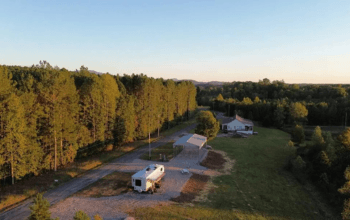
For private landowners, unused acreage may create an advantage that a dense RV resort cannot easily reproduce. The resort loses rent for every extra foot it places between customers. If you already own the land, that same space may cost you almost nothing.
Your free feature might be:
- Privacy and quiet
- Room for another truck or a work trailer
- No RV immediately beside the renter
- Flexible pet rules
- Acceptance of a well-maintained older RV
- Open sky for Starlink
- A location close to a plant, project, or job site
For an established RV park, the advantage could be reliable full hookups, package handling, laundry, security, or a stronger location. The mistake is not lacking a pool. The mistake is trying to be good at everything instead of being unusually good for one type of person.
The Simple Features Private RV Renters Actually Praise
A review sample of 38 inspectable private properties was exploratory, not universal. Still, the same language appeared repeatedly:
- Quiet appeared positively in 15 reviews
- Privacy or seclusion appeared in 14
- Easy access appeared in 11
- Helpful, responsive hosts appeared in 8
The recurring review language is practical: quiet, privacy, easy access, and responsive help.
That is not a luxury-resort brochure. It is much more practical: Can I get in? Is it quiet? Will I have space? If something breaks, will someone answer?
One small private RV property in Yuma earned repeat praise for level gravel, easy backing, working utilities, quiet, safety, space, a washer and clothesline, and helpful hosts. Not glamorous. Just dependable, comfortable, and functional.
That kind of boring confidence with elbow room is a fantastic business.
Better for Whom? Choose the Customer Before Choosing the Upgrade
Consider another comparison:
- Property A: Full hookups, pool, laundry, clubhouse, neighbors on both sides, $1,050 per month
- Property B: Water and electric, no pool, no clubhouse, one private site on the property, truck parking, $700 per month
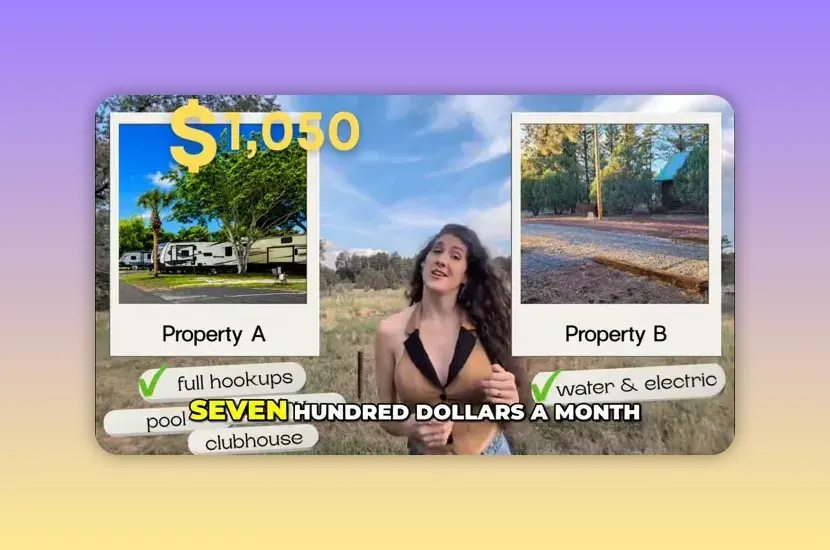
Neither property is universally better. Each is better for a different renter.
Which one is better?
That is the wrong question.
Better for whom?
A retiree looking for activities, friends, and predictable infrastructure may choose Property A every time. A contractor who needs a quiet place near a project, room for a truck, and lower monthly costs may strongly prefer Property B. A remote worker may choose based on the internet setup.
There is no single long-term RVer. In Hookhub’s demand data, the breakdown looked like this:
- 55% temporary work assignments
- 35% remote workers
- 5% relocation or temporary housing
- 5% seasonal or snowbird stays
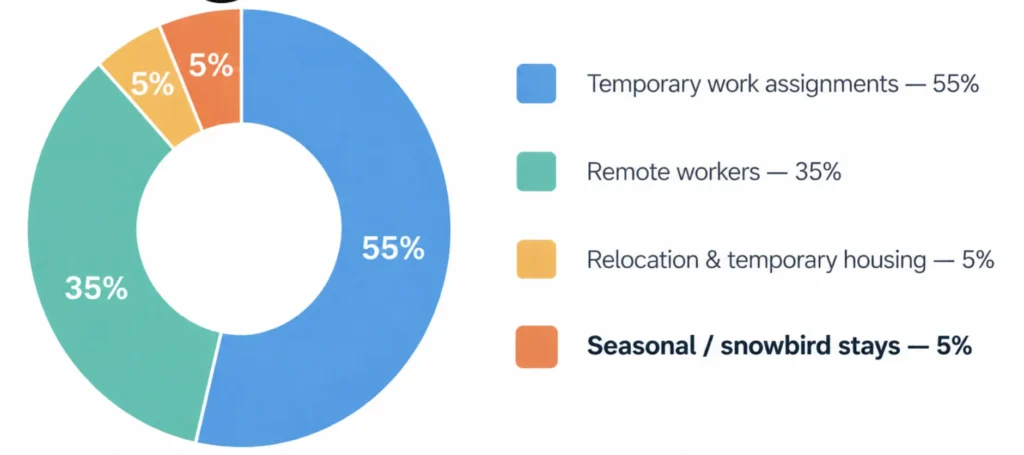
These are not four versions of the same person. A contractor, remote worker, relocating household, and snowbird are different customers with different priorities.
Start With the Simplest Site You Can Test
You do not need to predict the perfect RV site before accepting your first renter. If the property already has safe access, a usable parking area, and the basic utilities your target renter needs, start there.
List the site, see who inquires, and pay attention to what prevents otherwise qualified renters from booking. If several renters ask for 50-amp power, sewer access, better lighting, or another specific improvement, you now have real demand informing the investment.
That is a much safer way to improve a property than installing expensive infrastructure first and hoping the right customer appears later. Start with what the land already does well, validate demand, and add infrastructure when there is a clear reason to believe it will improve bookings, occupancy, rates, or operations.
The Four-Part Framework for RV Site Investments
Before spending serious money on an RV site, use this four-part framework.
1. Rig: Can the RV physically use the property?
Do not ask whether an RV fits somewhere on five acres. Ask whether it can get in, turn, park, deploy its slides, and leave safely.
2. Life: Does the property work for why the renter is there?
A contractor and a remote worker may both need a monthly stay, but their needs can be completely different. Consider the job, commute, internet, truck, pets, noise tolerance, and need for quiet.
3. Utilities: What does this customer truly require?
Identify the non-negotiables, then identify what the renter may trade for a lower price, more space, privacy, or better location. Full hookups can matter enormously, but not to every customer in the same way.
4. Economics: What will the investment actually produce?
If you spend $10,000, what changes? Higher rent? More qualified inquiries? Better occupancy? Longer stays? Less management work? If the answer is unclear, pause before building.
Build Forward, Not Backward
Sewer is not bad. Full hookups matter. And not everyone wants to live in a field.
But do not build the perfect RV site until you know whose perfect RV site you are building.
Sometimes the $10,000 upgrade is exactly the right decision. Sometimes the thing that wins the customer is something the property already has for free: quiet, privacy, room for a truck, a clear sky, flexible rules, or a location that makes daily life easier.
Start with the rig. Understand the customer’s life. Confirm the utilities they actually need. Then do the economics.
That is how you stop adding amenities blindly and start building an RV site that solves a real housing problem.
Frequently Asked Questions
Should I install a sewer at my RV site?
Possibly, but first determine whether it will increase rent, qualified demand, occupancy, stay length, or operating efficiency enough to justify the cost. Some long-term renters will accept water and electricity with nearby dumping in exchange for lower prices, privacy, or space.
How much space does a large fifth wheel need?
A Grand Design Solitude 390RK is about 41 feet, 5 inches long and 8 feet, 5 inches wide while traveling. With slide-outs open, it can reach about 14 feet, 6 inches wide. The site also needs safe access, turning room, vertical clearance, and a workable exit route.
What do long-term RV renters care about most?
It depends on the customer. Common priorities include reliable access, quiet, privacy, total monthly cost, working utilities, room for trucks or trailers, responsive hosts, cellular service, Starlink visibility, and proximity to work or other daily needs.
Is host-provided Wi-Fi necessary for a monthly RV site?
Not always. Many remote workers use cellular connections, multiple carriers, or personal Starlink equipment. Strong cell coverage and a clear view of the sky may be more valuable than property Wi-Fi for some renters.