


Hosting RVs Without Sewer Connections
Think you can’t host RVers without a direct connection to a septic or sewage system? Many renters and hosts assume a full sewer hookup is a minimum requirement, but there are practical, cost-effective alternatives that offer complete peace of mind. This guide explores three guest-approved RV waste management solutions that keep guests happy and your property hygienic.
We’ll cover everything from how to install each system to costs, pros, and cons. By the end, you’ll know the ideal solution for your RV or residential property, whether you’re a renter exploring off-grid options or a host looking to save money and maximize land income with a sustainable approach to sanitation. For more insights, check out our Hookhub guide to setting up RV-friendly land.
Watch our video for three proven RV waste solutions that keep your guests comfortable and your property clean.
Portable Toilets (Cassette / Porta-Potties / Composting / Dry Toilets)
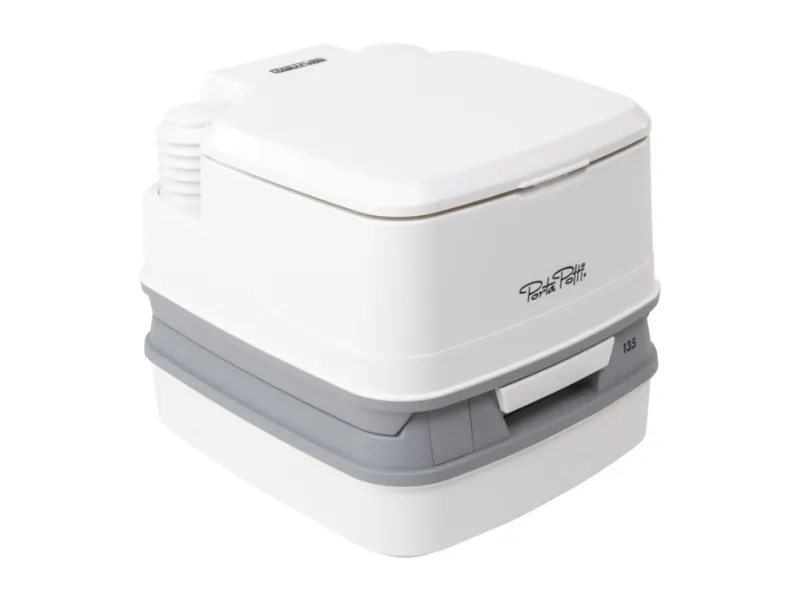
What It Is: This category covers self-contained toilet systems that store waste temporarily. They range from chemical porta-potties to advanced waterless toilets that use organic processes. This includes composting models, like those from HomeBiogas, which use natural bacteria to break down waste.
Setup / How to Use:
- Cassette / Porta-Potty: Place the unit on flat ground. Empty the holding bin at an approved dump station.
- Composting / Dry Toilets: Place in a ventilated area, sometimes requiring a small vent. Use an organic medium like peat moss and follow the manufacturer’s instructions for creating a clean and sanitary compost.
Pros:
- Portable, flexible, and often requires no electricity.
- Affordable initial investment compared to a septic install.
- Eco-friendly and sustainable options are available, contributing to a better climate.
- A great temporary solution with no plumbing required.
Cons:
- Requires you to regularly empty the unit; frequency depends on use.
- Chemical toilets can have odors if not maintained with a cleaner.
- Composting toilets require more space and management for optimal hygiene.
Tips:
- Assess your needs to choose the right model.
- Keep spare chemicals and recycling-friendly disposal bags on hand.
- A flushable model is often the ideal solution to reduce odor.
Cost Range:
- Chemical Porta-Potty: $50–$200
- Cassette Toilet: $150–$400
- Composting / Dry Toilet: $250–$600+
Solution 2: Portable Waste Tanks
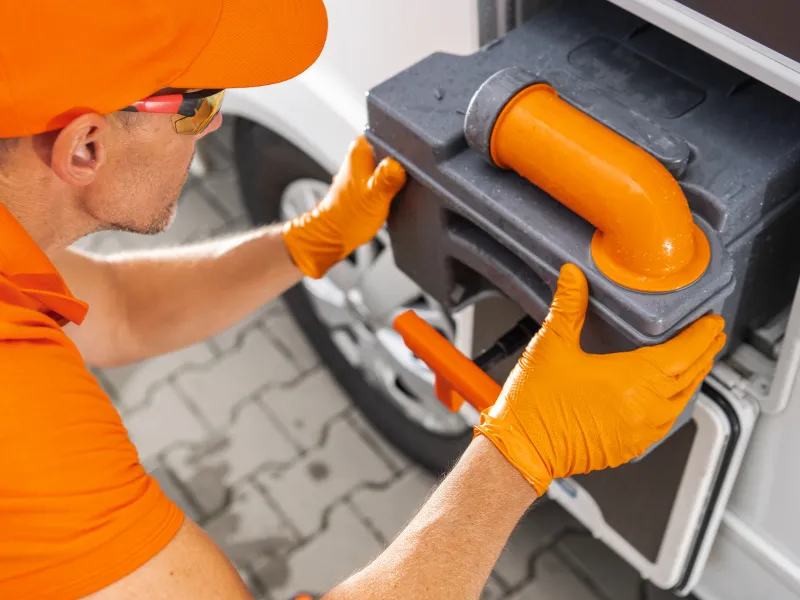
What It Is: Also known as “honey wagons,” these portable tanks store black and gray wastewater from an RV’s plumbing. They are the perfect bridge solution when a permanent sewer connection isn’t a possibility, allowing you to effectively manage waste on-site before transport.
Setup / How to Use:
- Connect the RV sewer outlet and trap to the tank’s intake valve.
- Secure all connections to create a hygienic, spill-proof system.
- Transport to an approved dump station to empty the sewage.
Pros:
- A reliable way to handle the full wastewater output of a trailer or RV.
- Reduces dependency on permanent sewer lines.
- Easy to transport, especially models with wheels.
Cons:
- Limited capacity requires frequent emptying for long-term guests.
- It can be very heavy when full.
Tips:
- Choose a tank with wheels for easier transport.
- Always flush hoses after emptying to keep the equipment clean.
- Label tanks clearly to avoid cross-contamination and maintain sanitation standards.
Cost Range: $80–$250
Solution 3: Mobile Pump-Out Services / Professional Waste Disposal
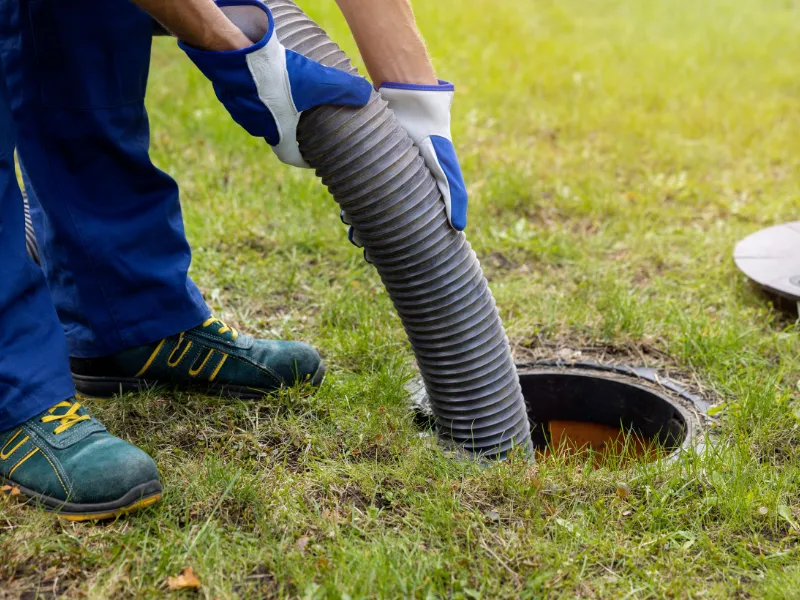
What It Is: A professional waste management service comes directly to your location to empty your RV’s black and gray water tanks. This is the ideal solution for hosts seeking a hands-off, convenient, and sanitary option, similar to services used by a hotel or restaurant.
Setup / How to Use:
- Schedule a service visit via phone or an app.
- Provide clear access to the RV’s tanks.
- A technician pumps the wastewater into a truck for safe, professional disposal, ensuring compliance with local health code.
Pros:
- Ultimate hands-off convenience and peace of mind.
- Ensures safe, hygienic, and professional disposal.
- Reduces odor and mess, providing a cleaner experience for everyone.
- Effectively handles multiple RVs or long-term hosting situations.
Cons:
- A recurring cost, though it can be a wise investment.
- Requires advance scheduling.
- Availability may be limited in remote areas.
Tips:
- Partner with local services for better rates on long-term hosting.
- Schedule visits at a regular frequency to maintain high hygiene standards.
- Keep service records for property management.
Cost Range: $50–$100 per visit. (Partner with Hookhub, and in select areas, we can get you our special price of just $30 per visit to help you save money!)

Side-by-Side Comparison
| Solution | Cost Range | Convenience | Maintenance | Guest Approval | Setup Difficulty |
| Portable Toilets | $50–$600 | Medium | High | Medium–High | Low |
| Portable Waste Tanks | $80–$250 | Medium–High | Medium | High | Medium |
| Mobile Pump-Out | $50–$100 per visit | High | Low | Very High | Low |
Choosing the right waste management system depends on your goals, guest expectations, and property setup.
- Short-term stays / Single RV: Portable toilets or waste tanks are an efficient and cost-effective choice.
- Long-term hosting / Multiple RVs: Mobile pump-out services are a reliable investment for maintaining a clean and professional site.
- Eco-conscious / Off-Grid Setups: Composting or other waterless toilets are the pinnacle of sustainability, reducing your carbon footprint.
At Hookhub, we help hosts of all sizes, from single residential lots to large-scale farms, set up RV-friendly properties. By offering flexible sanitation solutions, you can maximize your income potential and provide a stress-free, hygienic experience for every guest in your bathroom or restroom facility.
💡 Learn more about long-term RV hosting and start earning today!