
The RV industry is booming, with more people hitting the road. This means there’s a growing need for RV parks. If you’re thinking about getting into this market, starting an RV park needs careful planning and research. It’s crucial to pick the right spot and do a deep market analysis before buying land for an RV park business.
After buying land, you must check local laws and zoning rules to build an RV park. This ensures that land is okay for commercial use. We’ll walk you through it, from finding the best acre of land to opening your business.
How to Buy Land for RV Park Development
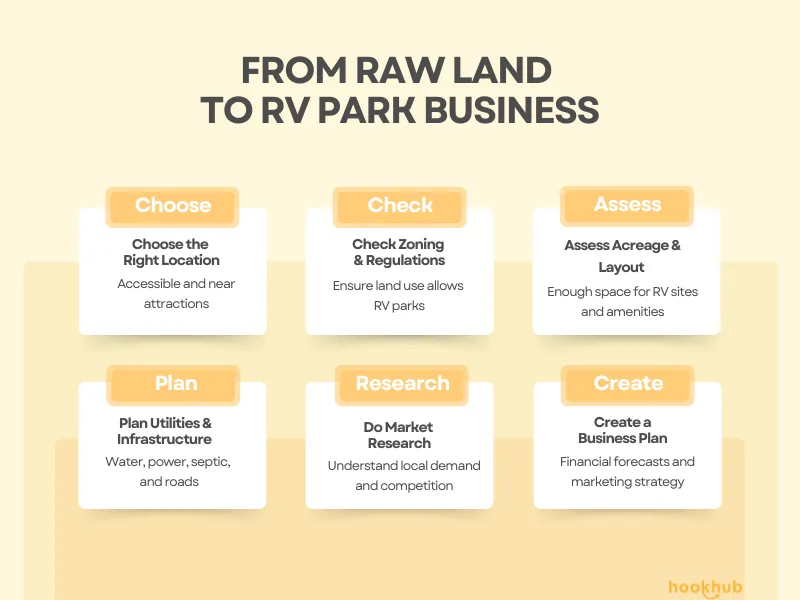
Finding the right land is key to a successful RV park. Several important factors come into play when buying land for an RV park.
Strategic Location Considerations
The location of your RV park is crucial. It should be close to popular attractions to attract visitors. Being near national parks or scenic areas is a big plus.
Also, the land should be easy to get to. It should be close to major highways or roads.
Here are some key location factors:
| Location Factor | Importance | Example |
| Proximity to Attractions | High | Near national parks or tourist spots |
| Accessibility | High | Close to major highways |
| Zoning Regulations | High | Compliance with local land-use laws |
Determining Optimal Acreage Requirements
The land needed for an RV park varies. A bigger area can have more sites and amenities. We must balance land cost and potential revenue.
For a basic RV park, start with 5 to 10 acres. This can grow based on your plan.
Here’s a simple guide:
- Small RV park: 1-10 acres
- Medium RV park: 10-20 acres
- Large RV park: 20+ acres
Evaluating Land Costs and Investment Potential
Land cost is a big factor. We must consider the purchase price and development costs. Starting an RV park needs a solid financial plan.
To assess the investment, look at these costs:
| Cost Factor | Description | Estimated Cost |
| Land Purchase | Initial cost of buying the land | $100,000 – $500,000+ |
| Land Preparation | Costs for clearing, grading, etc. | $50,000 – $200,000 |
| Utility Installation | Costs for installing water, electric, etc. | $10,000 – $300,000 |
By carefully considering these factors, we can make an informed decision. This sets the stage for a successful RV park business.
Navigating Zoning and Permit Requirements
Before starting your RV park, you must deal with zoning and permits. It can be tough, but with the right help, you can start strong. We’re here to guide you through it. If you’re exploring land-use laws, our post on parking an RV on private land can help clarify rules and restrictions.
Understanding Local Zoning Regulations
Zoning laws differ a lot from place to place. It’s important to know the rules for RV parks in your area. Start by talking to local planning officials. This can save you from unexpected costs later.
Key Considerations for Zoning Regulations:
- Minimum acreage requirements
- Setback requirements from neighboring properties
- Environmental restrictions
- Density and usage limitations
Knowing these factors helps you see if your site is right for an RV park. You might need a zoning variance or special permit.
For a complete overview of zoning classification and RV park permitting, check out this guide from RoverPass.
Securing Necessary Permits and Approvals
After checking zoning, get the needed permits and approvals. This step involves many agencies.
Break it down into smaller tasks:
- Submit a preliminary application to find out what permits you need.
- Prepare detailed plans and documents for local authorities.
- Go to public hearings or meetings as needed.
- Deal with any concerns or conditions from regulators.
Let’s look at a simple example of the permit process:
| Permit Type | Description | Typical Requirements |
| Zoning Permit | Ensures compliance with local zoning laws | Site plan, land survey |
| Building Permit | Required for construction of facilities | Detailed construction plans, engineering reports |
| Environmental Permit | Addresses environmental impact concerns | Environmental assessment, mitigation plans |
By carefully going through zoning and permits, you set a strong base for your RV park. Remember, following the rules is crucial for a smooth start and success.
Developing Your RV Park Infrastructure
Creating a well-planned RV park infrastructure is key for a great guest experience. A solid infrastructure makes your park comfortable and enjoyable. It also helps your RV park succeed and be profitable in the long run.
Installing Essential Utilities and Septic Systems
Installing utilities and septic systems is crucial for your RV park. You need reliable water, electricity, and sewage disposal. A good septic system is vital for your guests’ health and safety. Always consult experts to find the best septic system for your park.
When planning utilities, check our guide on understanding RV park hookups for detailed setup requirements.
For more tips on building the perfect RV park, see our guide on designing the perfect RV park.
Creating RV Sites and Amenities
Designing RV sites that are both useful and attractive is essential. You need to ensure there’s enough space for RVs and provide amenities like laundry and pools.
Think about what your guests want when planning your sites and amenities.
- Provide enough parking and space for RVs to move around.
- Include must-haves like laundry and pools.
- Add recreational areas and activities to make the stay better.
Optimizing Your Park Layout for Profitability
Optimizing your RV park layout is vital for high occupancy and revenue. Plan your layout to fit different RV sizes and types. Make sure guests can easily get to amenities and services. A well-planned layout makes your business more efficient and profitable.
When optimizing your layout, consider these points:
- Fit as many RV sites as possible while keeping it safe and comfy.
- Place amenities and services where they’re most useful to guests.
- Make sure utilities and septic systems are easy to access.
Planning Your RV Park Business
Starting an RV park business needs careful planning and knowing your target market well. We must consider several factors for success. For a deeper dive into the pros and cons of managing this type of business, see our guide on owning an RV park.
Market Research and Target Customer Analysis

Doing thorough market research is key to understanding success potential. This means looking at other RV parks, their occupancy rates, and who they serve. Knowing our target customer helps us offer what they want.
“The RV industry is booming, and starting an RV park can be very profitable,” an expert notes. “But, it’s vital to know your market and plan your business to meet their needs.”
To structure your feasibility study based on tourism trends, see the Campground Consulting Group’s market research guide.
To do good market research, we should:
- Look at the competition and find market gaps
- Learn about RV travelers’ demographics and likes
- Check the local economy and tourism trends
Creating a Comprehensive Business Plan
A detailed business plan is crucial for guiding our investment and ensuring our RV park’s long-term success. It should cover financial forecasts, marketing strategies, and how we’ll operate.
Our business plan should include:
- Executive summary: A quick overview of our business and goals
- Market analysis: A deep dive into our target market and competition
- Financial projections: Detailed financial forecasts, including income and costs
- Marketing strategy: A plan to draw in and keep customers
By following these steps and making a detailed business plan, we can make our RV park business successful. This will also help us attract investors.
Conclusion
We’ve looked at the key steps to buy land for an RV park and start a business. Doing market research and making a detailed business plan helps us succeed.
Choosing the right location and understanding land costs are vital. As we build our RV park, we need to make smart choices. This will help us draw in campers and grow our business.
The RV park industry is full of chances for those ready to work hard. With good planning and hard work, we can meet the growing need for RV parks. This way, we can build a successful and profitable business.
Key Takeaways
- Research local zoning laws and regulations for RV parks.
- Conduct thorough market analysis to understand demand.
- Choose a location that is accessible and appealing to RV travelers.
- Plan for necessary amenities and services.
- Understand the financial investments required to start and maintain an RV park.
FAQs
What are the key factors to consider when buying land for an RV park?
When looking for land for an RV park, we think about a few key things. We look at the location, how big the land is, and if it follows local rules. We also check if the land can be developed well, including its shape and the environment.
How do I determine the optimal acreage for my RV park?
To figure out the best size for our RV park, we think about a few things. We consider how many RV spots we want and what extras we’ll have, like a pool. We also think about the utilities and hookups needed.
What are the typical costs associated with developing an RV park?
Developing an RV park costs money. We have to buy the land, get it ready, and install utilities. We also need to build amenities and deal with ongoing costs like upkeep and marketing.
How do I navigate zoning and permit requirements for my RV park?
To deal with zoning and permits, we do some research and talk to local officials. We make sure we follow the rules and prepare all the necessary paperwork.
What amenities and services can I offer to enhance the guest experience at my RV park?
To make our RV park better for guests, we offer Wi-Fi, laundry, and fun activities. We also provide RV rentals and tours. Working with local businesses can give guests discounts and promotions.
How can I optimize my RV park’s layout for profitability?
To make our RV park more profitable, we think about how to arrange the sites and amenities. We want a welcoming place that makes guests want to stay longer and come back.
What are the benefits of investing in an RV park, and how can I maximize my returns?
Investing in an RV park can bring in steady income and good returns. To get the most, we focus on a great guest experience, keeping the park full, and always looking to improve.
How do I manage and maintain my RV park to ensure long-term success?
To keep our RV park successful, we have a detailed maintenance plan. We check and fix things regularly and listen to what guests say. Staying updated with the latest in the industry helps us stay ahead.