Quick Answers
- Lake Havasu State Park has 53 campsites with 50-amp electrical hookups and water at $35-$40 per night, including beachfront sites on the Colorado River with shade ramadas and fire rings
- London Bridge, the 1831 English bridge rebuilt stone by stone in Lake Havasu City in 1968, is a 10-minute walk from the state park campground
- Lake Havasu City has over 1,500 commercial RV sites across multiple resorts, including Crazy Horse Campgrounds (648 sites with jet ski and boat rentals) and Campbell Cove RV Resort (124 full-hookup sites)
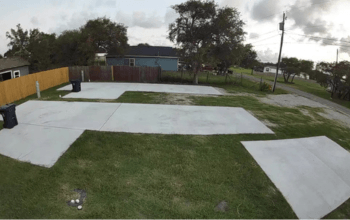
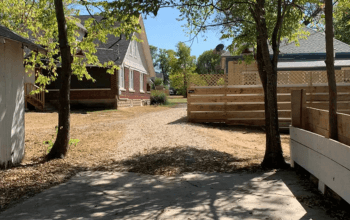
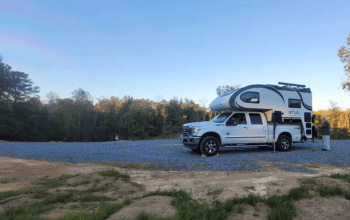
- Havasu Getaways in Parker is on Hookhub, approximately 30 miles south on the Colorado River corridor
- The park reaches capacity most summer weekends and closes its gates on holiday weekends once full, so winter and spring are the practical seasons for RV camping without advance planning stress
Most Arizona destinations ask you to take a look. Lake Havasu asks you to get in the water.
The Colorado River corridor at Lake Havasu City is the water sports capital of Arizona, a stretch of warm, calm river water between Arizona and California that supports boating, water skiing, jet skiing, fishing, scuba diving, and kayaking, in a city literally built around a relocated English bridge. The combination of year-round sunshine at 480 feet elevation, a full commercial resort infrastructure, and direct river access from multiple state parks and marinas makes Lake Havasu the most developed water recreation destination in the entire western Arizona corridor.
For RV travelers, Lake Havasu’s camping infrastructure is as extensive as its water access. The challenge is not finding a site. It’s finding one that isn’t already booked, particularly during winter snowbird season and summer holiday weekends when the city’s population effectively doubles.
What Is Lake Havasu?
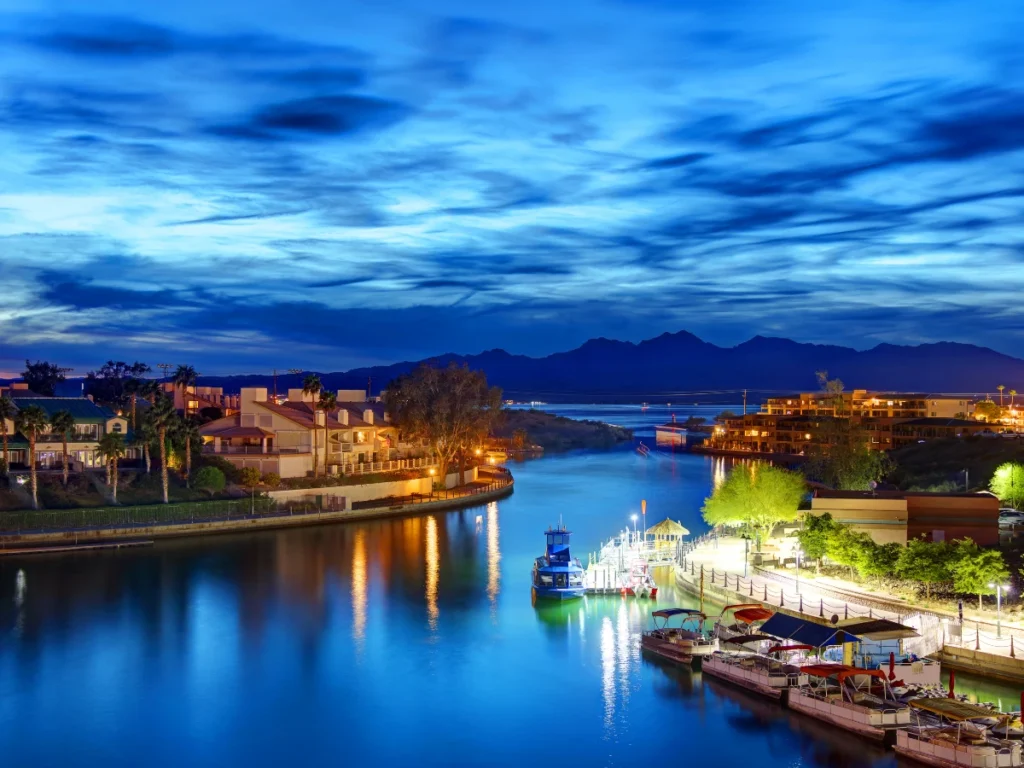
Lake Havasu is a reservoir on the Colorado River formed by Parker Dam, approximately 200 miles northwest of Phoenix on the Arizona-California border. The lake stretches roughly 45 miles along the river corridor, with Lake Havasu City on the Arizona side and Havasu Landing on the California side. The lake’s calm, warm water and its position in the Mojave Desert climate zone produce conditions that support water recreation virtually year-round.
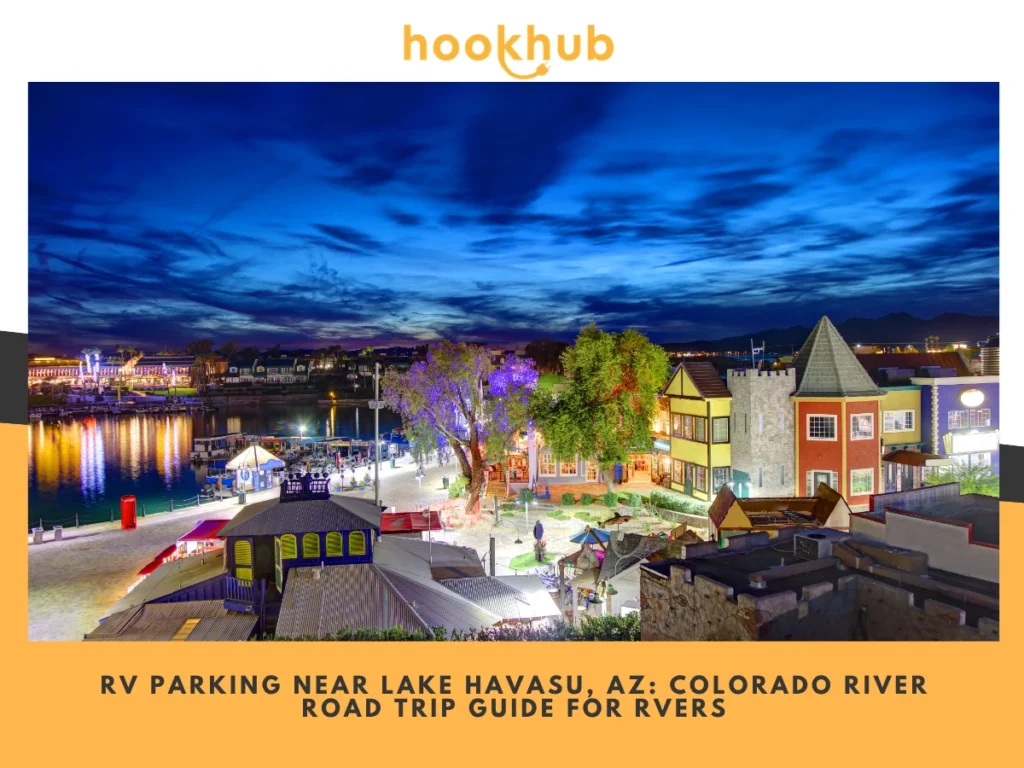
The London Bridge is the city’s most recognizable landmark. Robert P. McCulloch, the city’s founder, purchased the bridge from the City of London in 1968 and had it dismantled, shipped to Arizona, and reassembled stone by stone across a channel of the Colorado River. The bridge connects the mainland to a manufactured island that houses restaurants, shops, and the English Village tourist district. Whatever you think of the concept, the bridge itself is genuine, and walking across a structure that once spanned the Thames, with the Mojave Desert on both sides, is one of the more surreal experiences on any Arizona road trip.
The surrounding landscape is classic Mojave Desert at the Arizona border, with rocky mountains, sparse creosote scrub, and temperatures that push past 110 degrees in summer. The contrast between the arid desert terrain and the blue Colorado River water cutting through it gives the entire Lake Havasu corridor a visual drama that photographs don’t fully capture.
What Can You Do at Lake Havasu?
Water sports: Lake Havasu City exists because of the water, and the infrastructure reflects it. Jet ski and boat rentals are available from multiple operators along the waterfront, with Crazy Horse Campgrounds and other resort properties offering rentals directly to overnight guests. Water skiing, wakeboarding, and tubing are standard on the main lake. Kayaking and paddleboarding work best in the calmer morning hours before the afternoon boat traffic picks up. Fishing for largemouth bass, striped bass, and catfish is productive along the river channel and near rocky shoreline structure.
London Bridge and the Island: The English Village surrounding London Bridge has restaurants, shops, and a waterfront promenade that fills on winter evenings and spring weekends. The Mohave Sunset Trail runs along the waterfront, providing a walking and cycling connection between the bridge area and the state park to the south. Boat tours depart from the bridge area and run upriver through the narrow canyon sections of the Colorado River.
Lake Havasu State Park: The park’s beaches, nature trails, and boat ramps are located along the shoreline south of London Bridge, offering the most direct combination of beachfront camping and Colorado River access in the city. The Campbell Cove area of the park is the most popular beach and picnic section, with shallow water access suited for families and a boat ramp for launching personal watercraft.
Wildlife refuges: The Bill Williams River empties into the Colorado River at the southern end of Lake Havasu, and the landscape surrounding that confluence is protected within the Bill Williams River National Wildlife Refuge, a 37,515-acre preserve established in 1941 that offers kayaking through cottonwood-lined river channels and some of the best migratory bird habitat in western Arizona. The Havasu National Wildlife Refuge, farther north along the lower Colorado River, adds additional birding and desert hiking access. Both refuges are within day-trip distance of any Lake Havasu City base camp and provide a genuine contrast to the motorboat activity on the main lake.
Off-road riding: The desert surrounding Lake Havasu City has an extensive network of OHV trails, including access to the Arizona Peace Trail and surrounding sand dunes. The terrain ranges from packed desert floor to technical rocky washes, and several Lake Havasu RV parks cater specifically to the off-road community with staging areas and wash stations.
Annual events: Lake Havasu City hosts events throughout the year, with the London Bridge Days celebration, Festival of Lights, Winterfest, and the Relics and Rods Classic Car Show drawing visitors from across the Southwest. Regattas and off-road racing events fill the calendar on additional weekends. Check the city events calendar before booking, as these events fill every RV park in the corridor.
When Is the Best Time to Visit?
Winter (November through March) is peak season at Lake Havasu, not summer. The snowbird population from the Midwest and Pacific Northwest fills the RV parks from November through April, and the mild winter temperatures in the 60s and 70s make every outdoor activity comfortable. The water temperature drops enough to limit swimming, but boating, fishing, kayaking, and hiking are all at their best during this window.
Spring (March through May) is the shoulder season and arguably the most balanced time to visit. The water warms enough for swimming by late March, the winter snowbird population begins thinning, and the commercial RV parks transition from fully booked to partially available on weekdays.
Summer (June through September) is extreme. Temperatures consistently exceed 110 degrees from June through August, and the only comfortable activity is being on or in the water. The state park reaches capacity most summer weekends and closes its gates on holiday weekends once all sites are occupied. RV travelers who visit in summer need shore power for air conditioning, early morning activity schedules, and a commitment to water-based recreation during the midday heat.
Fall (September through October) brings temperatures back into the 90s, the summer boat traffic drops, and the lakes take on a quieter character that the peak season doesn’t offer.
Why Many RV Travelers Spend a Week or Longer at Lake Havasu
Although Lake Havasu is famous for weekend boating trips, many RV travelers discover that the area is better experienced over several days. Between the lake itself, the Colorado River, London Bridge, wildlife refuges, desert trails, and nearby Parker, there is enough variety to build an entire week of activities without feeling rushed.
The area is especially popular with retirees, snowbirds, anglers, and full-time RV travelers who prefer staying in one location instead of moving between campgrounds every few days. Establishing a base camp allows visitors to spend mornings on the water, explore the surrounding desert during the cooler hours, and enjoy the restaurants, shops, and waterfront without constantly relocating the RV.
Where to Park Your RV Near Lake Havasu
Lake Havasu State Park Campground
The state park campground has 53 sites, all with 50-amp electrical hookups and water access at individual sites. Standard sites are $35 per night, and beachfront sites are $40. Thirteen cabins with heating and air conditioning are also available for travelers who don’t have a rig. Every site includes a picnic table and fire ring, and most have shade ramadas. The campground has clean restrooms with showers, a dump station, and access to the park’s day-use beaches and boat ramps. The camping fee covers shower and restroom use, the dump station, and day-use park facilities.
The campground is a 10-minute walk from London Bridge and the English Village. This proximity is the state park’s specific advantage over the commercial RV parks farther north on Highway 95. No other campground in the Lake Havasu corridor puts you within walking distance of both the beach and the bridge.
Reserve through Arizona State Parks. Peak season (November through April) and all holiday weekends fill well in advance. Summer weekends fill, and the park closes its gates once capacity is reached.
Cattail Cove State Park
Cattail Cove sits approximately 15 miles south of Lake Havasu City on the Colorado River with 61 campsites, electric and water hookups, 30/50-amp service, and a boat ramp. The setting is more remote and less developed than the Lake Havasu State Park campground, offering a quieter alternative for travelers who prefer a desert lakeside experience without the commercial resort atmosphere of the city.
Commercial RV Parks in Lake Havasu City
Lake Havasu City has one of the densest concentrations of commercial RV parks in Arizona, reflecting both the winter snowbird market and the summer water sports crowd. A few of the largest options:
Crazy Horse Campgrounds on Beachcomber Boulevard has 648 sites accommodating both tents and RVs, with direct lake access, beachfront sites, on-site boat and jet ski rentals, and year-round operation. It is the most full-service waterfront campground in the city, with a blend of rustic tent sites and modern full-hookup RV pads.
Campbell Cove RV Resort on Industrial Boulevard has 124 full-hookup sites, accepts rigs up to 50 feet, and operates year-round. RVs only, no tents.
Islander RV Resort on Beachcomber Boulevard has 500 sites, RVs only, year-round, with rigs up to 45 feet accommodated. One of the largest single-property RV resorts in western Arizona.
Havasu RV Resort on London Bridge Road is another full-hookup option positioned on the main road leading to the bridge and the state park.
Most commercial parks in the Lake Havasu corridor require reservations during the winter season and offer monthly rates for long-term stays. Good Sam, Coast to Coast, and other RV club affiliations apply at several properties for member discounts.
Havasu Getaways, Parker via Hookhub
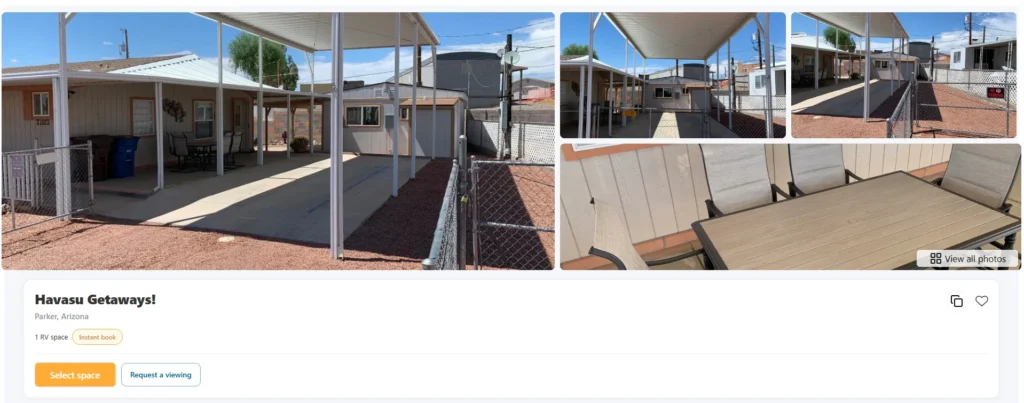
Havasu Getaways in Parker is listed on Hookhub, which produced this guide. Parker sits approximately 30 miles south of Lake Havasu City on the Colorado River corridor, connected by Highway 95 along the river. The listing offers a private land alternative to the Lake Havasu commercial RV park corridor at a lower price point, with full Colorado River recreation access, as in the Parker Strip section of the river.
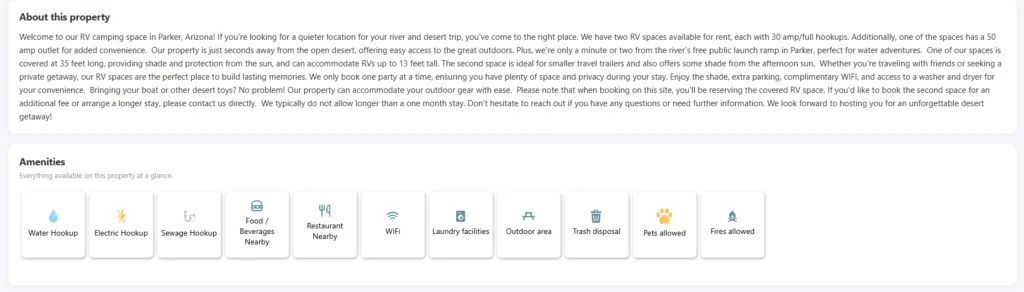
Parker’s positioning on the river means that jet ski and boat access is available from multiple launch points along the Parker Strip, without competing for the higher-traffic Lake Havasu City waterways. For travelers who want Colorado River water recreation without the commercial intensity of Lake Havasu City’s resort corridor, Parker provides that at a lower nightly rate and with a quieter atmosphere.
Search current Parker private RV parking for Havasu Getaways availability.
What Most RV Travelers Get Wrong About Lake Havasu
Many first-time visitors assume every campground in the Lake Havasu area offers direct waterfront access. In reality, some RV parks are several miles from the shoreline, making it worth deciding whether lake access or resort amenities are the higher priority before booking.
Another common mistake is underestimating summer conditions. Afternoon temperatures regularly exceed 110 degrees, and experienced RV travelers plan boating, fishing, kayaking, and hiking for the early morning while reserving the hottest part of the day for swimming or relaxing in air-conditioned spaces.
Finally, many visitors focus only on Lake Havasu City and overlook nearby Parker. While Lake Havasu offers the largest concentration of restaurants, marinas, and waterfront attractions, Parker provides a quieter Colorado River experience with convenient access to boating, fishing, and water recreation. Many RV travelers choose Parker as a lower-cost base camp and make easy day trips north to Lake Havasu City.
Practical Trip Planning
Fuel and groceries: Lake Havasu City has a full commercial corridor along Highway 95 with grocery stores, fuel stations, hardware, and all major chain services. Parker, 30 miles south, has more limited but adequate commercial options. Fill up in Lake Havasu City before heading to either state park.
Getting there: From Kingman (60 miles): Highway 93 South to I-40 West, then Highway 95 South to Lake Havasu City. From Phoenix (200 miles): I-10 West to Highway 95 North through Parker and up the river corridor. From Golden Valley: Highway 95 South, approximately 65 miles.
Dump station: Available inside Lake Havasu State Park campground for registered campers. Cattail Cove also has access to a dump station. Most commercial RV parks offer dump stations for registered guests.
Cell coverage: Good throughout Lake Havasu City and the commercial corridor. Coverage thins in the wildlife refuge areas and on the California side of the river.
Boat launch: Multiple public and private boat ramps are available throughout the Lake Havasu corridor. The state park has its own launch ramp. Check current launch conditions, as water levels on the Colorado River reservoir can affect ramp accessibility.
FAQ
When does Lake Havasu State Park fill up?
The state park campground fills on most summer weekends and closes its gates entirely on major holiday weekends (Memorial Day, Fourth of July, Labor Day) once all 53 sites are occupied. Winter season, from November through April, is the busiest sustained period as snowbird RV travelers fill the campground for extended stays. Reserve through Arizona State Parks as far in advance as the booking window allows for any visit during peak season. Weekday stays from September through November are the most consistently available.
Is Lake Havasu too hot for RV camping in summer?
Temperatures exceed 110 degrees Fahrenheit from June through August, and the open desert surrounding the lake offers no shade. Summer camping at Lake Havasu is viable only with a rig that can run air conditioning on shore power. The 50-amp hookups at the state park campground and the full hookups at commercial RV parks make this possible, but be prepared for electricity costs at commercial parks and arrive with all the water your rig needs. The water itself is warm and swimmable all summer, making on-the-water activity the practical approach to summer days. Stay off the land from 10 am to 4 pm and plan all non-water activities for early morning or evening.
What is the difference between Lake Havasu State Park and Cattail Cove State Park?
Both are Arizona State Parks on the Colorado River corridor. Lake Havasu State Park sits within Lake Havasu City limits, a 10-minute walk from London Bridge, with 53 sites, 50-amp hookups, beachfront access, and full proximity to the city’s restaurants, shops, and boat rental infrastructure. Cattail Cove, 15 miles south, has 61 sites with electric and water hookups in a more remote desert lakeside setting, away from the commercial corridor. Cattail Cove is the better choice for travelers who want the Colorado River without the city. Lake Havasu State Park is the better choice for travelers who want the city within walking distance of their campsite.
Ready to plan your Lake Havasu trip?
For a quieter Colorado River base at a lower price point, you can browse available private RV parking near Parker on the river corridor and check what fits your dates and rig.