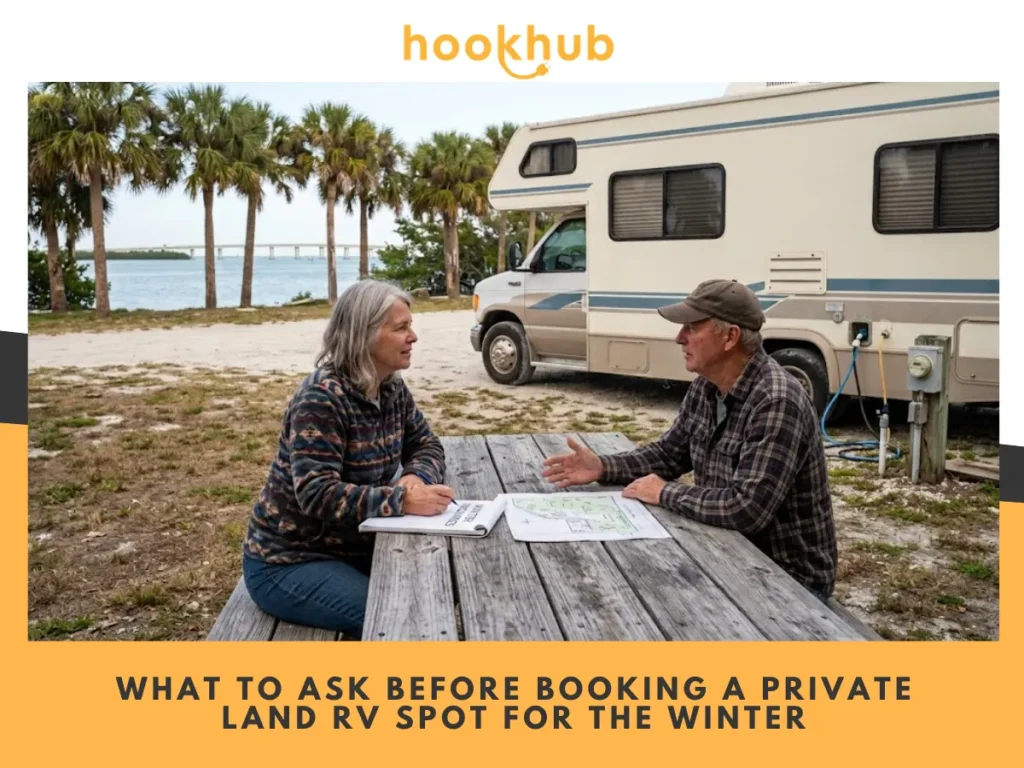
Booking an RV spot for one night is relatively simple. Booking somewhere you plan to call home for several weeks or an entire winter season deserves a little more thought.
A site can look perfect in photos and still create problems if your RV does not fit comfortably, the electric service cannot support your setup, or the cancellation policy is stricter than you expected. Even small details, such as where to park a tow vehicle or what time you can arrive, become more important during a long-term stay.
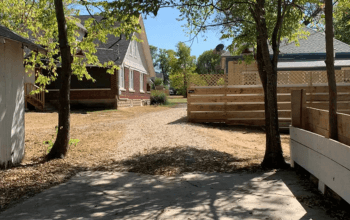
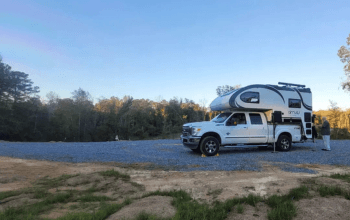
Private land RV parking can give travelers more flexibility than a traditional campground or large RV resort, but individual properties also vary considerably. One host may offer a full-hookup RV site with clearly defined arrival procedures. Another may provide a simpler space with electric access and fewer on-site amenities.
Neither is automatically better. What matters is knowing exactly what you are reserving before you arrive.
These eight questions can help you compare private RV spots, understand the rules, and book a winter stay with fewer surprises.
1. What Is Actually Included in the RV Site Fee?
The advertised rate is the starting point, not always the final cost.
Before you reserve an RV space, ask exactly what your fee includes. Electric, water, sewer, trash service, Wi-Fi, and other amenities may be included in the monthly rate, charged separately, or unavailable altogether.
Electricity deserves particular attention during a winter stay.
Some properties include reasonable electric usage in the site fee, while others may meter long-term guests separately. Your actual consumption can depend on the climate, your RV, and how you heat the space. An electric space heater running throughout a cold night can change your usage considerably.
The same principle applies to water and sewer.
A listing that says “hookups available” does not necessarily mean full hookups. Confirm whether the site provides electric only, water and electric, or individual water, electric, and sewer connections.
Ask about additional fees too.
Are there charges for pets, extra vehicles, additional guests, or trash removal?
Is there a security deposit?
Are there taxes or booking fees added to the advertised price?
You do not need every RV site to include every amenity. You simply need to understand what you are paying for before you make the reservation.
2. Is There a Winter, Monthly, or Long-Term Rate?
If you plan to stay for several weeks or months, ask whether the host offers pricing specifically for extended stays.
A nightly rate multiplied by 30 is not always the same as the monthly rate.
Some hosts may prefer longer reservations because they mean fewer arrivals, departures, and turnovers throughout the winter season. Others may set minimum stay requirements during peak periods or holidays when availability is limited.
Ask before you book rather than assuming a discount applies.
If a long-term rate is available, clarify exactly what it covers. A lower monthly price may come with different cancellation terms, utility arrangements, or minimum-stay requirements than an overnight reservation.
You should also confirm whether your reservation guarantees the same RV site for the entire stay. Moving a motorhome or trailer midway through a winter booking is probably not the adventure most RV travelers have in mind.
Understanding the full arrangement before you reserve makes it easier to compare one property with another based on actual cost rather than the advertised nightly fee.
3. Can the Site and Hookups Actually Handle Your RV?
A space being available does not automatically mean your RV will fit.
Before booking, give the host the total length and type of your rig. That includes your motorhome, travel trailer, or fifth wheel, along with any tow vehicle, truck, or additional trailer you plan to bring.
Then ask for the site’s maximum length in feet.
Do not focus only on the parking space itself. Ask about the route into the property, gate width, overhead clearance, turning radius, road surface, and whether you will need to back into the site.
Private properties are not always laid out like commercial campgrounds. A 40-foot RV may technically fit once parked but still struggle to make the final turn into the space.
The same level of detail should apply to electric service.
Ask whether the connection is 30 amp or 50 amp and whether you need an adapter. If the site offers water, confirm whether it remains available during freezing weather. If sewer is included, ask whether your RV can reach the connection comfortably from its parked position.
If you are booking for winter, ask whether there are any seasonal restrictions or preparations you need to make yourself.
The goal is simple: your RV, your vehicles, and the site’s utilities should all work together before you tow anything toward the property.
4. What Is the Cancellation and Refund Policy?
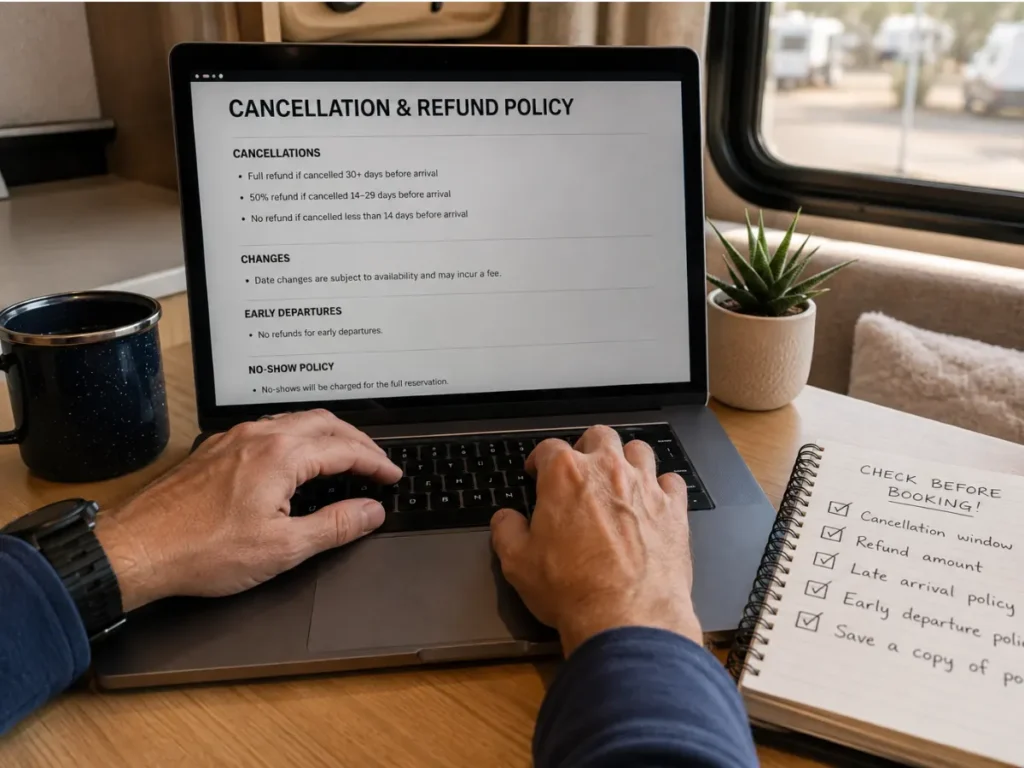
Cancellation policies matter more when you are booking months in advance.
Winter travel plans can change because of weather, road conditions, vehicle problems, family needs, or other circumstances outside your control. Before you confirm a reservation, understand what happens if you need to cancel or change your dates.
Ask how far in advance you need to cancel to receive a full or partial refund.
If you are booking a long-term stay, find out whether the cancellation policy changes based on the length of the reservation. A one-night booking may have very different terms from a 14-day, monthly, or seasonal stay.
You should also ask what happens if you arrive late.
Does your reservation remain active?
Do you need to contact the owner or host?
Is there a point at which a missed arrival could be treated as a no-show?
The same applies if you need to leave early.
A clear cancellation policy does not guarantee that your plans will never change. It simply means you know the financial consequences before they do.
Save a copy of the policy with your reservation details so you can refer to it later if necessary.
5. What Are the Pet and Guest Policies?
Never assume a property is pet friendly simply because it has plenty of outdoor space.
If you are traveling with a dog, cat, or another pet, confirm the host’s policy before booking. Ask whether there are limits on the number of pets, leash requirements, designated pet areas, or other restrictions that apply on-site.
The surrounding property matters too.
A rural RV site may have neighboring animals, wildlife, livestock, or boundaries that are not immediately obvious when you arrive. Understanding the environment ahead of time can help you decide whether the space is appropriate for your pet.
Ask about human guests as well.
If friends or family may visit during your stay, find out whether visitors are allowed and whether they need to provide identification, register with the owner, or follow specific parking rules.
For overnight guests, ask whether there is an additional fee or a maximum number of people permitted at the site.
Clear guest and pet policies protect everyone involved. You know what is allowed, the host knows who is on the property, and neighbors are less likely to be surprised by unexpected vehicles or visitors.
6. Where Can I Park My Tow Vehicle or Extra Vehicles?
This is one of those questions that seems minor until arrival day.
An RV site may have enough space for your motorhome or trailer but nowhere convenient to park the truck or tow vehicle that came with it.
Before reserving, tell the host exactly what you are bringing.
If you have a motorhome and a towed vehicle, ask whether both can remain at the RV site. If you are towing a travel trailer with a truck, confirm whether the truck can park beside the trailer or needs to use a separate parking lot or designated space.
The same applies to extra vehicles, utility trailers, motorcycles, and recreational equipment.
Some properties may have plenty of room. Others may restrict the number of vehicles because of access, fire lanes, neighbors, or local rules.
If separate parking is required, ask how far it is from the RV site and whether there is an additional fee.
Knowing where everything will go before you arrive makes the setup process much easier.
7. What Rules Could Get a Guest Asked to Leave?
Nobody books an RV stay expecting to be asked to leave, but understanding the property rules is part of being a good guest.
Ask the host which policies matter most.
Common rules may cover quiet hours, excessive noise, generator exhaust, smoking, pets, visitor limits, vehicle parking, trash disposal, and use of shared areas.
Some properties may prohibit certain activities entirely.
For example, fireworks may not be allowed because of local restrictions or fire risk. Campfires may be banned during dry conditions even if they were permitted earlier in the season. Leaving garbage outside the designated area may attract wildlife or create problems for neighboring properties.
Ask how violations are handled.
Does the host give a warning first?
Are there situations that could result in immediate removal?
Could local restrictions lead to a citation even if a guest did not realize a rule applied?
You do not need to approach a private RV stay expecting conflict. The purpose of asking is the opposite.
When expectations are clear before the reservation begins, most problems become much easier to avoid.
“The best booking experience starts before the RV ever arrives. Clear expectations give both the traveler and the host a better chance of having a stay that works.”
8. Who Do I Contact If Something Goes Wrong?
Even a well-planned stay can come with an occasional problem.
An electric connection may stop working. A water line may need attention. You may arrive and be unsure which space is yours. A neighbor may have a concern.
Before your stay begins, know who to contact for assistance.
Ask whether the owner or host is on-site and how quickly they can typically respond to maintenance issues. If they are not nearby, find out whether someone else manages the property.
You should also understand the process for reporting a problem.
Is there a preferred phone number or messaging system?
What counts as an emergency?
What should you do if you cannot reach the host immediately?
Identification and guest verification are also worth understanding before arrival. If the host needs information from you to approve the reservation or confirm who is staying on the property, complete that process before travel day rather than trying to sort it out while your RV is sitting at the entrance.
Knowing where to get help gives you one less thing to figure out when something unexpected happens.
Do Not Forget the Arrival and Departure Details
Once the major questions are answered, there is one final category that deserves attention: logistics.
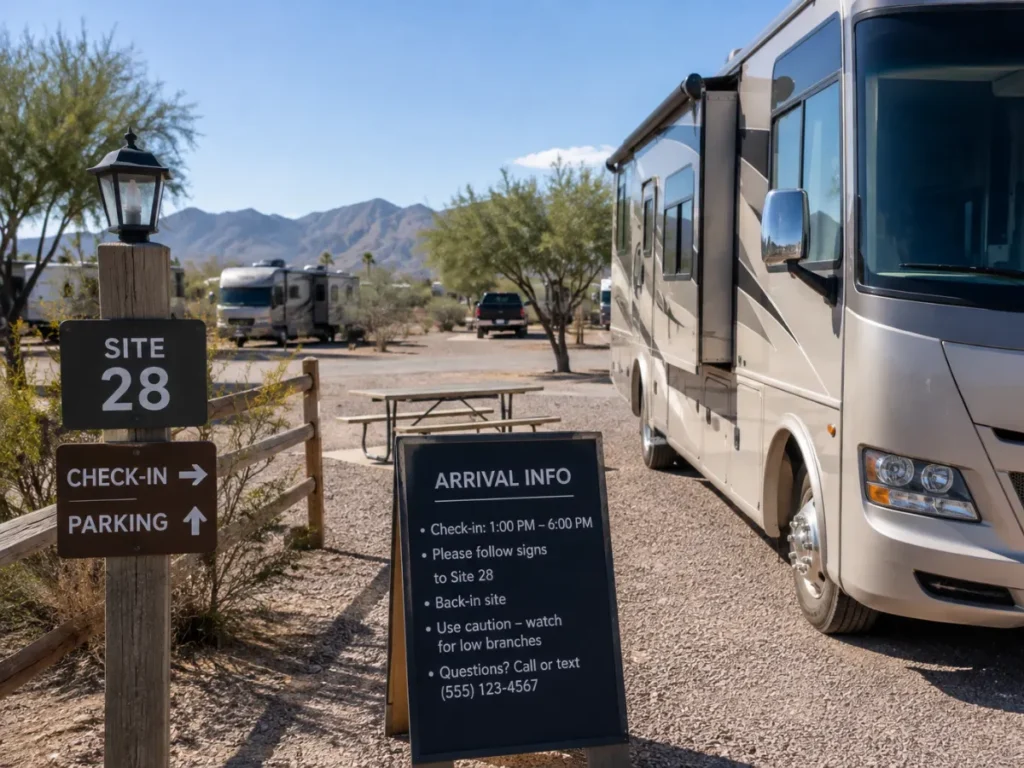
Ask what time you can arrive and whether there is a specific check-in window.
Some private RV properties use self-check-in, while others may require the host or an attendant to meet you. If you expect to arrive after dark, confirm whether the property is well marked and whether late arrival is allowed.
Ask for clear directions to the actual RV space, not simply the property’s street address.
Larger RVs may not have enough room to turn around easily after taking the wrong driveway.
Before arrival, you should know:
- where to enter the property
- where your RV should park
- where your tow vehicle or extra vehicles belong
- how to connect to available utilities
- where to dispose of trash
- who to contact if you need assistance
Departure deserves the same attention.
Ask whether there is a required checkout time, where garbage should go, and whether the host expects anything from you before you leave.
These details may sound small compared with hookups and cancellation policies, but they often determine whether arrival day feels simple or unnecessarily stressful.
Where Hookhub Fits Into Booking a Private Winter RV Spot
Private RV parking works best when travelers can understand the property before committing to a stay.
Hookhub gives RV travelers a way to explore private-land parking options and review the information available for individual listings before requesting a reservation.
Because private properties vary, travelers should still pay attention to the details that matter for their particular RV. Site size, hookups, vehicle restrictions, pet policies, length of stay, and property rules should all factor into the decision.
The goal is not to make every private RV site identical to a commercial RV park.
The variety is part of the appeal.
One traveler may need a full-hookup site for an entire winter. Another may want an affordable space for a 14-day stay. Someone else may simply need a safe overnight stop with room for a motorhome and tow vehicle.
Snowbirds can also compare private RV parking across popular winter destinations, from Arizona communities such as Gilbert and Salome to Florida locations including Lantana and Cortez, depending on the climate, amenities, and pace they prefer.
Knowing what you need, then asking the right questions, makes it easier to recognize a good match when you find one.
Frequently Asked Questions
How far in advance should I reserve a private RV spot for winter?
Availability depends on the destination and dates, but popular winter travel periods and holidays can create higher demand. If your arrival date is fixed or you need specific features such as full hookups or space for a large RV, booking farther in advance can give you more options.
What information should I give a host before booking an RV site?
Provide your RV type and total length, the number of guests, any pets, your tow vehicle, and details about extra vehicles or trailers. You should also mention any specific utility needs that could affect whether the site is suitable.
Can I stay overnight at a private RV spot without a reservation?
Do not assume an open-looking space is available for overnight parking. Private property requires the owner’s permission, and some locations may also be subject to local parking or camping restrictions. Reserve or receive clear approval before arriving.
What happens if my RV is too large for the space?
This depends on the property’s cancellation and arrival policies, which is why confirming measurements before booking is important. Ask for the maximum RV length and discuss your complete setup, including tow vehicles and trailers, before making the reservation.
Are campfires and fireworks allowed at private RV sites?
Rules vary by property and location. A host may allow a campfire under normal conditions but prohibit fires when local restrictions are in effect. Fireworks may also be prohibited by the property owner or local law. Always confirm current rules before lighting a fire or using fireworks.
Can a host ask an RV guest to leave?
A guest may be required to leave for serious or repeated violations of property rules, subject to the reservation terms and applicable local laws. Review policies covering guests, pets, noise, smoking, fires, trash, and vehicles before your stay so expectations are clear.
Should I ask about trash and garbage disposal before booking?
Yes, particularly for a long-term stay. Ask whether on-site trash service is available, where garbage should be placed, and whether there are restrictions on bulky items or other waste.
Ask Now, Relax Later
A good winter RV stay starts before you pull into the space.
Knowing the site fee is useful. Knowing what that fee includes is better. Knowing where your tow vehicle will go, whether your pet is welcome, what happens if you need to cancel, and who to call when something goes wrong gives you a much clearer picture of the stay you are actually booking.
You do not need to interrogate a host with a hundred questions.
You simply need answers to the ones that could change your decision.
Before you reserve your next winter RV spot, compare the details carefully and save the important policies somewhere you can find them later. A few extra questions before arrival can prevent weeks of frustration after your RV is already parked.
Explore private-land RV parking options on Hookhub and find a winter site that fits your RV, your travel dates, and the way you want to stay.