Quick Answers
- Kofa National Wildlife Refuge covers 665,400 acres of Sonoran Desert between Quartzsite and Yuma, with over 80% designated as wilderness and one of the largest desert bighorn sheep herds in the Southwest
- Camping is free anywhere on the refuge as long as you stay at least a quarter mile from any watering hole and keep your vehicle within 100 feet of designated roads, with a 14-day stay limit
- There are no facilities of any kind on the refuge: no water, no restrooms, no dump stations, no hookups, and no cell service in most areas
- Palm Canyon contains Arizona’s only native California fan palms, with fewer than 100 surviving trees visible from a short but steep 0.5-mile trail
- Two Hookhub listings in Salome provide hookup base camps approximately 40-50 miles northeast of the refuge starting at $29 per night
Kofa is not the kind of place you visit because it’s convenient. It is 665,400 acres of empty Sonoran Desert between Quartzsite and Yuma, accessed by washboarded dirt roads off Highway 95, with no facilities, no cell service, no water, and no one to ask for help if something goes wrong. The nearest grocery store is an hour away in either direction. The nearest hookup is farther than that.
What Kofa has instead is scale, silence, and a population of over 1,000 desert bighorn sheep moving through volcanic mountain terrain that most Arizonans have never seen. It also has Arizona’s only native California fan palms, tucked into a side canyon where water seeps through rhyolite cracks and sustains fewer than 100 trees in a grove that has existed in isolation for thousands of years. The U.S. Fish and Wildlife Service established the refuge in 1939 specifically to protect those sheep, following a 1936 campaign led by the Arizona Boy Scouts that turned the desert bighorn into their official mascot. The King of Arizona gold mine, which gave the refuge its acronym, is long abandoned, but the sheep have thrived.
For RV travelers, Kofa is the most genuinely remote boondocking destination covered in any Hookhub article. It rewards self-sufficiency, preparation, and a willingness to drive slowly on dirt roads that nobody maintains for your convenience.
What Is Kofa National Wildlife Refuge?
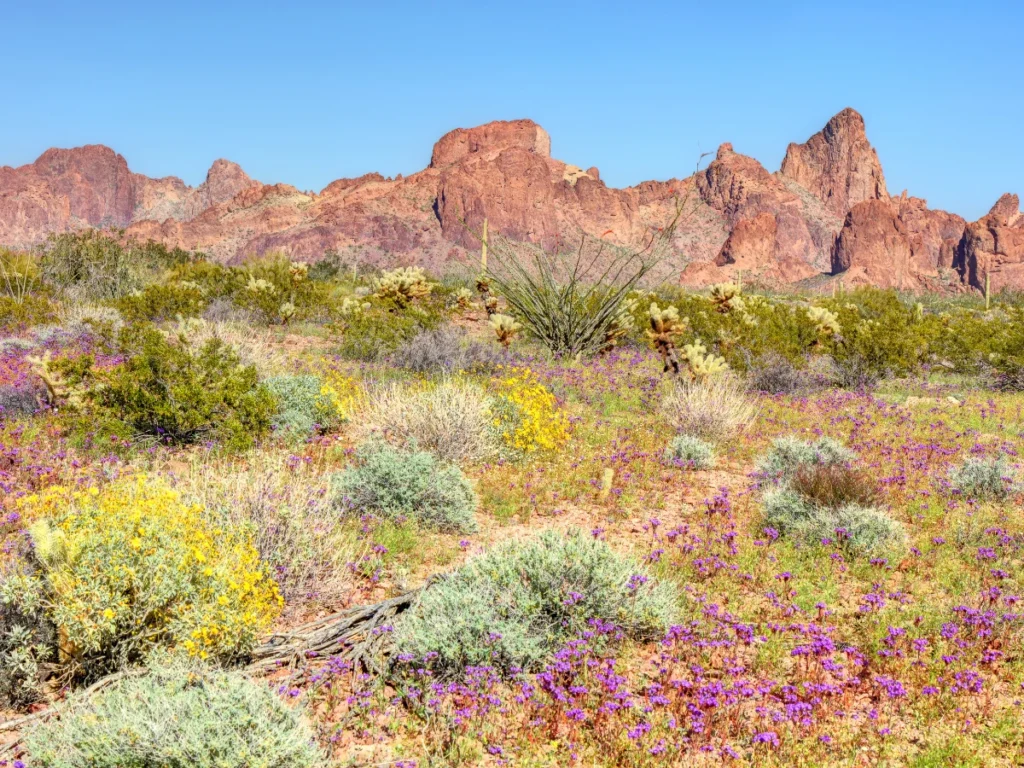
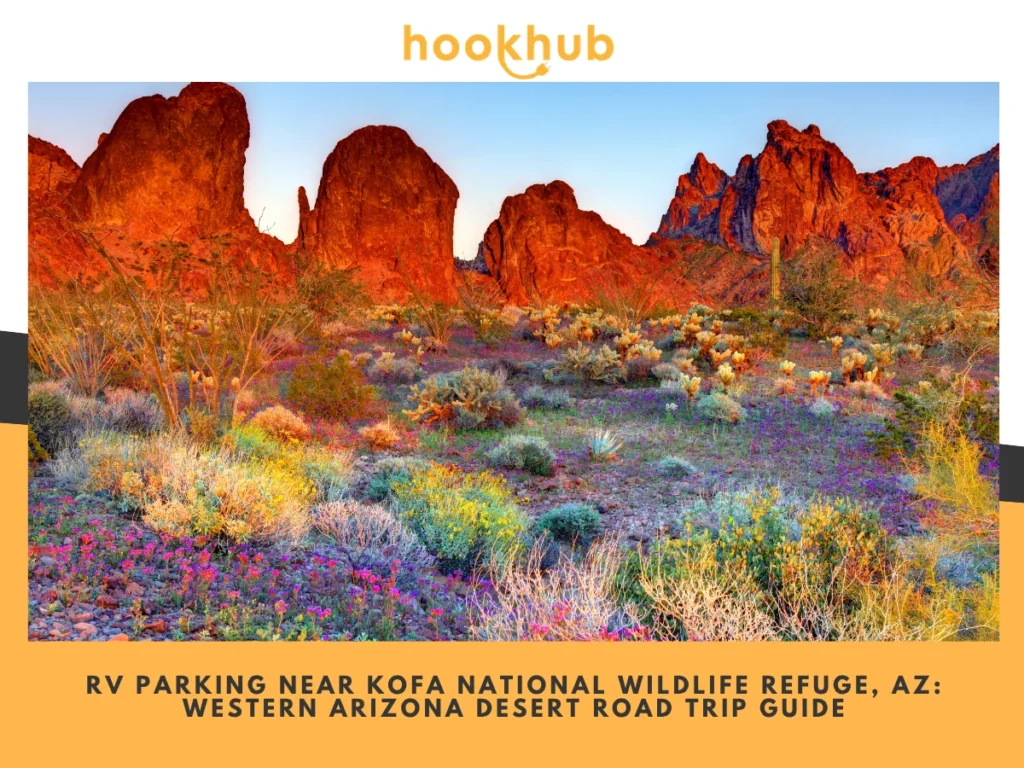
The refuge spans the Yuma Desert region of the Sonoran Desert in western Arizona, stretching from the Kofa Mountains in the east to the Castle Dome Mountains in the west. Congress designated 547,719 acres of the refuge as wilderness through the 1990 Arizona Desert Wilderness Act, making it the second-largest wilderness area in Arizona. The landscape is characterized by broad, gently sloping foothills that give way to sharp, needlepoint volcanic peaks rising abruptly from the desert floor.
The name Kofa is an acronym derived from the King of Arizona gold mine, one of several mines that operated in the area before the refuge was established. The mining era left scattered evidence across the landscape, including abandoned shafts, tailings, and the remains of supply roads that now serve as the refuge’s vehicle access routes.
The Kofa Mountain barberry, a plant found only in southwestern Arizona, grows in the refuge and draws botany visitors alongside the wildlife watchers and boondockers. Saguaro, cholla, barrel cactus, and several species of opuntia cover the lower elevations, while the mountain canyons support scattered pockets of wildflowers and the famous palm grove in Palm Canyon.
What Can You Do at Kofa NWR?
Palm Canyon Trail: The highlight of any Kofa visit is the Palm Canyon Trail, designated as a National Recreational Trail by the American Trails system. The trail is approximately 0.5 miles each way with about 300 feet of elevation gain through a narrow canyon carved into rhyolite. The destination is a view of Arizona’s only native stand of California fan palms, with fewer than 100 trees surviving in a side canyon where water seeping through rock cracks sustains the grove. The palms are visible from the trail without off-trail scrambling. The hike is short but steep and uneven in places, and the canyon walls amplify heat on warm days. There are no facilities at the trailhead: no water, no restrooms, no shade structures. Bring everything you need.
The dirt road to the Palm Canyon trailhead runs approximately 7 miles from Highway 95. It is washboarded, slow, and best approached in a vehicle with higher clearance than a standard sedan. Most trucks, SUVs, and RV tow vehicles handle it without difficulty at 15-20 mph. Large motorhomes should not attempt the road.
Bighorn sheep viewing: The refuge supports one of the largest desert bighorn sheep herds in the entire Southwest, numbering over 1,000 animals. The sheep spend most of their time on the rocky ridgelines and steep canyon walls of the Kofa Mountains, where their agility on vertical terrain keeps them safe from predators. Early morning visits to Palm Canyon and Kofa Queen Canyon offer the best viewing opportunities. Look along the skyline on both sides of the canyon for silhouettes, and listen for the sound of hooves on loose rock. Binoculars are essential.
Kofa Queen Canyon: A rougher access road leading to the eastern section of the Kofa Mountains, Kofa Queen Canyon Road provides a deeper penetration into the refuge’s wilderness character. Four-wheel drive is recommended for this route. The canyon terrain is more rugged than Palm Canyon, with narrower passages and less maintained road surface.
Desert solitude and stargazing: Kofa’s primary appeal for many boondockers is the absence of everything. No light pollution, no engine noise, no neighbors unless you choose to park near them. The night sky over Kofa is among the darkest in Arizona, and the silence at dawn, broken only by coyote calls and birdsong, is the experience that brings people back.
Rockhounding near Crystal Hill: Crystal Hill, on BLM land adjacent to the refuge’s northern boundary near Quartzsite, is a well-known collecting area for quartz crystals and other minerals. The area is accessible from Highway 95 and provides a geological day trip that pairs naturally with a Kofa camping stay.
Wildlife beyond the sheep: Foxes, mule deer, desert cottontail rabbits, lizards, rattlesnakes, and a surprising variety of desert birds all inhabit the refuge. Canyon towhees, gnatcatchers, thrashers, and the jet-black phainopepla are common in Palm Canyon. Coyotes are vocal at dawn and dusk, and their calls carry for miles across the open desert floor.
When Is the Best Time to Visit?
October through March is the only practical camping season. Summer temperatures on the desert floor between Quartzsite and Yuma regularly exceed 115 degrees Fahrenheit, and the complete absence of shade, water, or emergency services makes summer boondocking at Kofa genuinely dangerous for unprepared travelers.
November through February is the peak boondocking window. Daytime temperatures in the 60s and 70s, cool nights in the 40s and 50s, and the clearest desert air of the year for stargazing and photography. This window also coincides with the Quartzsite RV gathering and gem shows in January, when tens of thousands of RV travelers converge on the Quartzsite BLM lands 20 miles north of the refuge. The combination of Quartzsite’s social atmosphere and Kofa’s total solitude makes them natural day-trip companions.
Spring and fall shoulder months (March and October) offer manageable temperatures with smaller crowds than the winter peak. Wildflower blooms, when they occur, are most visible in late February through early April after good winter rain years.
Where to Park Your RV Near Kofa NWR
Dispersed Camping on the Refuge (Free)
Camping is permitted anywhere on the refuge with two rules: stay at least a quarter mile from any watering hole, and keep your vehicle within 100 feet of designated roads. There is a 14-day stay limit. No permit is required. No fee is charged. There are no designated campsites, no picnic tables, no fire rings, and no trash collection. Leave No Trace principles are strictly enforced.
Overnight parking is specifically permitted at the Palm Canyon parking area, making it the most accessible camping spot for first-time visitors who want to wake up near the trailhead for a dawn palm and sheep viewing hike.
Popular camping areas include pullouts along Palm Canyon Road, the Kofa Queen Canyon Road corridor, and the wider desert flats accessible from King Road. Most boondocking rigs park on the berms alongside the dirt roads, where the desert floor is flat and firm enough to support any self-contained vehicle. Dogs are allowed on leash throughout the refuge.
Practical requirements for Kofa boondocking: Arrive with full water tanks, full fuel, and all food and supplies you will need for your entire stay. Bring more water than you think you need. Plan all dump station and resupply stops in Quartzsite (north) or Yuma (south) before entering the refuge. Cell service is absent or unreliable throughout the refuge. Download maps, share your itinerary with someone who is not with you, and carry a satellite communication device if you have one.
BLM Land Near Quartzsite
Free dispersed camping on Bureau of Land Management land near Quartzsite provides an alternative to camping on the refuge itself. The Quartzsite BLM areas, including the popular La Posa Long Term Visitor Area, accommodate thousands of RVs during the winter season and offer a social boondocking experience that contrasts sharply with Kofa’s isolation. The La Posa LTVA charges a seasonal fee for long-term stays and a per-day fee for shorter visits.
Parker Pit Road dispersed camping, approximately 11 miles south of Parker, provides additional free BLM camping in the broader western Arizona corridor.
Hookhub Private Land, Salome
These two listings are on Hookhub, which produced this guide. Both are in Salome, Arizona, approximately 40-50 miles northeast of the refuge on Highway 60. Salome is the closest community to Kofa that has confirmed private land with hookups, and it serves as the practical resupply and hookup base for travelers who want water, electric, and sewer connections between Kofa boondocking stays.
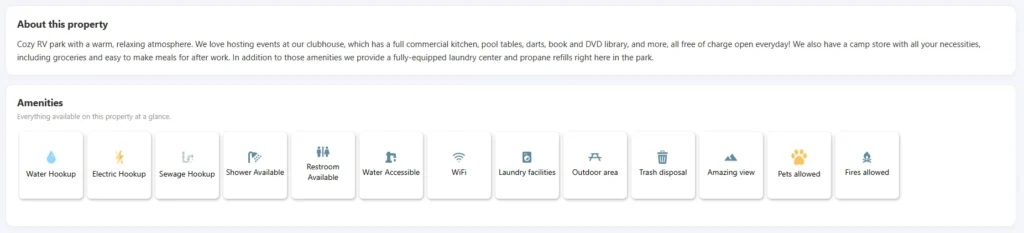
Dreamers RV Park in Salome provides a hookup option for travelers who want to refill water, dump tanks, and recharge before heading back into the refuge for another stretch. Check the listing directly for current site dimensions, hookup types, and pricing.
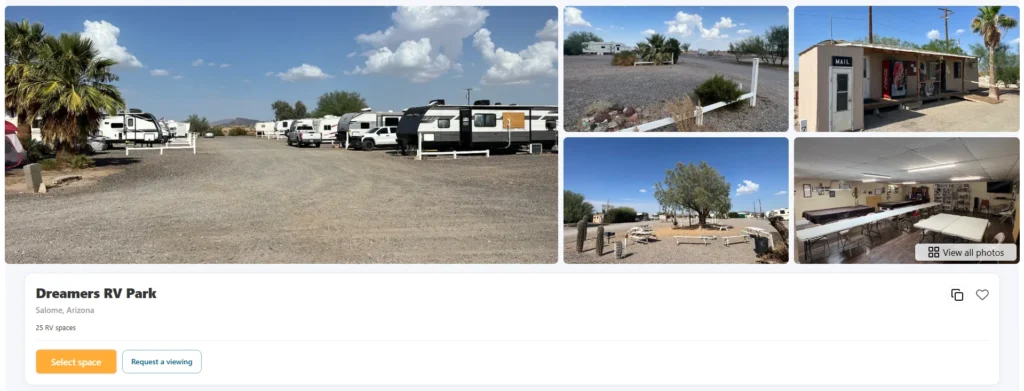
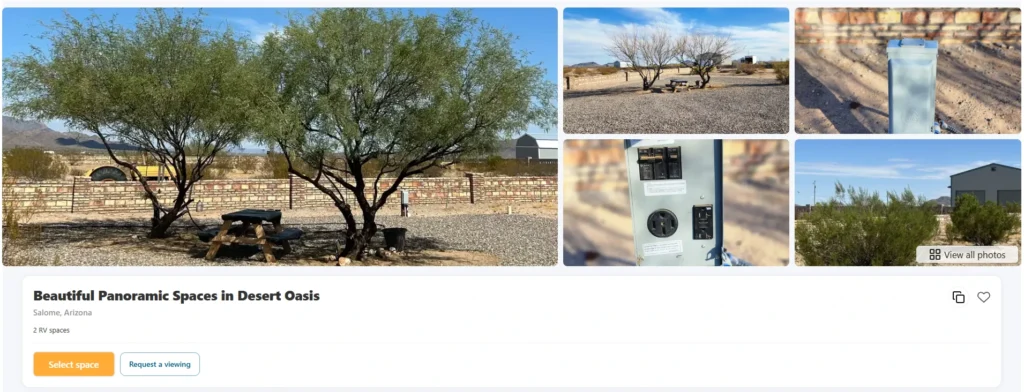
Beautiful Panoramic Desert Oasis in Salome provides wide-open desert views from the property and a private land alternative to the BLM boondocking areas. The panoramic setting captures the same Sonoran Desert character visible throughout the Kofa corridor, with the added benefit of confirmed utilities and a host who expects your arrival.
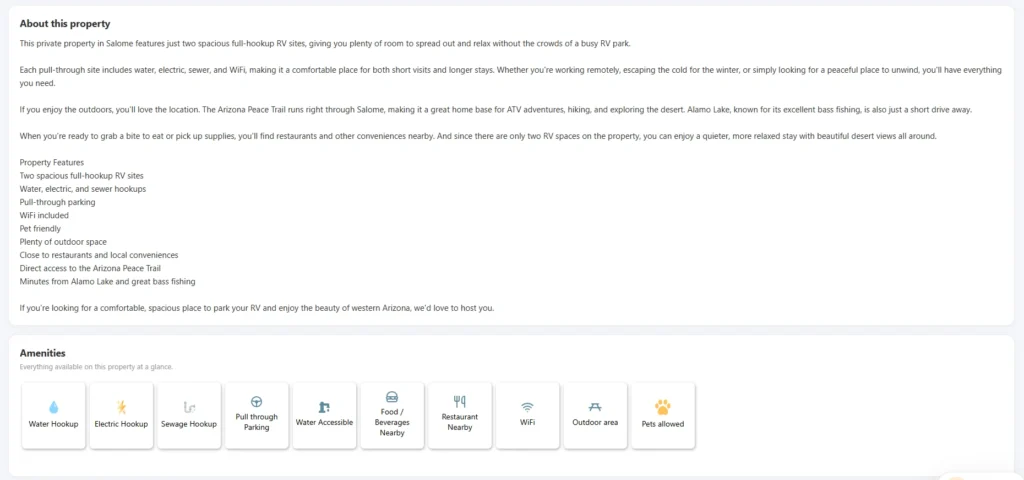
Search current Salome private RV parking for both listings and availability.
Practical Trip Planning
Fuel and groceries: Quartzsite, approximately 20 miles north on Highway 95, has fuel, groceries, and RV supply stores. During the January gem show season, Quartzsite has a full temporary commercial infrastructure. Yuma, approximately 60 miles south, has complete commercial services. Salome has limited services on Highway 60. There are no services of any kind inside the refuge.
Getting there: From Quartzsite: Highway 95 South approximately 20 miles to Palm Canyon Road (marked turnoff on the east side of the highway). From Yuma: Highway 95 North approximately 60 miles. From Salome/Phoenix: Highway 60 West to Highway 95 South. The turnoff for Palm Canyon Road is well-signed on Highway 95.
Road conditions: Palm Canyon Road is a 7-mile washboarded dirt road that is passable for most high-clearance vehicles at low speed. Kofa Queen Canyon Road is rougher and 4WD is recommended. King Road provides access to northern sections and varies in condition. Scout any unfamiliar dirt road before committing your rig. Large motorhomes and long trailers should not attempt the interior refuge roads.
Cell coverage: Essentially none inside the refuge. Download all maps, share your planned location with a contact outside the refuge, and carry emergency communication equipment if possible.
FAQ
Is there any fee to camp at Kofa National Wildlife Refuge?
No. Camping is free throughout the refuge with no permit required. You may camp anywhere as long as you remain at least a quarter mile from any designated watering hole and keep your vehicle within 100 feet of a designated road. The 14-day stay limit applies. There are no facilities: no water, no restrooms, no dump stations, no hookups, and no trash collection. Everything you bring in must leave with you.
Can I see the Palm Canyon fan palms without a high-clearance vehicle?
The 7-mile dirt road from Highway 95 to the Palm Canyon trailhead is rough and washboarded, but many passenger vehicles with reasonable ground clearance have made the drive at low speed. The road is not paved and is not graded regularly, so conditions vary by season and recent weather. A truck, SUV, or any RV tow vehicle will handle it comfortably. Large motorhomes and heavy trailers should not attempt the road. The trailhead has no facilities, and the 0.5-mile trail to the palm viewing point is short but steep and uneven. Bring water, snacks, and sturdy footwear.
How likely am I to see bighorn sheep at Kofa?
The refuge supports over 1,000 desert bighorn sheep, making sighting probability higher than at most desert locations in Arizona. However, the sheep spend most of their time on ridgelines and steep canyon walls where they are difficult to spot without binoculars. Early morning visits to Palm Canyon and Kofa Queen Canyon provide the best chances. Look along the skyline on both sides of the canyon, and listen for the sound of hooves dislodging loose rock on the steep slopes. Patience and quiet movement improve your odds significantly. The sheep are wild and unpredictable, so a sighting is never guaranteed, but most visitors who spend two or more days on the refuge during the October-through-March season see at least a few animals.
Ready to plan your Kofa trip?
For hookup base camps between boondocking stretches on the refuge, you can browse available private RV parking near Salome and check what fits your resupply schedule.