
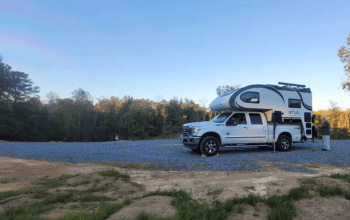
Starting full-time RV living feels like stepping into freedom.
No lease.
No fixed address.
No traditional routine.
But once the excitement settles, reality shows up in the form of tank levels, fuel costs, campground fees, maintenance surprises, and decision fatigue.
Full-time RV life is absolutely doable. Thousands of people make it work every year. But it is not a permanent vacation. It is a mobile lifestyle that rewards preparation and punishes vague expectations.
This guide breaks down what beginners really need to know before going full-time — including real costs, operational realities, and what the first year actually feels like.
Key Takeaways
- Full-time RV living costs more than social media suggests
- Your RV choice determines 80% of your comfort
- Utilities management becomes second nature
- Parking strategy affects your monthly budget dramatically
- Weather planning is not optional
- Remote work is possible with planning
- The first year is an adjustment curve, not instant mastery
1. Full-Time RV Living Costs More (and Less) Than You Think
One of the biggest beginner surprises is cost variability.
RV life can be cheaper than traditional housing — or more expensive — depending entirely on how you travel.
Initial Setup Costs
Before you even hit the road, expect:
- RV purchase: $15,000–$250,000+
- Sales tax & registration: Often 5–10% of purchase price
- Insurance: $600–$3,000/year depending on rig and usage
- Tow vehicle (if needed): $20,000–$70,000
- Setup gear: $500–$2,000 (hoses, surge protectors, leveling blocks, etc.)
Many new RVers underestimate how quickly setup costs stack.
Realistic Monthly Budget Scenarios
Here are two simplified examples:
Slow Travel (1–2 moves per month)
- Campground/private land: $600–$1,200
- Fuel: $200–$400
- Insurance: $75–$200
- Propane: $50–$150
- Maintenance fund: $150–$300
- Internet: $100–$250
Estimated monthly total: $1,200–$2,500
Fast Travel (weekly moves)
- Campgrounds: $900–$1,800
- Fuel: $500–$1,000
- Insurance: $75–$200
- Propane: $75–$200
- Maintenance fund: $200–$400
- Internet: $100–$250
Estimated monthly total: $2,000–$3,800+
Travel pace is the single biggest cost driver.
Hidden Costs Beginners Overlook
- Depreciation (RVs drop fastest in first 3 years)
- Tires ($1,000–$6,000 depending on class)
- Emergency repairs
- Storage during life transitions
- Laundry and dump fees
- Health insurance adjustments
If you haven’t read a full cost breakdown, review your detailed RV ownership cost guide before committing.

2. Choosing the Right RV Determines Your Happiness
Your RV is not just transportation. It is your house, your office, your kitchen, and your storm shelter.
The wrong rig creates friction every single day.
Size Trade-Offs
| Bigger RV | Smaller RV |
| More comfort | Easier driving |
| More storage | Better fuel mileage |
| Harder parking | More parking flexibility |
| Higher costs | Lower costs |
Real Beginner Mistake
Buying the biggest RV you can afford “just in case.”
What actually matters:
- Layout flow
- Storage access
- Tank capacity
- Insulation quality
- Workspace options
Many experienced RVers say they would:
- Either downsize
- Or buy used first
- Or rent before committing
If possible, test your chosen RV type for at least one extended trip.
3. Daily Life Is About Systems, Not Scenery
The Instagram part is the sunset.
The real part is:
- Monitoring tank levels
- Watching battery percentages
- Planning propane refills
- Scheduling dump stops
Tank Reality
Typical capacities:
- Fresh water: 20–100 gallons
- Gray tank: 30–80 gallons
- Black tank: 20–60 gallons
Average couple can fill gray tank in 3–7 days depending on usage.
These become rhythm-based habits quickly.
Power Management
You will learn:
- How many amps your AC pulls
- What trips breakers
- How long batteries last
- When solar works best
This is not hard — but it is new.
4. Parking Strategy Determines Financial Stability
New RVers worry most about “Where do I park?”
The truth: parking is available — but planning matters.
Main Parking Options
RV Parks
- Full hookups
- Predictable
- Higher cost
Boondocking
- Free
- No hookups
- Requires strong system management
Private Land
- Often quieter
- Flexible stays
- Clearer boundaries
Many full-timers find that staying longer (30–90 nights) reduces stress and costs dramatically compared to bouncing weekly.
Planning tools and platforms like Hookhub help RVers find stable private land options when they want fewer moves and more predictability.
Slow travel reduces burnout.
5. Weather Will Control You (Until You Control It)
RVs are not houses. They respond quickly to outside temperatures.
Summer Challenges
- AC strain
- Higher electric bills
- Tire pressure shifts
- Shade becomes critical
Winter Challenges
- Frozen hoses
- Propane spikes
- Condensation
- Skirting needs
Many full-timers migrate:
- North in summer
- South in winter
Flexibility is your advantage.
6. Working Remotely Is Possible (But Requires Redundancy)
Internet anxiety is common.
Most successful full-time RVers use:
- Primary cellular hotspot
- Backup cellular plan
- Satellite option (Starlink or similar)
- WiFi only as bonus
Never rely on campground WiFi alone for work.
Create a defined workspace, even if small. Boundaries help productivity.
7. The First-Year Timeline No One Explains
Month 1
Exciting. Overwhelming. Minor panic moments.
Month 3
Systems smoother. Fewer mistakes.
Month 6
Travel pace adjusts. Budget clearer.
Month 12
You know your style. You stop comparing yourself to Instagram.
The first year is adaptation, not perfection.
Want to see what full-time RV life actually looks like?
We share real-world breakdowns, setup walkthroughs, cost discussions, and beginner mistakes on our YouTube channel — including behind-the-scenes looks at daily RV living and practical solutions that make life on the road easier.
👉 Explore our RV life videos here: https://www.youtube.com/@hookhubrv
Who Full-Time RV Living Is NOT For
This lifestyle may not fit if:
- You dislike unpredictability
- You require fixed social routine
- You hate mechanical troubleshooting
- You need guaranteed high-speed fiber daily
- You prefer stability over movement
RV life rewards flexibility.
Legal, Domicile & Administrative Reality
Full-timers must choose a domicile state for:
- Vehicle registration
- Driver’s license
- Taxes
- Voting
Popular states:
Mail forwarding services become essential.
Healthcare coverage must be researched carefully for interstate travel.
This is manageable — but it requires planning.
Most Common Beginner Mistakes
- Moving too often
- Overspending on upgrades early
- Ignoring weight limits
- Skipping maintenance
- Underestimating fuel costs
- Booking parks last minute in peak season
- Assuming free camping is unlimited
Learning curve is normal.
Is Full-Time RV Living Worth It?
For some, RV living replaces:
- Rent or mortgage
- Constant travel costs
- Utility bills
For others, it is an investment in flexibility and lifestyle.
The key difference between those who thrive and those who quit:
Realistic expectations.
Final Thoughts
Full-time RV living is not about escaping responsibility.
It is about choosing a different kind of responsibility — one tied to mobility, simplicity, and intentional movement.
The freedom is real.
The challenges are real.
The learning curve is real.
With planning, budgeting, and flexibility, thousands of RVers build sustainable, fulfilling lives on the road.
If you’re preparing to transition, slow down your travel pace at first. Choose stability over constant motion. And build systems before you build speed.
Confidence comes from repetition — not perfection.