Long-term RV living offers unmatched freedom, mobility, and the excitement of exploring new places at your own pace. But small spaces, constant travel, and ever-changing environments can create stress that makes true downtime hard to achieve. These challenges can quickly turn rest periods into moments of tension rather than relaxation.
With intentional routines and thoughtful RV design, downtime can shift from overwhelming to restorative. Simple upgrades like improved lighting, decluttering, and mindful daily habits can create a calmer, more balanced living experience. If you’re still exploring whether long-term RV travel is right for you, this guide on living in an RV full-time offers helpful insights.
Overcome the Unique Challenges of Relaxation in Long-Term RV Living
Long-term RV living provides freedom and adventure, but it also presents challenges that make relaxation harder to achieve. Understanding these obstacles allows RVers to create a healthier, calmer, and more enjoyable everyday environment—especially in compact spaces where comfort is essential.
Limited Space Considerations
Small spaces can quickly feel overwhelming when storage, movement, and personal space are limited. Creating a peaceful environment becomes easier with simple strategies such as:
- Creating a dedicated relaxation corner
- Using smart storage solutions for clutter-free organization
- Choosing multifunctional furniture to maximize space
These steps help transform tight quarters into a more soothing and manageable living area.
Weather and Environmental Factors
Weather patterns, noise levels, and constant environmental changes significantly influence mood and stress. Intense heat, cold snaps, loud surroundings, or unpredictable conditions can disrupt relaxation.
Helpful strategies include:
- Choosing campgrounds known for calmer environments and moderate weather
- Improving interior climate control with RV modifications
- Taking advantage of campground amenities such as quiet lounges or shaded relaxation areas
These adjustments help maintain a more consistent and calming atmosphere.
Balancing Social and Private Time
RV parks make social interaction easy, but too much activity—or too little—can affect overall well-being. A balanced approach helps maintain emotional and mental clarity.
Tips to stay balanced:
- Scheduling personal downtime daily
- Joining community events selectively
- Staying connected with loved ones while maintaining privacy inside the RV
Awareness of personal boundaries supports a more peaceful and fulfilling RV lifestyle.
Create a Relaxing Environment Inside Your RV
Have you ever stepped into an RV and instantly felt the mood of the space? A calm and well-designed interior can transform the entire atmosphere, turning even the smallest layout into a comforting retreat. When the environment feels soothing, everyday routines become lighter, smoother, and far more enjoyable during long-term travel.
So how can an RV feel like a true sanctuary on the road? Thoughtful design choices—like cozy textures, calming colors, and clutter-free organization—elevate comfort and make the space feel more inviting. By creating an interior that supports relaxation, the entire RV living experience becomes more balanced, uplifting, and deeply rewarding.
Optimizing Your RV Layout for Relaxation
A functional, clutter-free layout reduces stress and supports better relaxation. Multi-functional furniture—such as Murphy beds, storage ottomans, and vertical shelving—creates additional room while keeping essentials organized.
Simple layout tweaks, like carving out a reading nook or meditation corner, can make the space feel more open and inviting.
Enhancing Comfort Through Accessories and Modifications
Small touches can dramatically improve comfort and relaxation.
Consider adding:
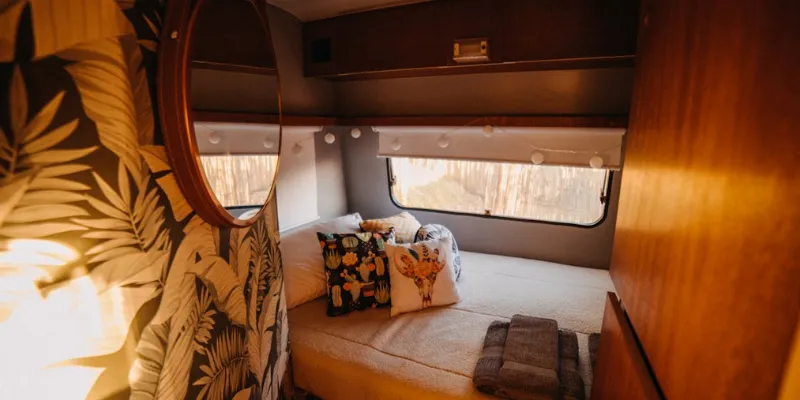
- Soft blankets, pillows, and plush rugs
- Calming colors and textures
- A high-quality mattress or topper
- Blackout curtains for improved sleep
- Air-purifying plants to freshen the environment
Each element contributes to a cozier, more restful RV interior.
Improving Lighting and Temperature Control
Lighting and climate play a major role in creating a relaxing atmosphere, with dimmable LEDs, warm string lights, adjustable fixtures, and reliable temperature tools such as portable heaters, fans, or upgraded thermostats enhancing overall comfort.
Thermal window treatments or reflective films further support consistent climate control, making the RV feel more inviting and serene year-round.
A controlled environment supports consistent relaxation, even during extreme weather conditions. For hot-weather relaxation support, check out this guide on keeping your RV cool in summer.
Practice Mindfulness and Meditation Techniques for RVers

Mindfulness supports mental clarity and emotional balance—qualities especially important in constantly changing environments. Simple techniques help RVers stay grounded and relaxed anywhere on the road.
Trying Simple Meditation Techniques for Small Spaces
Meditation fits easily into compact living areas, with breath-focused practices, short guided sessions, and body-scan routines all workable from a comfortable seated spot inside the RV. Mindfulness reinforces present-moment awareness, helping calm the mind even in small or busy environments.
For guided beginner-friendly meditation tips, explore Mayo Clinic’s meditation guide.
Short sessions can lower stress and improve focus throughout the day.
Engaging in Nature-Based Mindfulness Exercises
Nature offers an ideal setting for mindful reflection. Campgrounds, trails, and open landscapes encourage relaxation through quiet observation.
Activities may include:
- Walking meditation
- Noticing textures, shapes, and sounds in nature
- Observing natural elements such as trees, water, or wildlife
These simple practices deepen appreciation for the outdoors and reduce stress.
Using Apps and Resources for Guided Relaxation
Meditation and mindfulness apps—such as Calm or Headspace—provide convenient guided sessions suitable for RV living. Online communities and relaxation resources also offer helpful tools to support mental well-being.
Integrating these practices into daily routines enhances calmness and resilience during travel.
Adapt Physical Relaxation Techniques for RV Life
Physical relaxation is essential for reducing stress and maintaining well-being while living in tight quarters. Even limited RV space can accommodate effective relaxation methods.
“Relaxation isn’t just a perk of RV living — it’s proof that a space is working with you, not against you. When you create an environment that helps people slow down, breathe easier, and feel grounded, you’re not just hosting travelers… you’re shaping how they experience their own lives. That’s the real value of intentional land use.” Caylee Shea Harrington
Using Compact Exercise Options for Stress Relief
Compact exercises help reduce physical and mental tension. Yoga, resistance band workouts, and bodyweight movements improve mood and circulation without requiring much space.
Research consistently supports yoga’s benefits for stress reduction and overall wellness.
Following Stretching Routines for RV Dwellers
Gentle stretching eases muscle tension—especially after long drives.
Useful stretches include:
- Neck Stretches – relieves stiffness
- Shoulder Rolls – reduces upper-body stress
- Seated Forward Bends – increases flexibility
These simple movements support mobility and relaxation.
Enjoying Relaxing Outdoor Activities at Campgrounds
Outdoor activities enhance relaxation and offer a healthy break from indoor spaces.
Popular options include:
- Walking or hiking
- Meditating near water
- Stargazing
Time spent outdoors restores energy and improves mood. For park safety and trail tips, visit the National Park Service.
Build Community for Enhanced Relaxation
Community plays a meaningful role in reducing stress and enriching the RV lifestyle. Positive social connections create support, belonging, and opportunities for enjoyable shared experiences.
According to the Mental Health Foundation, being part of a community reduces isolation, lowers stress, and improves overall well-being.
Participating in RV Park Social Events
Events such as group hikes, potlucks, or campfire gatherings help RVers connect with others who share similar lifestyles. These interactions foster a sense of belonging and contribute to a more relaxed environment.
Creating Your Own Relaxation Gatherings
Hosting gatherings—such as group yoga, meditation circles, or small dinners—allows RVers to build community when formal park events are limited. Customizing these gatherings strengthens connections and encourages a calm, friendly atmosphere.
Balancing Community Engagement with Personal Downtime
A healthy routine includes both social interaction and solitude. The table below illustrates how different activities meet different needs:
| Activity | Community Engagement | Personal Downtime |
| Attending RV park events | High | Low |
| Meditation or yoga practice | Low | High |
| Organizing a group dinner | High | Medium |
| Reading or journaling | Low | High |
Balancing both aspects ensures sustainable well-being throughout long-term travel.
Adapt Seasonal Strategies for Year-Round RV Relaxation
Relaxation needs to shift with changing seasons. Adjusting routines for winter, summer, and the shoulder seasons helps maintain comfort year-round.
Creating Winter Coziness in Your RV
Warm lighting, cozy textiles, and effective heating create a comforting winter retreat. Insulation upgrades and energy-efficient heaters help maintain warmth. Soft blankets, ambient lighting, and a designated reading corner enhance the cozy winter atmosphere.
For winter comfort, this guide on keeping moisture out of your RV in winter helps maintain a dry, cozy environment.
Staying Cool and Comfortable in Summer
Summer heat requires thoughtful cooling strategies. Reflective window covers, shade setups, improved ventilation, and energy-efficient air conditioning help maintain comfortable temperatures.
Spending time outdoors during cooler morning and evening hours adds refreshing balance.
Making the Most of the Shoulder Seasons
Spring and autumn offer ideal weather for outdoor recreation and mindfulness practices. Hiking, biking, or simply enjoying nature provides refreshing opportunities for relaxation.
These seasons also make it easier to explore new campgrounds and enjoy peaceful, less-crowded environments.
Start Your Journey to a More Relaxed RV Lifestyle
Relaxation isn’t just a luxury—it’s essential for thriving on the road. By optimizing your RV interior, adding cozy touches, and keeping your space organized, you can create a calming environment that truly feels like a home away from home. Pair this with mindfulness practices and simple physical activities to maintain clarity, energy, and peace of mind no matter where your travels take you.
Building connections with fellow RVers adds another layer of support and enjoyment, making your journey both social and serene. And with platforms like Hookhub, finding safe, peaceful, and convenient places to park or stay becomes easier than ever—giving you more freedom to focus on what really matters: unwinding and enjoying the RV lifestyle.
A relaxed life on the road isn’t just possible—it’s within reach.
Start today: explore Hookhub, discover new spaces, and transform every trip into a truly rejuvenating escape.