

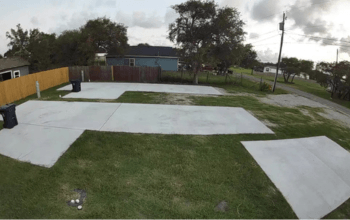
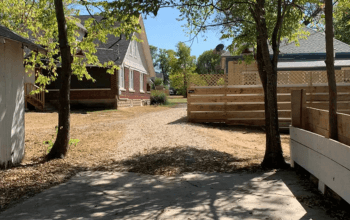
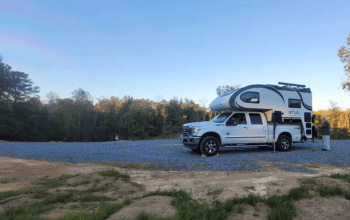
No sewer hookup does not automatically mean “no monthly guests.” In fact, some of the best long-stay setups are simple sites with clear expectations.
What matters is having (1) a consistent waste plan, (2) the right guest fit for 30–90 nights, and (3) written rules that keep your land clean and drama-free.
For hosts, the upside is big: fewer turnovers, fewer surprise messages, and steadier monthly income without running a campground.
Quick takeaways
- No sewer can work for long-term stays when the waste plan is simple and consistent.
- The wrong match creates mess, conflict, and negative reviews.
- Your listing must explain the sewer reality in plain language.
- House rules and a utilities policy prevent most disputes.
This post is one piece of our Arizona long-stay series—see the long-stay hosting hub for the full framework.
Why this matters for hosts
Monthly stays are where private land hosting becomes predictable. One guest for 30–90 nights usually means:
- fewer move-ins and move-outs
- less wear-and-tear from constant arrivals
- more stable income you can plan around
No-sewer long-stay hosting works best when the guest is already living like a long-stay guest, not a weekend camper. The goal is a calm home base, not constant “camp mode.”
The decision: can your property support long-stay hosting without a sewer?
Use this as a quick assessment. If you answer “no” to more than one, you are likely better off hosting shorter stays or upgrading the site.
- Can an RV physically park and leave without dragging a sewer hose through landscaping?
- Do you have a safe place for a tote or pump-out access (no spills, no runoff)?
- Is there a dump station within a reasonable drive, and is it open year-round?
- Can you set and enforce a simple rule for grey and black tanks?
- Are you comfortable saying “no” to guests who need full hookups?
- Can you explain the waste plan in 1–2 sentences (so guests don’t misinterpret it)?
- Are you willing to decline guests who require full hookups or daily long showers?
If you are still deciding what to include in your monthly rate, read “utilities included “or” “not” before you publish your listing language.
When no-sewer hosting works well (ideal scenarios)
No-sewer long-term stays tend to work when the guest is already set up for it.
Good fits:
- A self-contained rig with healthy holding tank capacity
- Guests who already use a dump station routine (and don’t need reminders)
- A guest who treats your place as a quiet home base (work, seasonal stay, local transition)
- Guests comfortable with weekly tank management (not daily dumping expectations)
This is not boondocking. You are still hosting on private land with a defined camp spot and house rules.
This approach typically fails in high-risk scenarios.
No-sewer hosting usually fails for one reason: the wrong expectations. These are mismatches, not “bad guests.”
High risk:
- Guests who expect long daily showers + heavy dishwashing without a dump routine
- Guests who ask to drain grey water “just this once”
- No clear pump-out/tote access area
- Properties with sensitive runoff, wells, or close neighbors where spills are a serious issue
If you see these patterns in the inquiry stage, screening matters. Use the questions in screening monthly RV guests.
There are three waste plans that can be effective; please choose one and provide specific details.
You do not need a complicated system. You need one that is safe and repeatable.
Read our full breakdown of RV waste solutions for sites with no sewer to weigh your options.
Plan A: Guest uses a dump station (most common)
- Guest empties grey and black tanks at a nearby dump station
- Guest transports waste in their RV (no portable waste tote on site)
- You provide directions and a suggested cadence (example: once per week, depending on tank size and usage)
This plan works best when the RV can easily leave and return.
Plan B: Portable tote, with strict rules
A tote can work, but it needs boundaries.
- Tote must be kept sealed and stored in a designated area
- No gravity feed dumping on the ground
- No spills, no overflow, no exceptions
If you allow a tote, your house rules should say exactly where it goes and what happens if there is a mess.
Plan C: Pump-out service (if available)
In some areas, a pump-out service can make “without sewer hookups” feel almost like full hookups.
- Guest pays for pump-out, or you include it as an add-on
- Schedule is set in advance
- Access is clear (gate code, driveway width)
Watch: No Sewer? 3 Guest-Approved RV Waste Solutions
If you want to see what these three plans look like in the real world (and how long-stay RVers actually manage them), I put together a quick walkthrough video:
No Sewer? 3 Guest-Approved RV Waste Solutions (Portable Toilets, Tanks & Pump-Outs)
It covers:
- portable tote tanks (and the #1 rule that prevents mess)
- pump-out routines that feel almost like full hookups
- a simple dump station cadence that works for 30–90 night stays
What the host provides (and what the guest provides)
To keep long-stay hosting smooth, be clear about responsibilities:
Host provides:
- the RV pad / parking space
- access instructions + boundaries
- the waste plan option (A/B/C)
- rules + enforcement
Guest provides:
- tank management routine
- dump station fees (unless stated otherwise)
- spill-free handling and cleanup
- communication if there’s an issue
The house rules you need when there is no sewer
If you have no sewer connection, your rules should be specific.
Minimum rules to include:
- No dumping gray water or black water on the property.
- All valves stay closed unless connected to an approved system
- Any spill must be reported immediately
- Guest is responsible for dump station fees and transport
On Hookhub, hosts also get built-in protections like damage coverage and support if a guest becomes non-compliant, so you’re not handling long-stay enforcement alone.
If you want a copy-paste starting point, use house rules for 30–90 night stays.
How to write the listing so guests self-select
Your goal is to attract the right guest and repel the wrong one.
Use plain language:
- “No sewer hookup. Guests must use a nearby dump station.”
- “Grey and black tanks must be emptied off-site. No draining on the ground.”
- “This spot is best for self-contained rigs.”
Then add one sentence that reduces back-and-forth:
- “If you are unsure whether your RV setup fits, message us with your tank sizes and typical usage.”
If you prefer straightforward language, utilize the long-stay listing template.
Common questions guests ask (and clean answers)
“Can I drain the grey water?”
No. Grey and black are both wastewater. Keep it simple.
“How long can I go without dumping?”
It depends on tank size, number of guests, and daily habits. Use a rule-of-thumb example only if you are comfortable, and keep it framed as “varies by rig.” Most long-stay RVers dump every 5–10 days depending on tank size, number of people, and shower habits. The key is agreeing on a routine up front.
“Can I host monthly guests without sewer if I’m near neighbors?”
Yes, as long as your waste plan avoids spills and doesn’t create odor issues. Pump-out service (Plan C) is often the best option in close-neighbor areas.
“Can I use the bathhouse?”
If you do not have a restroom facility, say so plainly. Do not imply amenities you do not offer.
After the midpoint of your post, you can support your safety framing with neutral references. The EPA septic system guidance is useful context for why waste handling matters, and the EPA wastewater overview provides general wastewater background.
References
- EPA septic system guidance (septic care basics and common failure causes)
- EPA wastewater overview (general wastewater background)
- RoverPass Annual Report (industry context on campground marketplace trends)