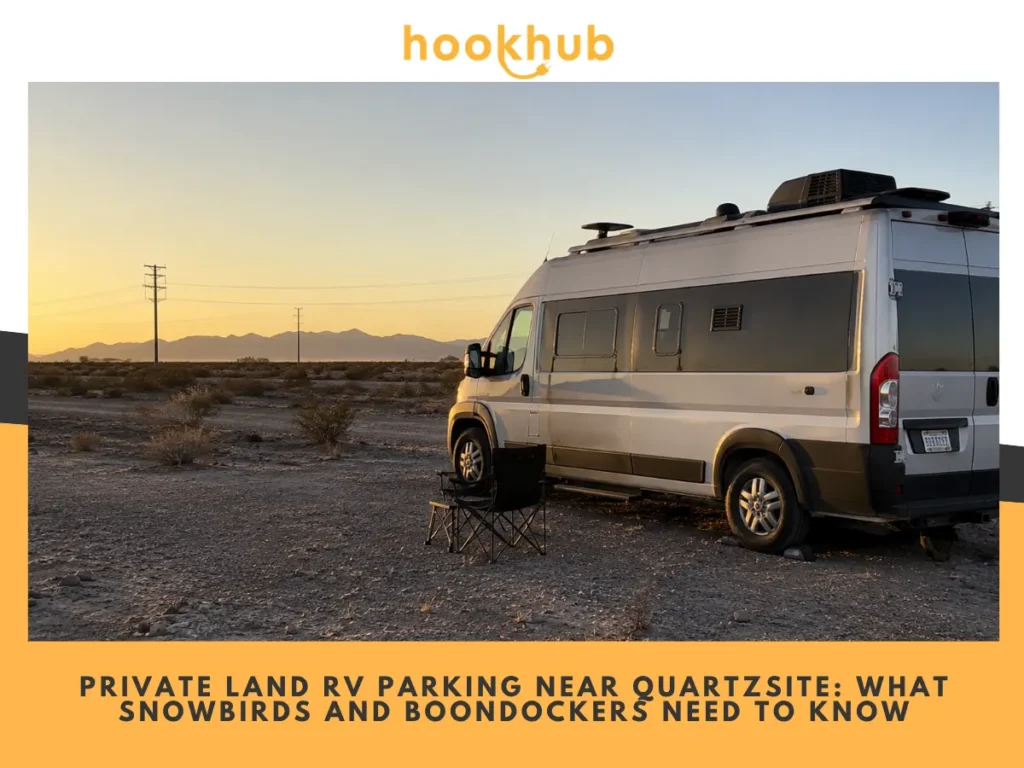
For snowbirds planning to spend the winter months somewhere warmer, choosing where to park can shape the entire season.
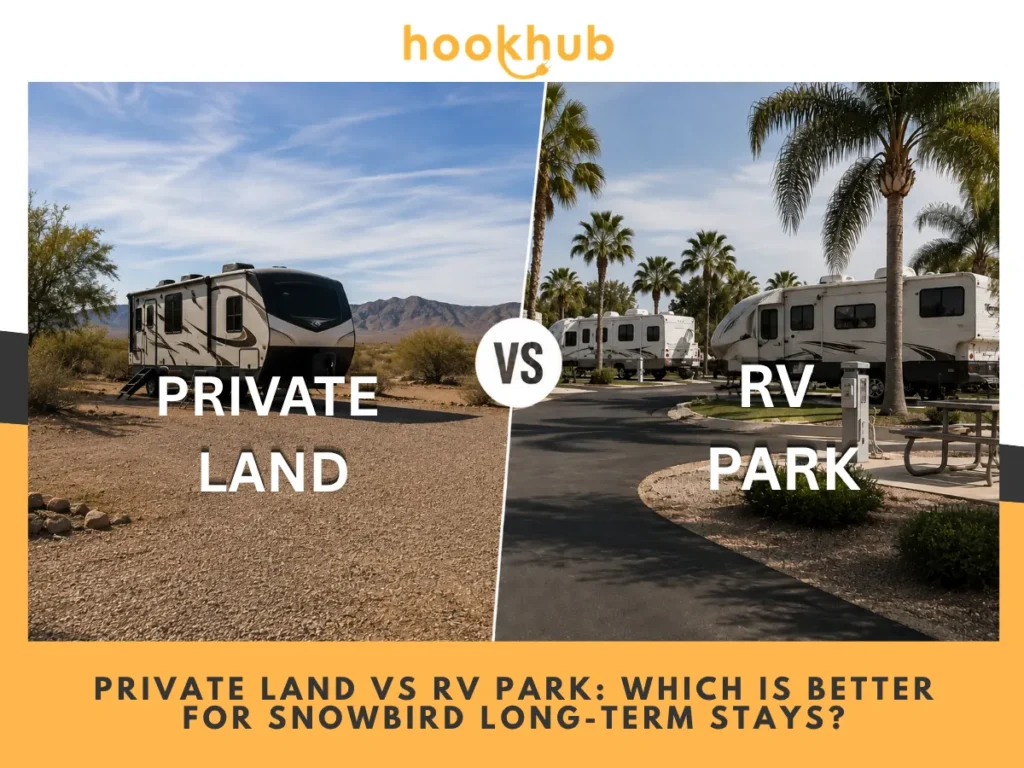
A traditional RV park or RV resort offers familiarity, structured amenities, and a built-in community. A private land stay offers something different: more space, fewer neighbors, direct communication with the property owner, and often more flexibility for a month-long or extended stay.
Neither option is automatically better. The right choice depends on what you want from your winter home base.
Do you picture mornings by a swimming pool, afternoons at the clubhouse, and organized activities with other RV travelers?
An RV resort may be exactly what you want. If your ideal winter involves a quieter site, more room around your rig, and fewer campground-style rules, private land may be the better fit.
For snowbirds comparing their RV options, understanding these differences before booking can make it much easier to find the right place to settle in for the season.
What RV Parks and Resorts Offer Snowbirds
An RV park or RV resort is designed specifically to accommodate multiple RVs in one location. That structure can make it an appealing option for snowbirds who want a predictable experience during the winter season.
Depending on the property, RV sites may include concrete pads, a picnic table, electric service, water, sewer, Wi-Fi, and other conveniences. Many RV parks also provide shared restroom and shower facilities, a bathhouse, laundry room, or other services that make an extended stay easier.
The biggest difference, however, is often the amenities.
A well-maintained RV resort near a popular snowbird destination may include a swimming pool, pool and hot tub area, clubhouse, dog park, playground, play area, pickleball court, fire pit, or golf cart access. Some resorts also organize seasonal activities that make it easier for RVers to meet people during a long winter stay.
For snowbirds who enjoy a social atmosphere, that can be a major advantage.
Many RV parks in popular winter destinations across Florida, Arizona, coastal Alabama, and other mild-winter regions are designed around seasonal guests. Returning snowbirds may even book the same RV spots year after year because the resort itself becomes part of their winter routine.
The tradeoff is that you are still staying in a campground environment.
Sites are often closer together, especially at busy resorts where maximizing the number of available RV sites is part of the business model. You may have neighbors on both sides, shared facilities, designated quiet hours, and rules covering everything from your tow vehicle to your rig size.
That is not necessarily a disadvantage. For many RV travelers, it is exactly the environment they want.
But if your goal is more privacy and fewer neighbors, it is worth comparing other camping options before automatically choosing an RV campground.
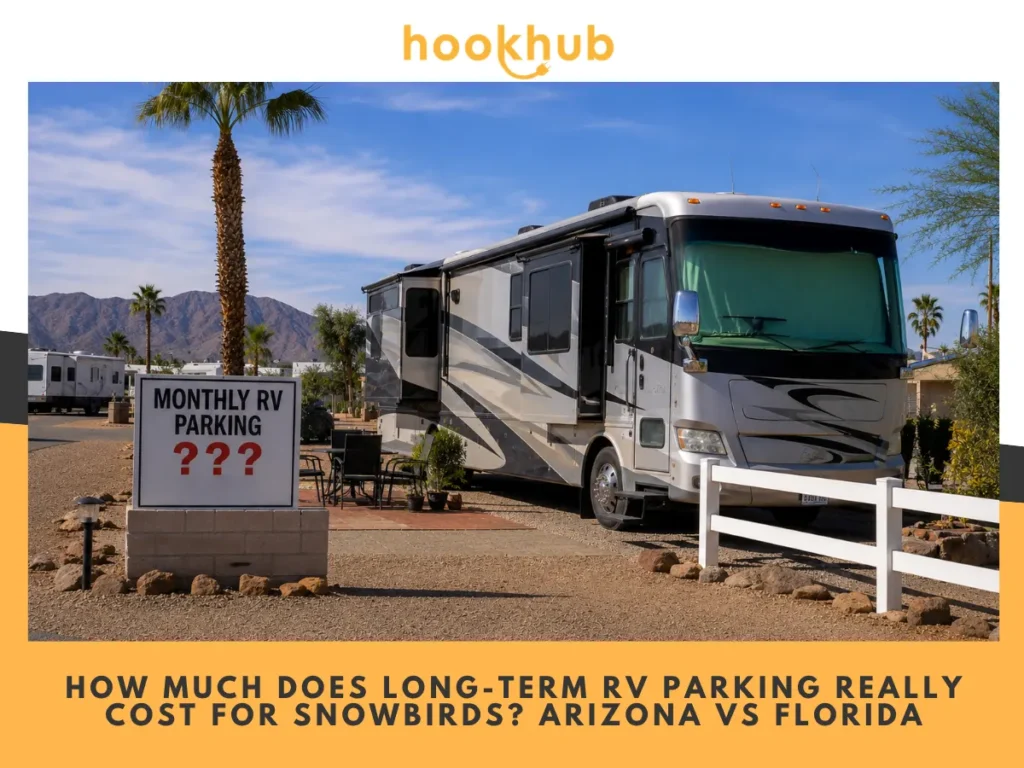
Is It Cheaper to Stay on Private Land or in an RV Park for a Month?
The answer depends heavily on the destination, season, hookup type, and amenities included.
A monthly RV rate at a resort may reflect more than the physical site itself. Access to amenities, staffed facilities, maintenance, recreation areas, and other services can all be built into the price.
Private land pricing is usually structured differently because you are not necessarily paying for a resort-style amenity package.
That does not mean every private site will be cheaper than every RV park. A private full-hookup site in a high-demand location can still command a premium, while a basic monthly site at an RV campground may be relatively affordable.
The better comparison is value.
If you plan to use the pool, clubhouse, organized activities, and other amenities every day, paying more for an RV resort may make sense. If you mainly need a safe, comfortable place to park with the right utility access, paying for amenities you rarely use may offer less value.
What Staying on Private Land Is Actually Like
Private land offers a very different type of snowbird RV experience.
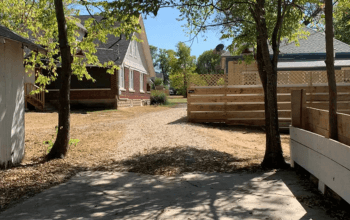
Instead of pulling into a large campground with rows of RVs, you might stay on a rural property, small farm, ranch, homestead, or unused section of privately owned acreage.
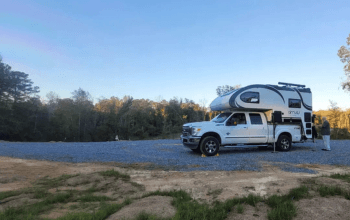
Some properties may accommodate only one RV. Others may have a small number of designated RV spots.
The result can feel much less like traditional camping and much more like having your own temporary home base.
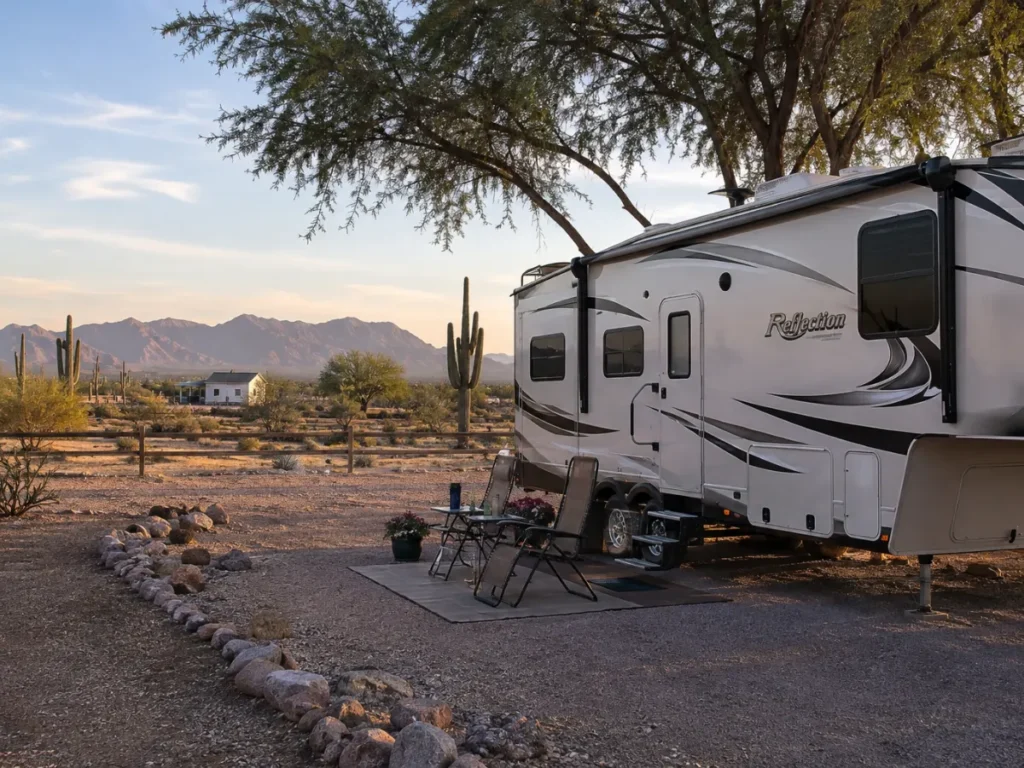
Depending on the property, you may wake up with more open space outside your window instead of another RV parked just a few feet away. There may be fewer shared facilities, fewer scheduled activities, and no crowded clubhouse.
For snowbirds who spend much of their time exploring local attractions, visiting family, kayaking, hiking, or simply enjoying warmer winter weather, that quieter setup can be appealing.
The experience also tends to be more personal.
Instead of dealing primarily with a commercial campground operation, you communicate with the person who owns the property. That can make it easier to discuss details such as arrival timing, parking arrangements, utility access, and expectations for a long-term stay.
Private land is not a substitute for an RV resort. It is a different category of stay altogether.
And for the right RVer, that difference is exactly the point.
“The best long-term RV stay is the one that gives you what you actually need, not simply the longest list of amenities.”
RV Resort vs Private Land: The Biggest Differences
When snowbirds compare long-term camping options, the decision usually comes down to a handful of practical differences.
Amenities vs Space
RV resorts generally win when it comes to access to amenities.
If you want a pool and hot tub, clubhouse events, laundry facilities, a dog park, a pickleball court, or a playground for visiting family, many resorts are specifically built to provide those conveniences onsite.
Private land usually wins on space.
Rather than having sites close together, you may have more distance between your rig and neighboring RVs, houses, or roads. Some properties may offer a picnic table or fire pit, but the main attraction is often the setting itself rather than a long list of recreational facilities.
Community vs Quiet
Some snowbirds want an active social calendar.
Others want quiet.
A seasonal RV resort can provide an instant community of people following similar winter migration patterns. That can be especially valuable for solo RV travelers or anyone who enjoys meeting other RVers.
Private land tends to offer a quieter experience with fewer people coming and going.
Neither is inherently better. The question is which environment you want to live in for several weeks or months.
Standard Rules vs Flexible Arrangements
Every RV park has its own policies, but commercial campgrounds generally rely on standardized rules to manage many guests efficiently.
Private land can allow for more direct communication.
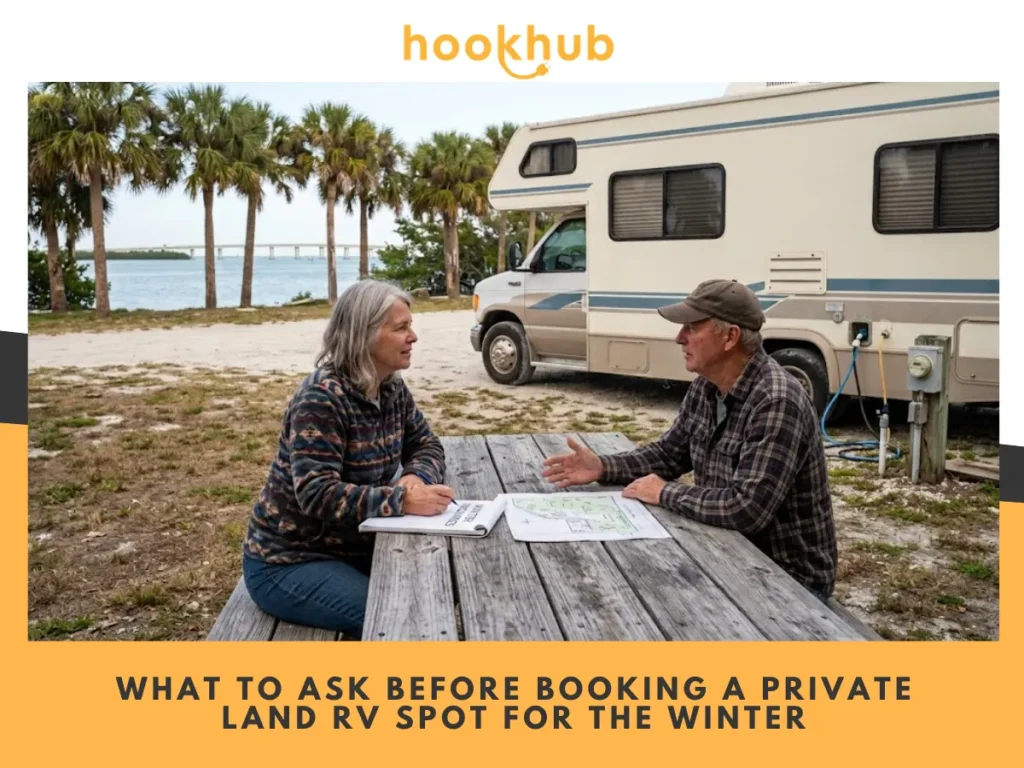
Because you are dealing with an individual host, there may be more opportunity to discuss the details of your stay before booking. That can be useful if you are traveling with an unusual rig configuration, need space for a tow vehicle, or are looking for an extended-stay option that does not fit neatly into a standard reservation calendar.
Flexibility is never guaranteed, but the conversation is often more direct.
Full Hookups: What Snowbirds Need to Confirm
For a short overnight stop, limited utilities may be manageable.
For a month-long stay, utility access matters much more.
Before booking any RV site, confirm exactly what the hookup includes.
A full-hookup site generally provides electric, water, and sewer connections. Partial hookups may provide only water and electric, while a dry camping site may provide no direct utility connections.
RV parks are generally designed to support ongoing RV utility use, but individual sites and campground sections can still vary.
Private land varies even more.
One property may offer a professionally installed full hookup, while another provides only electric access or a level place to park. Snowbirds should never assume that a listing includes sewer, potable water, Wi-Fi, or a specific electrical connection unless those details are clearly confirmed.
For an extended stay, ask about electrical amperage, water availability, wastewater arrangements, internet connectivity, and any utility charges before arrival.
A beautiful site is not a good long-term fit if it cannot support how you actually use your RV.
Can Snowbirds Get Full Hookups on Private Land?
Yes. Some private land hosts offer full hookups with water, sewer, and electric service.
Others offer partial hookups or dry sites.
Availability depends entirely on the individual property, which is why careful site selection matters. Review the listing details and confirm anything important to your stay before booking.
Location Matters More Than the Type of Property
It is easy to focus entirely on whether a property is an RV park, resort, campground, or private site.
But for a long winter stay, location may matter even more.
A beautiful RV resort can become inconvenient if every grocery run requires a long drive. A quiet private property may not work if you want to spend every day near beaches, restaurants, or major attractions.
Think about how you plan to spend an average week.
Do you need easy access to an interstate for regular travel?
Are you planning to visit nearby national or state parks?
Do you want to be close to coastal attractions?
Will you need medical services, grocery stores, or a place to refill propane nearby?
Snowbirds should also consider the winter weather of the surrounding region.
A destination known for a mild winter may still experience cold snaps, storms, or seasonal rain. Understanding the local conditions can help you choose a site and prepare your rig appropriately.
For many RVers, the ideal solution is not necessarily staying directly inside the busiest destination. A quieter site outside the main tourist area can provide more space while keeping local attractions within a reasonable drive.
Long-Term Stay Rules Are Worth Checking Before You Book
Long-term RV stays can be regulated differently depending on the property and location.
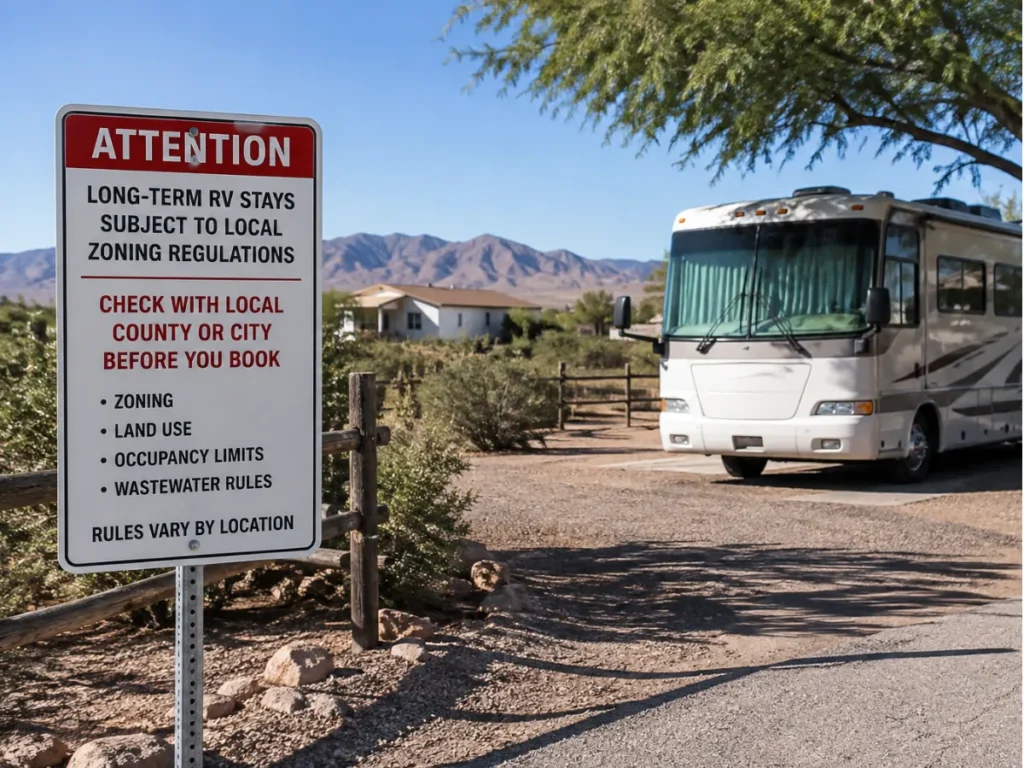
Commercial RV parks and resorts typically operate under established campground or lodging regulations. Private property stays may be subject to local zoning, land-use, occupancy, or wastewater rules.
Those requirements can vary significantly between counties and municipalities.
A stay that is permitted in one area may be restricted in another, particularly when an RV is occupied on private property for an extended period.
That does not mean private land is inherently complicated. It simply means that long-term stays should be arranged on properties where hosting is appropriate under local requirements.
Before committing to a seasonal stay, review the listing carefully, communicate with the host, and make sure the arrangement is suitable for the length of time you plan to stay.
Where Hookhub Fits Into a Snowbird Long-Term Stay
Finding an RV park is relatively straightforward. Most snowbird destinations have established campgrounds and resorts that appear in traditional travel searches.
Finding a legitimate private land stay has historically been more fragmented.
Hookhub is designed to make that option easier to explore by connecting RV travelers looking for longer stays with private landowners who have suitable space available.
Instead of assuming that every snowbird needs a traditional campground experience, travelers can compare private properties based on the factors that actually matter to them, including location, available hookups, site characteristics, and length-of-stay options.
For someone planning an extended winter stay, that creates another category to consider alongside traditional RV parks and resorts.
A snowbird who does not need a swimming pool, clubhouse, or organized resort activities may find that a quieter private property provides a better home base. Another traveler may compare the options and decide that access to resort amenities is worth paying for.
The goal is not to replace every RV park.
It is to give RVers more choices when traditional campgrounds are full, expensive, too crowded, or simply not the experience they want.
How to Choose the Right Snowbird RV Site
Before booking your winter stay, compare potential sites based on how you will actually live there.
Start with your non-negotiables. Your budget is part of that decision, so it helps to understand the costs of full-time RV living before comparing individual sites.
If you need full hookups, reliable Wi-Fi, onsite laundry facilities, and easy access to amenities, make sure those features are confirmed before booking.
If privacy is your priority, look closely at site spacing and the number of other RVs on the property. A listing described as quiet may still be located near a busy road, while a rural site may require a longer drive to everyday services.
Consider your rig as well.
Confirm whether the site is back-in or pull-through, whether the access road can accommodate your RV, and whether there is enough space for your tow vehicle. A level site can also make a significant difference during a long stay.
Finally, think beyond the campsite itself.
Your winter home base should support the lifestyle you want for the next few months, whether that means joining a resort community or having enough quiet space to enjoy your morning coffee without looking directly into your neighbor’s window.
Frequently Asked Questions
Are private RV sites suitable for the entire winter season?
They can be. Some private properties offer extended-stay options suitable for month-long or seasonal stays. Availability and maximum stay length vary by property and local regulations, so confirm the permitted length before booking.
Are RV parks better for first-time snowbirds?
Not necessarily, but some first-time snowbirds may appreciate the predictable infrastructure and onsite amenities offered by an established RV campground or resort. More experienced RVers may prefer the flexibility and privacy of private land, although either option can work for any experience level.
Do all RV resorts offer full hookups?
No. Many RV resorts offer full-hookup sites, but utility configurations can vary by property and site. Always verify the specific hookup available before making a reservation.
Is private land always quieter than an RV campground?
Not always. Private land often provides fewer neighboring RVs, but noise can come from nearby roads, farms, businesses, or other properties. Review the location carefully and ask the host questions if quiet is important to you.
Can I find monthly RV stays outside major snowbird destinations?
Yes. Looking beyond the most popular resort corridors can open up more RV options, including private properties in smaller communities. These locations can still provide reasonable access to attractions while offering a quieter home base.
What should I check before booking a long-term RV site?
Confirm the monthly rate, length-of-stay rules, hookup type, utility costs, site access, rig-size limitations, parking arrangements, internet availability, and cancellation terms. For private land, also make sure the stay is appropriate under applicable local requirements.
Final Thoughts: Choose the Winter Stay That Fits You
There is no single best place for every snowbird.
An RV resort can be an excellent choice if you want structured amenities, social activities, and the familiarity of a traditional campground community. A private land stay can make more sense if you value space, privacy, flexibility, and a quieter place to call home for the winter months.
The important thing is to compare what you are actually getting rather than choosing based on the label attached to the property.
Your ideal winter home base might be a full-service RV resort with a swimming pool and packed activity calendar.
Or it might be a peaceful piece of private land with enough room to finally hear something other than your neighbor’s awning opening at 7 a.m.
If the second option sounds more like your kind of winter, explore private land RV stays on Hookhub and find a spot that fits the way you actually want to spend the season.