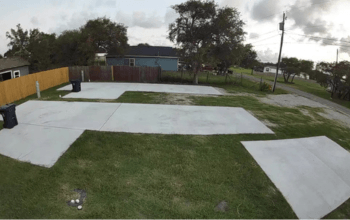
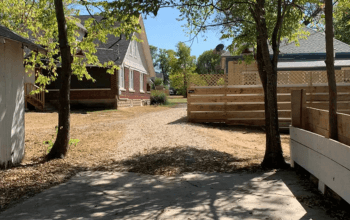
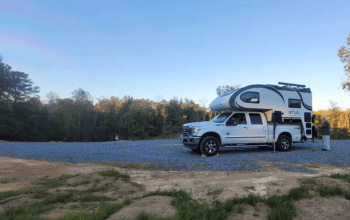
There is a moment that many full-time RVers describe almost the same way. You are parked somewhere beautiful, maybe a quiet field in the Texas Hill Country, a desert property outside Tucson, or a wooded stretch of private land in rural Arizona.
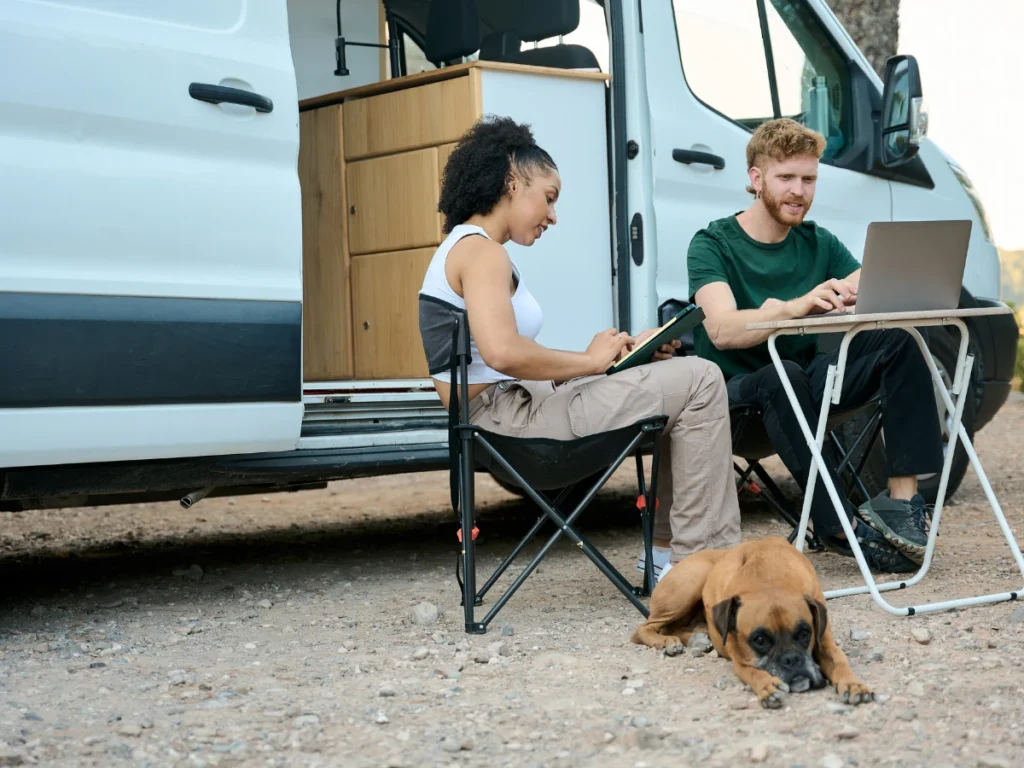
You open your laptop, join a Monday morning meeting, and realize you are doing it. You are genuinely working from your RV, and it is not a vacation anymore. It is everyday life.
That moment used to feel unusual. Today, it represents a rapidly growing movement.
This article draws on publicly available industry data from the RV Industry Association, KOA’s 2025 North American Camping Report, and Hookhub’s own host and traveler insights to explain what is driving private land demand and why landowners across the country should pay attention.
The numbers tell a clear story. According to the Recreation Vehicle Industry Association, 8.1 million U.S. households currently own an RV, while another 16.9 million are expected to buy an RV within the next five years. KOA’s 2025 camping report also found that more than 52 million North American households camped last year, with remote workers becoming increasingly represented within that group.
The RVIA additionally reports that 22% of RV owners now live in remote-work households, and more than half of those households have already worked remotely from an RV. That is no longer a niche category of travelers.
It is a structural shift in how people are choosing to live and work remotely, and it is creating demand that traditional campgrounds and RV parks were never designed to support.
Whether someone travels in a motorhome, travel trailer, camper, or campervan, the need for reliable long-term parking remains largely the same.
Key Takeaways
Why Remote Workers Are Choosing the RV Life
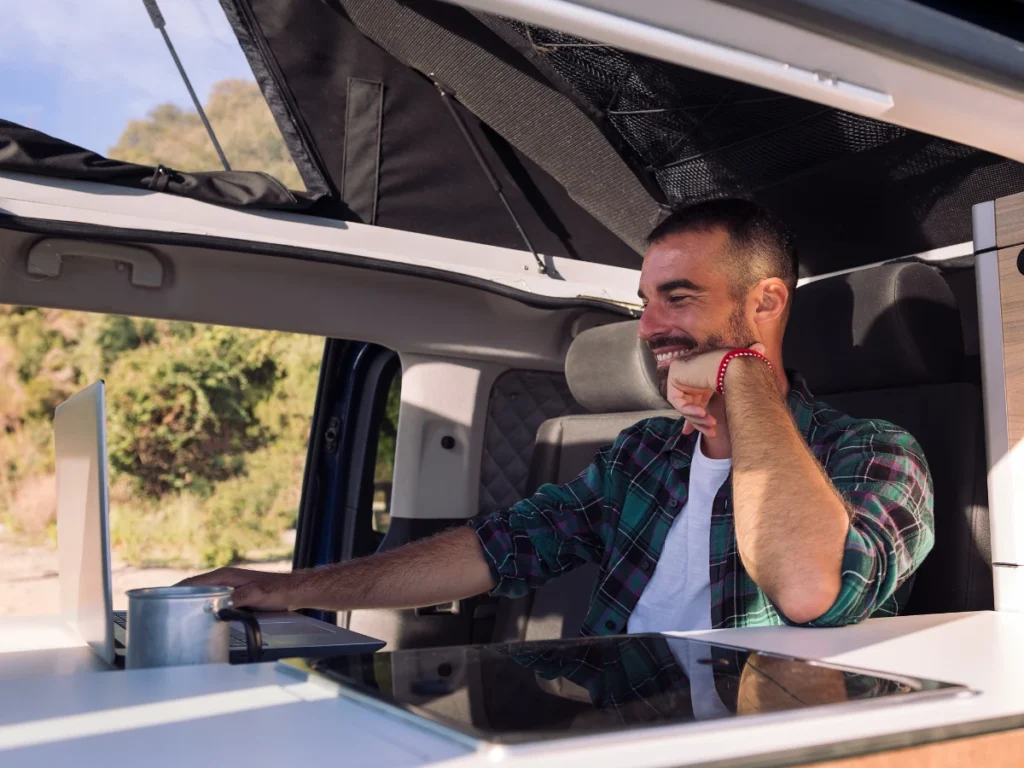
The appeal is not difficult to understand. Remote work broke the connection between employment and geography. If your employer no longer cares where your office space is located, many people naturally begin asking why they need to stay tied to one city.
For many people, the ability to work remotely in your RV has transformed what a career can look like. Instead of choosing between travel and stability, remote workers can maintain a consistent income while exploring a new location every few months.
Whether the job involves customer support, marketing, software development, virtual assistance, consulting, or another role that can be done remotely, the RV lifestyle offers flexibility that traditional housing cannot. For many, working remotely from your RV is no longer an experiment.
It is a sustainable way to live and work remotely, creating opportunities to travel and work without putting professional goals on hold.
For a growing segment of remote workers, including software developers, copywriters, consultants, travel nurses, designers, teachers, and many others whose remote job only requires a laptop and internet access, the RV increasingly feels less like a vacation vehicle and more like a practical home on wheels.
The economics matter too. Full-time RV living can cost substantially less than renting in a major metro area, especially when travelers become strategic about where they stay and how long they remain there. Monthly stays on private land are often dramatically cheaper than paying nightly campsite rates.
A landowner charging $400 to $700 per month for a quiet site with decent cell phone signal is offering something genuinely valuable to someone trying to balance work life with mobility. In many regions, that same renter could easily spend far more at crowded RV parks with constant turnover and limited privacy.
Many RVers begin their search for long-term parking through resources like Campendium, campground directories, and RV travel communities. What they quickly discover is that finding a dependable place to park your RV for several weeks or months is often harder than expected.
Popular campgrounds, RV parks, and public campsites frequently reach capacity during peak seasons. As a result, many full-time RVers choose to stay in one location longer, creating a healthier balance between productivity, cost control, and life on the road while reducing the stress of constantly searching for the next site.
The lifestyle itself has also evolved. It is not only vanlifers or young digital nomads experimenting with alternative living anymore. Families are doing it.
Couples nearing retirement are doing it. Professionals burned out by expensive urban living are doing it. Many people who once expected RV travel to feel temporary are now building long-term routines around working remotely from an RV or traveling in their RV full-time.
This shift toward extended stays is explored further in Long-Term RV Hosting vs. Short-Term Camping, where the differences in guest expectations, stay patterns, and hosting strategies become clear.
What Does “Workamping” Mean for Landowners?
Traditionally, workamping referred to RVers who exchanged labor for discounted campground stays. That often included helping manage a campground, handling maintenance tasks, or working front-desk operations in exchange for a campsite.
Today, the definition has broadened. Many workampers are now remote workers, freelancers, contractors, or self-employed professionals who simply want an affordable, long-term place to stay while they continue earning income online.
They are not necessarily looking for luxury amenities. Most simply want a stable site, a quiet work environment, and enough connectivity to stay connected during the work day.
The Problem With RV Parks and Public Campgrounds
One thing people outside the RVing community often underestimate is how difficult it can be to secure a reliable long-term campsite.
Public campgrounds usually impose stay limits, often around 14 days, because their systems are designed around short recreational visits rather than full-time RV living. That structure does not work well for remote workers who need consistency, routine, and uninterrupted internet access.
The wifi in many campgrounds is either unreliable or overloaded. Noise levels fluctuate constantly. Campsites turn over every few days. Even simple things like maintaining a predictable work schedule become difficult in heavily trafficked public spaces.
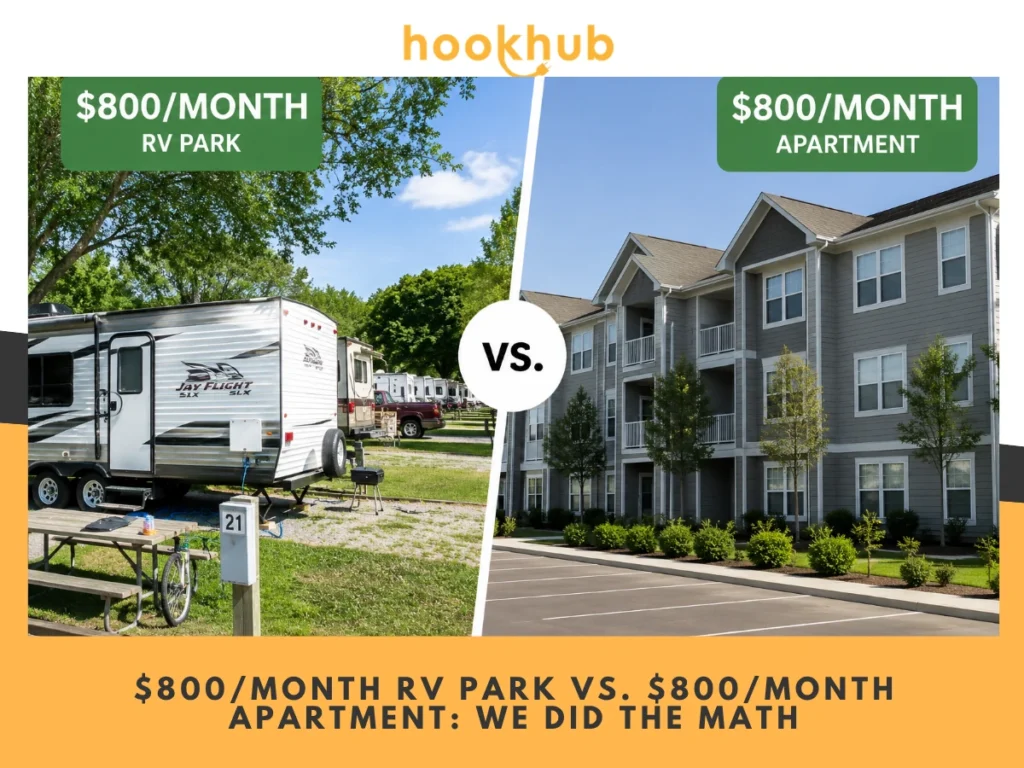
Traditional RV parks offer more monthly options, but they come with their own challenges. Sites are frequently crowded together. Rules can feel rigid. Monthly pricing in high-demand regions can easily reach $800 to $1,500 or more.
Beginners often underestimate how competitive long-term RV parking has become. It is one of the first major friction points many people encounter after hitting the road full-time.
Private land changes that equation.
What Private Land Offers That Campgrounds Cannot
A private property, whether it is a ranch outside Tucson, a semi-rural lot in Florida, or unused acreage in the Ozarks, can provide something that crowded campgrounds often cannot: space, quiet, and flexibility.
For remote workers, those advantages often matter more than resort-style amenities. Most are not searching for swimming pools or organized activities. They are searching for stability, a place where they can maintain a productive work routine while enjoying the freedom of the RV lifestyle.
Reliable internet remains one of the most important pieces of the equation. Many full-time RVers carry a mobile hotspot, backup carrier plans, Starlink systems, and signal boosters because they know campground Wi-Fi cannot always be trusted.
Internet planning remains one of the most important parts of working remotely from an RV or any mobile setup. Experienced travelers often combine a mobile hotspot, Starlink, and a secondary carrier to ensure they stay connected.
Resources such as the Mobile Internet Resource Center help RVers compare coverage maps, evaluate data plans, and estimate how much bandwidth they may need. For professionals who handle video calls, upload large files, or consume a lot of data, having multiple connectivity options is often considered essential.
What RVers cannot create for themselves is physical space. That is exactly where private landowners hold the advantage.
Landowners who communicate honestly about connectivity, power access, shade, parking conditions, and accessibility tend to attract the best long-term renters. Many remote workers are entirely self-sufficient and do not expect hosts to provide wifi.
They simply want transparency so they can evaluate whether the property supports their setup.
Many of these considerations are discussed in What Makes a Great RV Parking Property?, which explores the features experienced RV travelers value most when choosing a long-term stay.
How Much Can Landowners Realistically Earn?
Hookhub’s public host data suggests active hosts earn between $8,000 and $15,000 annually on average. Property owners can also use the How Much Can Your Land Earn?
Calculator to estimate income potential based on location, amenities, and demand.
For a single monthly RV site located near high-demand travel corridors, monthly revenue between $400 and $700 per site is realistic depending on location, access, and amenities. In premium winter regions like Arizona, Texas, and Florida, experienced hosts may earn even more during peak demand periods.
Landowners evaluating the opportunity may also find Can You Make Money Renting Land to RV Travelers?
Helpful for understanding real-world hosting economics.
Importantly, landowners do not necessarily need full hookups to begin hosting. A dry campsite or water-only setup can still appeal to experienced full-time RVers who already manage their own power and internet systems.
The Geography of Demand
Remote work did not just free people from offices. It also freed many workers from expensive cities.
Arizona, Texas, Florida, and the Carolinas continue to dominate winter RV demand. During warmer months, travelers often migrate toward Colorado, Utah, Montana, the Pacific Northwest, and the upper Midwest.
Many full-time RVers intentionally plan to camp near areas with strong mobile coverage and access to essential services. Some prefer traditional RV-friendly destinations, while others seek quieter private properties where they can focus during the work week and use their time to explore during evenings and weekends.
Because RV travel allows you to move between regions throughout the year, many travelers now structure their routines around weather patterns, seasonal opportunities, and preferred lifestyles.
That demand pattern matters for landowners because it means private land demand is not isolated to one region. It follows weather, seasonal migration, and remote-work corridors throughout the country.
Arizona provides a useful example of many of the forces driving long-term RV demand. Hookhub’s own platform content frequently highlights the state as a strong early-growth market because of its large snowbird population and concentration of long-term RV travelers.
During snowbird season, typically from November through March, thousands of RV travelers move into Arizona seeking mild winter temperatures. Areas surrounding Phoenix, Mesa, Apache Junction, and other parts of the metro area often experience especially strong demand.
Arizona’s summer heat creates practical considerations for hosts as well. Long-term renters frequently prioritize reliable electrical service, particularly 50-amp hookups, because air conditioning becomes essential when temperatures regularly exceed 110°F.
For landowners, understanding these seasonal needs can help identify opportunities to attract longer stays and potentially command higher rates.
Still, demand is expanding well beyond the Southwest. The work-from-RV movement is increasingly visible across multiple regions as more people embrace the flexibility of living and working remotely.
Why This Creates a Genuine Opportunity for Landowners
One of the most important insights from Hookhub’s host data is that renter demand is not the main issue. Supply is.
Many landowners assume they need to build a campground before they can participate in the RV market. In reality, that assumption often prevents otherwise suitable properties from ever being listed.
Most long-term remote workers are not looking for a resort experience. They are looking for stability, privacy, and accurate information about the property.
A simple site with good access and reliable connectivity may be far more attractive than a heavily developed property that does not match their practical needs.
Landowners who are unsure whether their property qualifies can explore List Your Land for RV Parking to better understand the basic requirements and hosting process.
In reality, the activation threshold is often much lower.
According to Hookhub, hosts can create a listing in as little as five to ten minutes. No amenities are required to begin. Hosts keep 90% of earnings, with platform fees set at 10% for shorter stays and 8% for longer-term bookings.
Platforms like Hookhub also handle payment processing, identity verification, guest vetting, and insurance infrastructure, reducing many of the psychological barriers that stop first-time hosts from listing.
For landowners who already understand rural property, RV travel patterns, or long-term hosting needs, the business model often feels surprisingly intuitive. You are not building a commercial campground.
You are offering access to underutilized land for responsible travelers who already know how to manage their own RV lifestyle.
The modern remote-work renter is often exactly the type of guest most hosts hope to attract: stable, employed, schedule-oriented, and interested in long-term stays rather than high-turnover weekend traffic.
Understanding the Modern Work-From-RV Renter
Not every RVer behaves the same way, and understanding who is driving demand matters.
The typical work-from-RV renter often falls within the 35 to 54 age range and may belong to a dual-income household. Many hold remote jobs with structured schedules, Monday through Friday responsibilities, and a strong dependence on reliable internet.
These travelers are usually not party campers. They plan carefully, often booking stays 30 to 90 days in advance. Accuracy matters to them more than flashy amenities.
What they need from hosts is straightforward:
- Honest communication about cell phone signal quality
- A reasonably level campsite
- Clear arrival instructions
- Reliable access conditions
- Respect for their work schedule during business hours
What they generally do not need is a resort environment.
Pools, camp stores, and organized activities may be nice extras, but they are rarely the deciding factor when choosing between private land and a crowded RV park.
What Internet Setup Do Most Remote RVers Bring?
Most experienced RVers working remotely carry multiple connectivity layers.
That often includes:
- A primary mobile hotspot
- Backup carrier plans
- Starlink or other satellite internet systems
- Cell signal boosters
- Data redundancy plans for heavy usage periods
Many remote workers also maintain backup power systems because losing connectivity can directly impact income.
Reliable internet is no longer optional for this group. It is essential infrastructure.
The Landowner’s Practical Next Step
If you own rural or semi-rural land and have been observing the growth of the RV lifestyle from a distance, the question is no longer whether demand exists.
It does.
The more important question is whether your property fits local zoning requirements and whether it offers the basic conditions long-term RV renters value most.
In practice, zoning and HOA restrictions are often the first hurdles new hosts encounter. Some landowners discover that RV stays are treated differently depending on stay length, utility setup, or whether compensation is involved. Understanding those rules early can prevent costly surprises later and help hosts evaluate whether their property is suitable before investing time or money.
Local regulations vary significantly from county to county, and landowners should always verify compliance requirements before hosting. Hookhub provides onboarding guidance designed to help hosts navigate those early questions more confidently.
Local regulations vary significantly from county to county, and landowners should always verify compliance requirements before hosting. Hookhub provides onboarding guidance designed to help hosts navigate those early questions more confidently.
Beyond zoning, the practical setup process is often simpler than expected. A dry site with decent access, stable ground conditions, and strong connectivity may already appeal to long-term renters without requiring major investment.
Many remote workers already carry their own internet systems, solar equipment, and self-contained utilities. Reviewing existing Browse RV Parking Listings can help landowners better understand what successful properties look like and what long-term RV renters typically prioritize.
What they are truly searching for is reliable space.
The work-from-RV movement has created a growing category of renter that is responsible, employed, and actively searching for flexible long-term parking options outside traditional campgrounds. Platforms like Hookhub exist specifically to connect those renters with landowners while simplifying payments, guest screening, and operational logistics.
Conclusion
The work-from-RV movement no longer looks temporary.
Remote work policies have become deeply embedded across multiple industries. RV ownership projections continue climbing. And more workers are discovering that living and working from an RV is financially and professionally sustainable.
As that shift continues, the demand for quiet, flexible, long-term RV parking on private land will likely continue growing faster than traditional campground infrastructure can expand.
That creates a meaningful opening for landowners willing to move early, communicate honestly, and understand what long-term RV renters genuinely value.
For many properties, the opportunity already exists. The first step is simply recognizing that unused land may now hold value in an entirely different way.
FAQs
What types of jobs allow people to work from an RV?
Many remote jobs are compatible with the RV lifestyle, including software development, customer service, marketing, bookkeeping, consulting, virtual assistance, sales, and design. Travel nurses also commonly use RVs as temporary housing between assignments.
As cellular coverage improves and satellite internet services like Starlink become more accessible, the number of types of jobs that support location-independent work continues to grow.
Do remote RV workers usually rely on campground wifi?
Most experienced RVers avoid depending entirely on campground wifi because speeds and reliability vary significantly. Instead, many use mobile hotspot systems, Starlink, carrier redundancy plans, and cellular boosters to maintain reliable internet access.
Is boondocking compatible with remote work?
For some RVers, yes. Experienced travelers who have strong solar setups, upgraded RV batteries, and reliable mobile internet systems may successfully work remotely while boondocking.
However, many remote workers still prefer private land because it offers better stability for long-term productivity.
Do landowners need hookups before listing?
Not necessarily. Many experienced RVers are self-contained and comfortable managing their own utilities. Even a basic campsite with good access and strong connectivity may attract long-term renters.
Why are long-term RV stays becoming more common?
Many full-time RVers are choosing slower travel patterns because constantly moving increases fuel costs, planning stress, and scheduling disruptions. Staying in one place longer often creates a better balance between work responsibilities, relaxation, and exploring a region more deeply.