
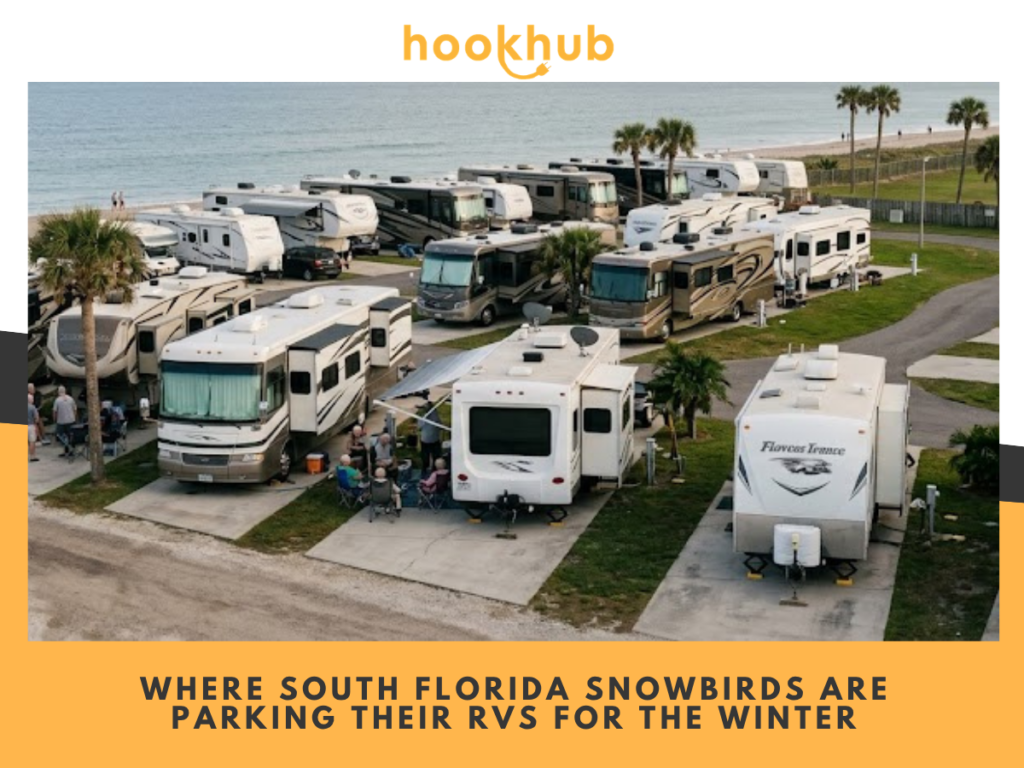
Every year, snowbird season brings a predictable shift.
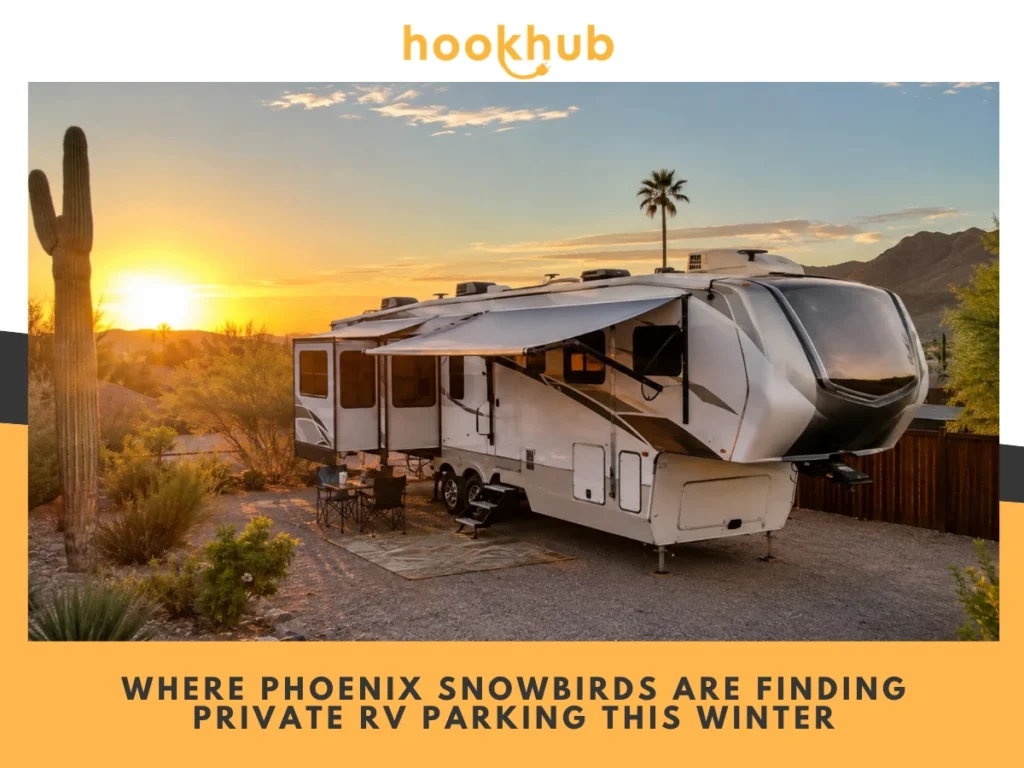
Many snowbirds arrive in Arizona for the winter months, while others begin preparing for heading north at the end of the season. This annual migration creates a unique overlap: rising demand for RV stays and a growing number of unoccupied homes during the hot summer months.
For landowners, that can look like an easy opportunity. Host RV travelers, generate income, and make use of idle space.
But in reality, it’s not that simple.
Ignoring zoning laws while hosting RVs, or failing to properly prepare your Arizona home before leaving, can lead to fines, system failures, property damage, or forced shutdowns.
This guide walks through both sides of that equation. You’ll understand what zoning laws actually mean in practice, what can go wrong if you ignore them, and how to follow a snowbird checklist that protects your home and keeps your setup stable and compliant.
Key Takeaways
- Zoning laws determine whether RV hosting is allowed and how it must be set up
- Violations can lead to fines, legal action, and forced guest removal
- Snowbird season increases both demand and enforcement visibility
- Preparing your Arizona home properly reduces risk during summer months
- A structured system helps create a more predictable, worry-free setup
Understanding RV Zoning Regulations in Practice
Zoning laws are not just technical rules. They define how your property is interpreted by your county, and that interpretation directly affects whether you can host RVs.
For a deeper breakdown of how zoning classifications work across regions, resources like the American Planning Association provide helpful guidance.
Most Arizona properties fall under residential, agricultural, or rural classifications. On paper, rural or agricultural land often allows more flexibility, while residential zones are more restrictive.
But the real issue is not just zoning type. It’s how your RV use is classified.
An RV on your property might be treated as:
- a temporary stay during snowbird season
- a dwelling unit if used long-term
- or a commercial activity if you’re charging guests
That classification determines whether you need permits, inspections, or upgraded systems.
This is where many landowners run into problems. A short-term setup can quietly turn into a long-term use without realizing it, especially when snowbirds stay for 30 to 90 nights.
At that point, your setup is no longer informal. It’s regulated.
What Actually Happens When Zoning Is Ignored
Most zoning violations don’t start with enforcement. They start with visibility.
Everything may seem fine at first. You host a guest, set up basic utilities, and the system appears to work.
Then something triggers attention.
It could be increased traffic, multiple RVs, or a neighbor noticing activity on a property that used to be quiet. Once a complaint is filed, local authorities may step in.
From there, things move quickly.
You may receive a violation notice or a stop-use order. In many cases, that means removing your guest immediately, even during an active stay. Fines can follow, and if the issue continues, those fines can stack daily.
If your setup includes unapproved plumbing, electrical connections, or waste systems, you may be required to remove or rebuild them entirely.
The financial hit is not just the penalty. It’s lost income, disrupted bookings, and the cost of fixing non-compliant infrastructure.
Why Snowbird Season Increases the Risk
During snowbird season, Arizona sees a surge of seasonal residents, especially across the Phoenix metro and surrounding areas in the Sonoran Desert.
This creates opportunity, but it also increases exposure.
More RVs on properties, more movement in neighborhoods, and more unoccupied homes mean higher visibility. At the same time, enforcement tends to be more active simply because activity is easier to notice.
There’s another layer to this.
Many snowbirds are preparing their Arizona home to sit unoccupied during the summer months. If that home is not properly prepared, issues like leaks, HVAC failure, or electrical problems can develop quickly in extreme heat.
So you’re not just managing hosting risk. You’re also managing property risk.
And both need to be handled correctly.
Local guidance from Maricopa County Planning and Development can help you confirm zoning requirements before hosting.
Real-World Scenario: How Problems Escalate
A landowner prepares for leaving Arizona at the end of the season. They decide to host an RV guest to offset costs.
They install a basic water system, connect power, and accept a long-term stay.
For a while, everything runs smoothly.
Then a neighbor files a complaint.
The county reviews the property and determines that the RV is functioning as a dwelling without proper zoning approval. A stop-use order is issued.
The guest has to leave immediately.
The landowner now faces:
- lost income during peak snowbird season
- potential fines
- costs to remove or modify utility systems
- and increased scrutiny moving forward
At the same time, their Arizona home was not fully prepared for the summer heat. A minor leak goes unnoticed, leading to water damage while the property sits unoccupied.
What looked like a simple income opportunity turns into a layered problem.
How to Legally Host RVs Without Creating Risk
Legal hosting is not just about permission. It’s about having the right systems in place.
Start with zoning confirmation. Understand how your property is classified and how RV hosting is interpreted locally.
Then move into infrastructure.
A stable setup includes a reliable water supply, safe electrical connections, and proper waste management. In Arizona’s climate, your HVAC system also plays a critical role, especially for long-term stays.
Following safety standards from the National Fire Protection Association can also help ensure your electrical and utility systems are safe and compliant.
This is where many setups fall short. It’s not enough to install hookups. They need to handle sustained use, especially during extreme temperatures.
But you do need to meet baseline expectations for daily living, not camping.
Want a clearer picture of what actually works?
Download the Arizona RV Hosting Playbook to see the exact setup, utilities, and pricing approach that performs best during snowbird season.
You also need to think about how your system operates over time. Dirt buildup, airflow issues, or poorly maintained systems can lead to failures that affect both your property and your guest experience.
Platforms like Hookhub help bring structure into this process, especially when you understand how the system works for landowners. Instead of managing everything manually, landowners use it to standardize bookings, reduce misunderstandings, and create clearer expectations between hosts and guests.
Ultimate Snowbird Checklist to Prepare Your Arizona Home
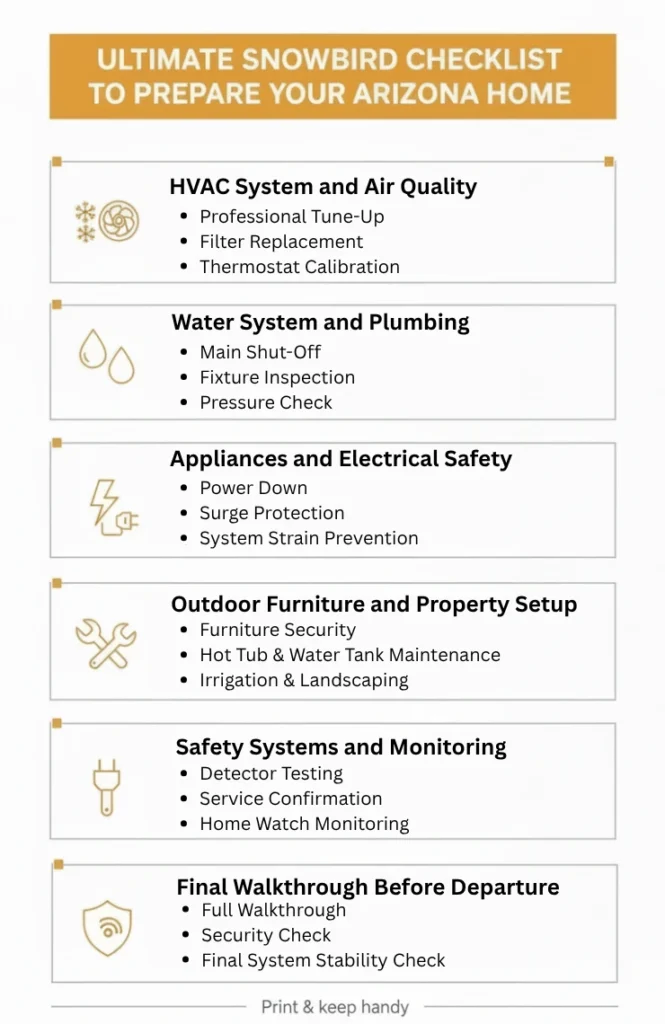
Preparing your Arizona home before heading north is not just routine. It’s what prevents small issues from turning into expensive problems during the summer months.
HVAC System and Air Quality
Start with HVAC maintenance. Make sure your HVAC system is in top shape and capable of handling extreme summer heat. Set your thermostat to maintain consistent airflow and protect indoor air quality.
Dust and dirt buildup can reduce efficiency over time, so it’s worth scheduling service before departure.
Water System and Plumbing
Turn off your water supply and inspect your plumbing system carefully.
Check every faucet and toilet. Look for potential leaks and make sure there’s no pressure buildup in the system. Even a small issue can escalate when a home sits unoccupied for months.
Appliances and Electrical Safety
Unplug non-essential appliances to reduce the risk of electrical issues, especially during monsoon season.
This is a simple step, but it plays a big role in preventing damage from power surges or system strain.
Outdoor Furniture and Property Setup
Secure patio furniture and outdoor furniture to protect against storms and extreme heat common in the Sonoran Desert.
If you have a hot tub or water tank, ensure everything is properly covered and maintained.
Arizona plants may also require attention. Working with a landscaper or setting up irrigation properly helps maintain your property while you’re away.
Safety Systems and Monitoring
Test smoke and carbon monoxide detectors and confirm that your home services are functioning correctly.
Many homeowners also consider home watch services to monitor the property while it’s unoccupied.
Final Walkthrough Before Departure
Before your departure date, do a full walkthrough.
Make sure everything is secured, systems are stable, and your home is ready for your arrival after the winter season. This final check is what gives most snowbirds real peace of mind.
Neighbor Complaints and HOA Conflicts
Zoning enforcement often starts with neighbors.
Common concerns include noise, traffic, and the visual impact of RVs on a property. In HOA communities, restrictions may be even stricter than local zoning laws.
This is where small details matter.
Keeping your property clean, limiting the number of RVs, and setting clear expectations with guests can prevent issues before they escalate.
If you want a deeper breakdown of behavior expectations, this RV etiquette guide can help reduce complaints and improve your setup.
Insurance and Liability: The Overlooked Risk
One of the most underestimated issues in RV hosting is insurance.
Standard homeowner policies often do not cover RV hosting, especially if it’s considered a commercial activity. That creates a coverage gap.
If a guest is injured, or if property damage occurs, you may be personally responsible.
This is why structure matters.
A well-managed setup includes not just zoning compliance but also clear systems, proper maintenance, and defined expectations.
Many landowners use platforms like Hookhub to reduce friction, organize communication, and create a more predictable hosting process, often supported by resources found in the Hookhub blog.
Where Hookhub Fits Into This
Hookhub is not just a listing platform. It functions as a structure that helps landowners manage RV hosting more clearly.
Instead of handling everything manually, you get a framework for:
- guest screening
- booking clarity
- communication
- and expectation setting
That structure reduces misunderstandings, helps manage risk, and makes the overall system easier to maintain over time.
For landowners trying to balance snowbird demand with compliance and property protection, that kind of clarity matters.
Many landowners also explore practical RV hosting tips to improve their setup and stay aligned with zoning, safety, and guest expectations.
Compliance Creates Stability
Hosting RVs during snowbird season can absolutely work.
But only when it’s done with the right foundation.
Ignoring zoning laws might seem like a shortcut, but it often leads to disruption, financial loss, and unnecessary stress. At the same time, failing to prepare your Arizona home before leaving exposes you to avoidable risks during the hottest months of the year.
When you approach both sides properly, everything changes.
You protect your home.
You reduce legal exposure.
You create a system that works long-term.
And instead of reacting to problems, you stay in control of your property and your income.
If you’re planning to turn your property into a reliable income stream, having the right structure from the start makes all the difference.
Download the Arizona RV Hosting Playbook to get a step-by-step breakdown of setup, pricing, and long-term hosting strategy built specifically for Arizona’s seasonal demand.
FAQ
What happens if I host RVs without permits?
You may face fines or enforcement actions or be required to remove guests immediately.
Do zoning laws vary across Arizona?
Yes. Each county and city has different requirements and interpretations.
Does insurance cover RV hosting?
Not always. Many standard policies exclude it, so additional coverage may be needed.
Can HOAs restrict RV hosting?
Yes. HOA rules can be stricter than local zoning laws.
Is RV hosting worth it?
Yes, but only when it’s set up correctly with proper compliance, infrastructure, and preparation.