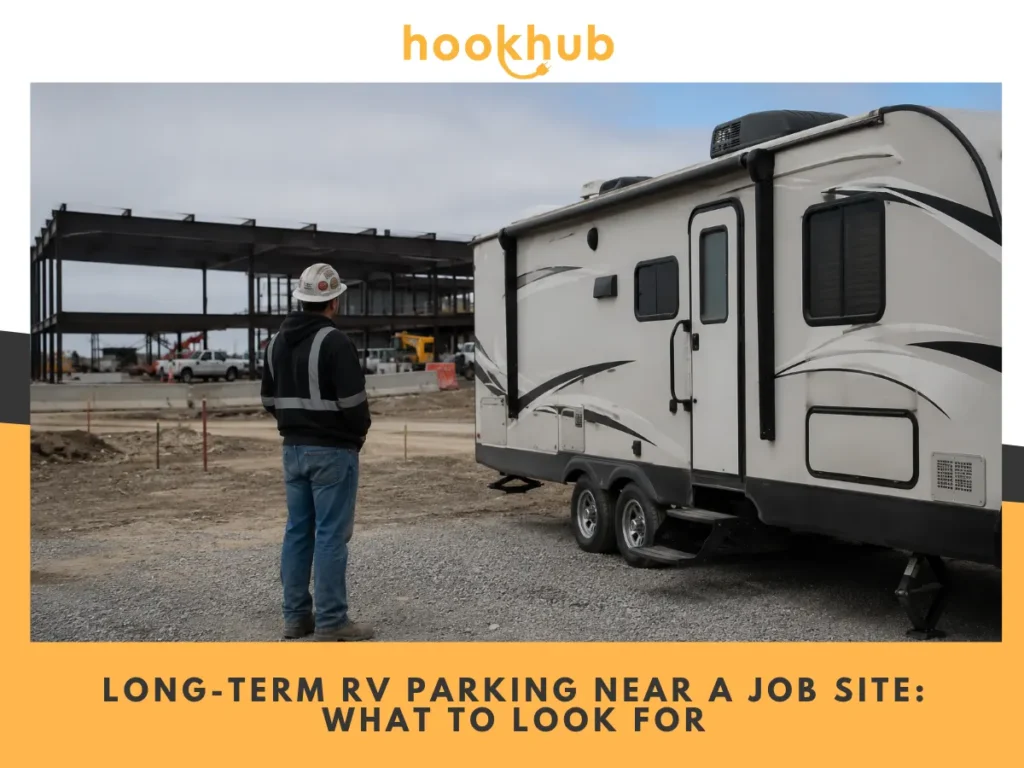
Finding long-term RV parking near a job site is less about finding the prettiest campsite and more about finding a site that makes everyday life easier.
For a traveling worker, the right RV park or private-land site can mean a shorter commute, lower monthly costs, reliable hookups, enough privacy to rest, and convenient access to the things you need between shifts.
That matters because the average American worker spends about 27 minutes commuting one way, while a significant share of workers have much longer commutes. Add that drive to a 10- or 12-hour shift, and the wrong RV parking location can turn an otherwise manageable work assignment into an exhausting routine.
Traveling construction crews, utility workers, pipeline workers, travel nurses, contractors, remote employees, and other full-time RVers often need something different from a weekend campground. They need a dependable place to stay for several weeks or months, with predictable rates, workable utilities, reasonable access to the job, and clear communication from a host or park manager.
If you’re preparing for a multi-week or multi-month assignment, here’s what to look for before you book.
How Far Should Long-Term RV Parking Be From a Job Site?
For many traveling workers, a 15- to 20-minute drive is a comfortable starting point when comparing long-term RV parking options.
It keeps the daily commute manageable without requiring you to live directly beside a construction project, hospital, industrial facility, or other workplace. Once the drive approaches 30 minutes each way, the extra time adds up quickly.
Think about it over the entire assignment. An additional 20 minutes each way adds more than three hours of driving to a five-day workweek. Over a month, that’s a substantial amount of time that could have gone toward sleeping, relaxing, maintaining your RV, or spending time with family.
The ideal distance also depends on your schedule. Someone working a standard eight-hour shift may be comfortable staying farther away, while someone working overnight or 12-hour shifts will probably benefit from the shortest practical commute.
Don’t judge location by mileage alone, either. Check the actual driving route, traffic, road conditions, and whether the roads are suitable for your RV and tow vehicle.
A site that looks close on a map isn’t necessarily convenient once you’re behind the wheel of a large RV.
Check the Commute During Your Actual Shift
Do not rely only on the travel time shown when you’re researching the site. Check the route around the time you will actually be driving it.
A hospital worker leaving before sunrise, a construction worker reporting to a job site at 6 a.m., and a plant worker changing shifts at 7 p.m. can experience very different traffic on the same road. Also consider shift changes at large industrial facilities, school traffic, construction zones, toll roads, and routes that may be uncomfortable to drive after a long overnight shift.
For a multi-month assignment, test the commute against your real work schedule before deciding that a site is “close enough.”
Match the Hookups to Your Actual Routine
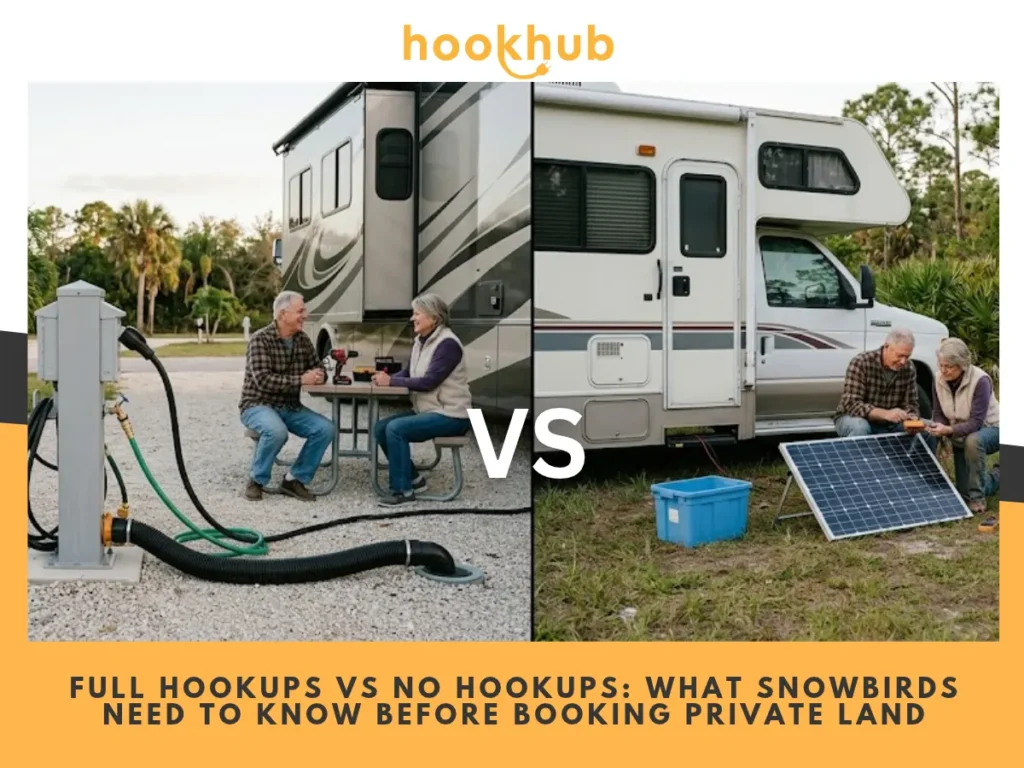
Full hookups are one of the most useful features to compare when looking for a long-term RV site.
At a typical RV park or campground, full hookups mean water, electricity, and sewer connections. But the exact setup can vary, so don’t assume every listing provides the same experience.
Electricity deserves particular attention during an extended stay. Ask whether the site offers 30-amp or 50-amp service and whether electricity is included in the monthly rate or billed separately.
Your power needs can also be much higher during a long-term RV stay than during a weekend trip. Heating and cooling equipment, refrigerators, laptops, appliances, televisions, and other everyday equipment can all contribute to your electricity usage.
Water and sewer matter too. A self-contained RV may be perfectly comfortable without a direct sewer hookup if the traveler has convenient access to a dump station. Someone staying for two or three months, however, may find a direct sewer connection worth paying more for.
If you’re unfamiliar with RV park hookups, understanding how full hookups work can help clarify what to expect from water, electricity, and sewer connections.
The important question isn’t simply, “Does this site have full hookups?”
It’s “What does this specific hookup arrangement mean for my RV?”
Before booking, confirm the electrical capacity, water source, sewer connection, utility limits, and whether any usage fees apply.
On rural properties, also ask whether the site uses a private well or septic system and whether there are any limits on long-term utility use. Find out who handles maintenance if a hookup, water connection, or electrical service stops working during your stay.

Monthly Rates Can Change the Cost of an RV Stay
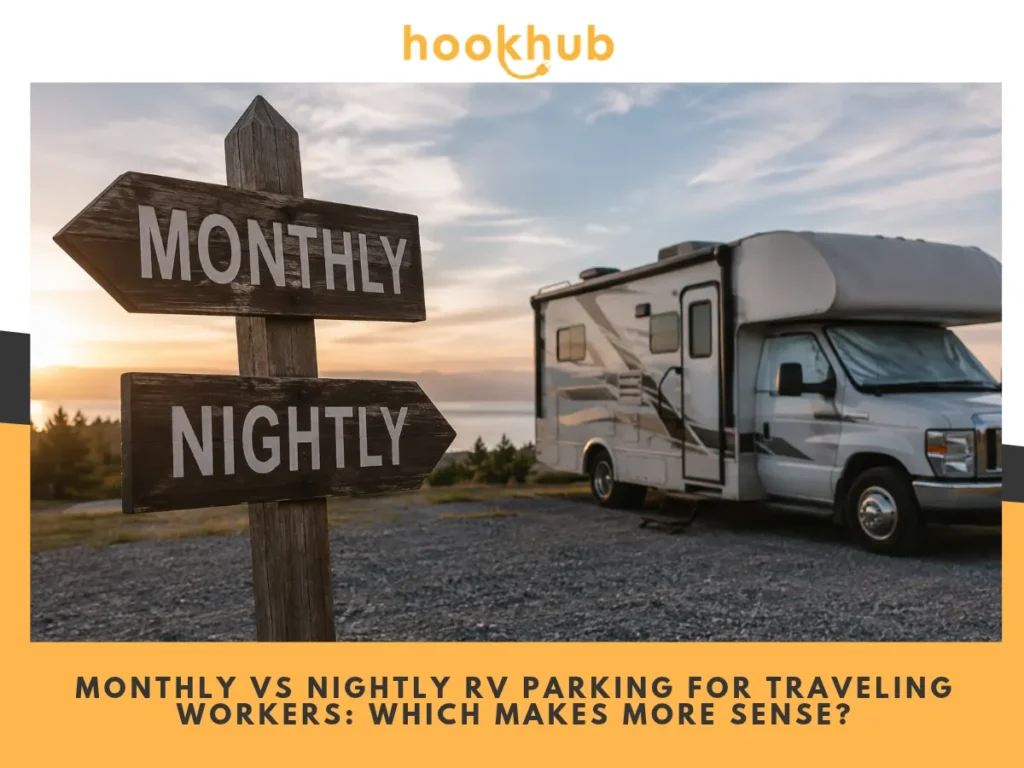
Nightly pricing makes sense when you’re staying for a weekend. It becomes a different calculation when you’re parking your RV for a month or longer.
For example, a $45 nightly rate works out to $1,350 over 30 nights before additional fees or taxes. A site offering a monthly rate could be substantially cheaper, depending on what’s included.
That’s why travelers with 30-, 60-, or 90-day job assignments should compare monthly and weekly pricing instead of simply multiplying the nightly rate.
Some RV parks offer weekly, monthly, seasonal, or annual arrangements. Private land hosts may also offer extended-stay rates designed around longer reservations.
The lowest advertised rate isn’t necessarily the cheapest option, though.
Look at the complete cost, including utilities, deposits, taxes, reservation fees, additional vehicle charges, and any other costs associated with the stay. Also check whether the monthly rate has a maximum stay limit or requires a separate agreement after a certain number of nights.
When comparing extended-stay options, monthly RV hosting versus nightly stays can help clarify the differences in pricing and terms.
If your job assignment could end early, ask about cancellation and early-departure terms before you book.
Look Beyond the RV Park Amenities
Amenities can make a long-term stay more comfortable, but they shouldn’t automatically determine which site you choose.
A traditional RV park may have a pool, clubhouse, shower facilities, laundry, fitness center, playground, recreation area, or planned activities. Those features can be valuable, especially for families or travelers who want a resort-style RV living experience.
But consider how often you’ll actually use them.
If you’re working ten or twelve hours a day, you may care more about a quiet campsite, reliable electricity, good cell service, and a comfortable place to sleep than whether the RV park has a pool.
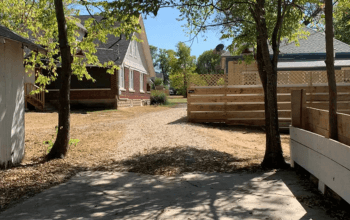
Private land sites can offer a different kind of value. Instead of a long list of shared amenities, you may get more space, fewer neighboring RVs, more privacy, and a quieter outdoor environment.
For a worker who spends most of the day at a job site, that can be the better trade.
Location Matters After the Workday Ends, Too
A good long-term RV location isn’t only close to work. It should also put everyday necessities within reasonable reach.
Before you book, check the distance to grocery stores, gas stations, pharmacies, restaurants, laundromats, healthcare facilities, and shopping.
These conveniences become much more important when you’re staying somewhere for a month or longer.
Recreation can matter too. A site near a forest, lake, beach, canyon, valley, state park, or national park can give you somewhere to unwind on your days off. In other locations, being close to a city may be more valuable because of restaurants, entertainment, shopping, and other facilities.
For example, a worker taking a seasonal assignment in Texas may prioritize convenient access to gas and grocery stores, while someone working near a national park may care more about outdoor recreation and scenic surroundings.
The best RV site balances job-site proximity with the lifestyle you actually want during your time off.
Privacy and Quiet Matter on a Long-Term Stay
A crowded campground can be perfectly enjoyable for a weekend. Living beside the same RVs for 60 or 90 days is a different experience.
After a long shift, many full-time RVers simply want a quiet place to eat, shower, sleep, and reset.
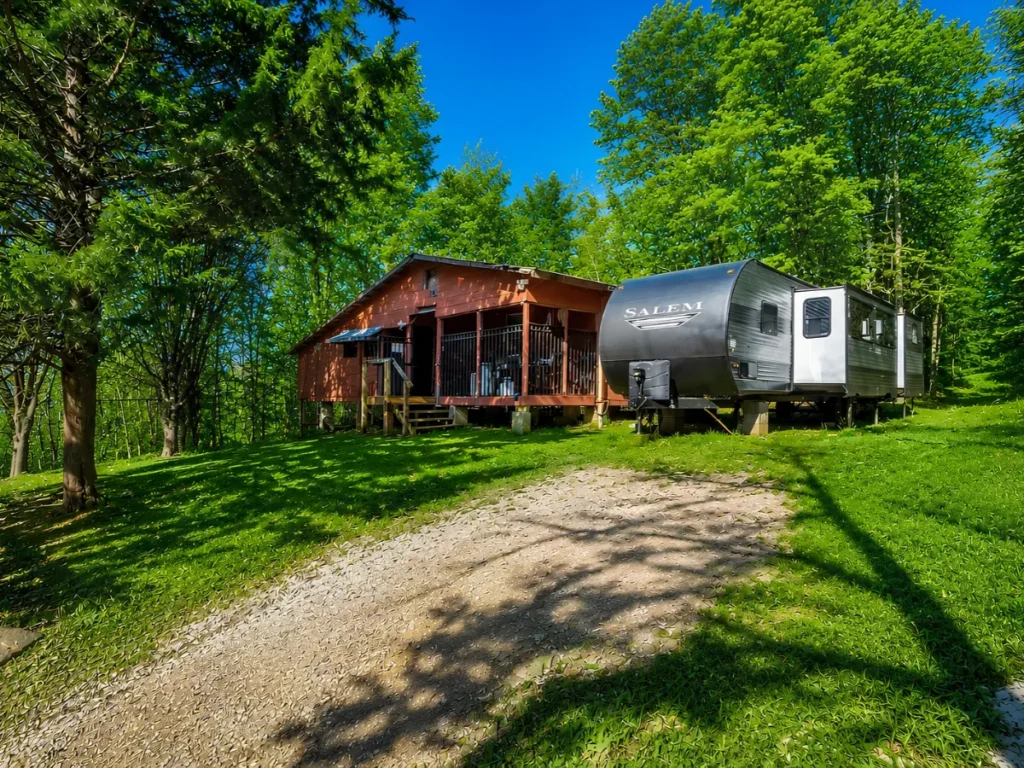
Sites with more space between RVs can provide a level of privacy that’s difficult to find in densely packed RV parks. This is one reason private-land RV parking can be appealing for extended stays.
Instead of choosing between a large commercial campground and constantly moving between campsites, travelers can sometimes find a private site that provides a quieter, more residential-feeling setup.
That doesn’t mean every private site is automatically better.
Ask about neighboring properties, road noise, lighting, property access, and how many other RVs will be staying there.
Is Private Land Parking Safe for a Traveling Worker?
Safety starts with knowing exactly where you’re staying and who you’re communicating with.
Before making a reservation, confirm the site’s location, access instructions, utility setup, parking area, and house rules. Read the listing carefully and ask the host about anything that isn’t clear.
For solo travelers, especially those arriving after a long shift or working unusual hours, practical details matter. You’ll want to know whether the property is easy to enter after dark, whether there is adequate lighting, and whether your RV can leave and return without difficulty.
If you’re booking through Hookhub, identity verification helps establish trust between hosts and travelers using the platform. Understanding how identity verification works can help you know what to expect before making a reservation.
Verification doesn’t replace common sense, though. You should still review the listing, communicate clearly, and make sure the property matches your needs before committing to a long stay.
Check Site Access Before Bringing Your RV
A site can look perfect online and still be difficult to reach with a large RV.
Check the road leading to the property, driveway width, turning space, overhead branches, low-clearance obstacles, and the condition of the parking area.
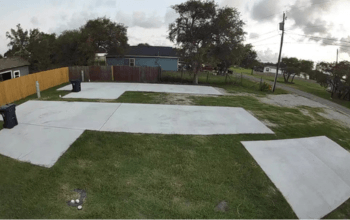
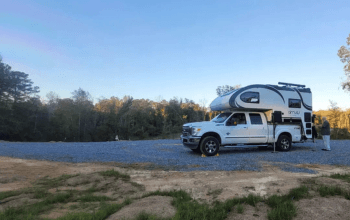
Concrete pads are convenient when available, but gravel, compacted dirt, or other surfaces may work perfectly well depending on the property and weather.
Ask whether the site has enough room for your specific RV, tow vehicle, and any additional vehicle you plan to bring.
This is particularly important for long-term stays because moving a large RV after you’ve already settled in is far more disruptive than discovering an access problem before booking.
Think About Weather and Seasonal Conditions
The best RV site in summer may not be the best site in winter.
For a job assignment running through colder months, ask how the property handles freezing temperatures. Water lines, exposed hookups, propane access, road conditions, and weather-related access can all become important.
In warmer states, shade, electricity capacity, air-conditioning use, and ventilation may matter more.
Seasonal RV parks can also have different availability and rate structures. Some operate year-round, while others have seasonal restrictions or maximum stay limits.
If you’re planning a winter stay in a state such as Texas or Arizona, ask about winter weather and utility access before booking. In colder regions, find out how the site handles freezing temperatures and whether water hookups remain available throughout the season.
The goal is to choose a site that works for the entire assignment—not just the first week.
Don’t Overlook Internet and Cell Service
Connectivity isn’t only a concern for remote employees.
Even workers who leave their RV for a job site may need reliable internet or cell service for scheduling, timesheets, dispatch communication, banking, video calls, streaming, and staying connected with family.
For remote workers, connectivity can be even more important.
Ask potential hosts about both Wi-Fi and cellular coverage. If the property is located in a rural forest, valley, canyon, or other remote area, don’t assume a strong connection is available simply because the listing mentions internet.
You may need a dedicated hotspot, cellular booster, or satellite internet as a backup.
For travelers who work from their RV, understanding the different RV internet options before arrival can prevent a frustrating first week.
Understand Restrictions Before You Book
Every RV park, campground, and private property can have its own rules.
Some sites have restrictions on the number of RVs, maximum stay length, additional vehicles, pets, generators, campfires, visitors, outdoor structures, or the type of RV allowed.
Long-term residents should also ask whether there are restrictions on receiving mail, storing belongings outside the RV, using outdoor furniture, or staying beyond the original reservation.
These rules aren’t necessarily a problem.
The problem is discovering them after you’ve already arrived.
Read the reservation terms carefully and ask questions before paying a deposit.
What Should You Ask Before Reserving a Long-Term RV Site?
Before booking, confirm the details that affect your daily routine and total cost.
Start with the actual monthly rate. Ask whether the advertised price includes electricity, water, sewer, taxes, deposits, and other fees.
Then confirm the hookups. Find out exactly what water, electric, and sewer connections are available, along with the site’s amp service and any usage limits.
Check the maximum stay as well. If your job assignment could run longer than expected, ask whether extensions are possible.
Look at the real driving distance to your job rather than relying only on the mileage shown in the listing. Then check what’s nearby, including grocery stores, gas stations, restaurants, shopping, healthcare, laundry, and outdoor attractions.
Finally, make sure your RV can physically access the property. Confirm road conditions, turning space, clearance, parking dimensions, and whether your tow vehicle will have enough room.
These questions take a few minutes before booking. Fixing a bad fit after you’ve moved your RV in can take considerably longer.
Where Hookhub Fits for Long-Term RV Parking
Traditional campgrounds and RV parks aren’t the only option for travelers who need a place to stay for several weeks or months.
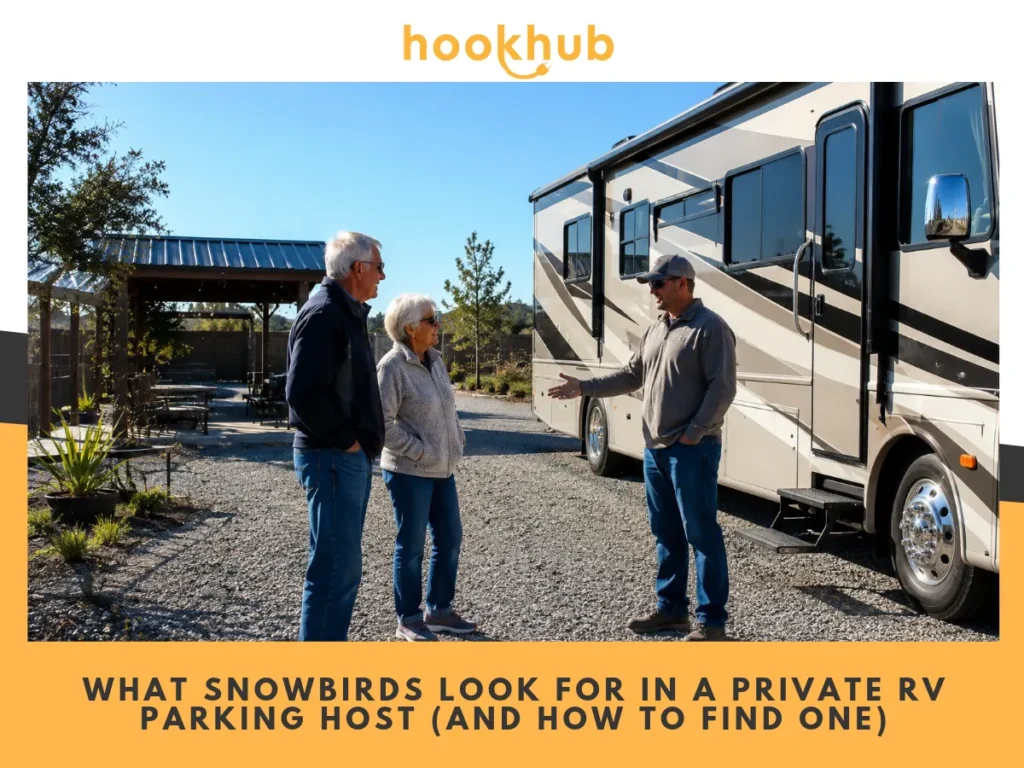
Hookhub connects RV travelers with private land hosts offering RV parking throughout the U.S. and Canada. The platform gives travelers another option when a traditional commercial RV park doesn’t fit their location, budget, or preferred lifestyle.
That’s particularly useful for traveling workers who don’t necessarily need a resort-style campground.
Instead of paying for amenities they may never use, they can focus their search on the things that actually matter: location, rate, hookups, privacy, access, and length of stay.
Long-term parking can also reduce the disruption of constantly moving between campsites. Staying in one place for the duration of a work assignment means less driving, less setup and teardown, and fewer reservations to manage.
Hookhub’s model is built around connecting landowners with travelers who need places to park and stay. That creates another option for RVers who want something between traditional campground living and completely off-grid camping.
“I lived the problem. I felt the panic of losing a place to stay. Hookhub exists because people deserve better options than that.”
That perspective matters for traveling workers whose RV isn’t simply a vacation vehicle. When your RV is your home, finding dependable parking near the next job isn’t a luxury. It’s part of making the entire work assignment function.
FAQ
What’s the difference between a monthly RV site and long-term parking on private land?
A monthly RV site is typically offered by an RV park or campground under a set rate and set of rules. Long-term private-land parking can provide a similar extended-stay arrangement while offering more privacy, fewer shared facilities, and direct communication with the landowner.
How far in advance should I book long-term RV parking near a job site?
Start looking as soon as your work assignment and dates are reasonably firm. Availability can vary significantly by location and season, and long-term sites near busy employment areas, major cities, beaches, and popular seasonal destinations may be more limited. Searching early also gives you more time to compare commute, utilities, rates, and stay terms instead of choosing based only on what remains available.
Are utilities included in long-term RV parking rates?
Not always. Some monthly rates include water and electricity, while others charge utilities separately. Ask specifically about electricity, water, sewer, and any usage limits before comparing rates between sites.
Do I need full hookups for a long-term work stay?
Not necessarily. Full hookups are convenient, particularly for full-time RV living, but your needs depend on your RV, work schedule, tank capacity, and access to dump facilities. Electricity capacity is particularly important if you’ll be using heating, cooling, appliances, and work equipment regularly.
Is an RV park or private land better for long-term RV living?
It depends on your priorities. An RV park may be the better choice if you want a pool, shower facilities, fitness center, clubhouse, organized activities, or other amenities. Private land may be better if you prioritize privacy, space, affordability, and a quieter environment.
Can I extend my stay if my job assignment runs longer?
Possibly. Extensions depend on availability and the host’s terms. If you think your assignment may continue, communicate with the host as early as possible rather than waiting until the original reservation is almost over.
What should I check if I’m staying through winter?
Ask about freezing temperatures, exposed water lines, propane access, snow or ice, road conditions, and whether the site operates year-round. A property that works well during summer may have very different conditions during winter.
Final Thoughts
The best long-term RV parking near a job site isn’t necessarily the RV park with the biggest pool, the most amenities, or the prettiest campsite.
It’s the site that works when you’re living there every day.
Look for a reasonable commute, a monthly rate that makes financial sense, utilities that match your RV, enough privacy to rest, reliable connectivity, easy RV access, and nearby essentials such as groceries and gas. Then consider the extras—whether that’s a fitness center, shower, pool, scenic forest, beach, state park, or nearby attraction.
For traveling workers and full-time RVers, those practical details can make the difference between an exhausting extended stay and a genuinely comfortable one.
When you’re ready to find a site for your next assignment, browse Hookhub’s RV parking locations and compare private-land options near the city, job site, or region where you’ll be working.
A little research before you book can save weeks of frustration after you arrive.