
Quick Answers
- Lyman Lake State Park is a 1,500-acre reservoir at 6,000 feet in northeastern Arizona — no horsepower restrictions, open to jet skis, speed boats, and water skiing
- Ancient Hopi petroglyphs line the shoreline trail on the lake’s peninsula — one of the few State Park petroglyph sites with guided interpretive tours
- The park campground has 38 full hookup RV sites plus tent sites, cabins, and beach camping, all year-round
- Private land near St. Johns through Hookhub starts at $12 per night — no park entrance fee required
- Spring and fall offer the best combination of fishing, wildlife viewing, and manageable crowds
Most RV travelers who explore Lyman Lake State Park arrive expecting a pleasant high-elevation getaway and leave talking about the petroglyphs.
The park covers 1,500 acres of reservoir at 6,000 feet in northeastern Arizona — large enough for unrestricted powerboating, deep enough for a serious walleye fishery, and surrounded by high desert terrain that gives the landscape a wider-open character than the forested lakes further west near Show Low. But it is the ancient rock art along the shoreline trail that surprises first-time visitors. Hopi Indian petroglyphs carved into the sandstone peninsula are accessible on a guided interpretive tour or a self-guided walk, making Lyman Lake one of the few state parks in Arizona where the cultural visit is as strong a reason to come as the fishing or the boating.
What Is Lyman Lake State Park?
Lyman Lake is a Lyman Reservoir impounded on the Little Colorado River near the town of St. Johns in Apache County — the geographic heart of northeastern Arizona. At 1,500 acres, it is substantially larger than other White Mountain-area lakes, giving it a horizon-scale presence that smaller high country lakes cannot match. The surrounding high desert landscape of juniper scrub, open grassland, and distant mountain vistas sets it apart from the ponderosa pine environment around Fool Hollow Lake and Show Low Lake to the northwest.
The park sits just off Highway 191, which runs north-south through the region from the Utah border to Tucson — making it one of the most accessible state park campgrounds in the eastern Arizona corridor for travelers coming up from Tucson or down from the Colorado Plateau. Springerville, approximately 17 miles north, is the nearest full-service town and the gateway community most closely associated with the park.
What Can You Do at Lyman Lake?
Fishing: The west end of the lake serves as a no-wake zone, creating a calmer environment where walleye, channel catfish, and largemouth bass concentrate away from the wake of the main lake’s water-sports traffic. The walleye fishery here is consistent and actively stocked. Anglers also target the deeper mid-lake structure for catfish. A fish cleaning station at the campground handles the practical end of a productive day.
Boating and water sports: Unlike the 10-horsepower limit on smaller high-elevation lakes in the region, Lyman Lake imposes no horsepower restriction on motorized watercraft. Jet skis, speed boats, and tow-sport rigs all operate on the main body of water. A water ski course in the northwest corner near the dam provides a designated area for performance boating. Canoes and kayaks share the lake without restriction — the no-wake zone on the west end gives non-motorized craft a quiet alternative to the main traffic.
Petroglyphs and cultural history: The park’s petroglyph trail follows the peninsula’s shoreline and passes ancient Hopi rock art carved into volcanic rock. Interpretive tours with park rangers provide historical and cultural context that a self-guided walk alone cannot replicate. The petroglyph and point trails are well-marked, not overly strenuous, and offer elevated views over the full lake from the peninsula ridge.
Wildlife viewing: Lyman Lake’s open high-desert landscape supports large-mammal populations that are seen less frequently in the more forested areas farther west. Pronghorn move through the grasslands around the lake. Elk and mule deer are common at dawn and dusk. Jackrabbits scurry along the shoreline trail throughout the day. The crepuscular activity window — an hour after sunrise and an hour before sunset — is the most productive time for wildlife observation on foot. The combination of low light pollution and open desert sky makes stargazing at the campground among the most rewarding in the Arizona State Parks system.
Nearby destinations: Petrified Forest National Park, southeast of St. Johns, is a half-day or full-day addition to any Lyman Lake trip — the fossilized logs, Painted Desert vista points, and ancient pueblo ruins add cultural and geological depth to the eastern Arizona experience. Big Lake in the Apache-Sitgreaves National Forest — roughly 40 miles southwest — extends the fishing options for a multi-day loop through the region. Sunrise Ski Resort is within an hour’s drive of winter visitors.
Mountain biking: The surrounding areas offer hundreds of miles of county roads and national forest access for gravel and maintained-dirt riding. The open terrain around the lake provides long, flat-to-rolling routes suited to loaded touring setups.
When Is the Best Time to Visit Lyman Lake with an RV?
Spring and fall are the strongest seasons. April through June brings warming water that activates the walleye and bass fishing, mild daytime temperatures in the upper 60s to low 80s, and a campground that is rarely at capacity on weekdays. The wildlife viewing window is excellent in spring — pronghorn fawns appear in May and early June, and migratory birds use the lake during the same period.
Fall — September through November — is arguably the best season of all. The lake’s water temperature drops into the productive range for walleye, the summer crowds thin, and the wide-open eastern Arizona sky transitions into some of the longest clear-weather windows of the year.
Summer is the peak season for boating and water sports. July and August bring families, jet skis, and weekend crowds that fill the campground. The convenience store in the Market is open from early April through September — outside that window, plan to source all supplies from Springerville or St. Johns.
Winter camping is available year-round. The park stays open even when the rest of northeastern Arizona sees snowfall, and the campground is often entirely empty from December through February. Shower facilities may be reduced, so self-contained rigs are the practical choice for winter stays.
Where to Park Your RV Near Lyman Lake State Park
Lyman Lake State Park Campground — On-Site
The park campground is the most direct option — 38 full-hookup RV sites with water, sewer, and electric on paved blacktop roads, with spacious layouts and no rig-size restrictions. Some pull-through sites are available alongside mostly back-in configurations. All campsites include picnic tables, fire rings, and shade ramadas where available. Clean restrooms with flush toilets and hot showers — noted across multiple reviews for unusually high water pressure — are distributed across the campground. A dump station is on-site and accessible to registered campers.
Beach camping is permitted at the lake’s edge for travelers who want water-level sites rather than the main campground loops. Four cabin rentals — including the Elk Cabin — offer tent-free accommodation options. The Elk Cabin and others offer lake views and convenient parking.
The Lyman Lake Market serves as the park Visitor Center and sells day-use and camping permits, hunting and fishing licenses, plus basic grocery items and ice. The convenience store component is open from April through September, offering bait, tackle, and firewood.
Day-use entrance fee is charged per vehicle for non-campers. Camping fees vary by site type — check the Arizona State Parks website for current per-night rates as fees change seasonally.
Private Land Near St. Johns — Hookhub Listings
These three listings are on Hookhub, which produced this guide. All three are in the Saint Johns and Concho area — the eastern Arizona corridor that also serves as the approach to Lyman Lake from Highway 191 and Highway 61.
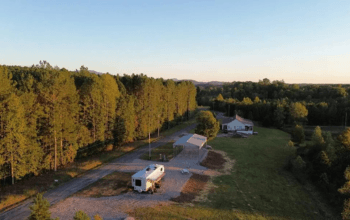
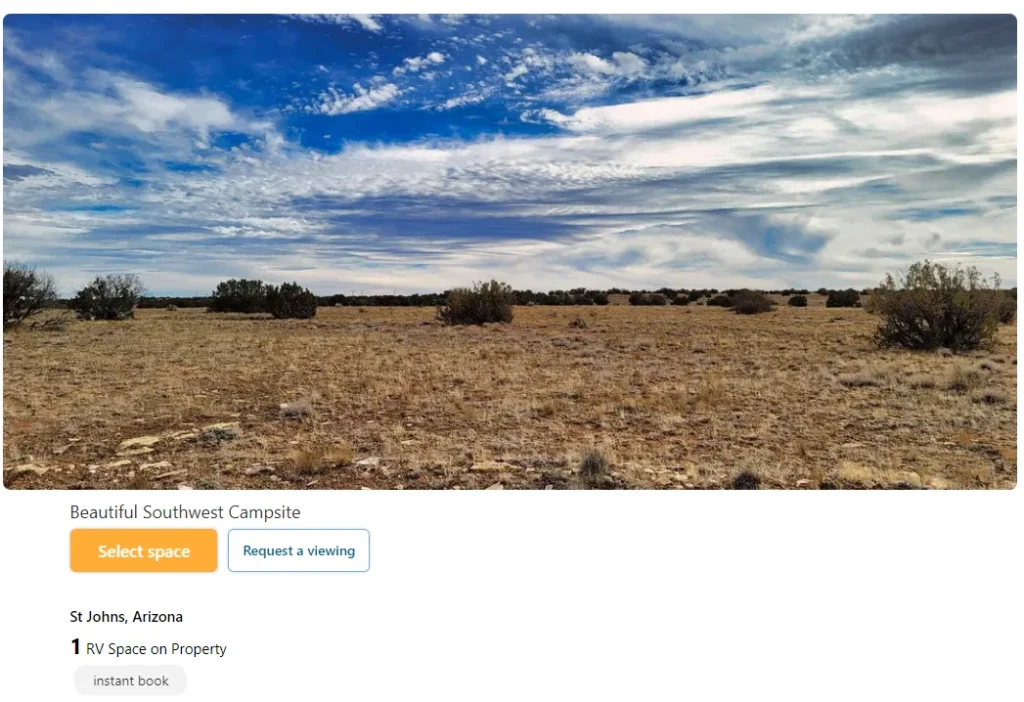
Beautiful Southwest Campsite in Saint Johns sits on 37.7 acres, approximately 10 miles from the park — the closest confirmed private land RV parking option to Lyman Lake in the Hookhub inventory. The site is 30 feet wide by 50 feet long with a water hookup. Instant booking is enabled, and the listing is a straightforward overnight or extended stay on open acreage at $40 per night, with monthly rates available. The 37-plus acres of land provide a genuine sense of open space that the campground’s dense loop configuration cannot replicate.
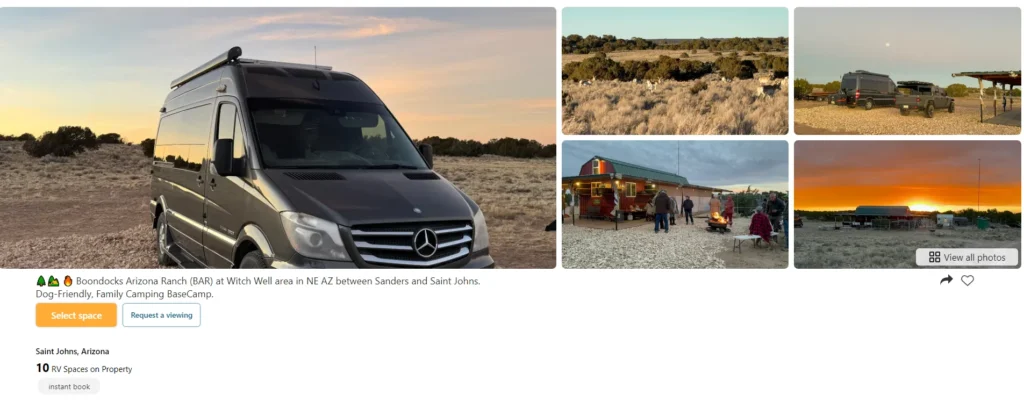
Boondocks Arizona Ranch near the Witch Well area between Sanders and Saint Johns is a boondocking destination at $12 per night — the most affordable option in the entire Hookhub Arizona inventory. The property has 10 sites, each 20 feet wide by 80 feet long, with a 15-day maximum stay and no hookups. It operates as an at-your-own-risk dry-camping experience on open high-desert terrain at a 6,000-plus-foot elevation, with on-site WiFi access. Pet-friendly, family-oriented, and structured for outdoor adventure travelers. The Witch Well area puts it near Highway 191 — the same road that passes Lyman Lake’s park entrance — making approach and departure straightforward.
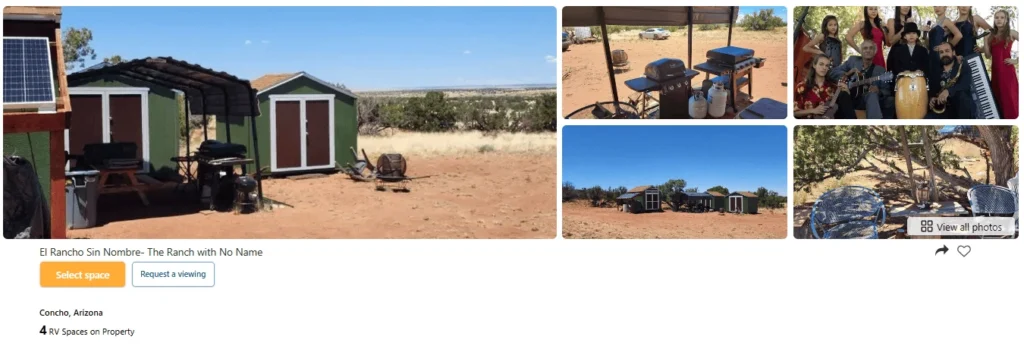
El Rancho Sin Nombre in Concho describes itself as a cowboy campground. Three pull-through sites at 20 feet wide by 40 feet long with electric hookup and WiFi at $29 per night. The musical family hosts live entertainment upon request, keeps the entrance gate locked for security, and accepts trailers of any size. The property sits near the Painted Desert corridor and the Petrified Forest, extending the day-trip range for travelers who want both Lyman Lake and northeastern Arizona’s cultural heritage from a single base camp.
Search current private RV parking near St. Johns for live availability across all three listings.
Practical Trip Planning
Fuel: Springerville and St. Johns both have fuel on the Highway 191 and Highway 60 corridors. Fill up before heading to the park — no fuel is available inside the campground.
Groceries: Springerville has grocery and supply options approximately 17 miles north. St. Johns is also within range for resupply on the way in or out. The campground Market sells basic items from April through September.
Dump station: On-site at the Lyman Lake campground for registered campers. Boondocks Arizona Ranch guests will need to plan for dump access in Springerville or St. Johns — the listing has no hookups.
Cell service: Coverage in the Saint Johns-Springerville corridor is reasonable on major carriers. The Witch Well area near Boondocks Arizona Ranch uses the AT&T/NPO network — the listing posts WiFi credentials for guests.
Getting there: From Show Low (~45 miles southeast): US-60 East to Highway 61 South toward St. Johns, then south on Highway 191 to the park. From Tucson (~200 miles): I-10 East to Highway 191 North. All primary approach routes are paved and accessible for large rigs.
FAQ
Does Lyman Lake allow jet skis and speed boats?
Yes. Unlike the smaller high-elevation lakes in the White Mountains that limit motorized boats to 10 horsepower, Lyman Lake State Park imposes no horsepower restriction on the main body of water. Jet skis, speed boats, and tow-sport rigs all operate freely. A water ski course in the northwest section provides a designated zone for performance boating. The west end of the lake is designated a no-wake zone for fishing — walleye, channel catfish, and largemouth bass concentrate in this quieter section away from main lake traffic.
What are the petroglyphs at Lyman Lake State Park?
The park’s peninsula holds ancient Hopi Indian rock art carved into the shoreline trail. The park offers interpretive ranger tours that provide cultural and historical context for the carvings, which date back several centuries and are among the more accessible petroglyph sites in the Arizona State Parks system. The petroglyph and point trails can also be hiked independently — they are well-marked, moderately easy, and end with elevated vista views over the full lake. Plan 90 minutes for a complete trail loop, including the rock art.
Is Lyman Lake State Park open in winter?
Yes. The park and campground operate year-round. Winter offers some of the most solitary camping in the system — the campground is often nearly empty from December through February, and the open high desert landscape around the lake provides exceptional stargazing with minimal light pollution. Shower facilities and the convenience store may be reduced or closed during winter months. Self-contained rigs are the practical choice for cold-weather visits as temperatures can drop well below freezing overnight at 6,000 feet.
Ready to plan your Lyman Lake trip?
Find private RV parking near St. Johns and check the host’s current availability.