
If you’re a landowner thinking about starting a campground or RV park, you’re not alone. Many people want to build an RV park or create RV sites on their land, but the biggest question is always the same: how much does it cost?
The reality is that this question is usually being asked too late in the process—or with the wrong assumptions. Many landowners assume they need to fully build out a traditional RV park before they can start earning, which leads to overestimating costs and delaying action.
The truth is, the cost to start an RV park or campground can vary widely. Some projects cost tens of thousands, while others reach into the millions depending on land, infrastructure, and amenities.
But more importantly, the cost depends on how you choose to start. There is a major difference between:
- building a full-scale RV park from day one
- and starting with a small number of functional RV sites and expanding over time
According to the RV Industry Association, RV travel continues to grow across the U.S., increasing demand for well-located RV parks and campgrounds. The key is understanding your options, your budget, and how to start earning without overbuilding too early.
Key Takeaways
- The overall cost depends on land, infrastructure, and amenities
- You can start a campground or RV hosting setup without building everything at once
- Zoning, permits, and regulatory requirements are critical and often overlooked early
- Hookups and utilities—not amenities—have the biggest impact on long-term success
- A phased approach helps control total costs and reduces risk
Understanding Your Options: RV Park vs Simple Hosting
Before you calculate total costs, you need to decide what you are building. This decision alone can change your startup cost by hundreds of thousands of dollars.
Full RV Park or Campground
A campground or RV park typically includes:
- Multiple RV sites
- Full hookups (water, electric, sewer)
- Amenities and facilities like restrooms and laundry
- Gravel roads, parking spaces, and layout planning
This option has higher upfront costs but supports long-term outdoor hospitality income. However, it also comes with:
- longer timelines before revenue
- higher regulatory requirements
- more complex operations
For many landowners, this model makes sense later, not at the beginning.
Starting Small as a Host
You do not need to build a full RV campground right away.
Many landowners begin by offering a few RV camping spots and expanding later. Platforms like Hookhub make it easier to become a host without building a full facility.. This approach allows you to:
- test demand
- understand your property’s limitations
- generate income before committing to large investments
Platforms like Hookhub make it easier to become a host without building a full facility. Instead of guessing what RVers want, you can validate it in real time.
Understanding how Hookhub works helps you start earning while keeping your budget manageable and avoiding unnecessary infrastructure early.
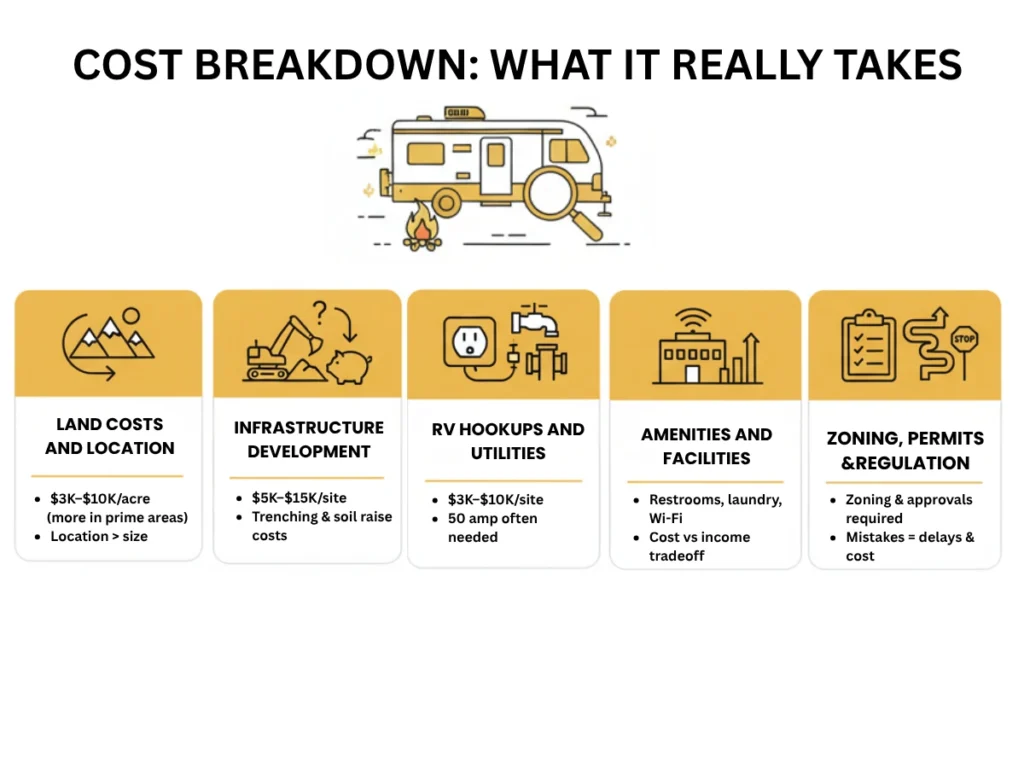
Cost Breakdown: What It Really Takes
1. Land Costs and Location
Acquiring land is usually the largest expense.
- Rural land: $3,000–$10,000 per acre
- Prime locations near attractions or metro areas: significantly higher
However, cost per acre is not the most important factor.
What matters more is:
- proximity to demand (Phoenix, Tucson, national parks)
- accessibility for larger rigs
- usability of the terrain
A cheaper property in a remote area may struggle with occupancy, while a smaller, well-located property can outperform it significantly.
2. Infrastructure Development
Infrastructure development includes:
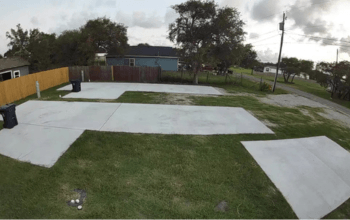
- Site grading and gravel roads
- Parking spaces and campsite layout
- Utility trenching and installation
Costs often range:
$5,000–$15,000 per site
This is where most of the cost of starting a campground comes from—and where most budgets go wrong.
What Most People Underestimate:
- trenching distances (long runs = exponential cost increases)
- soil conditions (rocky or desert soil increases labor costs)
- drainage issues (leading to rework after rainfall)
- access width for larger RVs
A site that looks “ready” often requires more work than expected to function reliably.
3. RV Hookups and Utilities
Hookups are essential for most RV parks.
You may need:
- Water hookups
- Electric hookups (30 amp or 50 amp)
- Sewer or septic systems
- Dump station access
Hookups might cost:
$3,000–$10,000 per site
But that range can increase quickly depending on:
- distance from existing utilities
- power capacity upgrades
- septic system size
Important Reality:
In places like Arizona, especially near Phoenix:
- 50 amp service is often expected for long-term stays
- power demand is significantly higher due to air conditioning
- underpowered systems lead to frequent issues
Well-equipped RV sites increase comfort and convenience for RVers—but poorly designed utility systems create long-term operational problems.
Setting up proper RV hookups guide standards improves long-term performance and reduces maintenance issues.
4. Amenities and Facilities
Amenities and facilities improve guest experience and revenue potential, but they are often overbuilt too early.
Common additions:
- Restroom and shower buildings
- Laundry facilities
- Wi-Fi
- Gathering spaces
The more amenities you offer, the higher your overall cost—but also the higher your potential income.
What Most Landowners Get Wrong:
They assume amenities drive bookings early.
In reality:
clean, functional, accessible sites drive bookings first
Amenities become more important after demand is proven.
5. Zoning, Permits, and Regulatory Requirements
Before building, you must include zoning permits and approvals.
This includes:
- Local zoning compliance
- Health and safety inspections
- Environmental impact considerations
- Occupancy and land use limits
Understanding regulations early prevents costly delays.
Mistakes here can result in:
- denied permits
- forced changes to your layout
- unexpected expenses
This RV hosting development guide explains how to structure your setup to avoid common zoning and compliance mistakes when starting RV hosting.
Total Costs: What You Should Expect
Here’s a realistic range:
- Small setup: $10,000–$50,000
- Mid-size campground: $100,000–$500,000
- Full RV park: $500,000–$2M+
Total costs depend on:
- Number of RV sites
- Infrastructure quality
- Utility access
- Level of amenities
Key Insight:
The biggest cost difference comes from how much you build before earning your first dollar.
How to Start Earning Without Overspending
Most beginners make one mistake: they try to build everything at once.
You don’t need to.
Start With What You Have
You can:
- Offer a few campsites
- Focus on location and usability
- Skip heavy infrastructure initially
This allows you to:
- validate demand
- generate early revenue
- avoid large upfront risk
Build Gradually
Start small, then reinvest.
Add:
- More RV sites
- Hookups
- Amenities
This lowers risk and improves cash flow.
Following a structured approach like the one outlined in this RV hosting development guide helps ensure you scale based on real demand rather than assumptions.
Download the guide to plan your RV setup and avoid costly mistakes.
Focus on Experience (But Define What That Means)
Comfort and convenience matter, but experience matters more.
For RVers—especially long-term guests—experience often means:
- quiet environment
- reliable utilities
- predictable setup
- enough space and privacy
Not luxury.
Many new owners compare their budget against real-world campground benchmarks from KOA campground models when estimating the overall cost of starting an RV park.
Following practical RV hosting tips helps improve your setup without increasing costs too quickly.
Ongoing Costs You Need to Plan For
Running a campground or RV park includes ongoing costs.
Monthly Expenses
- Utilities (water, electric, septic)
- Maintenance
- Insurance
- Occasional repairs
Occupancy Rates and Revenue
Your revenue depends on:
- Location
- Seasonality
- Demand
- Length of stay
Important Distinction:
Short-term stays require:
- more turnover
- more management
Long-term stays:
- reduce vacancy
- stabilize income
- simplify operations
Where Hookhub Fits Into This
If you want to avoid the high cost of starting a campground from scratch, Hookhub provides a simpler path.
You can:
- List your property
- Accept RV travelers
- Start earning without heavy infrastructure
More importantly, it allows you to:
Test demand before committing significant capital
Instead of building systems from scratch, you can focus on improving your property while using an existing structure for bookings and communication. You can also improve guest experience by following basic RV etiquette, which helps increase repeat bookings.
Starting small, focusing on experience, and scaling gradually is often the smarter path. Guidance from the Small Business Administration can also help you plan your budget and understand startup costs more clearly.
With the right setup, your land can become a reliable source of income.
Use this RV hosting development guide to get a clear, step-by-step plan for building and managing RV sites without unnecessary upfront costs. It walks you through setup, utilities, pricing, and how to scale your property over time.
Practical Checklist: Getting Started
If you are starting from scratch:
- Evaluate your land and location
- Estimate your budget and realistic total costs
- Check zoning and regulatory requirements early
- Decide between full park or simple hosting
- Start with a small number of RV sites
- Expand based on real demand
To see what this setup looks like in real life, watch this step-by-step video on how to prep your land for RV hosting.
Conclusion
Starting an RV park or campground can be a profitable opportunity, but it requires careful planning. The cost to build an RV park depends on your approach—not just your budget.
You do not need to build everything at once.
Starting small, focusing on functionality, and scaling gradually is often the smarter path. Guidance from the Small Business Administration can also help you plan your budget and understand startup costs more clearly.
With the right setup, your land can become a reliable source of income.
Use the RV hosting development guide to get a clear, step-by-step plan for setting up your property, utilities, and pricing without overbuilding.
Download the guide and start building your RV setup the right way.
FAQ
How much does it cost to start an RV park?
It ranges from $10,000 to over $1 million depending on size and infrastructure.
Can I start without building a full campground?
Yes, many hosts start small and expand later.
Do I need permits?
Yes, zoning and health requirements must be followed.
What amenities are most important?
Hookups, restrooms, and Wi-Fi are the most requested.
Is RV hosting profitable?
Yes, especially with strong occupancy rates and location.