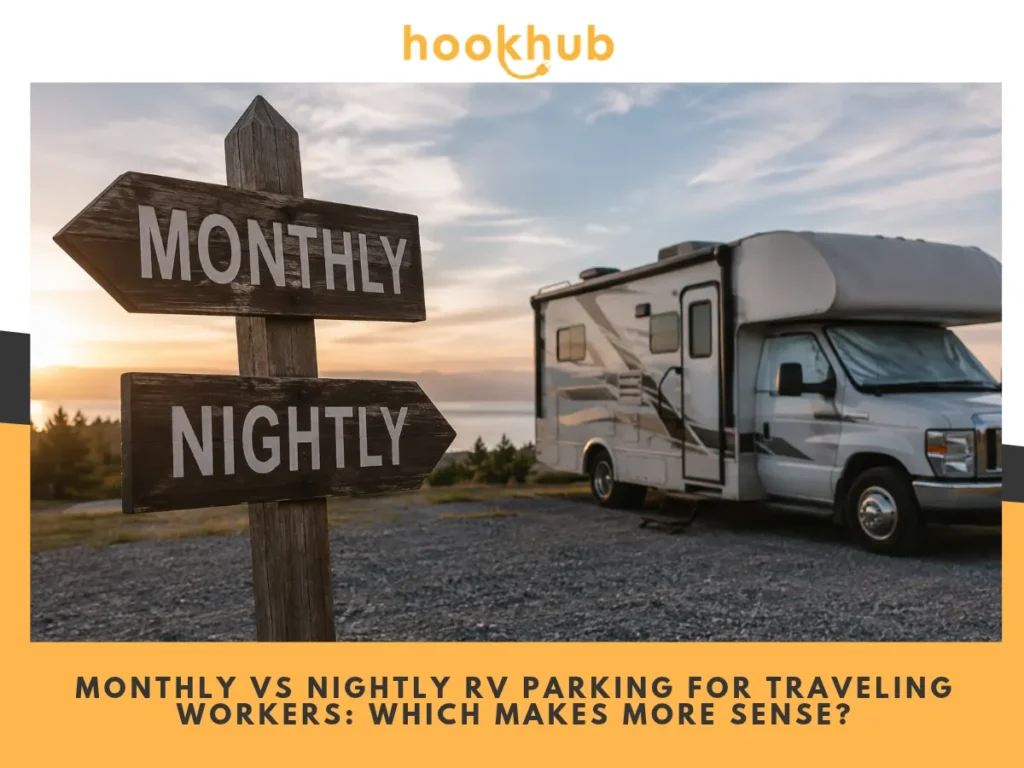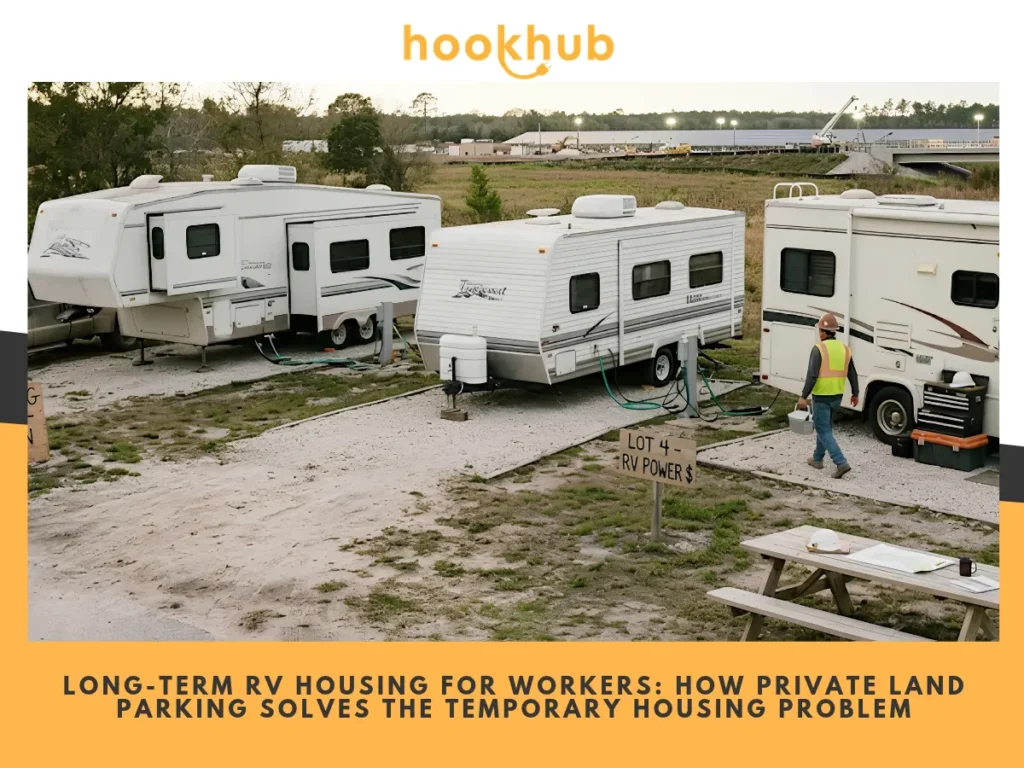
For a traveling worker, an RV can do more than provide a place to sleep between assignments. It can become a mobile home base, workspace, and way to avoid committing to traditional housing every time a job takes you to a new city.
That makes the choice between nightly and monthly RV parking more important than it might seem.
Paying for an RV site one night at a time gives you maximum flexibility, but that flexibility can become expensive when a two-week assignment turns into a month or a seasonal job stretches into several months. A monthly RV site usually requires more commitment, but long-term RV parking can provide a more predictable cost and a stable place to work and live.
The right answer depends less on whether monthly or nightly parking is “better” and more on how long you actually need to stay.
For traveling nurses, contractors, seasonal workers, remote employees, and other long-term travelers, understanding that difference before booking can make the entire assignment easier to manage.
The RV Industry Association’s 2025 RV Owner Demographic Profile reports that 8.1 million U.S. households own an RV. It also found that 22% of RV owners have someone in the household who currently works remotely, and 54% of those remote workers have worked from their RV. RV use is increasingly connected to flexible work and alternative lifestyles, making dependable long-term parking an increasingly relevant part of RV living.
What Is the Difference Between Nightly and Monthly RV Parking?
The basic difference is how you pay for the site.
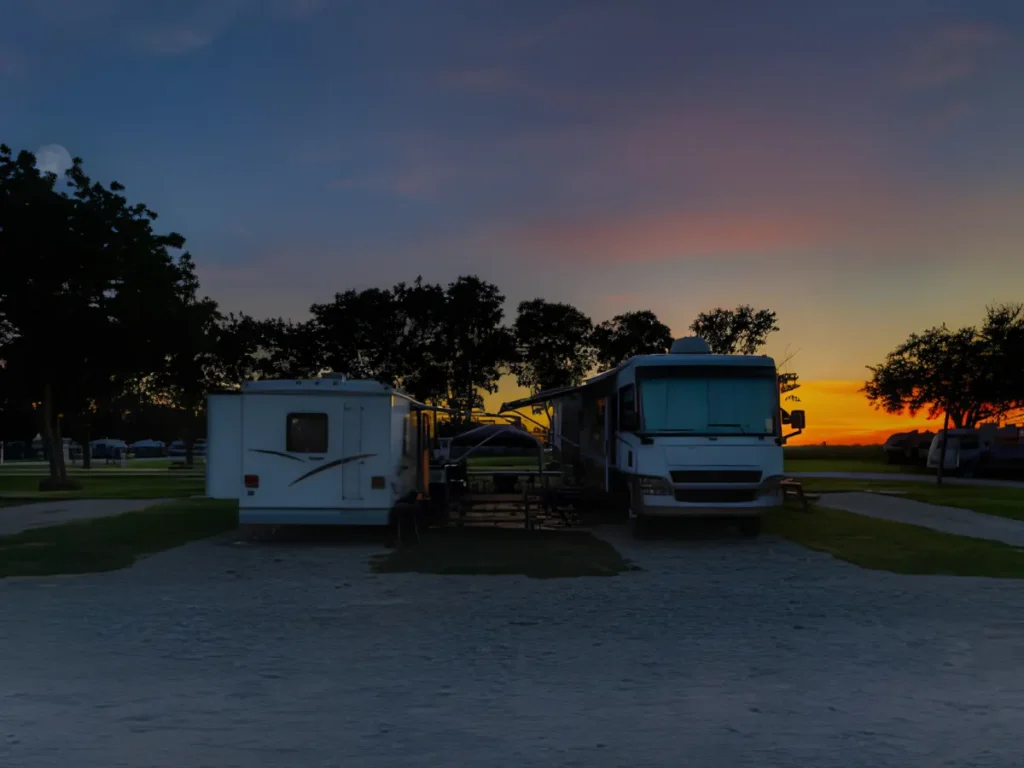
With nightly RV parking, you reserve an RV site for individual nights. You might stay for one night, several nights, or continue extending the reservation as your schedule changes. This is common at campgrounds, RV parks, and RV resorts designed around short-term travelers.
Monthly RV parking works differently. Instead of paying for every night individually, you reserve the RV site for a longer period, usually around 30 days or more. Some RV parks call these extended-stay or long-term RV sites, while private-land hosts may simply offer monthly stays.
The longer commitment often changes the effective nightly cost.
For example, a $60 nightly RV site would cost $1,800 if occupied for 30 nights at the same rate. A monthly site priced at $900 would have an effective cost of $30 per night. That does not mean every monthly RV park will offer a 50% discount, but it demonstrates why comparing the total cost of the stay is more useful than looking at the nightly price alone.
Monthly RV rates vary widely based on location, season, amenities, hookups, demand, and the type of property. Current published examples across the market show just how broad those differences can be, which is why workers should compare actual sites rather than rely on a single national average.
When Monthly RV Parking Makes More Sense
Monthly RV parking becomes particularly attractive when you already know your work assignment will keep you in one area for several weeks.
Imagine a traveling nurse accepting a 13-week contract. Moving between campsites every few days would add unnecessary planning, driving, setup, and teardown to an already demanding schedule. A monthly RV site creates a stable home base for the assignment.
The same applies to a contractor working on a construction project, a seasonal worker hired for several months, or a remote employee who wants to spend an extended period in another part of the country.
Once you know you will be staying longer, the value of monthly parking goes beyond the rate.
You set up once. Your utilities are established. Your work area stays intact. You learn where the grocery store is, where to do laundry, how long your commute takes, and where to get fuel. Instead of treating the RV like a campsite you repeatedly pack up, you can start treating it more like a temporary home.
That stability can be especially valuable for someone working full-time from an RV.
When Nightly RV Parking Is Still the Better Choice
Monthly parking is not automatically the right answer.
If you are still moving every few days, paying for a month at one RV park may defeat the purpose of your trip. A traveling worker who has a three-day assignment in one city and another assignment 150 miles away may need the flexibility of nightly RV camping.
Nightly stays also make sense when the length of an assignment is uncertain.
Suppose an employer says a project will probably last three weeks, but there is a chance it could end after ten days. Committing to a full month without understanding the cancellation or refund policy could create a different kind of financial problem.
This is where the break-even point matters.
Instead of automatically choosing monthly parking, calculate what the same number of nights would cost at the nightly rate. Then compare that total with the monthly RV rate and ask what happens if you leave early.
A monthly rate that looks dramatically cheaper on paper may not be cheaper if you only use half the month.
Find Your Break-Even Point
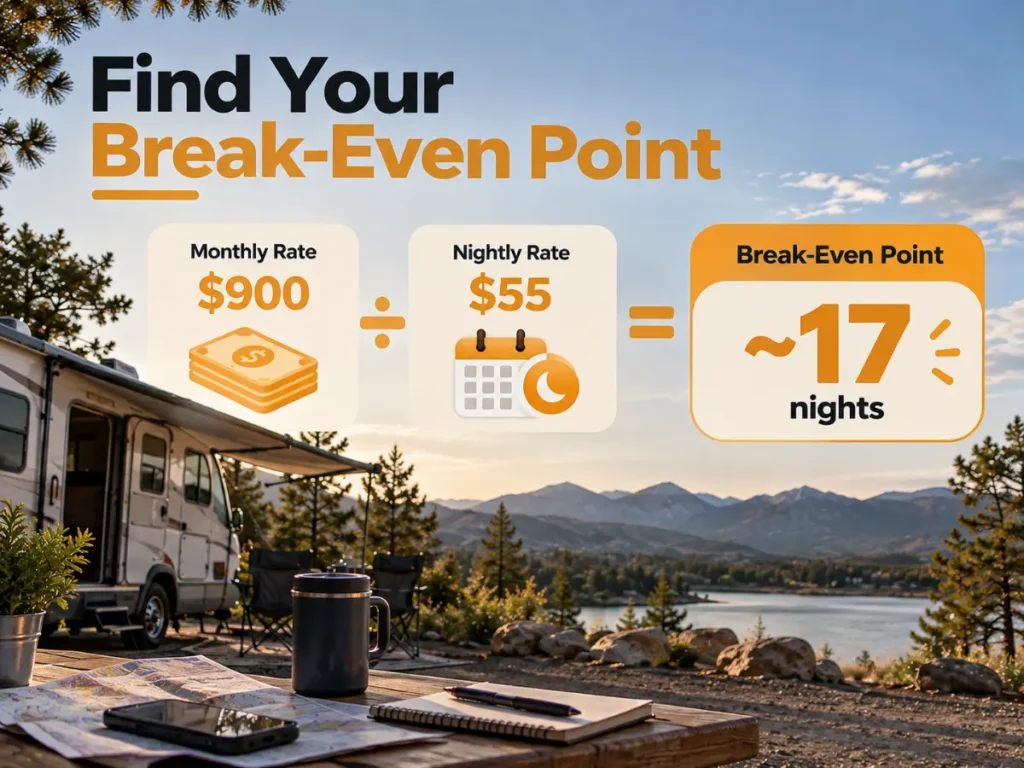
The most useful question isn’t simply whether the monthly rate is cheaper. It is how many nights you need to stay before the monthly rate becomes the better deal.
You can estimate that with a simple calculation:
Monthly rate ÷ nightly rate = approximate break-even number of nights
If an RV park charges $55 per night and $900 per month:
$900 ÷ $55 = about 16.4 nights
That means the monthly rate becomes cheaper once the stay reaches roughly 17 nights, assuming the two rates include the same utilities and fees.
That last part matters. Before choosing the monthly option, check whether electricity, water, sewer, trash, Wi-Fi, deposits, taxes, or other charges are handled differently. Also review what happens if you leave early. A monthly rate with no refund may still be the more expensive choice if an uncertain three-week assignment ends after ten days.
For traveling workers, the goal is to find the point where the savings from committing to a longer stay outweigh the flexibility of paying nightly.
If you’re comparing your expected parking costs with other RV living expenses, the RV living cost calculator can help you estimate the broader cost of staying on the road.
Monthly RV Parking vs Nightly RV Parking
| Factor | Nightly RV Parking | Monthly RV Parking |
|---|---|---|
| Payment structure | Pay per night | Fixed monthly or extended-stay rate |
| Flexibility | High | Lower |
| Best for | Short stays and frequent travel | Assignments lasting weeks or months |
| Setup | Frequent moves | One longer setup |
| Budget predictability | Lower | Usually higher |
| Effective nightly cost | Usually higher for long stays | Often lower for extended stays |
| Internet needs | Important | Critical for remote workers |
| Utilities | May be included or separate | Must be checked carefully |
| Cancellation | Usually easier | Policies vary |
| Best fit | Short-term workers and mobile travelers | Traveling nurses, contractors, seasonal workers, remote workers |
The table is a starting point, not a rule. Location and season can change the numbers considerably.
What Traveling Workers Should Check Before Booking a Monthly RV Site
Price should be near the beginning of your comparison, not the end.
For a month-long stay, utilities become much more important than they are for a weekend. If you need a full hookup, confirm exactly what the site provides. Water, electricity, and sewer can make long-term RV living considerably easier, but the terms vary between properties.
Electricity deserves particular attention. Some monthly RV parks include electricity in the monthly rate. Others provide an allowance and charge for overages. Some meter usage separately.
Ask before booking.
Internet is equally important if the RV is your workplace. A campground's Wi-Fi might be perfectly adequate for checking email but unreliable for video calls, cloud applications, or large file transfers.
If you work remotely, ask whether the Wi-Fi is available at the individual site or only in a clubhouse or common area. Also check cell coverage for your carrier and consider having a backup hotspot if your income depends on staying connected.
Accessibility matters, too. A monthly site is not useful if your RV cannot comfortably reach it. Check road conditions, site dimensions, turning space, hookups, and whether the site can accommodate your RV's length.
If you're comparing several properties, this guide on what to look for in an RV parking spot covers the practical factors that can affect comfort and usability during a stay.
Finally, understand the cancellation and early-departure terms before you pay.
A traveling worker's schedule can change quickly. A contract may end early, an employer may relocate you, or a project may be delayed. Knowing your options ahead of time is part of choosing a good long-term RV site.
Monthly RV Parking Can Create a More Stable Work Routine
One of the biggest advantages of a monthly RV site has nothing to do with the price.
It is routine.
Constantly moving an RV requires time. You have to disconnect utilities, secure belongings, prepare the vehicle, drive, find the next site, level the RV, reconnect everything, and settle back in.
Doing that every few days can become exhausting when you are also working full-time.
A monthly stay gives you the opportunity to establish a predictable routine. Your desk stays where it is. Your equipment stays connected. Your morning commute might be a 20-second walk from the bed to the workspace.
For remote workers, that consistency can be worth more than a small difference in the parking rate. If you're still deciding whether full-time RV living is practical for your situation, understanding the legal, financial, and lifestyle considerations can help you plan realistically.
What About Traditional Housing?
Traveling workers often compare monthly RV parking with apartments, extended-stay hotels, or other traditional housing.
The comparison is not always straightforward.
An apartment may provide more interior space, while a hotel may require less setup. An RV, however, lets the worker bring the same living space from one assignment to the next.
That portability is one of the biggest reasons long-term RV living appeals to workers who regularly move for employment.
The important thing is to compare the complete monthly cost, not just the parking rate.
For RV living, that could include the site, utilities, fuel, propane, insurance, maintenance, internet, and other RV-related expenses. Traditional housing has its own costs, including rent, deposits, utilities, furnishings, and potentially a longer lease commitment.
The best option depends on the worker, the assignment, and how often they need to relocate.
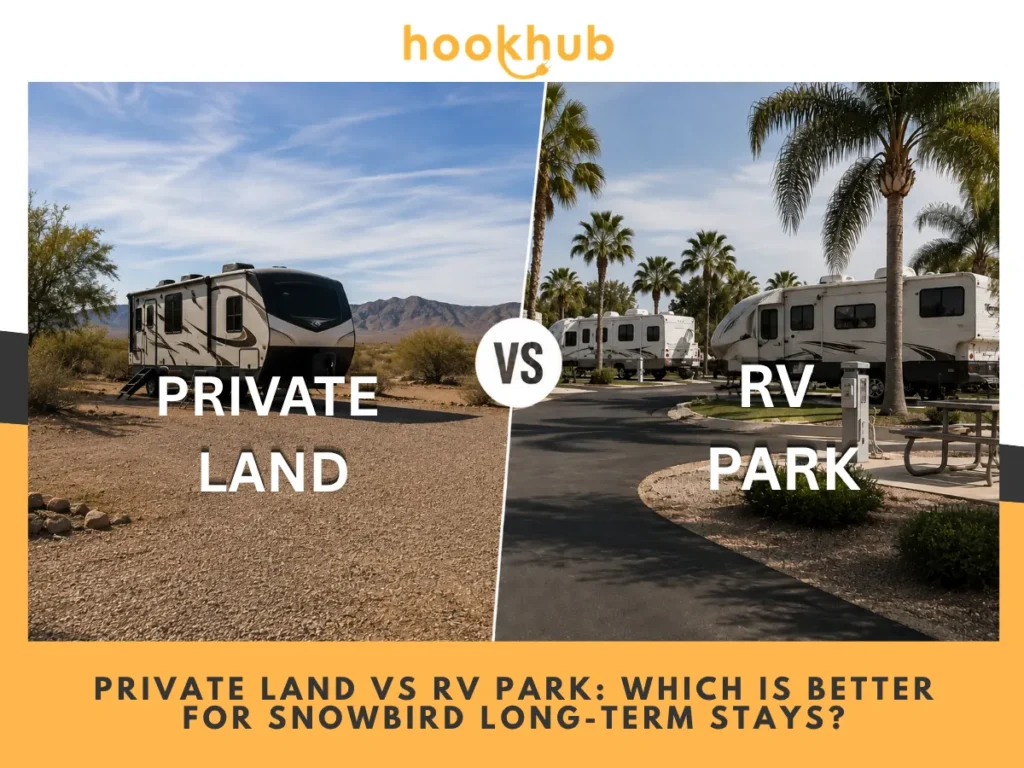
Private Land Can Be Another Option for Long-Term RV Stays
Traveling workers sometimes assume their only choices are a commercial campground, RV park, or RV resort.
Private land can provide another option.
A private RV site may offer a quieter setting, a longer stay, or a location closer to the job than a traditional campground. Availability and amenities vary, so the same questions still apply: Is there appropriate access?
Are hookups available?
What utilities are included?
How reliable is the internet?
What are the stay and cancellation terms?
Before choosing a private site, it's worth understanding the practical considerations involved in parking an RV on private land, including permissions, local regulations, utilities, and site suitability.
That is where Hookhub can fit into the search.
Where Hookhub Fits Into Monthly RV Parking for Traveling Workers
Hookhub connects RV travelers with private land hosts offering RV parking options, including longer-term stays. For a traveling worker, the value is not simply finding another place to park. It is having another category of site to compare when a conventional RV park does not fit the assignment.
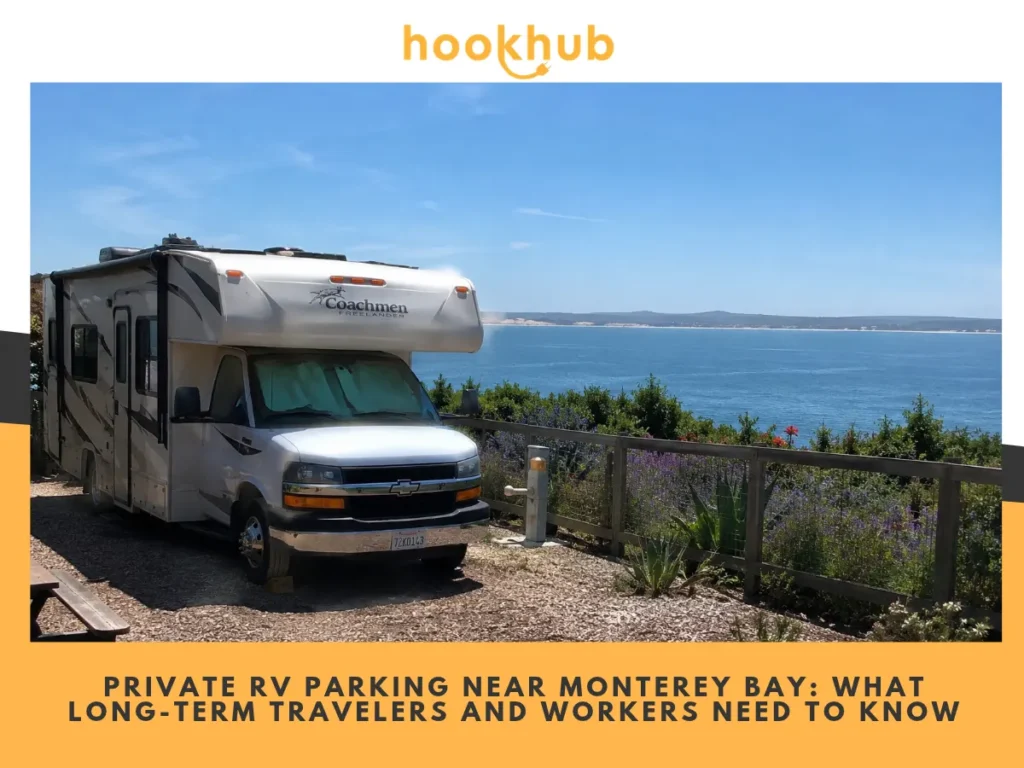
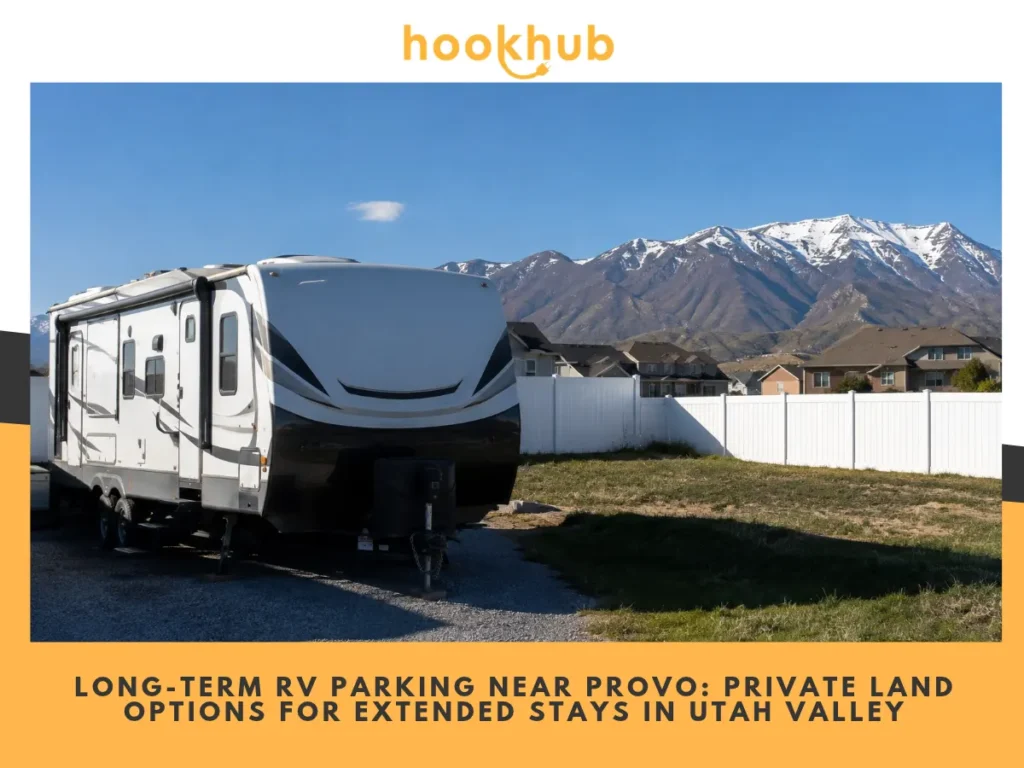
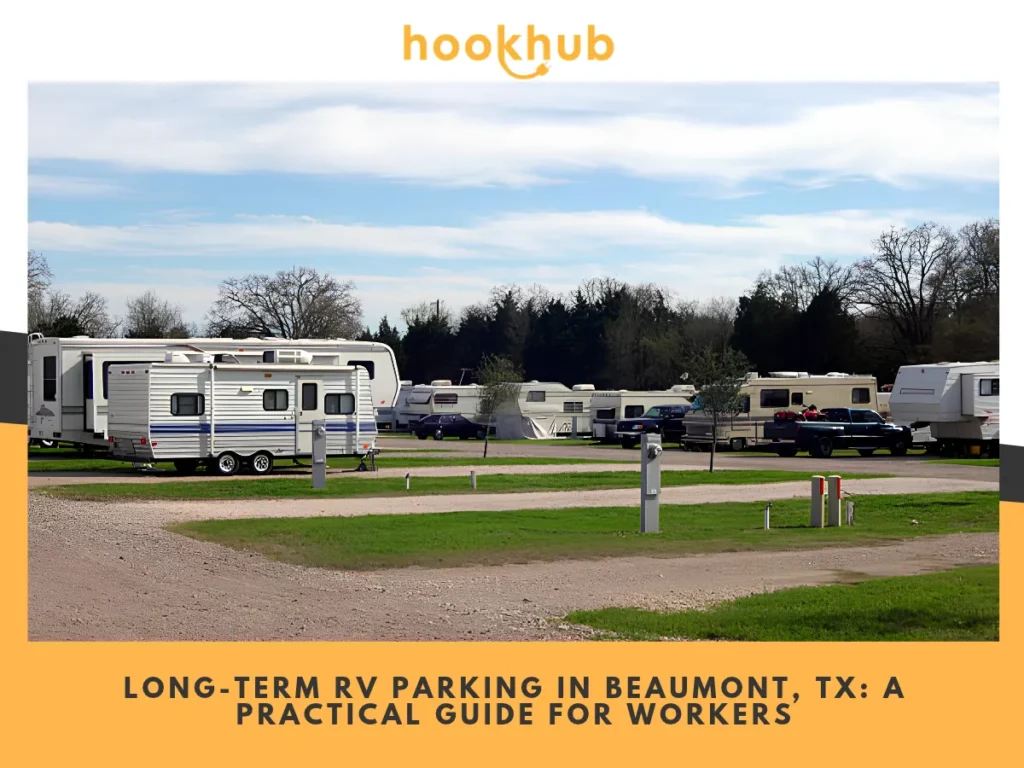
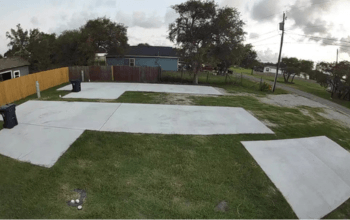
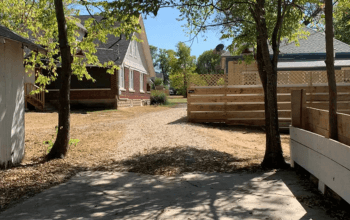
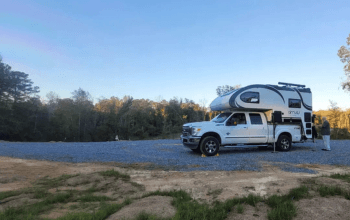
A worker heading to Beaumont, Lindon, or Prunedale, for example, can use Hookhub's location search to explore available RV parking rather than limiting the search to traditional campgrounds and RV resorts.
The key is to evaluate each listing based on the actual needs of the assignment. A lower rate is useful, but a reliable hookup, workable location, and clearly defined stay terms can be more important when the RV is going to function as a home base for several weeks.
Hookhub's existing RV parking resources also emphasize practical factors such as accessibility, safety, hookups, and proximity to essential amenities. Those considerations become even more important when an RV stay changes from a short camping trip into a month-long living arrangement.
“The best winter stay is not always the RV park with the longest amenity list. For many snowbirds, it is the place that gives them the right balance of warm weather, everyday convenience, and enough space to actually feel at home for the season.”
How to Choose Between Monthly and Nightly RV Parking
The decision can be surprisingly simple once you know three things: how long you will stay, how certain your schedule is, and what your RV needs.
If you are staying only a few nights, nightly RV parking is usually the simplest option.
If you expect to stay for one to three weeks, compare nightly, weekly, and monthly pricing. Do not assume that a monthly reservation is automatically cheaper if you might leave early.
If you know you will be there for a month or longer, start with monthly RV parks and extended-stay sites. Then compare the total cost, utilities, internet, location, and cancellation terms.
For assignments lasting several months, look beyond the headline rate. The best long-term RV site is the one that supports your work schedule and daily life without creating new problems.
One useful rule: the less certain your assignment end date is, the more valuable flexibility becomes. A deeply discounted monthly rate can save money on a confirmed 12-week contract, while a slightly higher nightly or weekly rate may be worth paying when a project could end with little notice. Price the uncertainty along with the RV site.
Final Thoughts
For traveling workers, the choice between nightly and monthly RV parking ultimately comes down to flexibility versus stability.
Nightly stays are ideal when your route is still changing or your assignment is short. Monthly RV parking becomes more attractive when you know you will be in one area for 30 days or longer and want a predictable place to live and work.
The smartest approach is to run the numbers before booking. Compare the total cost, not just the advertised nightly or monthly rate. Check utilities, Wi-Fi, site access, cancellation terms, and the distance to work. Then consider options beyond traditional RV parks if the usual choices do not fit.
For workers who use an RV as a mobile home base, the right long-term parking arrangement can make an assignment feel much less temporary.
And sometimes, that is the real value of finding the right spot: you can focus on the job without constantly worrying about where you'll park next.
Frequently Asked Questions
Is monthly RV parking cheaper than nightly RV parking?
Often, yes, particularly when you stay for a full month or longer. Monthly RV rates are commonly structured to reduce the effective nightly cost, but the actual savings depend on location, season, amenities, utilities, and the property's pricing model.
How long do you need to stay for monthly RV parking to make sense?
There is no universal cutoff, but monthly parking becomes increasingly worth comparing once your stay approaches 30 days. For shorter stays, calculate the total nightly or weekly cost and compare it with the monthly rate before committing.
Do RV parks offer monthly rates for traveling workers?
Many RV parks offer monthly or extended-stay options, although availability and eligibility vary. Some require advance reservations, deposits, or minimum stays, particularly during busy seasons.
Can traveling nurses stay in an RV park for a 13-week contract?
Yes. A 13-week assignment can be a good fit for monthly RV parking if the park or private host allows extended stays. Before booking, confirm that the site is available for the entire assignment and review the cancellation and early-departure terms.
Is monthly RV parking good for remote workers?
It can be. A monthly site provides a more stable work environment than moving between campsites every few days. Remote workers should pay particular attention to Wi-Fi reliability, cell coverage, electrical capacity, and noise levels.
What should I ask before booking a long-term RV site?
Ask about the total monthly price, utilities, hookup type, internet, deposits, site dimensions, access, guest policies, cancellation rules, and what happens if you need to leave early. Getting those details in writing can prevent surprises later.
Can I find monthly RV parking on private land?
Yes. Private land can be an alternative to traditional RV parks and campgrounds, depending on local regulations, site amenities, and host availability. Hookhub offers private-land RV parking options that can be considered alongside traditional long-term RV parks.