
The first time I got completely lost trying to find a private farm stay, I had a booking confirmation, a rough address, and zero signal. No pin drop. No landmarks. Just a gravel road that forked three times with nothing but a hand-painted sign that may or may not have been for the right property.
That experience, frustrating as it was, taught me exactly what good arrival instructions look like. Because the absence of them is felt immediately.
If you’re hosting RVers on your private land, your arrival instructions are the first real test of the guest experience. They arrive before your guests do. They set the tone. Get them right, and your campers pull in relaxed and ready to enjoy the stay. Get them wrong, and you’re fielding panicked calls at 7 p.m. from someone parked in the wrong field.
This guide draws on patterns from experienced private landowners and RV hosts who list through Platforms like Hookhub, where arrival clarity directly impacts guest reviews, repeat bookings, and overall peace of mind.
Why Arrival Instructions Matter More on Rural Properties
A campground has a gatehouse, painted curb markers, and staff who can wave someone in. Private rural land has none of that. Your guests are navigating unmarked roads, dead cell zones, and driveways that look identical to five others on the same county road.
The check-in process on private properties is fundamentally different from RV camping at an established campground, and most RVers know it. What they need from you is clarity, specificity, and a logical sequence they can follow even when their phone loses signal at the worst possible moment.
Good arrival instructions also protect you. When guests know exactly where to park your RV, what hookups are available, and what the property rules are before they arrive, you eliminate the most common friction points that lead to bad reviews, confusion, or accidental damage.
This becomes especially important for guests who are new to the RV lifestyle. Some travelers may be transitioning from traditional campground stays, Harvest Hosts overnight stays, or public lands boondocking and may not realize how different private properties can feel during the arrival process.
Guests who are used to dispersed camping or boondocking on federal land may also already be familiar with basic public lands camping guidelines, but private property stays often come with different access rules, parking expectations, and arrival procedures.
Start With Navigation That Works Without Cell Service
Your address is not directions. On rural land, GPS often routes guests to the wrong entrance, the wrong road, or, memorably, a field that hasn’t been a driveway in twenty years.
Write turn-by-turn directions from the nearest town or major intersection. Use landmarks: “turn left at the red barn,” “pass the water tower and continue half a mile,” or “look for the wooden mailbox with the number 4412.” Landmarks stick in memory far better than mile markers.
If your property has a gate, include the access code and explain what guests should do if the keypad fails. Never assume a guest will have enough signal to call you once they arrive. Include your number anyway, along with a backup contact if you’re unavailable.
For hosts listing on Hookhub, detailed map notes and written directions can be included directly in the listing so guests can screenshot or download them before entering low-signal areas. That one step alone can dramatically reduce confused arrival calls and create a more stress-free check-in process.
Set Clear Check-In Times and Arrival Expectations
Check-in time is not just about your schedule. On private properties, it often affects gate access, parking conditions, livestock routines, or whether someone needs to be available for the guest’s arrival.
State your check-in window clearly. “Arrivals between 2 p.m. and 8 p.m.” works much better than vague wording like “afternoon arrivals preferred.”
If late arrivals are allowed, create a separate set of instructions for after-dark arrivals. Include where guests should park temporarily, whether electric hookups are accessible at night, and whether you’ll greet them in the morning instead.
If you’re managing multiple overnight stays, consider placing a laminated check-in card near the parking area or entrance. Some of the most experienced hosts on private properties still rely on simple physical instructions because they work even when phones die or service disappears.
If you’re still preparing your property for RV guests, it also helps to think through arrival flow, parking access, and utility setup before accepting bookings.
Describe the Parking Area Clearly
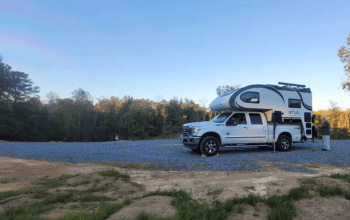
“Pull in anywhere” is not a parking instruction. It’s how large RVs end up stuck in wet grass or blocking another campsite setup area.
Describe the parking area in practical detail. Let guests know:
- Whether the surface is gravel, dirt, grass, or compacted rock
- If there is any slope that requires leveling blocks
- How many RVs can comfortably fit
- Whether wheel chocks are recommended
- If there are soft areas to avoid after rain
Guests appreciate knowing this information before arrival because it helps them prepare properly. Some RVers may still be learning how to level their RV safely or may not yet own basic campsite setup equipment.
If your site is designed more for boondocking than traditional campground hookups, explain that directly. RVers who enjoy boondocking or staying at a Harvest Hosts location often expect a simpler setup process, but they still need accurate expectations before arrival.
You should also explain where guests should not park. Mention flood-prone areas, muddy sections, private driveways, or areas reserved for future guests.
Walk Guests Through the RV Setup Process
Even experienced campers appreciate a simple setup checklist tailored to your property. Newer RVers especially benefit from step-by-step arrival guidance during the campsite setup process.
A basic RV setup checklist might include:
- Pull into the designated parking area and use a bubble level before unhitching.
- Place wheel chocks before disconnecting from the tow vehicle.
- If electric hookups are available, locate the pedestal and connect the power cord using a surge protector.
- Clearly state whether the site uses a 30 or 50 amp electrical connection and whether there are any known power issues guests should know about.
- If water is available, explain where the hose hookup is located and whether guests need their own hose.
- Explain whether sewer hookups are available or whether guests should use a nearby dump station after departure.
- Remind guests to secure their awning and store loose items if wind is common in the area.
The goal is to reduce guesswork before small setup problems become late-night interruptions.
Thinking through hookups, parking flow, leveling space, and utility access ahead of time is all part of the essential RV hosting setup considerations that help guests settle in safely and comfortably upon arrival.
Explain Utility Hookups Clearly
Utility confusion is one of the fastest ways to create frustration during check-in. Guests should understand exactly what hookups are available before they arrive.
Clarify whether the property offers:
- Electric hookups
- Water hookups
- Sewer hookups
- Partial utility access
- Dry camping or boondocking only
If your property does not offer sewer hookup access, state that clearly and provide information about the nearest dump station. Guests appreciate honesty far more than vague wording.
You should also clarify whether the water supply comes from a well system or municipal source. Some RVers may prefer using their onboard freshwater tank depending on the situation.
If your property occasionally experiences limited electrical capacity, mention it upfront. A quick note about avoiding simultaneous high-power appliances helps guests prevent unnecessary power issues during their stay.
If your guests are newer to RVing, it may also help to share a simple resource explaining 30 amp vs 50 amp RV hookups so they arrive with the correct adapters and electrical expectations.
State Property Rules Early, Not at the End
Property rules buried in the last paragraph rarely get read. Rules included during the arrival process actually shape guest behavior.
Keep your instructions clear and direct without sounding hostile. You are orienting guests, not warning them.
Important property rules may include:
- Quiet hours
- Campfire policies
- Pet guidelines
- Parking limitations
- Wastewater disposal rules
- Visitor policies
- Emergency procedures
- Leave no trace principles
If guests are staying on working farms, ranches, winery properties, or brewery locations, explain any boundaries they should avoid and whether certain areas are private.
Clear expectations protect both your property and the guest experience. RVers generally want to be respectful stewards when expectations are communicated properly.
Clear communication during check-in also helps prevent misunderstandings later, especially when hosts end up managing difficult RV guest situations that could have been avoided with stronger arrival instructions upfront.
Include a “What to Expect” Section
Not every guest is an experienced full-time RVer. Some are taking their very first RV camping trip. Others may be transitioning from busy campground stays, Harvest Hosts host locations, or crowded public lands.
A short “what to expect” section helps guests mentally settle before arrival.
For example:
“You’ll have the east side of the property to yourself. It’s quiet here with very little road noise. Most guests prefer parking near the tree line for afternoon shade. The nearest grocery store is about 15 minutes away, and cell service may vary depending on your carrier. We’re happy to answer questions, but otherwise we give guests plenty of privacy so they can relax and enjoy the stay.”
That small amount of context dramatically improves the camping experience because guests arrive with realistic expectations instead of uncertainty.
Unlike some Harvest Hosts locations attached to a brewery or winery, many private rural properties focus more on quiet overnight stays, open space, and slower-paced RVing experiences.
Where Hookhub Fits Into Rural RV Hosting
Managing arrivals manually becomes harder as your bookings increase. That is especially true for hosts managing multiple RVs, rotating campsite setup areas, or seasonal property changes.
Platforms like Hookhub help landowners manage RV guest bookings and arrival communication in one place, making the check-in process smoother for both hosts and guests.
Hosts can organize:
- Reservation details
- Arrival instructions
- Property rules
- Guest communication
- Utility information
- Self-check-in notes
That structure helps reduce confusion, streamline arrivals, and create more consistency across guest stays.
For landowners hosting on farms, ranches, or other private properties, it also creates more consistency across future guests and helps establish clear expectations from the beginning.
Encourage Guests to Support the Host’s Business Naturally
If your property includes a farm stand, small winery, brewery, market, or other local attraction, mention that guests are welcome to support the host’s business during their stay.
The key is keeping the invitation natural rather than transactional. RVers generally appreciate opportunities to engage with local businesses when it feels optional and authentic.
For example:
- A winery might offer tastings during overnight stays
- A brewery may have weekend live music
- A farm may sell fresh produce or homemade goods
These small experiences often become the most memorable part of staying at a private property.
Send Arrival Instructions in Multiple Formats
Do not rely on a single message.
Send arrival instructions:
- Through the booking platform
- In the reservation confirmation
- As a downloadable or screenshot-friendly message
- On printed signage near the entrance if possible
Redundancy matters on rural properties because technology fails more often than people expect.
A guest who arrives prepared, parks correctly, completes their RV setup smoothly, and settles in without confusion is far more likely to leave a positive review and recommend your property to other RVers in the RV community.
Frequently Asked Questions
What should RV arrival instructions include?
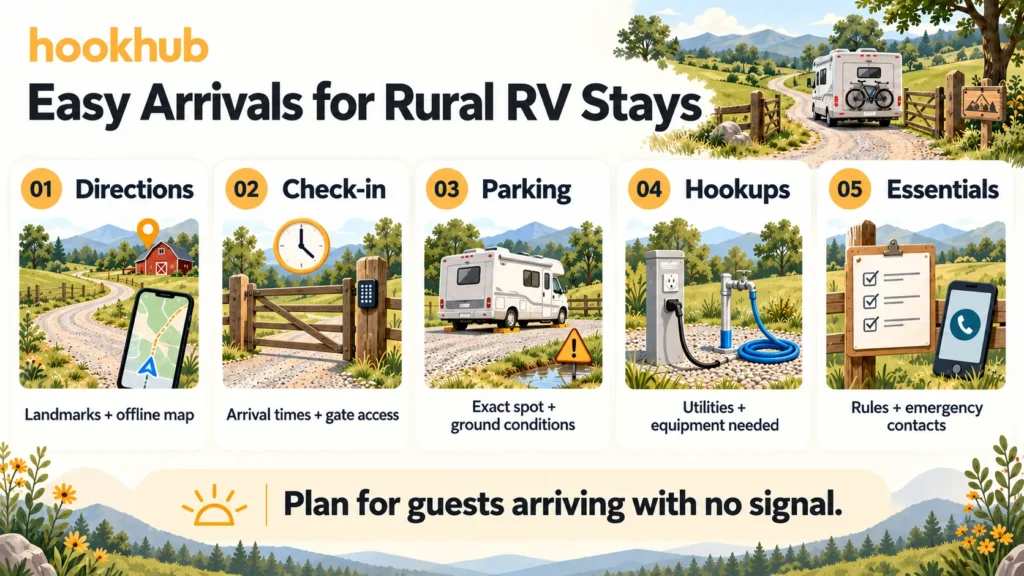
Arrival instructions should include navigation directions, check-in time, parking details, utility hookups, property rules, emergency contacts, and campsite setup information. Rural properties should also include landmarks and offline-friendly directions for guests traveling through low-signal areas.
Do RV guests bring their own hookup equipment?
In most cases, yes. Guests are generally expected to bring their own power cord, sewer hose, surge protector, wheel chocks, and potable water hose. Hosts should clearly explain whether the property supports 30 or 50 amp service and whether any adapters are needed.
How early should arrival instructions be sent?
Arrival instructions should ideally be sent immediately after booking confirmation and again 24 to 48 hours before check-in. This gives guests enough time to review reservation details and download directions before traveling.
Should arrival instructions change seasonally?
Yes. Weather conditions, muddy access roads, utility availability, and parking conditions can all change throughout the year. Seasonal updates help guests prepare properly and reduce arrival problems.
Do hosts need to greet guests in person?
Not necessarily. Many private property hosts successfully use self-check-in systems. The important part is ensuring the instructions are detailed enough that guests can complete the arrival and setup process independently.
What if guests arrive late?
Your property rules should explain exactly what happens if guests arrive outside the normal check-in time. Include instructions for temporary parking, gate access, and emergency contact information if late arrivals are permitted.
Conclusion
Good arrival instructions are not just logistical details. They are part of the hospitality experience.
Guests remember whether arrival felt confusing or effortless. They remember whether they felt welcomed, informed, and prepared when they pulled onto your property after a long day of RVing.
Start with navigation. Walk guests through the setup process. Explain your property rules clearly. Set expectations early and honestly.
That level of clarity creates better reviews, smoother check-ins, fewer late-night problems, and a far more enjoyable experience for everyone involved.
If you’re building a hosting setup for long-term RV guests or overnight stays on private land, platforms like Hookhub can help organize bookings, guest communication, and arrival instructions in one place so both hosts and campers can focus less on logistics and more on enjoying the stay.