If you’re a landowner looking at your private property and wondering whether it can generate extra income through RV hosting, you’re asking the right question.
With the rise of RV travel and the growing demand for unique stays on private land, more travelers are looking for a safe and convenient place to park their RVs outside of traditional campgrounds. That creates a real opportunity to earn extra income, but not every property is automatically a good fit.
Before you list your property or install hookups, you need to understand whether your land can realistically support RV parking and attract the right kind of guest.
Key Takeaways
- You can start earning from RV hosting even without a fully developed campground
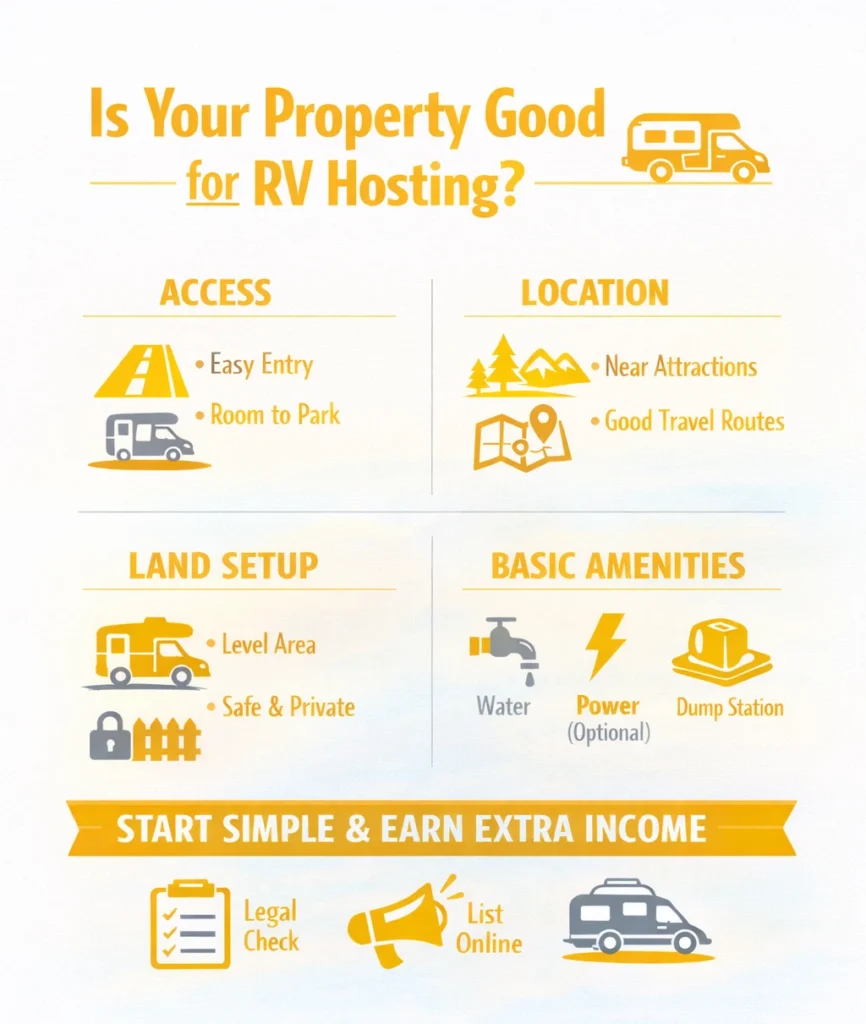
- A good RV hosting property depends on access, usability, and location appeal
- Many RVers are comfortable staying on private land without full hookups
- Infrastructure like electricity, water, and sewer can be added over time
- Legal requirements, insurance, and liability should be considered early
- Using a platform like Hookhub helps you validate demand before investing heavily
What Makes a Property Suitable for RV Hosting?
A good RV hosting property is not just about size. It’s about whether your land can function as a safe, accessible, and appealing camping spot for RV travelers.
Think of it this way:
Would an RVer choose your property over a traditional campground or another listing?
That decision depends on:
- Whether they can park their RV safely
- Whether the location fits their travel route or destination
- Whether your property offers a comfortable stay, even without full amenities
If your land can provide a reliable place to park and a positive experience, you already have the foundation for hosting RVs.
Physical Land Requirements: What Actually Matters
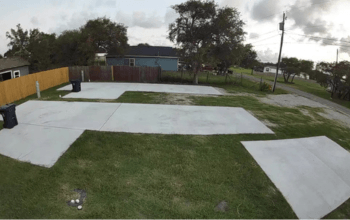
Your property should be able to accommodate different types of RVs, from small campers to larger travel trailer setups.
Important factors include:
- Enough space for RV parking and maneuvering
- Ground that can support the weight of RVs
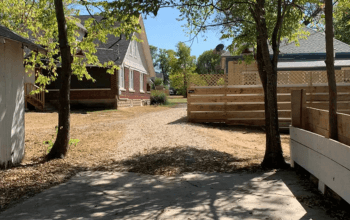
- Clear access for vehicles entering and exiting your property
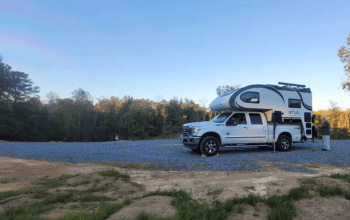
A simple gravel campsite or designated parking spot can already work well. If you’re unsure how to set this up, this guide on preparing your land for RV guests (https://hookhub.co/how-to-prepare-your-land-for-rv-guests) explains how to make your property ready without overbuilding.
Accessibility is critical. Even a great campsite can fail if RV travelers struggle to reach it.
Download this RV hosting development guide to understand how to turn a workable piece of land into a properly structured RV setup without overbuilding too early.
Natural Features That Increase Booking Appeal
Many RV travelers are not just looking for a place to park. They are looking for an experience.
If your private land offers
- Scenic views
- Quiet surroundings
- Outdoor access or nearby attractions
it immediately becomes more appealing than a basic campground.
Properties located near destinations like U.S. National Parks or open outdoor areas like
Public lands often attract more bookings because they align with how RVers plan their trips.
Some guests also value responsible travel and follow leave no trace camping principles, especially when staying on private property.
Location Matters More Than You Think
Location plays a major role in whether RVers choose your property.
Travelers often plan their RV travels in advance, mapping out destinations, overnight stops, and convenient places to stay. Many rely on RV trip planning tips when deciding where to book.
If your land is:
- Near a popular destination
- Along a common travel route
- Close to attractions or urban areas
it becomes easier to attract consistent bookings.
If your property is more rural, your advantage becomes privacy, space, and a more relaxed RV lifestyle experience.
To understand how location and setup affect your ability to earn, this guide on how much you can earn from RV hosting gives a clearer picture of income potential.
Infrastructure: What You Really Need (and What You Don’t)
This is where many landowners hesitate.
You might think you need full hookups immediately, including electricity, water, and sewer connections. In reality, many RVers are comfortable with simple setups.
Guests often manage:
- Fresh water and water usage
- Battery systems or solar instead of full electrical hookups
- Waste through dump stations rather than direct sewer
That means you can start hosting RVs without installing everything upfront.
Over time, you can add:
- Electrical hookups (30 amp or 50 amp)
- Water access points
- Sewer connections
Understanding basic rv electrical safety and safe water handling practices is important if you plan to expand your setup later.
Avoid Overbuilding Too Early
It’s tempting to install every amenity before you even get your first guest.
But this is one of the biggest mistakes in RV hosting.
Many landowners invest heavily in electrical systems, sewer hookups, and upgrades without knowing if their property will attract enough RV travelers to justify the expense.
Learning from common RV hosting mistakes landowners make can help you avoid unnecessary costs and build your hosting setup step by step.
Start simple, host a few guests, then improve based on real demand.
The RV hosting development guide shows how to start simple, validate demand, and expand your setup based on real bookings instead of guesswork.
Download the guide to get started.
Legal, Insurance, and Platform Considerations
Before you start hosting RVs on your property, you need to understand your responsibilities.
Check:
- Local zoning laws
- Whether your property is allowed to host paying guests
- Any restrictions related to private land use
Insurance is also critical. You need proper coverage to protect yourself from liability if something happens during a guest’s stay.
Organizations like National Association of RV Parks and Campgrounds provide guidance on safety, operations, and liability considerations.
If you plan to use a hosting platform, make sure you understand their policies, listing requirements, and how they handle guest communication and protection.
Where Hookhub Fits Into Your Decision
You don’t need to fully develop your property before getting started.
Hookhub allows you to test your property as an RV hosting destination without taking on unnecessary risk.
You can:
- List your property on Hookhub
- Attract RV travelers looking for private land stays
- Communicate clearly about your amenities and setup
- Start earning before installing full infrastructure
This approach helps you validate your property using real guest stays instead of assumptions.
Making the Final Decision
Your property does not need to be perfect to be worth developing.
If it can:
- Provide a safe place for RV parking
- Offer a decent location or unique appeal
- Support a basic campsite setup
then it is already a strong candidate for hosting RVs.
From there, your job is to improve strategically, not all at once.
Conclusion
RV hosting is one of the most practical ways to turn unused land into extra income.
You don’t need a full campground, luxury amenities, or expensive installations to begin. What matters is whether your property can offer a safe, accessible, and appealing place for RV travelers to stay.
If your land meets the basics, you are already in a position to start earning from your land
Start simple, learn from your guests, and build your hosting setup over time.
Use this RV hosting development guide to get a clear, step-by-step plan for evaluating, setting up, and improving your RV hosting property with confidence. It walks you through layout, utilities, pricing, and how to scale without unnecessary risk.
FAQ
Do I need full hookups before I start hosting RVs?
No. Many RVers are comfortable staying without full hookups, especially for short stays or overnight parking.
Can I earn money hosting RVs on private property?
Yes. Many landowners earn extra income by offering RV parking on private land through hosting platforms.
What type of property attracts the most RV travelers?
Properties near attractions, travel routes, or scenic areas tend to perform well.
Do I need insurance to host RV guests?
Yes. Proper insurance coverage helps protect you from liability and ensures safer hosting.
How do I know if upgrades are worth the cost?
Start hosting first. Use real guest feedback and booking demand to guide your investments.