

Your RV’s roof is exposed to constant movement, UV rays, rain, and temperature shifts. Over time, even a small crack in old sealant can allow water intrusion to begin. Most roof leaks develop slowly around roof seams, vents, and roof penetrations rather than from sudden failure.
Choosing the right RV roof sealant starts with matching the product to your roof membrane. Compatibility, flexibility, and durability matter more than brand popularity. When you understand the type of roof your RV has, selecting the right sealant becomes much simpler.
Understanding the Type of RV Roof You Have
Not every sealant product adheres to every roof membrane. Using an incompatible sealant can reduce adhesion and shorten the life of your repair.
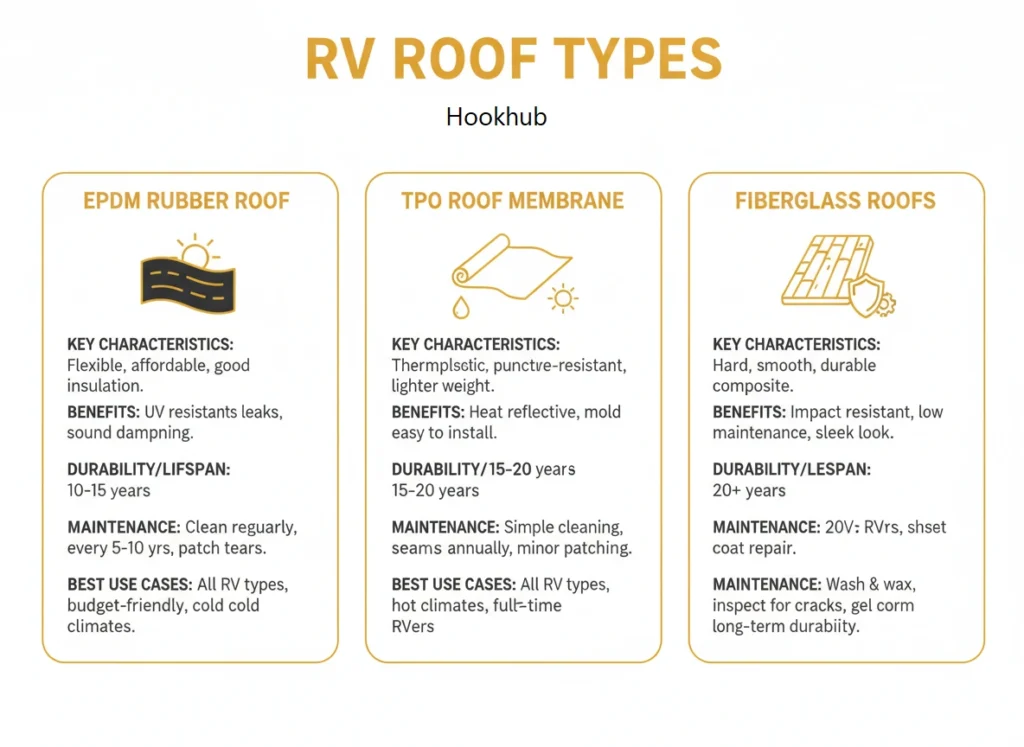
EPDM Rubber Roof
EPDM rubber roofs remain one of the most common systems on campers and motorhomes, according to the RV Industry Association.
They feature a flexible EPDM rubber membrane, typically with a black underside. When sealing an EPDM roof, the sealant must adhere to rubber and remain flexible as temperatures change. Self-leveling lap sealant is often the best for sealing horizontal roof seams on rubber RV roof systems.
Standard household silicone caulk is not recommended because it may not bond properly to EPDM rubber.
TPO Roof Membrane
TPO roofs are white thermoplastic membranes designed to reflect heat. While similar in appearance to EPDM, they require TPO-compatible sealants. Using the wrong type of sealant on TPO can lead to poor adhesion and early failure.
When working with EPDM and TPO, always confirm compatibility on the label before applying the sealant.
Fiberglass Roofs
Fiberglass roofs are rigid and durable but still require flexible sealant at roof edges, seams, and around vents. A sealant with strong adhesion and flexibility and durability is essential for fiberglass roofs to prevent leaks.
If unsure about the type of roof your RV has, check the interior trim ring under a vent. A black underside usually indicates EPDM. White on both sides typically means TPO.
Different Types of RV Sealants and Their Applications
Understanding different types of RV sealants ensures you use the right product in the right location.
Self-Leveling Lap Sealant
Self-leveling sealant is best for horizontal roof surfaces. After applying the sealant with a caulking gun, it spreads across a flat surface and forms a watertight bond.
It is best for sealing:
- Roof seams
- Roof penetrations
- Vents
- Skylights
- Horizontal roof sections
Non-Sag Sealant
Non-sag sealant is designed for vertical surfaces and roof edges. It holds its shape and will not run down the camper roof.
It is best for:
- Vertical seams
- Roof edges
- Trim joints
- Sidewall transitions
Silicone and Butyl-Based Options
Silicone-based RV sealant offers strong UV resistance and flexibility. However, it must be formulated specifically for RV roof systems. Some silicone products can create future adhesion issues if used improperly.
Butyl tape is often used beneath fixtures before sealing roof seams. It provides strong initial adhesion and works well in combination with lap sealant.
RV Sealant Tape Systems
Sealant tape systems such as EternaBond create a durable waterproof barrier over roof seams. RV sealant tape is commonly used to reinforce aging sealant or repair a small leak before it becomes serious.
12 Best RV Roof Sealants
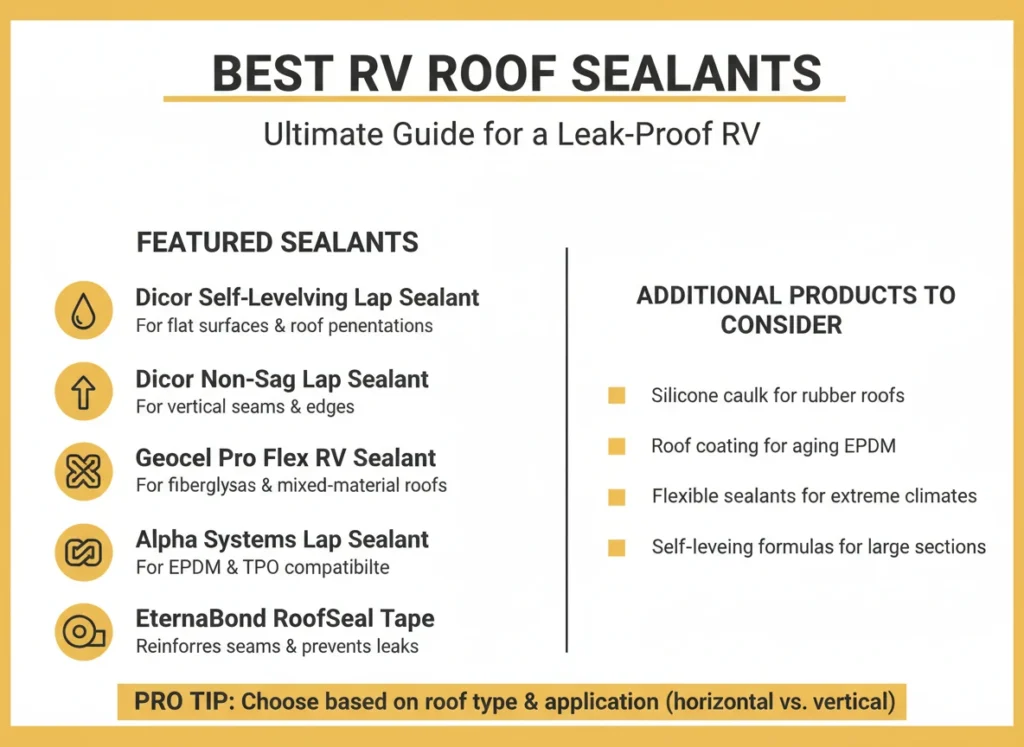
Below are the top picks based on compatibility, adhesion, cure performance, and overall durability.
1. Dicor Self-Leveling Lap Sealant
A leading self-leveling lap sealant for EPDM and TPO roofs. It is easy to apply and ideal for horizontal roof applications.
Best for sealing flat surface areas and roof penetrations.
2. Dicor Non-Sag Lap Sealant
Designed for vertical surfaces and roof edges. It maintains shape while curing and offers reliable flexibility.
Best for vertical seams and edge work.
3. Geocel Pro Flex RV Sealant
A flexible sealant known for strong adhesion across a variety of materials, including fiberglass and metal. It performs well in changing weather conditions.
Best for fiberglass roofs and mixed-material RV roofs.
4. Alpha Systems Lap Sealant
Manufactured by a roof membrane brand, this sealant product is designed for compatibility with EPDM and TPO roof membranes.
Best for manufacturer-matched systems.
5. EternaBond RoofSeal Tape
A popular RV sealant tape that provides an immediate waterproof seal. It is often used over roof seams and problem areas.
Best for reinforcing existing sealant and preventing small leaks.
6–12. Additional Sealant Products to Consider
Other reliable products on the market include:
- Silicone caulk formulated for rubber roofs
- Roof coating product options for aging EPDM rubber
- Flexible sealant blends for extreme climates
- Self-leveling sealant formulas designed for large horizontal roof sections
When comparing different sealants, focus on the type of RV roof you have and whether the sealant is better suited for horizontal roofs or vertical surfaces.
How to Apply RV Roof Sealant Properly
Even the best RV roof sealants require proper surface preparation, especially for travelers living in an RV full-time who rely on regular maintenance to avoid water damage.
Surface Preparation
The surface must be clean and dry. Surface thoroughly to remove dirt, oil, and debris. Dry the surface completely before applying the sealant to ensure strong adhesion.
For practical RV roof care and maintenance tips, including cleaning, inspecting for leaks, and understanding when to reseal your roof, see this roof maintenance guide from the Florida RV Trade Association.
Removing Old Sealant
Old sealant that is cracked or separating should be removed before resealing. Applying new material over failing sealant reduces durability and increases the risk of roof leaks.
Applying the Sealant
Use a caulking gun and apply a steady bead along roof seams and roof penetrations.
Use:
- Self-leveling lap sealant for horizontal roof areas
- Non-sag sealant for vertical surfaces
Allow proper cure time based on manufacturer instructions. Most products cure within 24 to 48 hours under normal weather conditions.
FAQ
What is the best RV roof sealant for EPDM rubber roofs?
A self-leveling sealant specifically labeled for EPDM rubber is typically best for sealing horizontal roof seams.
How often should sealant be inspected?
Inspect at least twice per year. Many RVers reseal high-stress seams every couple of years.
Can roof coating be applied over lap sealant?
Yes, provided the old sealant is clean, intact, and fully cured.
Final Thoughts
Regular roof inspections and proper sealing are simple steps that prevent expensive repairs. Check your RV’s roof seams, vents, and edges at least twice a year, and reseal areas showing wear before leaks develop. If you’re planning longer stays or exploring hosting RV travelers on private land, routine roof maintenance becomes even more important. If you’re planning longer stays or exploring private land options, routine roof maintenance becomes even more important.
Hookhub connects RV travelers with verified private property hosts, making it easier to arrange secure overnight stops. Preparing your roof before extended travel helps you arrive confident and leak-free, especially when researching where RVs can park overnight during long trips.
Consistent maintenance keeps your RV protected, reduces the risk of water intrusion, and ensures your camper is ready for every trip.