Arizona has no shortage of scenic destinations.
From Sedona’s red rocks to the Grand Canyon, most content about RV travel focuses on where people visit. But for landowners looking to generate consistent income, that’s the wrong lens.
The more important question is:
Where do RV travelers actually stay long-term?
Because the RV demand that produces reliable income is not driven by tourism alone. It is driven by people who need a place to live temporarily, not just a place to visit.
These are travelers staying for 30, 60, or even 90 nights at a time. They are not chasing views. They are looking for stability.
That shift changes everything about where demand exists and how landowners should position their property.
Key Takeaways
- Long-term RV demand in Arizona is concentrated near metro areas rather than tourist destinations
- Snowbird season (November through March) drives the majority of extended-stay bookings
- Reliable utilities and quiet environments matter more than “unique experiences”
- Properties near Phoenix consistently outperform scenic regions in total income potential
- Clear setup and expectations are just as important as location
The Reality of RV Demand in Arizona
Most articles highlight Arizona as a destination.
But from a hosting perspective, Arizona is a temporary relocation hub.
There are two very different types of RV demand:
Short-Term Demand
This is what most people picture:
- Visitors exploring Sedona
- Travelers stopping near the Grand Canyon
- Weekend or overnight stays
This type of demand is:
- High traffic
- High turnover
- Less predictable
Long-Term Demand
This is where the real opportunity exists.
These guests are:
- Snowbirds escaping winter
- Remote workers staying for months
- People between housing situations
- Seasonal workers
They are not looking for an experience.
They are looking for:
- A stable place to stay
- Reliable utilities
- Quiet surroundings
- Easy access to daily life
For landowners, this type of demand creates something much more valuable than traffic:
Consistency.
Where Long-Term RV Demand Is Strongest (By Region)
Central Arizona (Phoenix Metro and Surrounding Areas)
If you strip away the tourism narrative and focus purely on where people actually stay for extended periods, everything points to one region:
The Phoenix metro area and its surrounding outskirts.
This includes:
- Scottsdale
- Mesa
- Apache Junction
- Queen Creek
- San Tan Valley
- Cave Creek
These areas consistently outperform others for one simple reason:
They support daily living.
Unlike tourist-heavy regions, these locations provide access to:
- Grocery stores
- Healthcare
- Restaurants
- Services
- Transportation
For someone staying 60 days, this matters far more than proximity to a hiking trail.
What Demand Looks Like Here
Long-term RV guests in this region are typically:
- Staying for the winter
- Working remotely
- Living a slower, more stable lifestyle
They often prioritize properties that feel:
- Quiet
- Organized
- Predictable
This is why private land hosting performs so well here. It offers a controlled, low-density alternative to large RV parks.
Income Reality
Because of this demand, monthly pricing in these areas tends to stabilize between:
$800 and $1,500+ per site depending on:
- Hookups
- Location
- Site quality
What matters is not just the rate, but the consistency of occupancy during peak months.
Pinal County and the Growth Corridor
Just outside the core Phoenix metro, there is a fast-growing corridor that many landowners overlook.
Areas like Queen Creek, San Tan Valley, and Florence are becoming increasingly important.
They offer a unique combination:
- Lower land cost
- Fewer restrictions in many areas
- Close proximity to Phoenix
This creates a powerful dynamic:
Guests get access to the metro area without the density and congestion.
For landowners, this often means:
- Easier setup
- Strong demand spillover
- More room to scale
This is one of the most strategic areas for long-term RV hosting in Arizona right now.
Western Arizona (Lake Havasu and Colorado River)
Western Arizona has strong visibility and attracts a large number of RV travelers, particularly during the winter months.
However, the nature of demand here is different.
There is a mix of:
- Long-term snowbird stays
- Short-term tourism-driven visits
While there is solid income potential, it tends to be more seasonal and less consistent outside peak months.
This makes it a good option for:
- Hybrid hosting models
- Seasonal optimization
But not always the strongest choice for year-round stability.
Northern Arizona (Sedona, Flagstaff, Grand Canyon)
Northern Arizona is often perceived as the most desirable region due to its scenery.
And for short-term stays, it absolutely is.
But for long-term RV hosting, it presents several challenges:
- Colder temperatures
- Seasonal demand swings
- Less emphasis on extended stays
Most guests in this region are passing through, not settling in.
This means:
- Higher turnover
- Less predictable occupancy
- Less alignment with monthly hosting
It is often overestimated as an income market for landowners.
Southern Arizona (Tucson and Surrounding Areas)
Southern Arizona offers a quieter alternative to Phoenix while still benefiting from snowbird demand.
The pace is slower, and the environment is less dense, which appeals to a certain type of long-term guest.
While pricing may be slightly lower than in Phoenix metro, the trade-off is often:
- Less competition
- Easier setup
- More relaxed hosting environment
For some landowners, this balance is ideal.
What Long-Term RV Guests Actually Look For
This is where many hosting guides get it wrong.
They focus on what makes a stay interesting instead of what makes it livable.
For long-term guests, the priorities are practical.
Reliability Over Experience
A guest staying for 60 days does not care about novelty.
They care about:
- Whether their power works every day
- Whether the water pressure is consistent
- Whether the environment is quiet
These are not “amenities.”
They are expectations.
Power Is the Foundation
In Arizona, electricity is not optional infrastructure.
It is the backbone of the stay.
Most long-term guests prefer 50 amp service because it allows:
- Multiple AC units
- Normal appliance usage
- Comfortable living conditions
Without it, your property becomes less competitive immediately.
Quiet, Low-Density Environments
Many RV parks are built for volume.
Private land is built for space.
Long-term guests often choose:
- Fewer neighbors
- More distance between sites
- Less turnover
This creates a more stable environment, which is exactly what they are looking for.
Clarity Reduces Friction
Guests want to understand:
- What is included
- What utilities cost
- How long they can stay
- What happens if they extend
The more clearly this is communicated, the more likely they are to book and stay longer.
Download the Arizona RV Hosting Playbook to see the exact long-term setup that performs best in Phoenix-area demand zones (utilities, layout, and pricing).
Why Scenic Locations Don’t Always Produce the Best Income
It’s easy to assume that the most beautiful locations will generate the most demand.
But long-term hosting does not work that way.
A scenic property without:
- reliable utilities
- access to services
- stable infrastructure
will often underperform compared to a simpler property in a more practical location.
For monthly guests, the priority order typically looks like this:
- Location near daily services
- Utility reliability
- Quiet environment
- Clear pricing
- Scenic value
This is why a modest property outside Phoenix can outperform a premium scenic property in a tourist area over the course of a season.
How to Position Your Property for Long-Term Demand
Success in RV hosting is not about chasing trends.
It is about aligning with how people actually live.
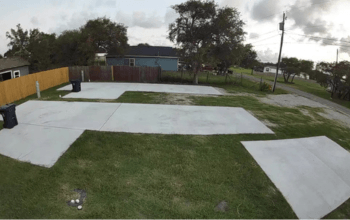
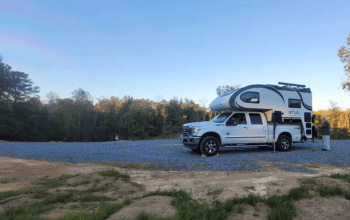
Build for Daily Use
Instead of thinking like a campground, think like a long-term living setup.
This means:
- Stable ground
- Reliable hookups
- Functional layout
Reduce Decision Friction
The easier it is for a guest to understand your setup, the more likely they are to book.
Clarity around:
- pricing
- utilities
- policies
is one of the most overlooked advantages.
Create Structure Early
Many issues in RV hosting do not come from the land.
They come from lack of structure.
Unclear expectations lead to:
- disputes
- misunderstandings
- early departures
Platforms like Hookhub help standardize:
- listings
- bookings
- communication
- guest vetting
This becomes especially important for long-term stays, where small issues compound over time.
Seasonality: The Layer That Changes Everything
Arizona demand is highly seasonal.
Understanding this is critical for setting expectations.
Winter (Peak Season)
From November through March, demand is at its highest.
This is when:
- snowbirds arrive
- occupancy stabilizes
- pricing strengthens
This period often drives the majority of annual income.
Shoulder Seasons
Spring and fall bring moderate demand.
These periods allow for:
- flexible pricing
- shorter stays
- transitional guests
Summer Reality
Arizona summers are extreme.
Temperatures regularly exceed 100–110°F.
This affects:
- demand (lower)
- power usage (higher)
Some hosts:
- reduce pricing
- switch strategies
- or pause entirely
Planning for this is part of running a sustainable setup.
Where Landowners Actually Win
The highest-performing properties are not the most complex.
They are the most aligned.
They:
- sit in the right region
- offer reliable infrastructure
- maintain clear expectations
- operate with structure
When those pieces come together, the result is not just bookings.
It is consistency.
Where Hookhub Fits Into This
Demand alone does not create income.
Execution does.
In high-demand areas, especially around Phoenix, the difference between success and frustration often comes down to how well the hosting process is structured. For landowners who want to simplify everything, platforms like Hookhub make it easier to host RVs on your property while reaching more RV travelers.
Platforms like Hookhub provide a framework that helps landowners:
- present their property clearly
- manage bookings without confusion
- vet guests before arrival
- maintain consistent communication
This reduces friction on both sides and allows hosting to operate more like a system than a series of one-off arrangements.
Instead of figuring everything out alone, you can:
- List your RV sites
- Connect with verified guests
- Manage bookings more easily
Understanding how Hookhub works helps you turn your land into a consistent income source.
Many hosts also explore RV hosting tips to improve their setup and stand out in competitive areas.
Conclusion
Arizona is one of the strongest RV markets in the country.
But the most valuable demand is not driven by tourism.
It is driven by people looking for a place to stay, not just a place to visit.
Landowners who understand this shift and position their property for long-term use can create a more stable and predictable income stream.
The opportunity is not just in having land.
It is in using that land in a way that aligns with how RV travelers actually live.
Download the Arizona RV Hosting Playbook to get a clear plan for attracting snowbirds and long-term guests in the right Arizona regions.
It’ll help you set expectations, price monthly stays, and build a stable setup without overbuilding.