Imagine waking up in a new place every morning. You’re surrounded by nature and learning with your kids as you travel. For many families, homeschooling on the road is now a reality. It’s changing how they see education.
Christine Lindstrom, a full-time RVer and roadschooling writer, shares how life on the road has shaped her family’s approach to education. She highlights the value of learning through real-world experiences, showing that homeschooling in an RV is more than academics—it’s a lifestyle that blends travel, exploration, and growth.
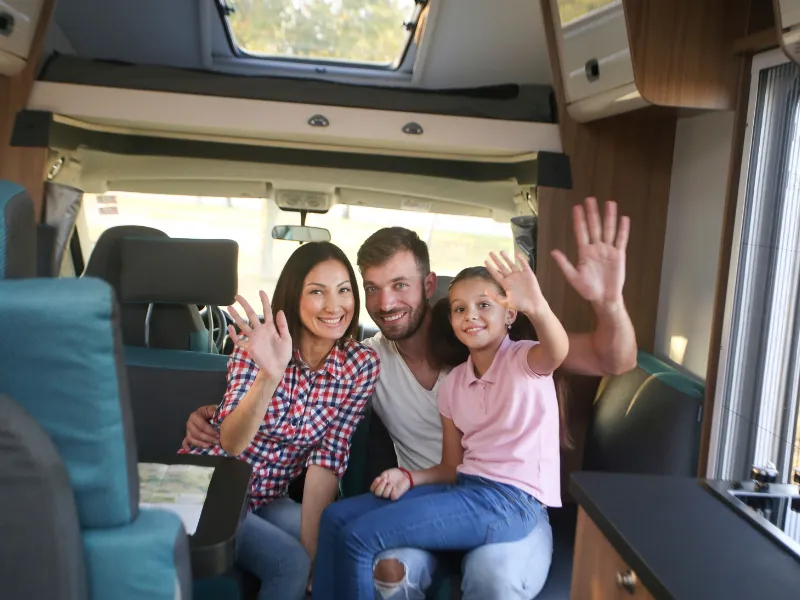
As we dive into homeschooling in an RV, we see it’s more than just school. It’s a lifestyle that mixes education with travel.
RV living needs careful planning, and education is key. In this guide, we’ll share practical tips for a successful journey.
The Unique Benefits of RV Homeschooling
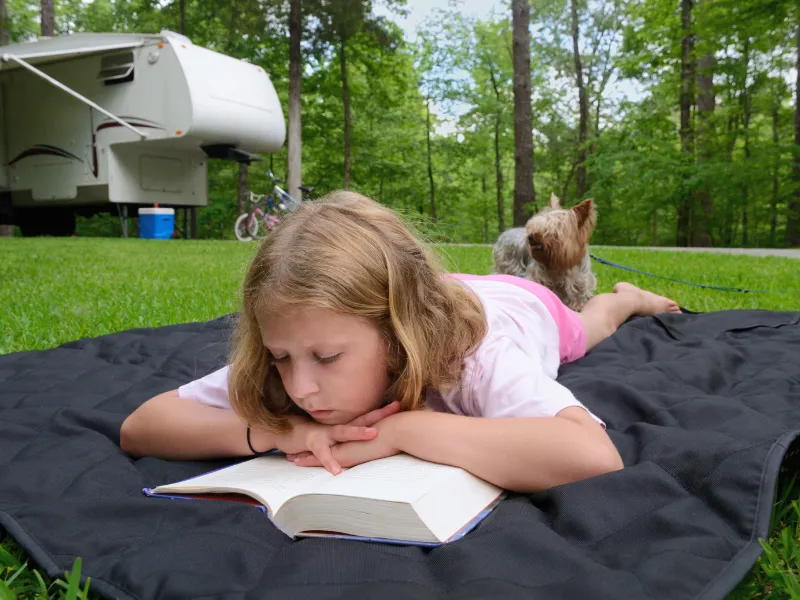
RV homeschooling blends education with adventure, giving families the freedom to travel while learning together. This flexible lifestyle turns everyday experiences into meaningful lessons, making education both engaging and diverse.
Combining Education with Travel Experiences
One of the biggest advantages of RV homeschooling is the chance to learn through real-world experiences. Christine Lindstrom, a writer and full-time RVer, highlights how “learning by doing”—whether snorkeling, visiting museums, or exploring landmarks—makes subjects more exciting and practical.
History comes alive at historical sites, while science becomes easier to grasp in museums or through hands-on nature activities. Traveling adds depth to learning that a classroom alone can’t provide.
Key benefits of combining education with travel include:
- Experiential learning that sparks curiosity
- Exposure to diverse cultures and lifestyles
- Opportunities to visit historical landmarks
- Hands-on science and nature experiences
- Flexibility in Learning Environments
RV homeschooling allows children to learn anywhere—inside the RV, in a park, or at a local library. This variety creates comfortable and productive learning spaces.
Parents also have the freedom to adapt lessons to their child’s unique needs and learning style, ensuring a personalized and effective education.
Building Family Bonds Through Shared Experiences
Beyond academics, RV homeschooling strengthens family connections. Learning and exploring together builds lasting memories and encourages deeper parent-child involvement.
This close-knit lifestyle fosters a supportive and collaborative learning environment where both education and relationships thrive.
RV homeschooling families don’t just rent space—they seek educational destinations. Smart hosts who design their land as a living classroom attract these longer-staying guests who share their experiences throughout their extensive network. It’s not just hospitality; it’s strategic positioning in a growing market hungry for meaningful places. – Caylee Shea Harrington, CEO of HookHub
Setting Up Your RV as an Effective Learning Space
For RV homeschooling families, turning the RV into a functional learning environment is essential. While one of the greatest advantages of this lifestyle is the flexibility to learn anywhere, having a dedicated space helps foster focus, consistency, and productivity.
Creating Dedicated Study Areas in Limited Space
Space can be tight in an RV, so smart organization is key. Even a small, defined area for learning makes a big difference.
Some practical tips include:
- Choosing multi-purpose furniture that doubles as storage and a workspace
- Designating a specific area for study, even if it serves other purposes later
- Using compact yet comfortable seating for longer study sessions
These small adjustments help children separate “learning time” from daily RV life.
Essential Educational Materials for Long-Term RV Living
Selecting the right learning tools is crucial when space is limited.
Families often rely on:
- Digital curriculum accessible online
- Portable devices like tablets and e-readers with educational apps
- Compact books, games, and hands-on resources that encourage creativity
By keeping materials simple and space-efficient, families can support learning without clutter.
Technology Solutions for Learning in an RV Park
Technology plays a major role in making RV homeschooling effective. Reliable access ensures kids can stay connected and engaged.
Helpful tech options include:
- Mobile internet solutions to stay connected anywhere. To keep lessons running smoothly, families often explore the best RV internet options to find reliable setups that support both schooling and work on the road.
- Interactive educational apps that make learning fun
- Virtual learning platforms for lessons, collaboration, and connecting with teachers
Together, these tools give RV homeschooling families the balance of flexibility and structure needed for a strong education on the road.
Legal Requirements for RV Homeschooling Families
For families who homeschool while traveling in an RV, understanding the legal side is just as important as creating a learning routine. Since laws vary across the U.S., RV homeschoolers need to stay informed to ensure a smooth and compliant educational journey for their children.
Understanding State-by-State Homeschooling Laws
Homeschooling laws differ widely from state to state. Some states have minimal requirements, while others may require record-keeping, periodic evaluations, or formal notification. For traveling families, knowing the regulations in each state they visit—or plan to reside in—is essential.
A reliable resource for this is the Home School Legal Defense Association (HSLDA), which provides updated information on homeschooling laws across the country. Staying aware of these rules helps avoid legal complications and ensures continuity in learning.
Establishing a Domicile State for Legal Purposes
Because RV families are always on the move, choosing a domicile state (a permanent legal residence) is a critical decision. The domicile state determines which homeschooling laws officially apply.
When selecting a domicile, families often consider:
- The state’s homeschooling regulations
- Tax implications and residency requirements
- Steps to establish domicile, such as registering a vehicle, obtaining a driver’s license, or registering to vote
Some states are known for being more homeschool-friendly, making them popular choices for full-time RVers. If you’re considering the switch, here’s a practical guide on can you live in an RV full time that covers the legal and lifestyle essentials.
Record-Keeping and Documentation Tips
Good record-keeping is essential—not only for meeting legal requirements but also for tracking a child’s educational progress. Organized documentation provides proof of compliance and a clear picture of learning achievements.
Important records to maintain include:
- Attendance logs – daily or weekly tracking of homeschooling hours
- Work samples – essays, projects, and tests to show progress
- Curriculum plans – outlining subjects and learning goals
- Standardized test results – where required by law
By staying organized and choosing a homeschool-friendly domicile, RV families can focus on what matters most: giving their children a rich, flexible, and well-rounded education.
Curriculum Options Ideal for Long-Term RV Park Homeschooling
For families living full-time in RVs, choosing the right homeschooling plan means finding resources that are both flexible and adaptable. With limited space and a constantly changing environment, RV homeschoolers often combine digital tools, compact physical resources, and alternative learning approaches to create a well-rounded education.
Online and Digital Curriculum Resources
Digital curriculum is a favorite among RV homeschooling families because it’s portable and accessible anywhere with internet. These tools allow lessons to be flexible, engaging, and easy to update as families travel.
Popular options include:
MobyMax – a comprehensive online program available wherever there’s internet
Khan Academy – free courses and tutorials across multiple subjects
Calvert – a structured online homeschool program
Time4Learning – interactive lessons with activities for various grade levels
These platforms make it easier to adapt learning plans without being tied to heavy textbooks or large materials.
Physical Curriculum Solutions for Limited Space
Some families still prefer hands-on materials, but in an RV, space is precious. Choosing compact, versatile resources helps balance learning with storage needs.
| Curriculum Type | Space Considerations | Examples |
| Workbooks | Compact, easy to store | Math, language arts, science |
| Unit Studies | Flexible in print or digital formats | History, science, literature |
| Hands-on Materials | Needs some storage, but highly engaging | Science kits, art supplies |
A small but carefully selected collection of physical resources can complement digital learning.
Unschooling and Interest-Led Learning Approaches
Many RV families embrace unschooling or interest-led learning, where children’s curiosity guides their education. This approach lets kids dive deeply into subjects they’re passionate about—whether it’s marine life, astronomy, or history.
For instance, a child fascinated by marine biology can learn about ocean ecosystems, endangered species, and conservation efforts through books, field trips, and real-world experiences.
By blending digital tools, compact physical resources, and interest-driven exploration, RV families can create a flexible and meaningful homeschool curriculum that grows with their children on the road.
Establishing Effective Routines for Homeschooling in an RV
Creating a routine is essential for RV homeschooling. It helps families balance the freedom of travel with the structure needed for consistent learning. As homeschooling blogger Ana Willis emphasizes, setting a schedule that works for your family is key to success.
Creating Consistent Daily Schedules
A daily schedule provides stability and helps children meet educational goals. Starting the day with a simple morning routine—such as a family check-in or “morning circle”—sets a positive tone for learning.
For younger children, a visual timetable can be especially helpful. It gives them a clear sense of what’s coming next, making transitions between activities smoother.
Balancing Structured Learning with Flexibility
RV homeschooling requires both structure and flexibility. While having a routine keeps learning on track, it’s equally important to embrace spontaneous learning opportunities during travel.
As the saying goes, “The world is a book, and those who do not travel read only one page.” Flexibility allows families to weave cultural experiences, outdoor adventures, and new discoveries into their curriculum, enriching education in unique ways.
Managing Multiple Children of Different Ages
Homeschooling children of different ages can be challenging, but with the right strategies, it becomes manageable—and even rewarding. A mix of group activities and individual lessons ensures everyone’s needs are met.
For instance, older children can work independently on certain tasks, while parents focus on guiding younger ones. This approach not only balances the workload but also encourages independence and self-directed learning in older kids.
By creating consistent routines while staying open to new experiences, RV families can enjoy the best of both worlds: productive homeschooling and the freedom to learn from the journey itself.
Leveraging RV Park and Local Community Resources
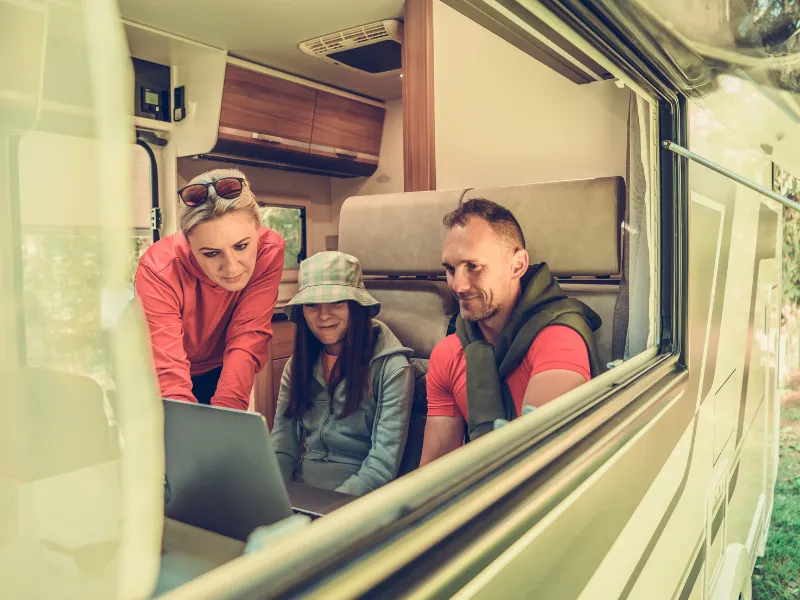
RV homeschooling isn’t just about what happens inside the RV—it’s also about tapping into the people, places, and opportunities around you. Using RV park networks and local community resources not only enriches education but also creates meaningful memories for the whole family.
Connecting with Other Homeschooling Families at RV Parks
One of the greatest advantages of RV homeschooling is the chance to connect with like-minded families on the road. Communities such as Fulltime Families and Thousand Trails make it easier to meet others who share similar values and lifestyles.
As one parent put it, “The community is a big part of RV homeschooling. We’ve found our closest friends through these groups.”
To connect with other homeschooling families:
- Join online forums and social media groups dedicated to RV homeschooling
- Attend RV park events and gatherings
- Get involved with local homeschooling co-ops
Utilizing Local Libraries, Museums, and Educational Centers
Libraries, museums, and educational centers are full of learning. They have programs for homeschooling families. For example, libraries often have special sections for homeschooling and host events. Pairing these experiences with eco-friendly practices for long-term RV park can help families build both knowledge and sustainable habits on the road.
Finding Extracurricular Activities and Social Opportunities
Extracurricular activities are an important part of a well-rounded education. Fortunately, the RV lifestyle offers endless opportunities for kids to explore new hobbies, interests, and talents.
To discover activities on the road:
- Explore programs at local community centers
- Ask other homeschooling families for recommendations
- Use online platforms to find events, workshops, and clubs in the area
Overcoming Challenges of Homeschooling in an RV Park
Homeschooling in an RV park is rewarding but comes with unique challenges. As writer and full-time RVer Christine Lindstrom notes, “While there are challenges to RV homeschooling, many families thrive in this lifestyle.” By recognizing common obstacles and applying practical solutions, families can make RV homeschooling both successful and enjoyable.
Managing Limited Space and Resources
One of the biggest challenges of RV homeschooling is limited space. With careful planning, though, families can create functional and organized learning areas.
Effective strategies include:
- Using vertical storage to maximize available space
- Selecting compact and versatile curriculum materials
- Maintaining a regular decluttering routine to prevent clutter buildup
Even small adjustments, like choosing multi-functional furniture or setting up a designated desk, can make a big difference in creating an efficient learning space.
Addressing Socialization Concerns
Socialization is often a concern for homeschooling families, but RV parks naturally provide opportunities to connect with others. Kids can meet peers within the park community, while parents can seek out additional opportunities beyond the campground.
As one RV homeschooling parent shares, “The key to successful socialization is being proactive and seeking out opportunities for our children to engage with others.” Joining local homeschool groups, attending RV park events, and participating in community activities all help children develop friendships and social skills.
Dealing with Weather Constraints and Seasonal Changes
Weather and seasonal changes can impact homeschooling routines, especially in extreme climates. Flexibility is key—families can adjust lesson plans to fit the conditions.
For example:
Take advantage of good weather with outdoor activities and nature-based lessons
Use rainy or cold days for indoor projects, educational games, and creative activities
Instead of seeing weather as a setback, families can treat it as an opportunity to explore new ways of learning.
Weather and seasonal changes can impact homeschooling routines, especially in extreme climates. Families can adapt by planning flexible lessons and ensuring their RV setup is ready for seasonal shifts. For practical tips, see our guide on power and weather resilience for RV living
By addressing space limitations, supporting socialization, and adapting to changing weather, RV families can overcome the most common challenges of homeschooling on the road—turning obstacles into opportunities for growth.
Conclusion: Thriving Through RV Homeschooling
Homeschooling in an RV goes far beyond textbooks and schedules—it’s a lifestyle that blends learning, travel, and family connection. While challenges like limited space, socialization, and unpredictable weather may arise, these obstacles often become opportunities for growth, creativity, and resilience.
With the right balance of structure and flexibility, families can turn the open road into a classroom without walls. Every destination becomes a lesson, every journey an adventure, and every shared experience a chance to grow closer together.
RV homeschooling isn’t just about teaching children—it’s about shaping a lifestyle where learning never stops, memories are built daily, and education is as limitless as the road ahead.