

Quick Answers
- The Painted Desert stretches approximately 150 miles across northern Arizona’s Colorado Plateau — its colors come from 225-million-year-old mineral chemistry recorded in ancient soil layers
- The best viewing is at dawn and dusk when low-angle light saturates the reds, purples, and blues — overnight stays near Holbrook are essential to be at the viewpoints when the light is right
- No campground exists inside the park — backcountry permits for wilderness camping are available free at the visitor center by 4:30 pm
- Private land-based camps near the park start at $12 per night through Hookhub
- The Painted Desert Inn, a National Historic Landmark on the rim, is the most architecturally significant building on the I-40 corridor between Flagstaff and Albuquerque
Most visitors drive through the Painted Desert at noon and miss the point entirely. The colors that give this landscape its name — bands of deep red, burnt orange, lavender, and grey-blue layered across 150 miles of Arizona badlands — do not perform under a flat midday sun. They perform at first light, when the low angle illuminates the iron-rich cliffs with a warmth that makes the entire plateau appear to glow from inside. And again at dusk, in the thirty minutes before the park gates close, when the same light comes from the opposite direction and the blues and purples in the valley deepen to shades that have no direct equivalent in any other landscape in the United States.
This is why the overnight base camp strategy matters for the Painted Desert even more than it does for most national park destinations. The viewpoints are spectacular whenever you visit. They are extraordinary only at dawn and dusk. Getting there at the right moment requires sleeping nearby.
What Is the Painted Desert?
The Painted Desert is a section of the Colorado Plateau — the vast highland region covering northeastern Arizona, southern Utah, southwestern Colorado, and northwestern New Mexico — where the ancient Chinle Formation has been exposed by millions of years of erosion. The Chinle was deposited approximately 225 to 234 million years ago during the Late Triassic period, when this corner of Arizona sat near the equator on the supercontinent Pangaea, covered by a great river system in a humid subtropical climate. Dinosaurs and phytosaurs moved through ferns and cycad forests along river channels that would eventually become the most colorful landscape in North America.
The colors are not paint. They are chemistry. The reds and oranges in the badlands record ancient soil horizons where groundwater fluctuated seasonally — iron minerals oxidized in the presence of oxygen, effectively rusting into the red shades visible in the northern Petrified Forest Member. The blues, purples, and greens in the Blue Mesa Member record permanently saturated soils where iron minerals stayed in a low-oxygen environment and never oxidized. The result is a geological record of ancient groundwater tables written in color across a thousand-foot-thick stack of Triassic mudstone — visible from the rim road overlooks as bands of color stacked over each other like pages in a book, as the NPS describes it, with each layer representing a different chapter of ancient climate and hydrology.
What Can You Do at the Painted Desert?
The north entrance rim drive: Eight overlooks along the northern section of the park road provide direct views into the Painted Desert basin. Tatáypi Point, 1.25 miles from the north entrance, sits on black Bidahochi Formation basalt and overlooks the red Chinle badlands east toward open grasslands — the contrast between the volcanic black cap rock and the ancient red mudstone is visible at this single stop. The name Tatáypi is Hopi for “beautiful view.” Kachina Point is where the Painted Desert backcountry trail begins, dropping into the wilderness for hikers carrying permits.
Painted Desert Inn: The Painted Desert Inn National Historic Landmark sits on the rim above the badlands at a viewpoint accessible from the north entrance parking area. The building was originally constructed in the 1920s and renovated by the Civilian Conservation Corps in the 1930s in a Puebloan Revival style using petrified wood as a primary building material. Hopi artist Fred Kabotie painted the interior murals during the 1940s renovation. The Inn operated as a Harvey House hotel before the National Park Service acquired it. Today it functions as a bookstore and exhibit space — the architectural and cultural anchor of the northern park section.
Dawn photography and evening light: The Painted Desert changes character more dramatically with light than almost any other national park landscape in the United States. The reds in the badlands absorb and then emit orange light at low sun angles. The purples and blues in the Blue Mesa badlands shift tonality between the cool morning light and the warm evening light. The most saturated colors and the longest shadows occur in the 30 minutes after sunrise and 30 minutes before sunset. A traveler who bases camps in Holbrook and drives the 20-25 miles to the north entrance before dawn will see a landscape that midday visitors never experience.
Colorado Plateau context: The Painted Desert is one of the most accessible windows into the geological record of the Colorado Plateau — the most geologically varied region in the contiguous United States. The same Chinle Formation that creates the Painted Desert’s colors underlies much of the Four Corners landscape. The Apache and Navajo peoples have lived in and around this landscape for centuries — the Navajo Nation surrounds the park on its northern and eastern boundaries, and the Fort Apache Indian Reservation of the White Mountain Apache Tribe lies to the south. The cultural landscape of northeastern Arizona is as layered as its geology.
Meteor Crater day trip: Approximately 60 miles west on I-40 near Winslow, the best-preserved meteorite impact crater on Earth is a natural museum of cosmic geology. The 600-foot-deep crater formed approximately 50,000 years ago when a nickel-iron meteor the size of a city block struck the Colorado Plateau at roughly 26,000 miles per hour. The combination of Painted Desert deep-time geology (225 million years) and Meteor Crater geological event (50,000 years) makes northeastern Arizona one of the most geologically condensed road trip corridors anywhere.
Wildlife along the desert: Despite the badlands landscape that appears barren from the overlooks, the desert and Painted Desert basin support wildlife populations that reward patient observation. Ravens, ravens, and raptors work the thermals above the canyon rim. Pronghorn antelope move through the grassland sections between the badlands formations. The dinosaur fossil record buried in the Chinle Formation — including complete Coelophysis bauri skeletons and phytosaur specimens — is a reminder that this “barren” landscape once supported apex predators 10 to 17 feet long.
When Is the Best Time to Visit?
Spring and fall are the most productive seasons for Painted Desert viewing. October is the most recommended single month — the fall light is warm and low, autumn air brings clarity to the far views, and the summer monsoon season has passed, leaving the landscape without the afternoon thunderstorm clouds that can block the sunset light from July through September.
Spring brings wildflowers to the grassland sections between the badlands, and it is the most lush the landscape gets — the contrast between brief green growth and the stark reds and purples of the Chinle badlands is most visible in April and early May.
Summer visits require early morning arrival before the heat peaks. The park gates open at 8 am — arriving at the north entrance within the first hour means the morning light is still at the ideal low angle for Painted Desert photography before the midday sun flattens the landscape.
Where to Park Your RV Near the Painted Desert
The park has no developed campground — the same structure as Petrified Forest National Park, because the Painted Desert is the northern section of the same park. All overnight stays require base camping outside the park boundary. The logic of base camping for the Painted Desert, specifically, the dawn and dusk light that makes the landscape extraordinary, requires being on the road before the park opens. Staying 20-25 minutes away in Holbrook means a 5 am departure for a 5:30 am arrival at the north entrance as the light builds.
Commercial base camps in Holbrook: The Holbrook/Petrified Forest KOA at 102 Hermosa Drive is the primary full-service option — full hookups with 50-amp service, pull-throughs for large rigs, pool, dog park, laundry, and restroom and shower facilities. Recent 2026 reviews confirm spacious, level gravel sites, clean facilities, and staff who provide park orientation at check-in. Good Sam is affiliated with discount options available. The OK RV Park on Roadrunner Road is the alternative for travelers who prefer a smaller property close to the I-40 corridor.
A free self-contained boondocking area near the south entrance gift shop accepts rigs with no hookups at no cost — useful for travelers who want the closest possible approach to the park but need no amenities: large open sites, no shade, and genuinely dark skies. Designate your spot before dark and be set up before the gates close.
For backcountry camping inside the Petrified Forest National Wilderness Area, free permits are available at visitor centers by 4:30 pm. Hike at least 1 mile from the parking areas before setting up camp. No water, no facilities — carry everything in and pack everything out.
Private land in the park corridor — Hookhub listings:
These three listings are on Hookhub, which produced this guide. All three are in the eastern Arizona corridor within 20-30 miles of the park.
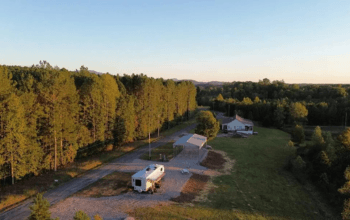
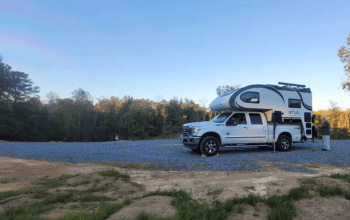
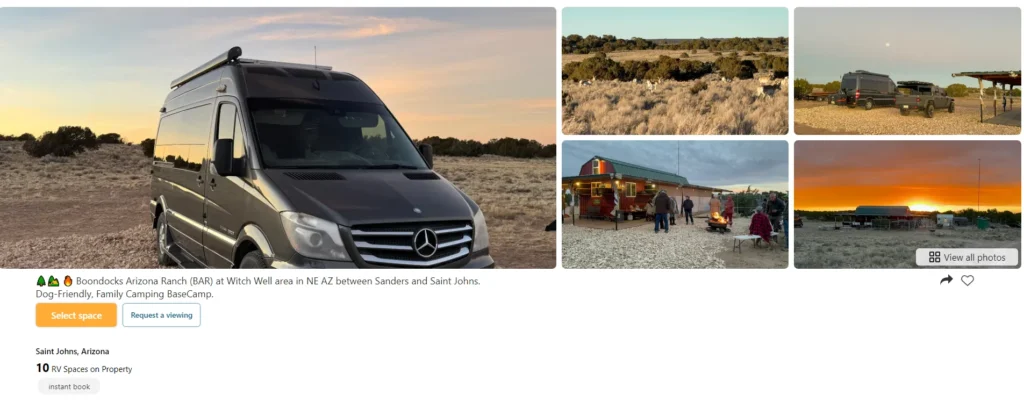
Boondocks Arizona Ranch near the Witch Well area between Sanders and Saint Johns sits approximately 20-25 miles from the park near the Highway 191/I-40 junction. Ten sites at 20 feet wide by 80 feet long at $12 per night — the most affordable confirmed private land base camp in the Hookhub inventory relative to this landscape. No hookups — fully self-contained rigs only. 6,000-plus foot elevation with wide open desert and night sky access. The boondocking character of the listing matches the spirit of the Painted Desert corridor.
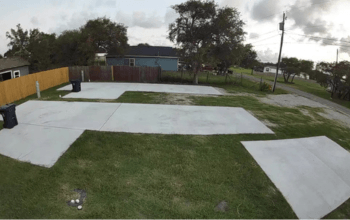
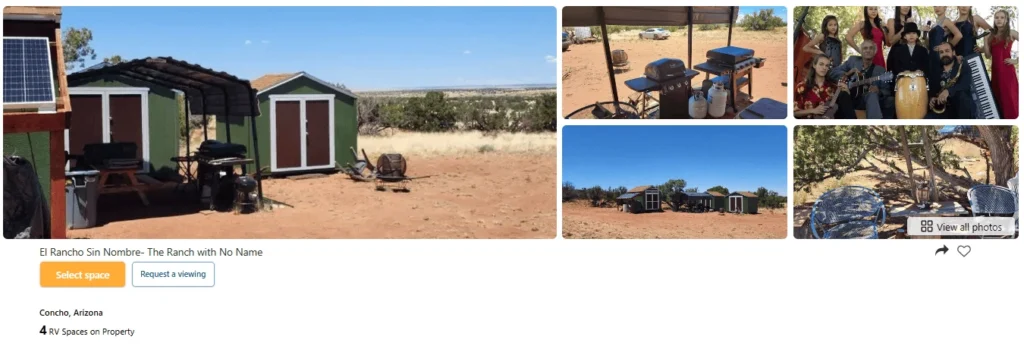
El Rancho Sin Nombre in Concho explicitly names the Painted Desert in its listing — three pull-thru sites at 20 feet wide by 40 feet long with electric hookup and WiFi at $29 per night. Musical family hosts, any trailer size accepted, gate locked for security. Approximately 25 miles from the park entrance.
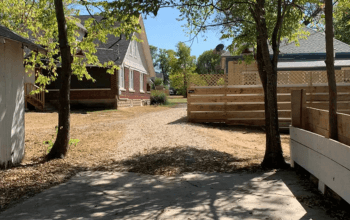
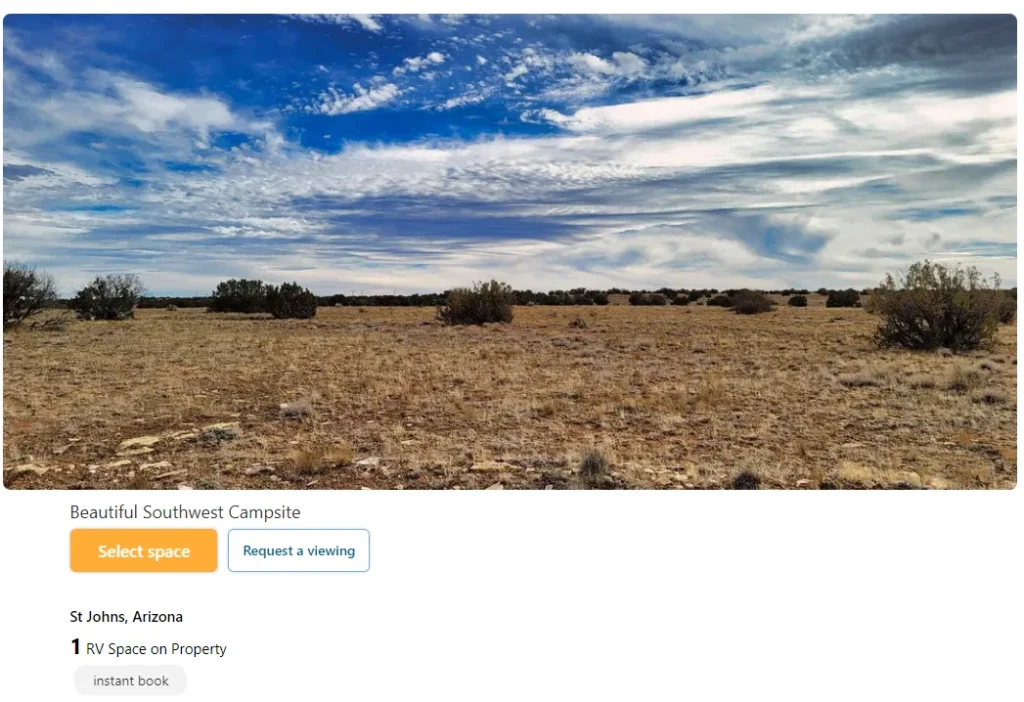
Beautiful Southwest Campsite in Saint Johns sits on 37.7 acres with a water hookup at $40 per night on a 30-foot by 50-foot site with instant booking available. Approximately 30 miles from the park.
Search current private RV parking near Saint Johns for all available listings in the park corridor.
Practical Trip Planning
Fuel: Holbrook has fuel on I-40 at multiple exits. No fuel inside the park. Plan to arrive with a full tank if exploring the full 28-mile park road, as the entrance and exit points are 20 miles apart.
Groceries: Holbrook has full grocery options. The forest gift shop and souvenir stores near park entrances sell snacks and souvenirs — not a resupply stop.
Dump station: Available at the Holbrook KOA for registered campers. No dump station inside the park.
Getting there: North entrance: I-40 Exit 311 east of Holbrook, turn south. South entrance: Highway 180 east from Holbrook to the Rainbow Forest Museum. From Flagstaff: I-40 East approximately 90 miles.
FAQ
What causes the colors in the Painted Desert?
The colors are chemical records of ancient soil conditions from 225 to 234 million years ago. The Chinle Formation mudstones were deposited in a great river system when Arizona was near the equator. Where ancient groundwater tables fluctuated seasonally, iron minerals oxidized and rusted into the red and orange shades. Where the water table was permanently high with low oxygen levels, those same iron minerals stayed in a reduced state and produced the blues, purples, and greens. The color of each layer is a record of the ancient hydrological conditions that existed when that soil horizon formed.
When is the best time of day to see the Painted Desert colors?
Dawn and dusk — consistently, by a significant margin. The colors look most striking at low sun angles when light travels through more atmosphere and hits the mineral-rich cliff faces at a raking angle. The 30 minutes after sunrise and 30 minutes before sunset produce the most saturated reds and the deepest blues. Midday sun flattens the landscape dramatically. Travelers who want the full visual experience should plan their campsite to allow a pre-dawn departure to reach the north entrance as the park gates open. A base camp 20-25 minutes away in Holbrook makes this straightforward.
Is the Painted Desert accessible to large RVs?
Yes — the park road and all north entrance viewpoints are paved, wide, and accessible for any size recreational vehicle. The north entrance off I-40 is a standard highway interchange. All viewpoint parking areas can accommodate large trailers and motorhomes. The backcountry trails are hike-in only, but every Painted Desert overlook is accessible by road and on foot from paved parking. There is no restriction on rig size for the park driving tour.
Planning a Painted Desert trip?
Find private RV parking in the park corridor and check current availability near the north entrance.