If you are thinking about full-time RV living as a solo worker, the biggest adjustment is realizing that you are not simply taking a long road trip.
You are creating a different kind of everyday life.
Your camper becomes your home on wheels. Your campground or private campsite becomes your temporary neighborhood. Travel days become part of your schedule, and decisions that barely matter on a weekend trip—where you get fresh water, how reliable the Wi-Fi is, where you dispose of wastewater, or whether your tires are ready for another few hundred miles—suddenly matter a lot.
The good news is that you do not have to figure everything out at once.
This guide to full-time RV living focuses on the practical side of transitioning from a house or apartment to living on the road, especially if your work, budget, or personal goals require you to stay in one place for weeks or months at a time.
Why Solo Workers Are Choosing Life on the Road
For some people, the appeal of RV life starts with flexibility.
Instead of signing another year-long lease, you can take your home with you. Instead of planning every trip around limited vacation time, you can build travel into your everyday life. If your work allows it, you may even be able to follow good weather, move closer to a temporary job assignment, or spend several months exploring a region without giving up a permanent home base.
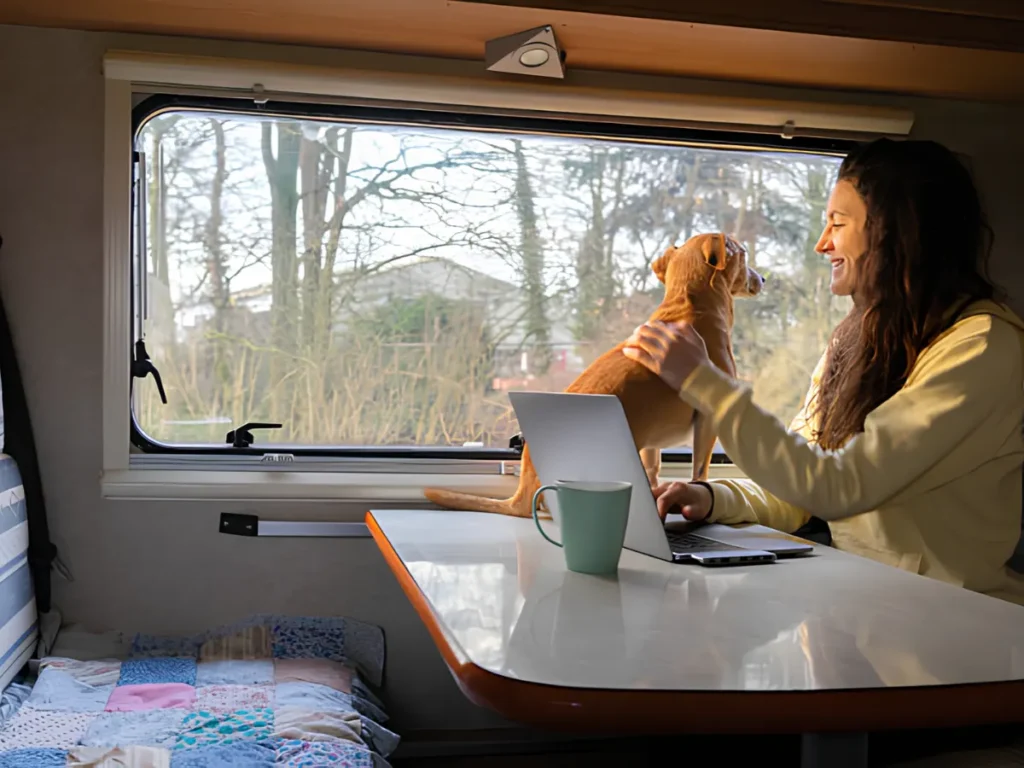
Remote work has also made this lifestyle more practical for people who once needed to stay close to a traditional office. The broader work-from-RV movement has also created new demand for flexible places to stay.
The RV Industry Association’s owner demographic research reports that 22% of RV owners have someone in their household who works remotely, and more than half of those remote workers have worked from an RV.
For a solo worker, however, the appeal is not only about saving money.
It can be about having the ability to choose where you live next.
You might be a travel nurse between contracts, a contractor following a project, a remote employee who wants more freedom, or someone ready to trade a conventional apartment for a camper and the open road.
But flexibility comes with responsibility. You are managing the rig, route, budget, utilities, work schedule, and daily maintenance yourself.
That is where preparation matters.

Is it worth living in an RV full-time as a solo worker?
It can be, particularly if you have reliable income and a realistic plan for parking, connectivity, fuel, insurance, maintenance, and everyday expenses.
Full-time RV living works best when you treat it as a lifestyle rather than an extended vacation. You still have laundry, grocery shopping, work deadlines, vehicle maintenance, bills, and bad-weather days.
The scenery may change.
The responsibilities do not.
What “Long-Term” Actually Means When You Are Booking
One of the first things to understand about RV living is that nightly pricing and long-term pricing can be very different.
A campsite that looks affordable for a weekend can become expensive when multiplied across several weeks. On the other hand, a host or campground may offer a monthly rate that makes a 30-, 60-, or 90-night stay much easier to budget. If you’re comparing options, monthly RV parking can make more sense than booking individual nights.
If you are transitioning to full-time RV living for a work assignment, start by thinking about your expected stay rather than individual nights.
Before you book, confirm how the property handles monthly rates, utility costs, deposits, cancellations, and maximum stays. You should also ask whether water, electric, sewer, and trash are included or billed separately.
That last detail can make a bigger difference than the advertised campsite price.
If your job assignment could end early or be extended, ask about the notice period and whether you can renew. Knowing that you can stay another month can be far more valuable than finding the cheapest nightly rate.
Money Before You Move: Building a Realistic RV Living Budget
The cost of living in an RV can look deceptively simple at first.
You may think about the campsite fee, fuel, and food, then assume the rest will take care of itself.
It rarely works that way.
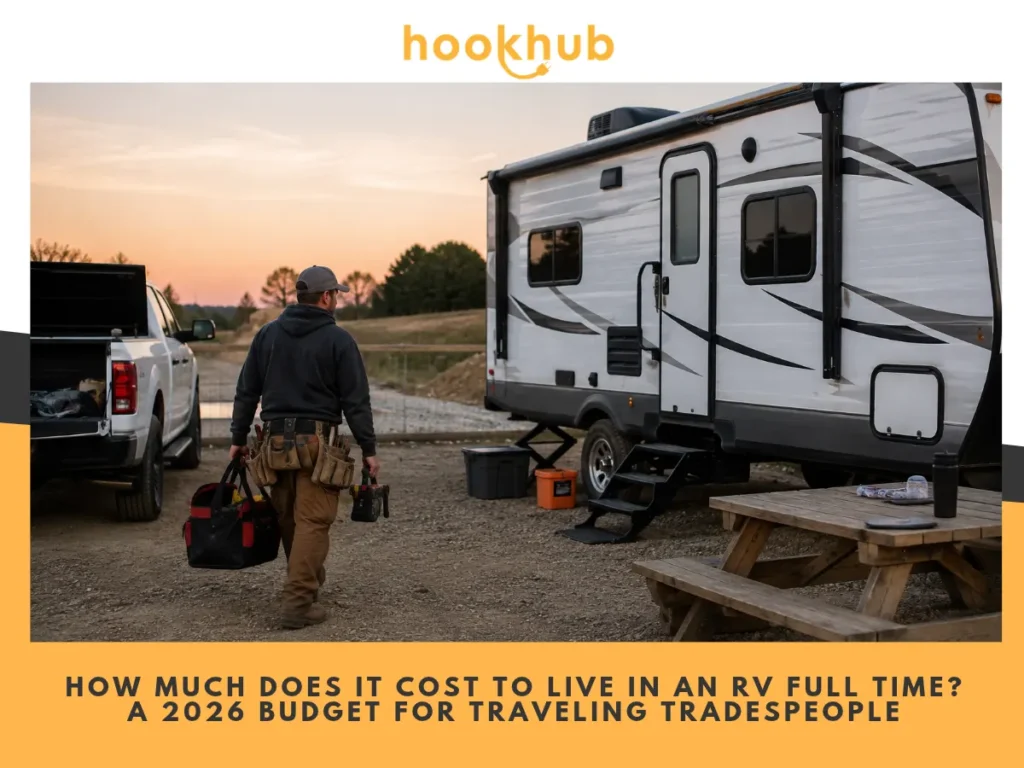
Your full-time RV living budget needs to account for the expenses that come with turning a recreational vehicle into your everyday home. Your campsite or land-rental fee may be the largest recurring expense, but it is only one piece of the picture.
You may also need to budget for propane, fuel, RV and tow-vehicle insurance, phone and internet service, food, household supplies, freshwater needs, wastewater management, routine maintenance, and unexpected repairs.
Travel frequency makes a major difference, too.
Someone who stays stationary at one full-hookup campsite for several months will have a very different budget from someone moving every week or two. Frequent travel adds fuel costs, wear on the RV and tow vehicle, additional campground fees, and the time required to repeatedly set up and break down camp.
How much does long-term RV living cost per month?
There is no single monthly number that works for every full-time RVer.
Your actual cost depends on where you stay, how often you move, whether you own or finance your RV, whether you need a tow vehicle, and how much you spend on connectivity, food, recreation, and maintenance.
The safest approach is to build a budget around your actual lifestyle rather than relying on a generic average.
Before you book your first long-term stay, it can help to work through a full-time RV living budget that accounts for both predictable monthly expenses and the occasional repair or unexpected cost.
If your goal is to save money, longer stays can help. A monthly campsite rate, fewer travel days, and lower fuel consumption can make a stationary period considerably easier on your budget.
It is also worth setting aside a repair fund. Tires, brakes, appliances, plumbing components, and other RV systems eventually need attention, and a repair that would be an inconvenience in a traditional house can become a serious disruption when your entire home is on wheels.
The RV and Tow Setup You Actually Need
If you have never lived in an RV before, renting an RV before buying one can be a smart way to learn what actually works for you.
A camper can look spacious during a dealership walkthrough and feel completely different after you have cooked in the kitchen, stored your clothes, worked at the table, showered, and spent a rainy day inside it.
Renting gives you an opportunity to test the lifestyle before committing to a vehicle that may become your primary home.
Your first few months of full-time RV life are also when simple routines become important.
Before every travel day, check your RV and tow-vehicle tires, inspect the brakes and connections, confirm that your leveling blocks and sewer hose are accessible, check your propane supply, test your fire extinguisher and carbon monoxide detector, and make sure you have a reliable navigation option if your phone loses service.
These tasks are not complicated.
The challenge is remembering them when you are tired, late for work, or eager to hit the road.
A repeatable routine solves that problem.
Hookups, Utilities, and Staying Connected While You Work
For a weekend camper, unreliable Wi-Fi may be an inconvenience.
For someone working remotely from an RV, it can become a genuine work problem.
Before booking a long-term campsite, find out what connectivity is actually available at the property. A campground may advertise Wi-Fi while providing a connection that becomes unreliable during busy hours. Cellular coverage can also vary dramatically from one property to another.
Many working RVers therefore use a layered approach: a primary cellular connection, a backup carrier or hotspot, and another option for locations where mobile service is limited.
If you’re comparing connectivity options before a long stay, a budget RV internet plan can be a useful starting point for figuring out what you actually need.
The important point is not which specific technology you choose.
It is redundancy.
If your income depends on being online, you do not want your entire workday depending on one connection.
What internet setup do full-time RVers use to work remotely?
Many remote-working RVers use a cellular router or hotspot as their primary connection and keep a second connection available as a backup. Depending on the location and work requirements, some also consider satellite internet.
Before committing to a 30-plus-night stay, test the available signal if possible and ask the host what they know about local connectivity.
Connectivity is only part of the equation.
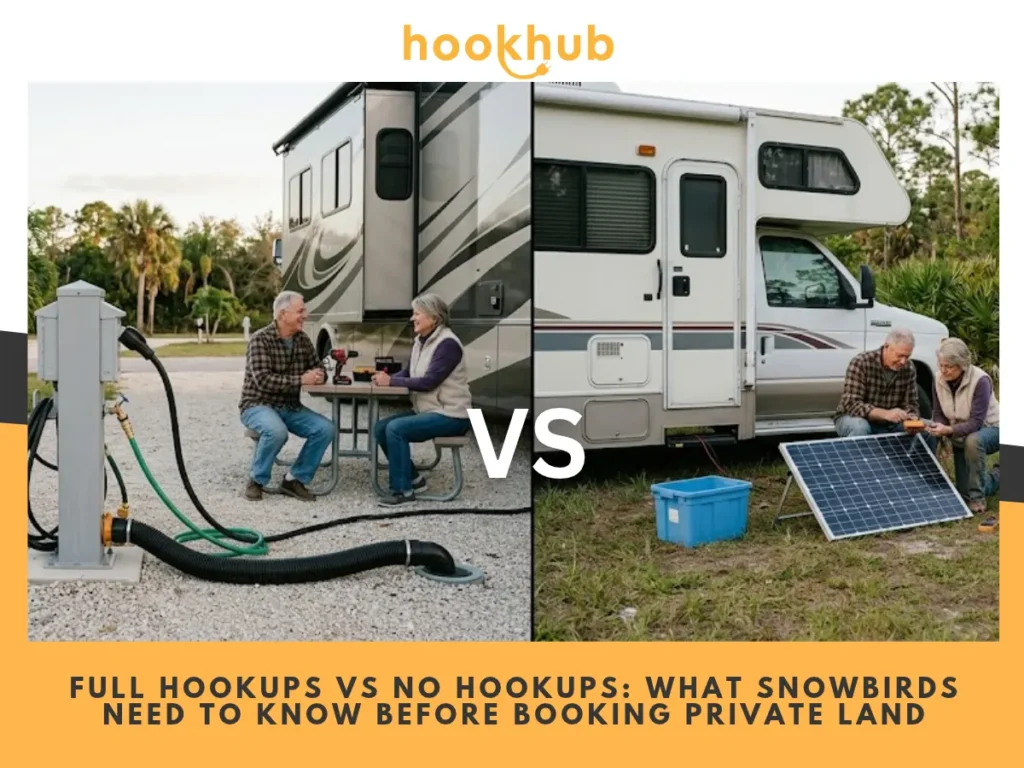
Hookups matter because your RV becomes your everyday home. You are not simply sleeping inside it for two nights. You are cooking at the kitchen sink, running a microwave, showering, using electricity throughout the day, managing your black tank, and trying to maintain a normal work schedule.
That is why full hookups—water, electric, and sewer—can be especially valuable for people living and working from an RV.
Safety, Documents, and the Things You Cannot Forget
Living on the road does not eliminate paperwork.
It makes organization more important.
Keep important documents together and easy to access. Depending on your situation, that can include identification, insurance information, vehicle registration, employment documents, pet records, and other paperwork you may need while traveling.
A waterproof folder and secure digital backups can save a lot of stress.
Your basic safety equipment matters, too. Keep a working fire extinguisher readily accessible, maintain your smoke and carbon monoxide detectors, and know where your emergency equipment is stored.
If you travel with pets, prepare their records and travel setup before you leave. A pets-safe setup should account for temperature, ventilation, secure transportation, and what you will do if you need to leave the RV temporarily.
Full-time RV life gives you freedom, but it also means being prepared to handle problems without the infrastructure of a traditional house.
Plan for the Things You Normally Wouldn’t Handle Alone
Solo RV living means there is no second person automatically available when something goes wrong. If you get sick, your truck will not start, the RV develops a leak, or you arrive after dark and have trouble backing into a site, you need a plan that does not depend on a travel partner being there.
Before a long stay, identify nearby RV repair services, towing options, urgent care, a veterinarian if you travel with a pet, and at least one person who knows where you are staying. Keep roadside-assistance and insurance information somewhere you can access even if your phone is dead or unavailable.
It is also worth thinking through what happens if you temporarily cannot move the RV yourself. You may never need the backup plan, but solo travel becomes much easier when every problem does not have to be solved from scratch.
Choosing Where to Park: Private Land vs. Traditional RV Parks
Traditional campgrounds and RV parks can be an excellent choice, particularly if you want established amenities, organized facilities, recreation areas, laundry, or a more conventional campground experience. Industry research from the 2026 Camping & Outdoor Hospitality Report also provides broader context on how camping and outdoor hospitality are evolving.
But long-term RV living can create different priorities.
You may care less about a swimming pool and more about whether you can stay for 60 or 90 nights. You may care less about organized activities and more about whether the site has dependable hookups, reasonable connectivity, and enough space to live comfortably.
That is where private-land RV stays can be worth considering.
A private property might offer a cleared space on a rural parcel, ranch, homestead, or another piece of land suitable for RV parking. The experience can be quieter and more personal than staying at a large commercial campground.
For solo workers, proximity can also matter.
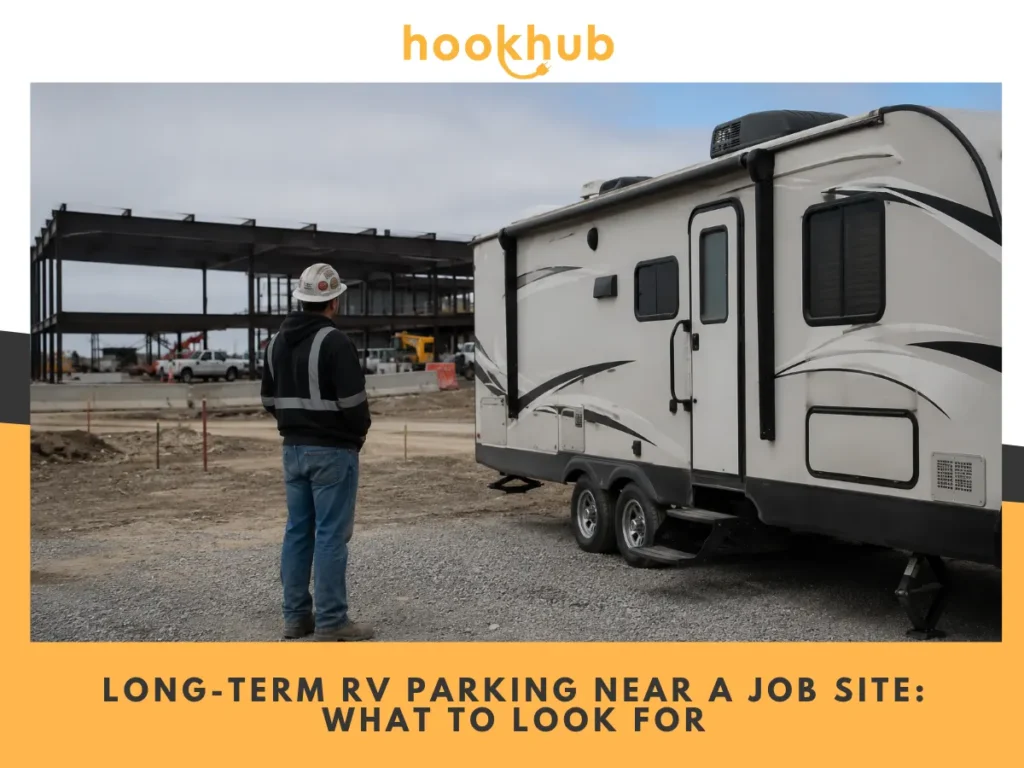
If you are traveling for a contract, being closer to your job site may save hours of commuting and reduce fuel costs. If you work remotely, a quiet private site may provide the environment you need to maintain a normal work schedule. Our guide to working remotely while traveling in an RV covers more of the day-to-day considerations once you’ve settled somewhere.
Private land is not automatically better than an RV park. It simply gives you another option.
The right choice depends on your rig, your work, your budget, the available hookups, and the type of everyday life you want.

Transitioning From a House to a Home on Wheels
One of the hardest parts of transitioning to full-time RV living is not learning how to operate the RV.
It is learning how to live with less.
A house has room for things you rarely think about. An RV does not.
Every possession takes up space, adds weight, or competes with something else you actually need.
Before you hit the road full-time, go through your belongings with a simple question:
Would I choose to carry this if I had to pay for the space and weight every day?
You do not need to become a minimalist overnight.
But downsizing before you move into a camper can make everyday life much easier.
Keep the things you genuinely use, the things you genuinely value, and the things that would be expensive or difficult to replace.
The rest may be better stored, donated, sold, or left behind.
That process can feel strange at first.
Eventually, having fewer possessions can become one of the more freeing parts of RV life.
Avoiding Burnout on the Road
The open road sounds relaxing until every travel day starts feeling like another work assignment.
A typical travel day can quickly turn into a checklist:
- Drive to the next destination.
- Arrive and choose your site.
- Level the RV.
- Connect your water, electric, and sewer hookups.
- Settle in and organize your space.
- Find groceries and other necessities.
- Check that your work connection is reliable.
- Repeat the entire process a few days later.
When you travel alone, every item on that list belongs to you. There is no second person navigating while you drive, setting up utilities while you level the RV, running to the grocery store while you troubleshoot the internet, or taking over when you’re exhausted.
That makes travel pace especially important for solo workers. Fewer moves do not simply save fuel and campground fees. They reduce the number of times you have to manage the entire moving-and-setup process by yourself while also maintaining a normal work schedule.
That pace is difficult to sustain, especially when you already have a full-time job.
The first few months of full-time RV living are often an adjustment period. You are learning the RV, figuring out your preferred campsite setup, discovering how much propane you use, learning how often you need to refill freshwater or dispose of wastewater, and developing a routine that works.
You do not need to keep moving just because you can.
Staying stationary for longer periods can make RV life more sustainable. It gives you time to work, rest, explore the area without rushing, and actually experience what living in an RV feels like.
“When your RV is also your home and your workplace, where you stay matters. The right spot gives you the stability to focus on your work while still having the freedom to live on your own terms.”
For long-term RVers, having a dependable place to stay is more than a convenience. It can be the difference between enjoying life on the road and constantly worrying about where you will park next.
Frequently Asked Questions
Do you need a special license to live full-time in a travel trailer?
Living in a travel trailer does not automatically mean you need a special license. Licensing requirements can depend on the type and weight of the vehicle or trailer and the state where you drive. Check the applicable DMV requirements before beginning long-term travel.
Can you register a vehicle and get mail while living in an RV full-time?
Full-time RVers commonly establish a domicile and use mail-forwarding arrangements to manage registration, taxes, insurance, and other paperwork. Requirements vary, so research the rules that apply to your chosen domicile before making the transition.
How long can you stay in one spot as a long-term RV renter?
It depends on the host or campground’s rules. Long-term arrangements may be available for 30, 60, or 90 nights, but maximum stays, renewal options, deposits, and cancellation policies vary. Always confirm the terms before booking.
Is renting an RV a good idea before committing to full-time living?
Yes. Renting can give you a realistic test of the lifestyle before buying an RV. Pay attention not only to how the RV drives, but also to storage, sleeping arrangements, cooking, bathroom use, workspace, connectivity, and how comfortable you are spending everyday life in the available space.
What’s the biggest mistake first-time solo RV workers make?
Underestimating the everyday costs and responsibilities is one of the easiest mistakes to make. Fuel, propane, connectivity, tire and brake maintenance, repairs, and campsite fees can add up quickly. Another common mistake is moving too frequently and turning RV travel into a second job.
Final Thoughts
Full-time RV living can offer something a traditional lease cannot: the ability to take your home with you.
But freedom on the road works best when the practical details are already under control.
Before you hit the road full-time, build a realistic budget. Choose an RV and tow setup that fits your actual needs. Make sure you have dependable connectivity if you work remotely. Learn how to manage your freshwater and wastewater systems. Keep your documents and safety equipment organized. And, perhaps most importantly, give yourself permission to stay in one place when constant movement stops being enjoyable.
Whether you are renting an RV for the first time, transitioning from a house, or preparing to become a full-time RVer, the goal is the same: create an RV life that you can actually sustain.
When you’re ready to look for a long-term place to park, start by comparing private-land RV stays based on location, hookups, amenities, availability, and length of stay.