

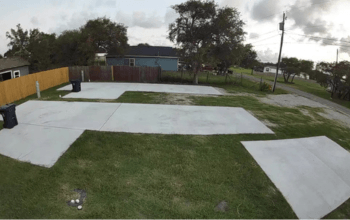
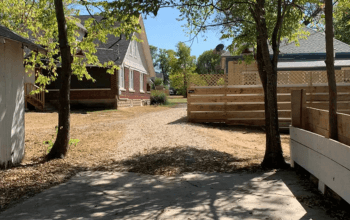
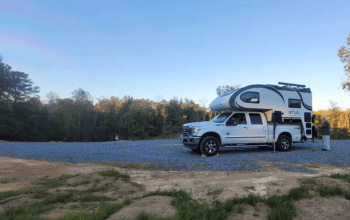
The most-quoted number in RV land-hosting content is that a single space with hookups, an ideal location, and extra amenities can earn over $40,000 a year—a real figure Hookhub has reported from its own host data.
What that headline leaves out is the infrastructure behind it, and here’s the part most guides get wrong: for a typical host adding hookups to property they already own, that infrastructure usually costs a few hundred to a few thousand dollars, not the tens of thousands you’ll see quoted in guides written for commercial campground developers.
What Does a Typical RV Host Actually Earn, Before the $40K Headline?
$8,000 to $15,000 a year for an average active host, well below the premium figure that dominates land-hosting content, according to Hookhub’s own host data. Typical monthly rates run $800-1,200 for a site with hookups, or $400-500 without, and nightly stays commonly range from $40-100. The $40,000-a-year figure requires all three factors at once: hookups, a genuinely in-demand location, and additional amenities, not any one of them alone.
What Does It Actually Cost to Add Hookups on Land You Already Own?
Much less than commercial RV park guides suggest, if you’re working with utilities you already have at the house. Those bigger guides you’ll find online, quoting $3,200 to $29,000+ per site, are written for campground operators building out a multi-site professional development project that includes permits, engineering plans, and soil testing. That’s a different project than a landowner adding one or two hosted RV spots.
For an individual host, a full hookup setup—water, electric, and sewer—typically runs from $200 for a basic DIY job to around $5,000 for a fully professional install, assuming you’re already connected to a water source and sewer or septic system at the house.
Broken down by component: a water hookup runs $30 DIY or up to $700 for a professional line run; an electrical hookup runs $100 DIY (not recommended without an electrician) or $800-2,000 professionally installed depending on amperage; and a sewer hookup can be free if you’re tying into an existing cleanout, or run $2,000-6,100+ if you need a dedicated RV septic tank installed from scratch.
That septic tank is the one component that can push costs meaningfully higher, and it’s also the one most hosts can skip entirely by starting with water and electric only, then deciding later whether full sewer hookups are worth the investment for their specific location and demand.
Do You Actually Need Full Hookups to Start Hosting?
No. A cleared parking area with decent road access, plus a willingness to host, is the real baseline for a listing. Some hosts earn hundreds of dollars a month with no hookups at all, simply offering flat, accessible land. Adding a water line and an electrical cord from the house is a common first upgrade that lets a host raise rates without the full hookup investment.
The pattern in the data is a ladder, not a single decision: bare land, then water and electric, then full hookups. Each rung raises the achievable rate, and a host can move up it as demand and cash flow justify the next investment, often starting with a budget as low as a few thousand dollars rather than the tens of thousands a commercial park build-out requires.

Who Actually Seeks Out Full-Hookup Sites Specifically?
Long-term guests and full-time RVers, disproportionately. RVers traveling with children, pets, or remote-work equipment specifically avoid sites where they’d have to worry about running out of water or hauling a sewer tote to a dump station, which is exactly the segment paying $75 or more a night for a full-hookup site when traveling.
That’s also the renter profile most likely to book weeks or months at a time rather than a single night, which is where a host’s actual annual income comes from.
Frequently Asked Questions
Is $40,000 a year a realistic expectation for RV hosting?
Not for a typical host. Hookhub’s average active hosts earn $8,000-$15,000 a year; the $40,000+ figure describes a specific combination of full hookups, prime location, and added amenities, not a typical outcome.
How much does it cost to install full RV hookups as an individual landowner?
For a host already connected to water and sewer at the house, a full setup typically runs $200 (DIY) to $5,000 (professional). Costs rise toward $6,000+ only if a dedicated septic system is needed. That’s a different, much smaller project than the $3,200-$29,000+ figures quoted in guides written for commercial campground operators.
Can I start hosting RVs without any hookups?
Yes. A cleared, accessible parking area is the real baseline, and some hosts earn hundreds of dollars a month with no hookups at all. Adding water and electricity later is a common next step before committing to full sewer infrastructure.
Why do full-hookup sites earn more than basic ones?
They serve a different renter: long-term guests and full-time RVers who need reliable water and waste service and are willing to pay $75+ a night, or a comparable monthly rate, to avoid managing those needs manually.
The Bottom Line
The $40,000-a-year RV hosting figure is real, but it describes a built-out, hookup-equipped, well-located site, not a starting point. Most hosts earn $8,000- $15,000, and reaching that doesn’t require the commercial-park-scale investment you’ll see quoted elsewhere. For most landowners, it starts with a few hundred to a few thousand dollars, not tens of thousands. Ready to see what your land could earn? Here’s what it takes to list your land on Hookhub.
Sources
- Hookhub, Hosting on Hookhub: Turn Your Land Into Passive Income, retrieved 2026-08-13, https://info.Hookhub.co/blog/questions-and-answers-hosting/
- RVShare, The Cost to Install RV Hookups, retrieved 2026-08-13, https://rvshare.com/blog/how-much-does-it-cost-to-install-rv-hookups/
- GudGear, How Much Does It Cost to Install RV Hookups?, retrieved 2026-08-13, https://gudgear.com/cost-to-install-rv-hookups/