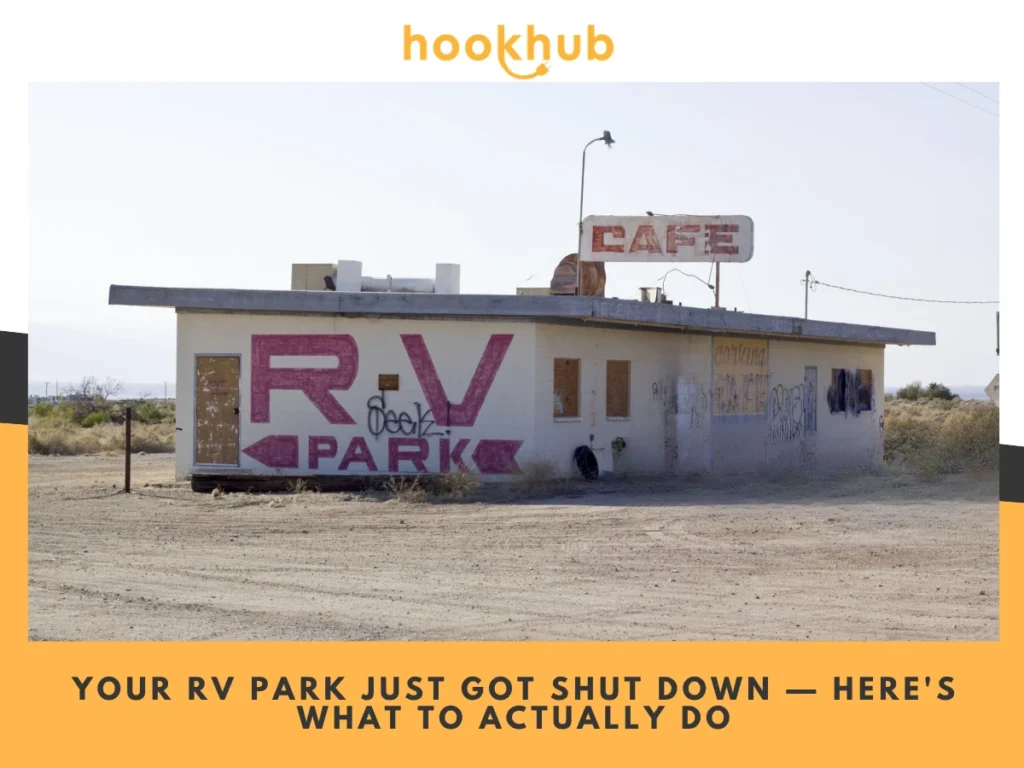

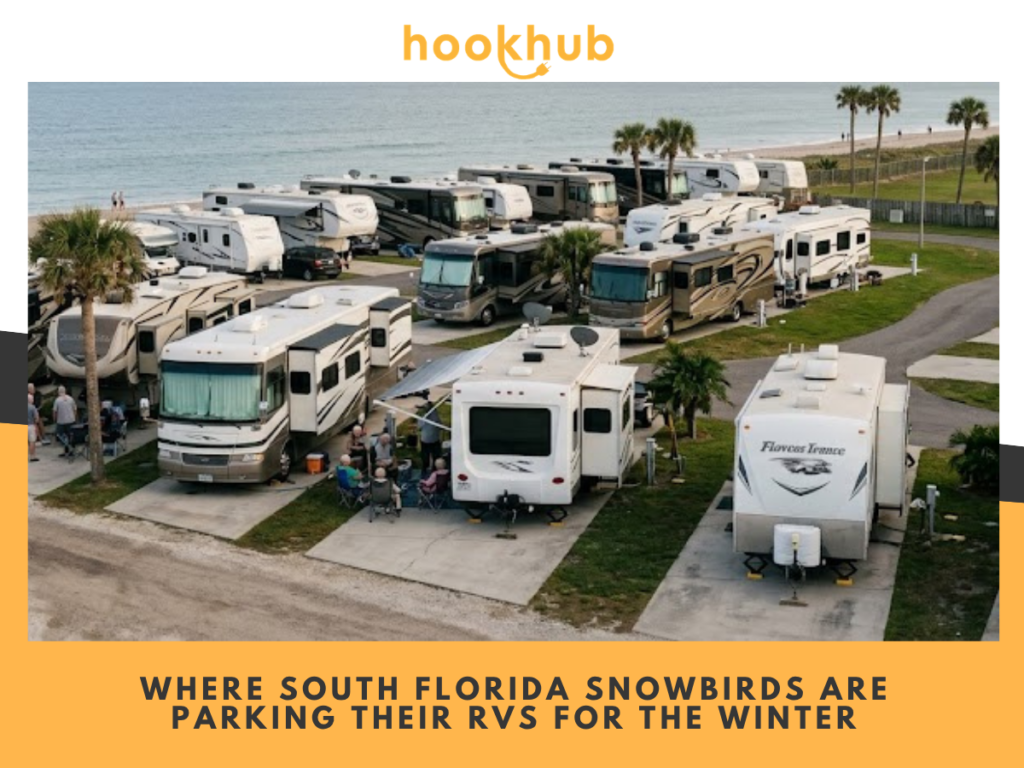
You got the notice, the city council vote, or the “sorry, we’re selling” conversation with the park manager, and now you have weeks, maybe days, to figure out where your rig goes next. You’re not imagining that this is happening more. In 2025, long-term RV stays of 28+ nights jumped 19.1% to an all-time record high (RoverPass, 2026 Outdoor Hospitality Report, retrieved 2026-08-01), and new park development still takes 24 to 48 months from land purchase to opening. More people need a long-term spot than there are spots being built.
Key Takeaways
- Long-term RV stays (28+ nights) rose 19.1% in 2025 to a record high, while new park development takes 24-48 months (RoverPass, 2026).
- Whether you have legal protection when a park closes depends on your state and how long you’ve stayed: some protections kick in only after 180 or more consecutive days.
- Private-land hosts are a faster overflow option than waiting for new commercial parks to get built or permitted spots to open up.
How Many RV Parks Are Actually Closing or Pushing Out Long-Term Residents Right Now?
In 2026, at least four documented cases show long-term RV residents losing their spots with little to no relocation plan. In Fremont, California, the city council unanimously approved a 72-hour street-parking limit on November 15, 2024, banning long-term RV parking in residential areas without a relocation plan (CBS News San Francisco, retrieved 2026-08-01). Business owner Eddie Benson had documented 41 RVs along a single street before the vote.
Calgary took a softer but still precarious approach: the Calgary Parking Authority issued nine temporary, cost-free permits to motorhome residents on Moraine Road Northeast on October 21, 2024, valid for one month, after an earlier attempt to make the street a permanent no-parking zone (Global News, retrieved 2026-08-01). As of the story’s January 2026 update, residents like decade-long resident Victor LaRock were still in limbo: “We’re upended, wondering what the heck is going to happen.”
If you’re already trying to https://www.hookhub.co/long-term-rv-parks-near-me, stories like these are exactly why the search is getting harder.
Why Are RV Parks Shutting Down Long-Term Residents Right Now?
Two forces are colliding: aging infrastructure that can’t handle long-term loads, and land that’s worth redeveloping more than renting. In Niland, California, county inspectors ordered an unpermitted electrical bypass line de-energized on July 14, 2026, cutting power to dozens of low-income senior and disabled residents at Lark Spa Mobile Home & RV Park during triple-digit heat, with no repair timeline (KYMA, retrieved 2026-08-01). Resident Seth True described the scene plainly: “Imagine having no access to your personal effects.”
At Orangeland RV Park in Orange, California (family-run since 1972), residents learned in February 2026 that the property was being sold, with condominium redevelopment expected (ABC7 Los Angeles, retrieved 2026-08-01). Longtime resident Gracie Coviello put the search for a replacement spot bluntly: “It’s like trying to find a hotel during the Super Bowl… places are becoming smaller, and rates are going up.”
These aren’t isolated incidents in one type of place. They’re hitting a major Bay Area suburb (Fremont), a big Canadian city (Calgary), a small desert community (Niland), and an Orange County institution (Orangeland) alike. Long-term RV parking is getting squeezed everywhere, not just in one kind of market.
That’s not just a feeling. Average nightly rates at medium-sized RV parks rose 16.6% to $83.00 in 2025, the largest single-year rate jump on record (RoverPass, 2026), while national occupancy still runs 65-67% annually, with peak-season pockets hitting 85-100% (RoverPass, 2026). Parks that are full and expensive have less incentive to accommodate long-term residents at legacy rates when they can redevelop, sell, or re-let at a higher price.
Do You Have Any Legal Protection If Your RV Park Closes or Evicts You?
Whether you have any legal standing depends entirely on your state and how long you’ve been there, and the threshold is stricter than most people expect. In Florida, a guest becomes a legally protected tenant only after 14 days within a six-month period, or seven consecutive nights; anyone staying less than six months as a “transient guest” can be asked to leave without formal eviction proceedings (Woodall’s Campground Magazine, retrieved 2026-08-01).
Arizona sets the bar higher still: RV eviction protections apply only once you’ve rented a space for more than 180 consecutive days (AZ Court Help, retrieved 2026-08-01). California is more protective of established residents: owners must give written 60-day notice before eviction proceedings once a tenant has lived in a park for more than a year (MHPHOA California RV Park Occupancy Law, retrieved 2026-08-01). Texas requires a written notice to vacate before an eviction filing under the Texas Property Code (Legal Beagle, retrieved 2026-08-01).
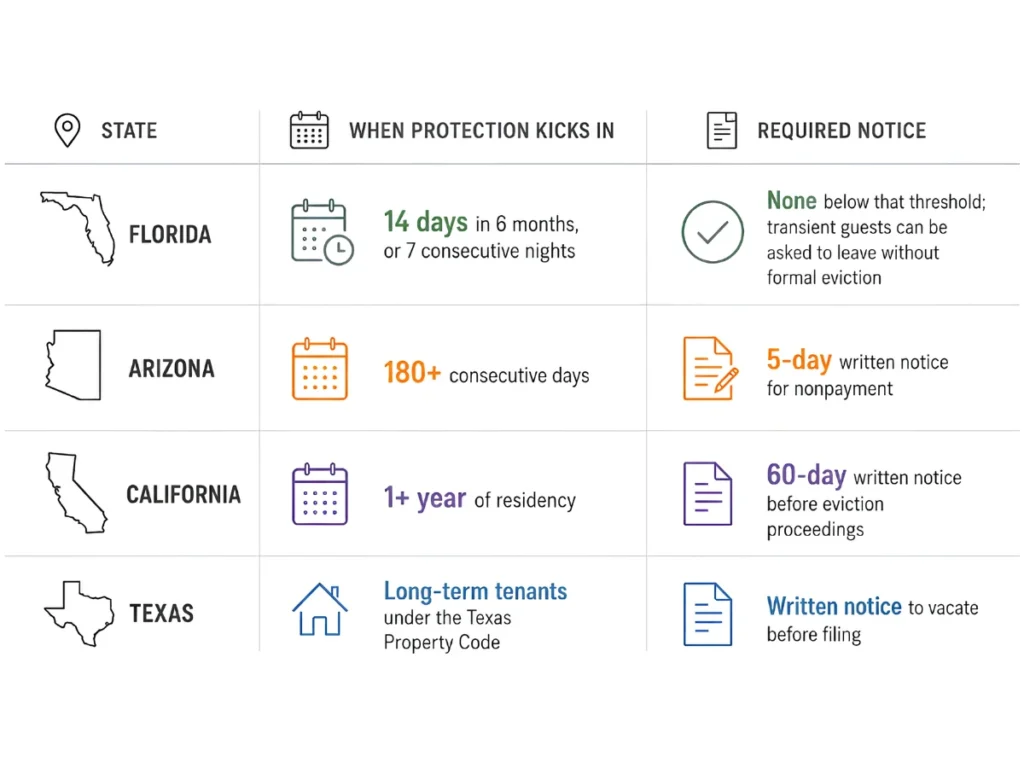
The practical takeaway: if you’ve been at a park for under six months, don’t assume you have any notice period at all in most states. Read your rental agreement’s termination clause before you need it, not after, and check our state-by-state RV tenant rights breakdown for the specifics where you live.
What To Do in the First 48 Hours After You Get a Closure or Eviction Notice
Move fast on documentation before you move your rig:
- Photograph the notice, your site, and your hookup connections. This matters if a dispute over deposits or damages comes up later.
- Check your state’s guest-to-tenant threshold against your actual length of stay. That determines whether you’re owed any notice period at all.
- Call your park manager and ask directly whether the closure is a sale, a code enforcement action, or a policy change. A sale (like Orangeland) often means a longer runway than a safety-driven shutoff (like Niland).
- Start searching for a new spot immediately rather than waiting for a firm move-out date. Rates are climbing, and long-term openings are getting harder to find, so a comparable spot at your old rate may not exist by the time you need one. Browse verified private-land RV hosts near you while you weigh your options.
Where Do You Actually Go Next? Private Land as the Overflow Valve
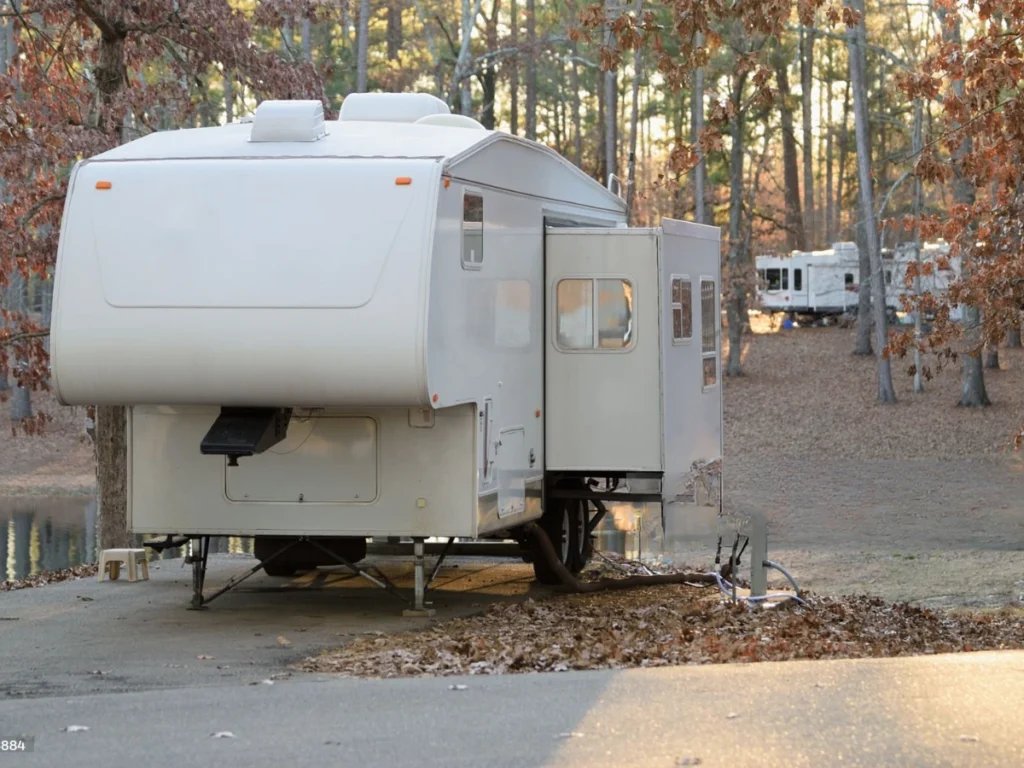
Commercial RV parks aren’t building fast enough to absorb displaced long-term residents: that 24-to-48-month development timeline doesn’t speed up just because your park just closed. Private landowners are the closest thing to spare capacity that already exists. A host with flat land, a water hookup, and a driveway can list a space in days, not years.
That’s the gap Hookhub is built for. Unlike a park waitlist or a reciprocal-hosting network that requires you to host others in return, Hookhub is a bookable marketplace of private-land hosts offering confirmed overnight, monthly, and long-term RV parking and storage, with no membership fee and a pay-per-stay model. If your search for a replacement park spot is turning up nothing, checking long-term RV parking listings near you takes minutes.
Frequently Asked Questions
How much notice does an RV park have to give before closing or evicting long-term residents?
It depends on your state and length of stay. California requires 60 days’ written notice after one year of residency; Arizona’s protections apply only after 180 consecutive days; Florida treats anyone under six months as a transient guest with no formal notice requirement (AZ Court Help; MHPHOA, retrieved 2026-08-01).
Can an RV park close or evict residents without any relocation plan?
Yes. Fremont’s 2024 ordinance passed with no relocation plan for displaced residents, and Fremont’s existing safe-parking program had no RV capacity to absorb them (CBS News San Francisco, retrieved 2026-08-01). A relocation plan is not guaranteed by default; check your local municipal code.
Why are RV park rates rising even as long-term residents get pushed out?
Average nightly rates at medium parks rose 16.6% to $83.00 in 2025, the largest jump on record, while long-term stays (28+ nights) hit an all-time high, up 19.1% (RoverPass, 2026). Demand is outpacing the slow, zoning-constrained supply of new park development.
Is private land parking a legal alternative to a commercial RV park?
Yes, when arranged through a marketplace that verifies hosts and renters and documents the booking, private-land RV parking is a legal, common arrangement. It’s the same basic model as short-term vacation rentals, applied to RV parking, storage, and long-term stays.
The Bottom Line
A park closure or eviction notice feels like an emergency because it is one, but it’s also a solvable one if you move fast on both fronts: know your legal standing under your state’s guest-to-tenant rules, and don’t wait for a replacement commercial park spot that may not exist at your old rate. Document everything, check your notice-period rights, and start searching for private-land alternatives the same day you get the news, not after your move-out date.
Sources
- RoverPass, 2026 Outdoor Hospitality Report / RV Park Industry Stats, retrieved 2026-08-01, https://software.roverpass.com/blog/rv-park-industry-stats/
- CBS News San Francisco, Fremont leaders approve ban on long-term RV parking encampments, retrieved 2026-08-01, https://www.cbsnews.com/sanfrancisco/news/fremont-leaders-approve-ban-long-term-rv-parking-encampents/
- Global News, RV dwellers in Calgary given one-month permit, forced to move, retrieved 2026-08-01, https://globalnews.ca/news/10822925/rv-dwellers-calgary-one-month-permit-forced-to-move/amp
- KYMA, Niland seniors forced from homes after county shuts off RV park power, retrieved 2026-08-01, https://kyma.com/news/imperial-county/2026/07/16/niland-seniors-forced-from-homes-after-county-shuts-off-rv-park-power/
- ABC7 Los Angeles, Orangeland RV Park residents face uncertainty as longtime Orange Park prepares to close, retrieved 2026-08-01, https://abc7.com/post/orangeland-rv-park-residents-face-uncertainty-longtime-orange-prepares-close/19522753/
- Woodall’s Campground Magazine, When Does a Long-Term Guest Become a Tenant?, retrieved 2026-08-01, https://woodallscm.com/when-does-a-long-term-guest-become-a-tenant/
- AZ Court Help, Legal Info Sheet: RV Park Eviction, retrieved 2026-08-01, https://azcourthelp.org/browse-by-topic/eviction/tenant-information/tenant-eviction-resources/rv-eviction-info-sheet
- MHPHOA, California RV Park Occupancy Law (RVPOL), retrieved 2026-08-01, https://mhphoa.com/mrl/rv
- Legal Beagle, Texas RV Park Occupancy Laws, retrieved 2026-08-01, https://legalbeagle.com/6812386-texas-rv-park-occupancy-laws.html
If you’re already trying to find long-term RV parking near you, stories like these are exactly why the search is getting harder.