

Quick Answers
- Rancho Sedona RV Park has 67 creekside sites on Oak Creek within walking distance of downtown Sedona galleries, restaurants, and trailheads — full hookups, Sycamore and Cottonwood shade, $42-$84 per night depending on season and site
- Oak Creek Canyon runs 12 miles north from Sedona to Flagstaff through Coconino National Forest — Slide Rock State Park at milepost 10 is the most popular swimming and hiking access point
- Sedona has no in-town camping other than commercial RV parks — the red rock landscape is surrounded by the Coconino National Forest and limited parcels of public land with no dispersed camping in the immediate area
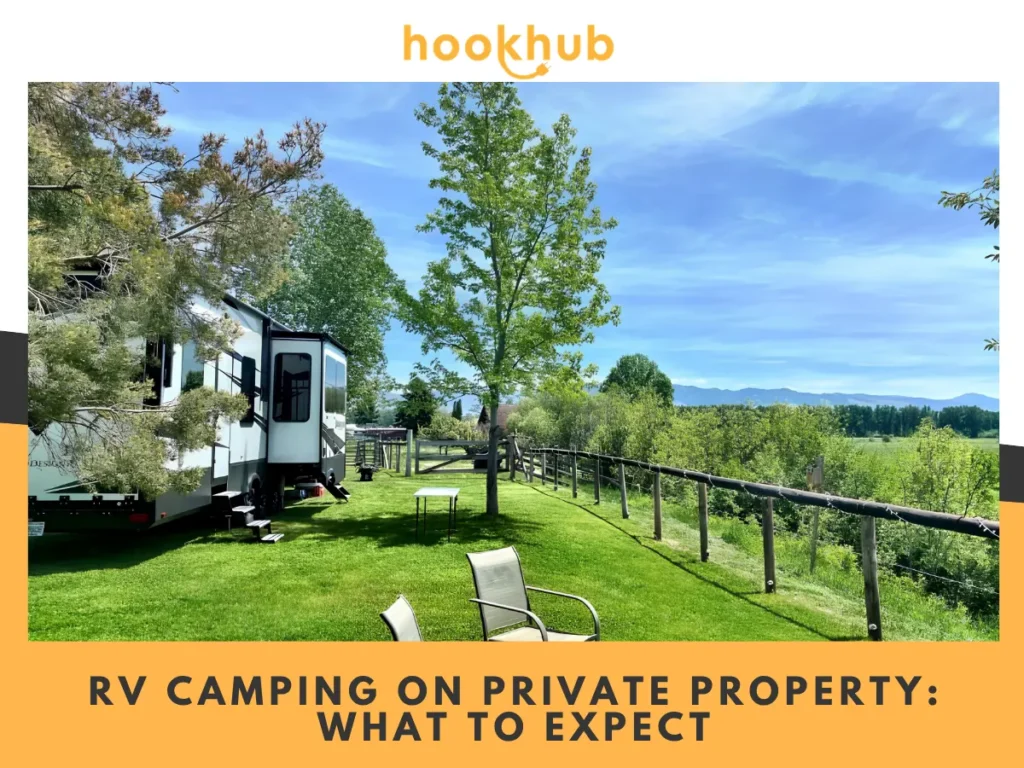
- Private farm stays through Hookhub in Cornville start at $90 per night — 15-20 minutes from downtown Sedona with full hookups and Verde Valley wine country within walking distance of the property
- A free Sedona trolley and shuttle system reduces the need to move a rig once you are parked in the central corridor
Most people who visit Sedona for the first time make the same mistake: they spend their first day in town rather than on the trails, and their second day on the trails rather than in town. Sedona rewards attention in both directions. The Coconino National Forest surrounds the town with nearly 2 million acres of protected land, and the red sandstone formations rising from that forest — Cathedral Rock, Bell Rock, Courthouse Butte, Coffee Pot Rock — are the reason the town exists at all. But the galleries along Route 89A, the Tlaquepaque arts village, the culinary scene, and the wellness culture make Sedona a destination that holds its visitors for four days rather than one.
For RV travelers, the practical challenge is that Sedona’s famous scenery drives real estate prices, and commercial camping rates reflect that. Rancho Sedona RV Park — the only RV park with direct access to Oak Creek inside town — charges a premium that reflects its location. The trade-off is a creekside camping experience within walking distance of everything Sedona offers, without having to move the rig after check-in.
What Is Sedona and Oak Creek Canyon?
Sedona sits at 4,350 feet in northern Arizona at the southern end of Oak Creek Canyon, where the Coconino Plateau drops into the Verde Valley. The town is surrounded by Sedona’s red rock country — geologically, a series of Permian-era sandstone and limestone formations that were exposed by millions of years of erosion and then tinted by iron oxide into the deep reds, oranges, and salmon that make the landscape instantly recognizable.
Oak Creek Canyon extends 12 miles north from the city along State Route 89A toward Flagstaff, cutting through limestone and sandstone walls with the creek running along the bottom. The canyon narrows and deepens as it climbs toward the Mogollon Rim, providing a dramatic geological transition from the high desert of the Verde Valley to the ponderosa pine forests of the plateau. The creek itself is cold, clear, and fed by springs — unusual for an Arizona watercourse that maintains reliable flow through summer.
The Sinagua people inhabited the red rock region and Oak Creek Canyon for centuries before abandoning their settlements around 1425 CE. Honanki Heritage Site, Palatki Heritage Site, and V Bar V Heritage Site preserve petroglyph panels and cliff dwellings accessible from Sedona on dirt roads managed by the Coconino National Forest.
What Can You Do in Sedona and Oak Creek Canyon?
Hiking: Sedona has over 200 miles of marked trails radiating from the town and canyon. Bell Rock Pathway is the most beginner-friendly iconic route — the trail circles Bell Rock’s base with minimal elevation gain and full red rock views. West Fork Trail in Oak Creek Canyon is one of the most beautiful canyon walks in the Southwest, following the creek upstream through narrows and cottonwood groves. Cathedral Rock Trail is shorter and steeper — the 1.5-mile round trip is more challenging than it looks but delivers the most recognizable red rock view in Sedona. Bring water regardless of trail length — shade is limited, and temperatures can be deceptive in the dry high desert air.
Mountain biking: Sedona is widely considered one of North America’s top mountain biking destinations. The Whole Enchilada, Highline, and Llama trails offer technical terrain. Hangover Trail along the canyon rim is the most visually spectacular intermediate route. Multiple bike rental shops operate in town and offer shuttle services to uphill trailheads. ATV trails and off-road vehicle rentals are available for travelers who prefer four wheels.
Oak Creek Canyon and Slide Rock: Seven miles north of Sedona on SR-89A, Slide Rock State Park preserves a natural sandstone water slide carved by Oak Creek. Swimming in the creek among the red rock walls is the signature summer activity. The park fills by 9 am on summer weekends — arrive early or visit on a weekday. The canyon road north of Slide Rock continues toward Flagstaff through increasingly dense forest and dramatic cliffs, and the drive is worthwhile whether or not you stop.
Tlaquepaque Arts and Shopping Village: The adobe courtyard complex just south of Oak Creek Bridge is Sedona’s most distinctive cultural destination — a collection of galleries, art studios, restaurants, and craft shops designed to replicate a traditional Mexican village. The architecture is genuine in its details, and the galleries hold work by regional and nationally known artists in painting, sculpture, glass, and ceramics. The free shuttle stops nearby, and the walk from Rancho Sedona RV Park is manageable.
Vortex sites: Sedona is known for four designated energy vortex sites — Cathedral Rock, Bell Rock, Airport Mesa, and Boynton Canyon — where visitors report amplified spiritual energy. The science is contested, but the landscape at each site is extraordinary, and the hikes to them are among the most accessible in the area. Airport Mesa offers the best sunset views in central Sedona and is just a short walk from the parking pullout.
Verde Valley Wine Trail: The wine-growing corridor of the Verde Valley begins in Cornville and Page Springs, approximately 10-15 miles south of Sedona. Page Springs Cellars, Javelina Leap Vineyard, Alcantara Vineyards, and Oak Creek Vineyards all operate tasting rooms. The Verde Valley wine country is an afternoon day trip from any Sedona base camp and a natural complement to the art gallery and restaurant culture of the town.
Jerome and Cottonwood: Historic Jerome — the former copper boomtown on Mingus Mountain — is approximately 25 miles southwest via SR-89A through Cottonwood. Jerome’s galleries, restaurants, and dramatic hillside setting make it a compelling full half-day addition to any Sedona itinerary. Cottonwood’s 12th-century Tuzigoot National Monument and the Verde Canyon Railroad add cultural and scenic dimension to the southwestern Verde Valley loop.
When Is the Best Time to Visit?
Spring (March through May) and fall (September through November) are the seasons when Sedona’s trail conditions and temperatures are ideal. Daytime highs in the 60s to low 80s allow for full-day hiking without the risk of heat, and the red rock light at low sun angles in spring and fall is as saturated as it gets. October and early November combine excellent hiking weather with the fall color of the Cottonwood and Sycamore trees along Oak Creek — the canyon puts on a brief but vivid color display that most visitors do not expect from Arizona.
Summer is Sedona’s busiest season despite the heat. July and August regularly reach the 90s at 4,350 feet elevation — warm but manageable for morning hikes that conclude by noon. Hiking at Slide Rock State Park and Oak Creek Canyon is the most popular summer activity. Expect full parking at every trailhead on weekends from June through August, and plan to arrive before 8 a.m.
Winter is the quietest season. January and February see fewer crowds, lower hotel rates, and occasional snow dusting on the red rocks — a photographic combination that draws photographers specifically. Temperatures range from the 30s overnight to the 50s and 60s by afternoon. Most trails and attractions remain open year-round.
Is Sedona a Good Place for a Longer RV Stay?
Many travelers think of Sedona as a weekend destination, but the area works surprisingly well for longer RV stays. While the red rock formations are the main attraction, the surrounding Verde Valley offers enough hiking, biking, wine tasting, sightseeing, and small-town exploration to fill several weeks.
Longer stays are especially popular among retirees, snowbirds, remote workers, and full-time RV travelers who prefer to move less frequently. Instead of relocating every few days, many RVers use Sedona, Cornville, or Cottonwood as a central base camp and take day trips throughout northern Arizona.
A month-long stay also allows travelers to experience Sedona at a slower pace. Popular trails can be visited on weekdays, restaurant reservations become easier to manage, and visitors can explore places like Jerome, Tuzigoot National Monument, Montezuma Castle, Camp Verde, and the Verde Valley Wine Trail without feeling rushed.
For travelers who prioritize space, privacy, and a quieter environment, private land RV sites can provide an alternative to traditional RV parks while still keeping Sedona within easy driving distance.
Where to Park Your RV Near Sedona
How to Choose the Right RV Base Camp Near Sedona
One of the biggest decisions RV travelers make is whether to stay in Sedona itself or use a nearby community as a base camp. The answer depends on how you plan to spend your time.
Travelers who want to walk to restaurants, galleries, and shuttle stops often prefer staying inside Sedona. The convenience is excellent, but campsite rates are typically higher and availability can be limited during peak seasons.
Travelers planning a longer stay often look beyond downtown Sedona. Communities like Cornville and Cottonwood provide easier access to the broader Verde Valley while still keeping Sedona’s trail system within a short drive. Many RVers find that staying slightly outside town gives them more flexibility, less congestion, and a quieter experience while exploring the region.
As a general rule:
- Stay in Sedona if convenience and walkability are your top priorities.
- Stay in Cornville if you want a quieter rural setting with quick access to wine country and multiple Verde Valley attractions.
- Stay in Cottonwood if you want a more budget-friendly base camp with access to shopping, services, and day trips throughout the region.
For travelers spending a week or longer in the area, choosing the right base camp often matters more than being closest to any single attraction.
Rancho Sedona RV Park — In the Heart of Sedona
The closest RV park to downtown Sedona with direct access to Oak Creek, Rancho Sedona occupies 10 naturally wooded acres at 135 Bear Wallow Lane off Schnebly Hill Road. 67 sites accommodate rigs up to 45 feet with full hook-ups: 30 and 50-amp electric, water, sewer, digital cable TV, and Wi-Fi. The park is fully shaded by grand Sycamore and Cottonwood trees that line the creek, and the executive sites directly beside Oak Creek are the most premium accommodations in any RV park in northern Arizona.
Activities are accessible from the park itself — mountain biking and hiking trails are nearby, trout fishing is permitted in Oak Creek year-round, and swimming in the creek is an option in summer. The park is within walking distance of Tlaquepaque, galleries on SR-89A, and restaurants in the central Sedona corridor. For travelers who want to park once and use Sedona without driving, the free Sedona shuttle van stops just outside the park entrance.
No campfires are permitted at Rancho Sedona. No pool on site. Rules are noted as comprehensive in multiple reviews — families traveling with young children will want to read the park’s policies before booking. The serene atmosphere is intentional and enforced. Rates run $42-$84 per night depending on season and site location, with creek-facing sites at the premium end.
Good Sam and AAA discounts apply. Pet-friendly. Pull-through and back-in sites available.
Oak Creek Mobile Lodge — West Sedona Creek Access
A smaller creekside RV park in the West Sedona corridor, Oak Creek Mobile Lodge accommodates rigs up to 33 feet with full hookup sites including 50-amp electric, water, and sewer. Pull-through and back-in configurations. Private Oak Creek access with a small beach area. Laundry, shower, and bathroom facilities on site. The free Sedona shuttle van picks up outside the entrance. Owners live on site and are attentive — multiple March 2026 reviews confirm a positive experience. Approximately $90 per night.
High Desert Ranch Petting Farm — Cornville via Hookhub
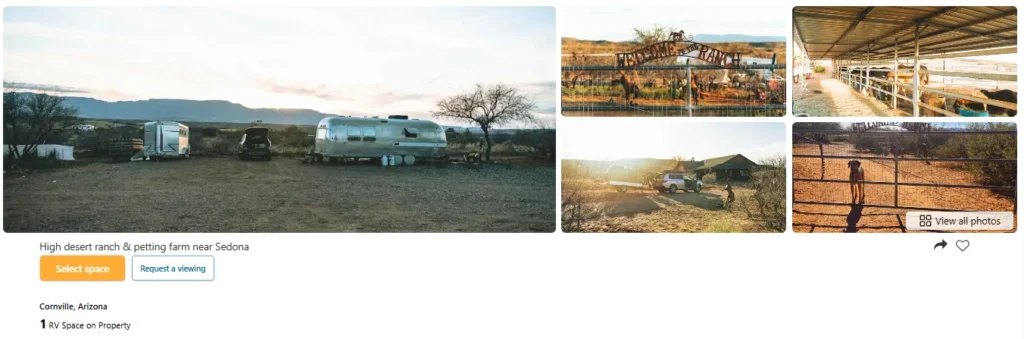
The contrast is hard to miss: spend the morning at a 900-year-old Sinagua cliff dwelling, spend the night at a working farm where goats and chickens roam the property at dusk. High Desert Ranch Petting Farm in Cornville is listed on Hookhub, which produced this guide — and it sits at the geographic midpoint of the Verde Valley’s entire cultural corridor. Montezuma Castle in Camp Verde is 15-20 minutes east. Montezuma Well is 25 minutes northeast. Tuzigoot National Monument is 20 minutes west. Three of Arizona’s most significant Sinagua sites, all within a half-hour of the same farm stay.
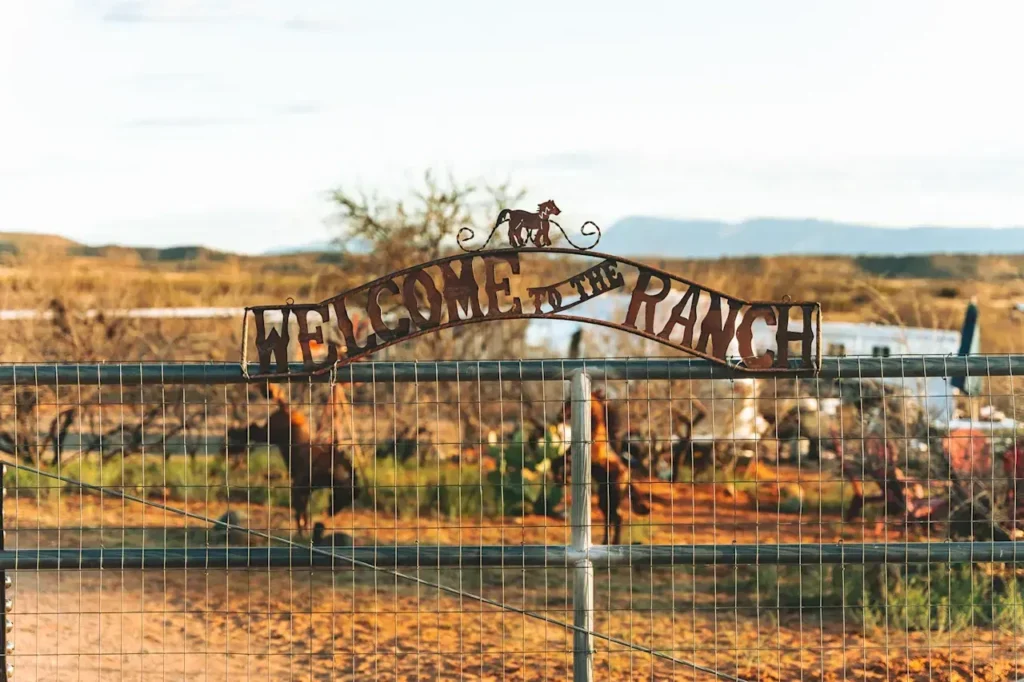
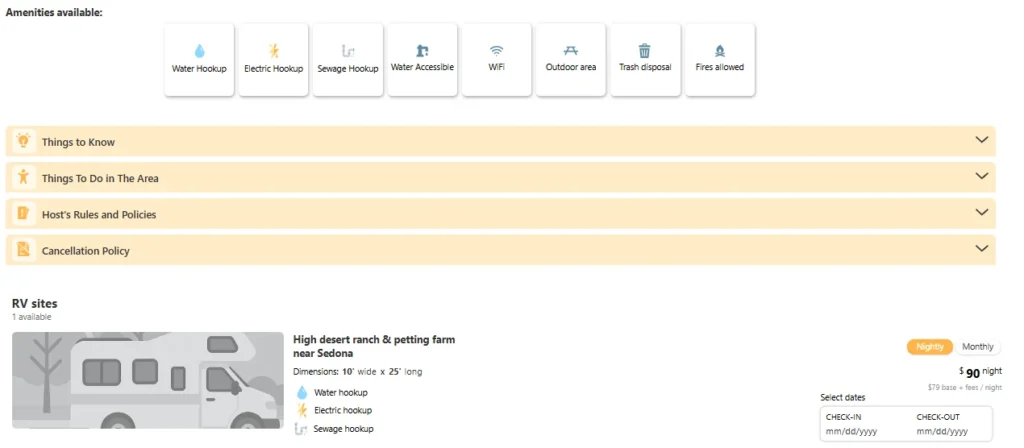
The single RV site is 10 feet wide by 25 feet long with full hookups — water, electric, and sewer — at $90 per night. Class B and smaller Class C rigs only. Full-size Class A motorhomes, large fifth wheels, and rigs over 25 feet will not fit — confirm dimensions with the host before booking. WiFi included, farm animals on the property, mountain and sunset views from the site.
Search for current private RV parking near Cornville for availability.
Is Staying in Sedona Worth the Premium RV Rates?
Sedona is one of Arizona’s most popular destinations, and RV rates reflect that demand. Campgrounds and RV parks located close to downtown often charge significantly more than parks and private land sites found elsewhere in northern Arizona.
Whether the higher price is worth it depends on how you plan to use your campsite.
If your goal is to park once and spend several days exploring Sedona’s restaurants, galleries, hiking trails, and shuttle system, staying close to town can save considerable driving time and reduce the stress of finding parking at busy trailheads.
On the other hand, travelers planning a longer visit often discover that a site in Cornville or elsewhere in the Verde Valley provides better value. A slightly longer drive can mean a quieter setting, fewer neighbors, easier access, and a more relaxed experience overall.
Many experienced RVers choose a simple strategy: stay close to Sedona for a few days if they want maximum convenience, then move to a lower-density base camp in the Verde Valley if they plan to spend a week or more exploring the region.
The best option is not necessarily the closest campsite. It is the one that matches the way you actually travel.
Practical Trip Planning
Fuel: Multiple fuel stations in Sedona on SR-89A. Fill up in Sedona before heading into Oak Creek Canyon — no fuel is available in the canyon itself.
Groceries: Sedona has grocery supply options along SR-89A. A larger commercial selection is available in Cottonwood, approximately 18 miles southwest.
Dump station: Rancho Sedona RV Park has a dump station access for registered campers. Plan dump stops before arriving in Sedona if staying at the Cornville private land listing.
Transportation: The free Sedona trolley and shuttle system covers most central Sedona attractions and stops near the major RV parks. Using the trolley or Uber/Lyft for in-town movement allows you to keep the rig parked. This is strongly recommended on busy weekend afternoons when parking in the Tlaquepaque and Bell Rock corridor areas is limited.
Getting there: From Phoenix (2 hours): I-17 North to Exit 298 (McGuireville Road) to SR-179 North into Sedona. From Flagstaff (30 miles): SR-89A South through Oak Creek Canyon. The canyon road, SR-89A, from Flagstaff is one of the most scenic drives in Arizona and is manageable for most RVs — check current conditions, as the road narrows in the canyon.
FAQ
Is Rancho Sedona RV Park worth the price?
For travelers who want to base camp in Sedona itself — within walking distance of Tlaquepaque, galleries, and restaurants, with direct access to Oak Creek and shade from mature Sycamore and Cottonwood trees — the answer is yes for most reviewers. The setting is genuinely unusual for a commercial RV park: creekside, heavily shaded, in the heart of a major destination. The premium pricing ($42-$84/night) reflects the location and amenities. For travelers who prefer to base camp outside Sedona and drive in for day trips, the Cornville farm stay through Hookhub provides full hookups at a more rural setting 15-20 minutes south.
Can I take a large Class A motorhome or long fifth wheel to Sedona?
Yes, for the main Sedona approach routes and Rancho Sedona RV Park, which accommodates rigs up to 45 feet. The SR-179 approach from I-17 is a well-maintained highway with no size restrictions. The SR-89A route through Oak Creek Canyon from Flagstaff narrows in sections — it is manageable for most rigs but becomes tight in the canyon’s narrowest passages. The High Desert Ranch Petting Farm in Cornville on Hookhub has a 10×25 site — not suitable for large rigs. Confirm rig dimensions with the host before booking any private land listing.
What is the best single-day trip from a Sedona RV base camp?
Jerome — the former copper-mining ghost town on Mingus Mountain, 25 miles southwest — is the most distinctive single-day trip from Sedona that most visitors do not take. The town’s dramatic hillside position, surviving 1900s-era buildings, independent galleries, restaurants, and views across the Verde Valley are unlike anything else in the region. Drive to Jerome in a tow vehicle rather than an RV — the road is steep, and the streets are narrow. Combine it with a stop at Tuzigoot National Monument in Clarkdale (a Sinagua pueblo ruin preserved by the NPS) for a full cultural day that pairs well with the following day’s archaeological visit to Montezuma Castle.
Planning a Sedona trip?
Find private RV parking in Cornville and the Verde Valley and check current availability near Oak Creek.