- The Dyrt is the best app for researching public campgrounds, comparing sites, and getting cell signal data before committing to a location
- AllStays Camp & RV is the best all-in-one road trip tool for mapping campgrounds, rest areas, dump stations, and chain-store stops in one place
- HookHub is the best app for booking confirmed private land overnight parking before you leave—no showing up and hoping a spot is open
- FreeCampsites.net is the best resource for locating free dispersed camping on BLM and national forest land across the US
- iOverlander is the best option for remote routes, overlanding, and international travel, where GPS-logged community spots are the only reference available
- Campendium is the best choice for carrier-specific cell signal ratings and detailed user reviews on specific campground sites
Finding overnight RV parking near you is straightforward when you know which app to reach for. The RV industry recorded its highest sustained shipment volumes in decades through 2024 and 2025, according to the RVIA’s industry outlook—more rigs on the road mean more competition for the same parking spots, rest areas, and campgrounds. The result is predictable: popular sites fill early, and RVers who show up without a plan routinely find the campground full at 7 pm.
The five ways to find RV parking that worked reliably five years ago require more planning now. The apps below solve that problem—each one differently, for different travel styles and overnight needs. The right choice depends on whether you need a confirmed booking or a map of options, a private spot, or a free dispersed site, and whether you need one night or thirty.
1. The Dyrt—Best for Campground Research and Public Land Discovery
The Dyrt is a campground research and review app covering tens of thousands of public campgrounds, state parks, national forest sites, dispersed camping areas, and private RV parks across the US. Users submit reviews, upload photos, and log carrier-specific cell signal ratings—AT&T, Verizon, T-Mobile—for individual sites.
The Dyrt’s core value for RVers is the depth of community-submitted information. Before committing to a campground, you can read reviews from RVers who describe road conditions, pad length limitations, noise levels on weekends, and whether the dump station was operational on their visit. That specificity is what separates The Dyrt from a basic campground directory.
The Dyrt Pro, the paid subscription tier, unlocks offline maps and sold-out campground alerts—notifications when a previously booked-out national park or state park site opens up due to cancellation. For RVers chasing popular sites that book months in advance, the alert feature alone justifies the subscription cost.
What The Dyrt does not offer is booking. It is a research and discovery tool—it shows you what exists and what others have experienced there, then directs you to the park’s reservation system or walk-in availability to secure the spot.
Best for: Trip planning, campground comparison, cell signal research, and catching cancellations at popular parks
Cost: Free basic version; Dyrt Pro available by paid subscription
2. AllStays Camp & RV — Best for Road Trip Navigation and Chain-Stop Mapping

AllStays Camp & RV is a mapping app that pulls campgrounds, rest areas, dump stations, propane fill stations, low-clearance warnings, Walmart parking lots, Pilot Flying J truck stops, Cracker Barrel locations, and casino parking onto a single filterable map. For RVers covering long daily distances who need to locate multiple types of stops quickly, AllStays removes the need to switch between multiple apps while driving.
The breadth of location types is what makes AllStays a road trip staple. The practical utility of finding a dump station within 20 miles of your current position—displayed alongside campground options and fuel stops—is something most dedicated camping apps don’t surface in one interface. Low-clearance bridge warnings are a particularly valuable feature for Class A motorhome drivers navigating unfamiliar routes.
AllStays Pro, the paid upgrade, adds offline map functionality—critical for RVers traveling through national forest corridors or rural stretches where cell service drops out. The app does not process bookings directly; it is a navigation and discovery layer that you use alongside a reservation system or walk-in approach.
Best for: Route planning, locating road travel resources, chain-store overnight stops, and low-clearance navigation
Cost: Free base version; AllStays Pro is a one-time purchase upgrade
3. Hookhub—Best for Confirmed Private Land and Extended Overnight Stays
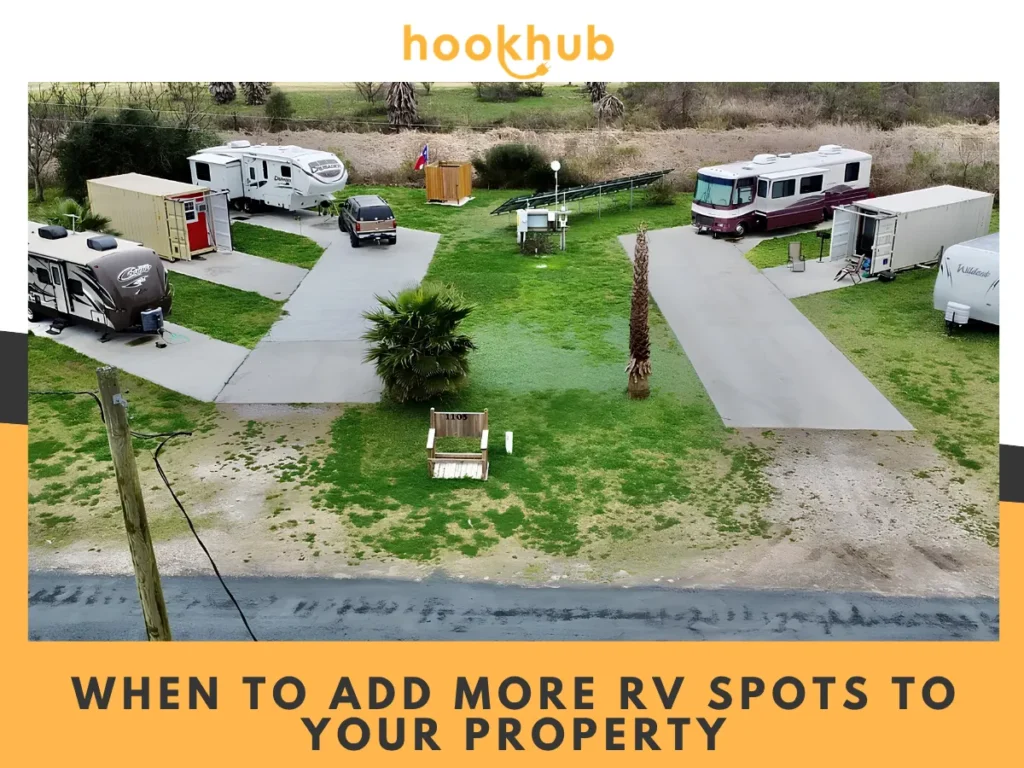
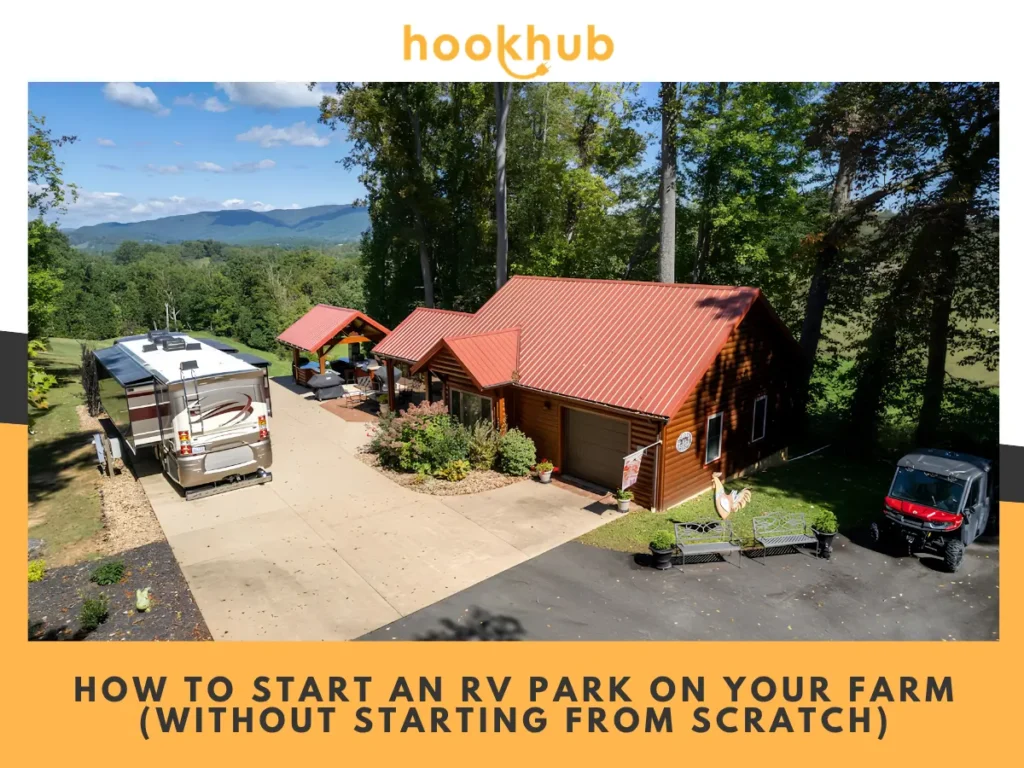
Hookhub is a bookable private land marketplace—the only app on this list that lets you reserve confirmed overnight parking on private property before you leave home. Landowners across the United States list unused land on Hookhub; RVers search by location and amenities; and stays are booked directly through the platform, with payment and host agreements handled before arrival.
The key distinction from every other app in this list is confirmation. When you book through HookHub, a host accepts your request, holds your pad, and you arrive knowing exactly where you will sleep. No community-submitted pins that may or may not be accessible. Do not call ahead to a campground that does not answer. No driving past a rest area that turned out to be closed to overnight parking.
HookHub listings include filter options for electric hookups, dump station access, pet-friendly properties, and rig length compatibility—details confirmed by the host before the booking is finalized. Stays range from a single overnight to monthly arrangements, making it the most flexible private land option for both road-tripping RVers and full-timers who need a stable base.
For free overnight RV parking options, the other apps below cover that territory. For confirmed private land parking with a real host, HookHub has no direct equivalent on this list.
Best for: RVers who need confirmed availability, hookup access, or stays longer than one or two nights.
Coverage: United States—search current availability at hookhub.co/us
Cost: No membership fee—pay per stay at host-set rates
4. FreeCampsites.net—Best for Finding Free Dispersed Camping Spots
FreeCampsites.net is a community-sourced database of free and low-cost camping locations across the United States and Canada. The database covers dispersed camping areas on Bureau of Land Management land, United States Forest Service sites, and community-logged free spots near highways, rural roads, and public land boundaries.
The platform exists specifically to aggregate free overnight parking options that don’t appear in commercial campground directories. BLM dispersed camping—legal, free, and widely available across the American West—is one of the primary use cases the database serves. The BLM’s recreation and camping resource outlines the federal rules governing dispersed overnight use; FreeCampsites.net helps you locate the specific spots where those rules apply.
The limitation for large-rig RVers is data quality. Many reviews come from van-dwellers, tent campers, and car campers whose rigs fit into spaces a 36-foot fifth wheel cannot. Road condition and rig length information is present on many listings, but inconsistent—reading reviews carefully before committing to a remote location is essential.
Best for: Finding free BLM and national forest dispersed camping, van life, and smaller rig travelers, budget-focused road trips
Cost: Free
5. iOverlander—Best for Remote Routes and Off-Grid International Travel
iOverlander is a free community app built for overlanders and long-distance travelers seeking GPS-logged camping spots in remote, rural, and international areas. The database spans every continent and includes community-submitted locations ranging from dispersed desert pullouts in the American Southwest to rural farm stays across South America and Europe.
For US-based RVers, iOverlander’s value is strongest in genuinely remote areas where other databases have thin coverage—high desert stretches, backcountry routes, and rural corridors where the nearest commercial campground is 80 miles away. Every location is logged with GPS coordinates, photos, and a community review from the traveler who submitted it.
iOverlander has no booking functionality and no confirmed availability. You identify a spot, drive to it, and hope conditions match the most recent review. For van-dwelling and car camping travelers who travel light and adapt easily, that uncertainty is manageable. For large RVs whose drivers need confirmed clearance, pad dimensions, and hookup access, iOverlander is a supplemental research tool rather than a primary planning resource.
Best for: Remote routes, international travel, overlanding, and van life in areas with minimal commercial campground coverage
Cost: Free
6. Campendium—Best for Detailed Reviews and Carrier-Specific Cell Signal Ratings

Campendium is a campground review platform with one of the more detailed user-submitted datasets available for RV-specific site information. Reviews include notes on pad length, road conditions, slide-out clearance, noise levels, and—Campendium’s most distinctive feature—carrier-specific cell signal ratings that show AT&T, Verizon, and T-Mobile performance at individual sites.
For RVers who work remotely or rely on cellular data for navigation and communication, the cell signal data alone makes Campendium worth bookmarking. Knowing that Verizon has two bars and AT&T has none at a specific campground before you commit to the drive prevents the scenario of arriving at a scenic site with no workable signal.
Campendium does not offer booking. Like The Dyrt, it is a research layer—use it to evaluate and compare sites, then secure the spot through the campground’s own system or on a walk-in basis. Coverage skews toward established campgrounds and RV parks rather than dispersed or private land options.
Best for: Pre-trip campground research, cell signal planning for remote workers, and comparing site-specific conditions before arrival
Cost: Free
What’s the Best Free App for Overnight RV Parking?
The answer depends on whether “free” refers to the app cost or the parking cost.
For free parking on public land—BLM dispersed areas, national forest sites, and community-logged spots—FreeCampsites.net is the most focused resource. For a free-to-download app that covers the widest range of overnight options, including chain-store stops, rest areas, and campgrounds, AllStays Camp & RV’s base version covers that comprehensively.
For confirmed private land parking, HookHub is a paid-per-stay platform with no membership fee—you pay only for the nights you book, at rates set by individual landowners. For long-term parking needs where monthly rates apply, long-term RV parking near you on HookHub consistently comes in below commercial campground pricing for the same duration.
FAQ
What app shows free overnight RV parking near me?
FreeCampsites.net and AllStays Camp & RV are the two most practical apps for locating free overnight options. FreeCampsites.net focuses specifically on dispersed camping on public land, including BLM and national forest areas. AllStays Camp & RV maps a broader range of free stops, including rest areas, Walmart parking lots, casino parking, and truck stops alongside paid campgrounds—all on one filterable map. Neither app offers booking confirmation; you identify a spot and secure it on arrival or by calling ahead.
Is there an RV app that lets you book overnight parking in advance?
Hookhub is the purpose-built platform for booking confirmed overnight and extended RV parking on private land across the United States. Unlike discovery apps that show you where spots exist, Hookhub processes the booking, confirms the host, and holds your space before you leave. Other apps on this list—The Dyrt, AllStays, FreeCampsites.net, iOverlander, and Campendium—are research and discovery tools without direct booking functionality for the majority of their listings.
Which RV parking app works best without cell service?
AllStays Pro and The Dyrt Pro both offer offline maps that function without an active data connection—a practical requirement for RVers traveling through national forest corridors, high desert routes, and rural stretches where cell service is unreliable. Download the maps for your intended region before leaving an area with a signal. iOverlander also functions with pre-cached data for GPS coordinates in remote areas, though its offline functionality is more limited than the dedicated offline map features in AllStays Pro and Dyrt Pro.
The right overnight parking app depends on what problem you’re solving. For free dispersed spots on public land, FreeCampsites.net and AllStays work well. The Dyrt and Campendium provide depth for campground research before committing to a route. For confirmed private land parking—especially if you need hookups, a longer stay, or simply want your space held before you arrive—search available hosts at hookhub.co/us and book before you hit the road.