



If you’re new to the RV lifestyle or want to understand RV hookups better, you’re in the right place. RV park hookups make staying at a campground comfortable and convenient, allowing you to access water, electricity, and sewer connections.
Let’s break down everything you need to know to feel confident about your next camping adventure!

What Are RV Hookups and How Do They Work?
RV hookups are essential connections that provide your RV with the utilities it needs, such as water, electricity, and sewer. Think of them as the lifeline that makes your RV feel more like a comfortable home on wheels.
- Water hookup: Connects your RV to a freshwater supply for cooking, bathing, and drinking.
- The electrical hookup supplies power to your RV, enabling you to use lights, appliances, and other gadgets.
- Sewer hookup: Allows you to dispose of wastewater quickly, which means less hassle with black and gray water tanks.
These hookups are designed to make your camping experience as stress-free as possible. Different campgrounds offer different kinds of hookups; choosing the right one will depend on your needs.

How to Choose the Right RV Hookup for Your Needs
Selecting the proper RV hookup depends on your comfort level, your RV’s capabilities, and your travel style.
- Full hookups: Includes water, electricity, and sewer hookups. This option is ideal for those who desire complete availability without the burden of water conservation or wastewater management.
- Partial hookups: Typically consist of water and electricity connections but do not include sewer hookups. This arrangement is ideal if you don’t mind occasionally using a dump station.
- No hookups (dry camping): Also known as boondocking. You’ll rely entirely on your RV’s battery, water tank, and waste storage. This can be an adventurous option but requires careful planning.
Tip: Consider how long you’ll stay at a site and whether you prefer comfort or adventure. Full hookups provide all utilities, while partial hookups give you a mix.
Full RV vs. Partial RV: Which Is Best for You?
- Full RV hookups are like staying at a fully equipped campsite—you’ll have water, electricity, and sewer available at your convenience. This type of setup is the best option if you prefer having all the amenities and not worrying about filling tanks or charging batteries.
- Partial hookups offer more of a minimalist experience while still providing some comfort. You’ll have access to electricity and water but must handle your wastewater.
Starting with a full hookup is best if you’re new to RV camping. This way, you can focus more on enjoying the experience and less on logistics.
What Should You Know About Water Hookups?
Water hookups make accessing fresh water in your RV simple and convenient. Here’s how it works:
Connecting Your RV to a Water Supply
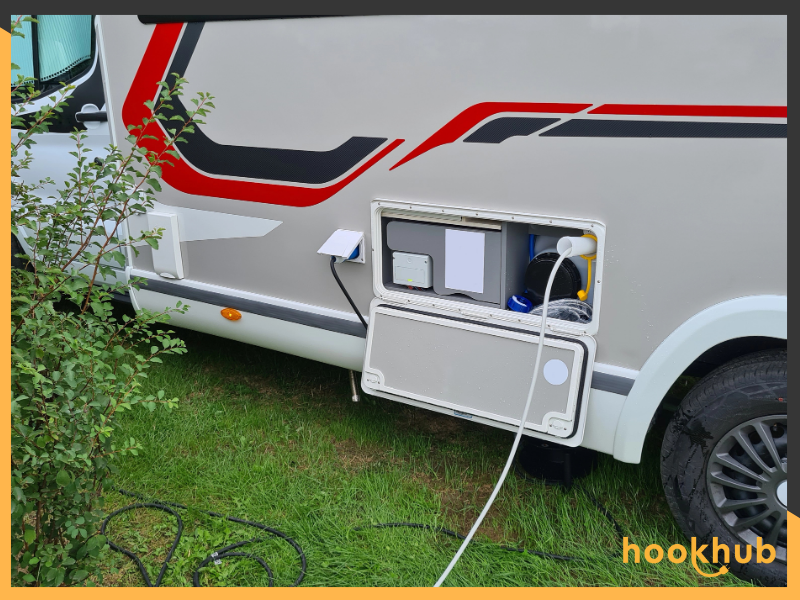
You’ll need a drinking water hose to connect to a water hookup. Simply attach it to the RV park’s water source and connect it to your RV’s water inlet.
Tips for Safe Water Connection:
- Use a hose rated explicitly for drinking water.
- Consider using a water filter to ensure clean, fresh water.
Managing Water Pressure and Safety
High water pressure at some campgrounds can damage your RV’s pipes. Always use a water pressure regulator to keep your system safe. These devices are affordable and straightforward to install.
Statistics: 40% of RV owners reported issues with high water pressure at campgrounds. Using a regulator can prevent costly repairs. Source
Using Freshwater Hookups Effectively
Ensure you use your water hookup effectively by monitoring your water tank levels and turning off connections when you’re not using them to avoid overflows.
Exploring Electrical Hookups: What Do You Need?
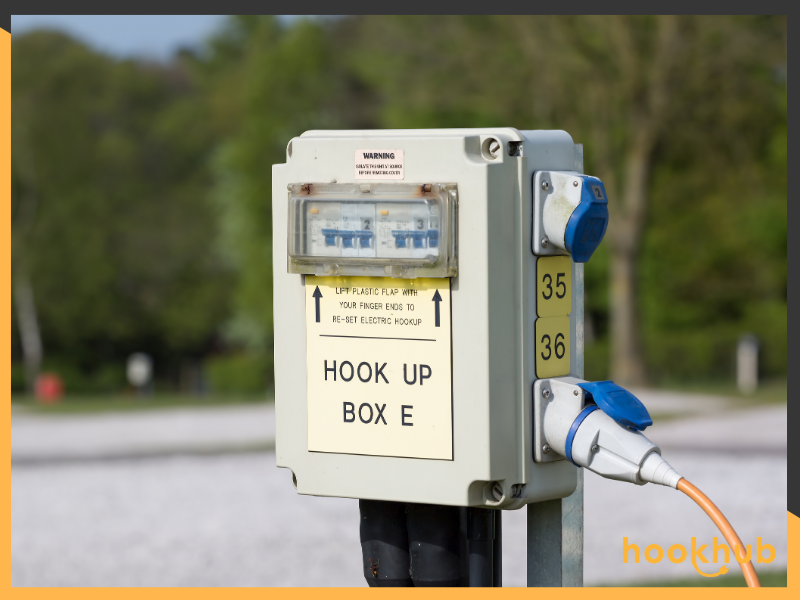
Electrical hookups provide power to your RV for lights, air conditioning, and more. Here’s what you need to know:
Types of Electrical Hookups: 30-amp vs. 50-amp
- 30-amp: Suitable for smaller RVs and basic power needs. It provides up to 3,600 watts of power.
- 50-amp: Best for larger RVs with multiple appliances. It can provide up to 12,000 watts of power.
Tip: Always check your RV manual to see which hookup is proper.
Powering Your RV Safely at Campgrounds
When plugging into a campground hookup, use a surge protector. It protects your RV from potential power surges, which can occur in crowded parks.
Furthermore, remember to use cords designed for RV use only to avoid safety issues.
Handling Electrical Needs While Dry Camping
If you’re dry camping (boondocking), you won’t have access to electricity unless you use a generator or solar panels. It’s essential to conserve battery power and turn off non-essential devices.
How Do Sewer Hookups and Waste Management Work?
Sewer hookups allow you to empty your black and gray water tanks directly at your campsite.
Connecting to Sewer Hookups and Dump Stations
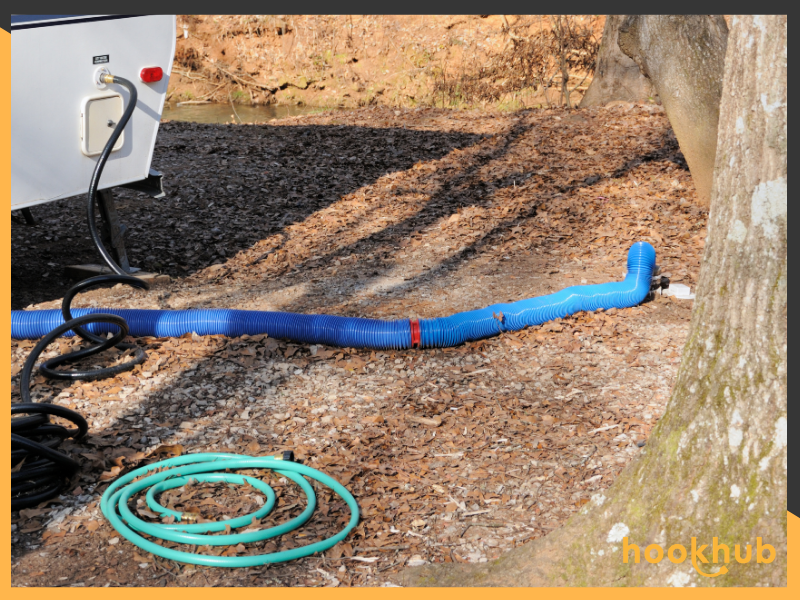
Attach a sewer hose from your RV to the park’s sewer inlet to connect to a hookup. Be sure to make a tight seal to avoid leaks.
Some parks provide dump stations for tank emptying without a direct sewer connection.
Important Note: Never leave your black tank valve open all the time when connected to a sewer hookup. To ensure proper flushing out of all waste, it’s better to let it fill before emptying it.
Managing Black Water and Gray Water Tanks
- Blackwater: This is wastewater from the toilet. Handle it carefully, and use chemicals to reduce odors.
- Gray water: This is wastewater from sinks and showers. You’ll need to empty it periodically.
Best Practices for Sewage and Wastewater Disposal
- Always use gloves when handling sewer connections.
- Rinse your sewer hose thoroughly after each use.
- Use chemicals designed for RV black tanks to manage odors and break down waste.
Sewage Tip: Some RV parks have strict rules about how and when to connect to sewer hookups, so ask about them when checking in.
What to Expect at Different RV Parks and Campgrounds?
RV parks can vary widely in terms of what they offer. Here’s a quick breakdown:
Exploring Amenities at RV Resorts vs. Basic Campgrounds
- RV Resorts: Often provide full hookups, Wi-Fi, cable TV, swimming pools, and laundry facilities.
- Basic Campgrounds: These typically offer partial hookups or no hookups at all. They’re ideal for those who want a more rustic experience.
Tip: Decide what level of comfort you need before booking. RV resorts are the ideal choice if you appreciate luxury.
Understanding Full and Partial Hookup Options
- Full hookup: Includes electricity, water, and sewer hookups.
- Partial hookup: Usually just water and electricity. You’ll need to use a dump station for wastewater.
What Many RV Parks Provide for a Comfortable Stay
Most RV parks provide basic amenities like restrooms, showers, and dump stations. Higher-end parks might include pools, hiking trails, and community activities to make your stay more enjoyable.
Ready to Start Your Next Adventure?
Understanding RV hookups significantly affects how smoothly your camping experience goes. From connecting to water and sewer to choosing between 30-amp or 50-amp electrical hookups, knowing what to expect will make your adventure stress-free and fun.
If you’re ready to explore the best RV parks and find the perfect full RV hookup, refer to our RV Parking page and start planning your next adventure today!