
Long-term RV living offers freedom and adventure, but it also comes with extra expenses that need careful planning. One of the most important factors to budget for is RV utility costs.
Utility fees in long-term RV parks—such as electricity, water, and sewer—can add up faster than expected. By understanding how RV park utility charges work, travelers can avoid unexpected expenses, manage their budget more effectively, and select the most cost-effective RV park for extended stays.
“The best RV parks make utility management fair and transparent through smart meters, renewable options, and clear communication. This builds trust that leads to longer stays and stronger referrals.” – Caylee Shea Harrington, CEO of Hookhub
Utility Costs in Long-Term RV Living
When staying in an RV park for an extended period, utility costs play a big role in overall expenses. These charges can quickly add up and affect how much is left in your budget. Understanding the different factors that influence utility costs helps travelers make smarter decisions and avoid surprises during long-term stays.
Common Utilities in RV Park Rates
When choosing an RV park, it’s important to know which utilities are included and which may cost extra.
Here’s what to expect:
- Usually included: Basic utilities like water, sewer, and trash are often part of the park’s base rate.
- May cost extra: Some parks charge separately for utilities, especially electricity.
- Special deals: Certain parks offer bundled packages that include multiple utilities, making budgeting easier.
- Tip: Always confirm what’s covered in the base rate to avoid surprise fees. If you’re new to hookups, check out this guide on understanding RV park hookups
Metered vs. Flat-Rate Utility Billing
RV parks have different ways of billing for utilities. Some charge based on how much you use, while others charge a fixed rate. Each method has its own advantages and disadvantages.
Metered billing can save money if you watch your usage. Flat-rate billing makes expenses easier to predict. Knowing how your RV park bills helps manage your costs better.
| Billing Method | Pros | Cons |
| Metered Billing | Pay for actual usage, potential for cost savings | Unpredictable monthly costs, requires monitoring usage |
| Flat-Rate Billing | Predictable monthly costs, easy to budget | May pay more than actual usage, less incentive to conserve |
Seasonal Variations in Utility Expenses
Utility costs often shift depending on the time of year.
Here’s how:
- Summer: Electricity bills can rise with increased air conditioning use.
- Winter: Propane costs often climb due to heating needs.
- Budget impact: Seasonal changes can affect overall expenses, so planning ahead is key.
- Money-saving tip: Use energy-efficient practices and adjust habits during peak seasons to cut costs.
Hidden Fees and Unexpected Charges
There can be hidden fees or unexpected charges in RV parks. These might include connection fees, maintenance charges, or late fees. It’s important to read the fine print and ask about extra costs when signing up.
Being aware of these extra charges helps avoid surprises and manage your expenses better. For a full breakdown of typical expenses, see this guide on campground costs
Breaking Down Specific Utility Expenses
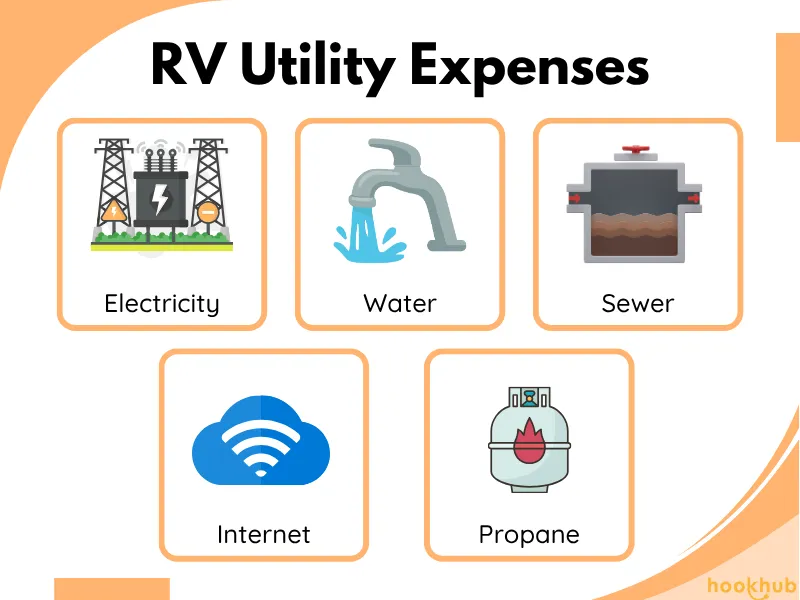
Understanding utility expenses is crucial for managing your RV lifestyle budget. When you live in RV parks long-term, knowing the different costs helps you make smart choices about how you use utilities.
Electricity Costs and Consumption Factors
Electricity is a big part of RV utility costs. The price can change a lot based on how much you use, your RV type, and what amenities you have. Things that affect electricity costs include:
- The number of appliances you use at once
- The energy efficiency of your RV’s appliances and lights
- How you use electricity during busy and quiet times
To keep electricity costs down, use energy-saving appliances and watch your usage during busy times. You can also check out RV living cost tips to use less energy.
Water and Sewer Expenses
Water and sewer costs are also big parts of RV utility expenses. These costs can change based on:
- How often you use water for bathing, cooking, and cleaning
- Sewer fees, which might depend on how much you use or be a flat rate
- Using less water, like with low-flow fixtures
Being careful with your water use and saving it can lower these costs.
Internet, Cable, and Other Optional Services
Services like internet and cable can also increase your utility costs. The prices for these services depend on:
- The provider and the plan you choose
- The quality and speed of the connection you need
- Any special deals or bundles
Thinking about what you need and comparing providers can help you find the best deals.
Propane and Heating Considerations
Propane is often used for heating, cooking, and appliances in RVs. The cost of propane can change based on:
- How much you use it, more in cold months
- The size of your propane tank and how often you refill it
- What propane costs in your area
Watching your propane use and knowing local prices can help control these costs.
Impact of Park Types and Locations on Utility Costs
The cost of utilities in RV parks varies a lot. This depends on the park’s location and type. Luxury RV resorts and basic campgrounds have different prices for utilities.
Luxury RV Resorts vs. Basic Campgrounds
Luxury RV resorts are pricier, including utility costs. They offer full-hookup sites, fast internet, and more. Basic campgrounds, on the other hand, cost less because they have simpler amenities.
For example, luxury resorts might charge extra for fast internet or high-end laundry. This increases water and electricity costs. Basic campgrounds usually have simpler pricing with fewer extra services.
Public Parks Utility Policies
Public parks, like state and national parks, have their own rules for utilities. Some offer full-hookup sites with metered utilities. Others have vault toilets and fewer amenities, affecting costs.
It’s key to know these policies for budgeting. For instance, some national parks might ask you to use less water or electricity. This can change your utility costs.
Regional and Climate-Based Cost Differences
Utility costs in RV parks also depend on the region and climate. Parks in hot areas might spend more on electricity for air conditioning. Parks in cold areas might spend more on heating.
Also, areas with less water might charge more for water or have strict rules. Knowing these differences helps plan your RV trip better.
Urban vs. Rural Park Cost Comparison
Utility costs differ between urban and rural RV parks. Urban parks are pricier because of city living costs. Rural parks might be cheaper but have fewer amenities.
Think about what you need. If you want fast internet and amenities, an urban park might be worth it. But if you’re on a budget and don’t need fancy amenities, a rural park could save you money.
Strategies to Reduce Monthly Utility Expenses
Living in an RV long-term means finding ways to save on bills. A few simple changes can cut down your monthly costs. This way, you can live more sustainably and enjoy your travels more.
Energy-Efficient RV Modifications
One smart move is to make your RV more energy-efficient. You can install LED lights, get new appliances that use less energy, and add insulation. For winter, simple steps like learning how to keep moisture out of your RV can save both energy and repair costs.
Upgrading your RV with energy-saving measures can significantly enhance comfort while reducing power bills. For instance, switching to LED bulbs can reduce lighting energy use by 75–90% compared to incandescent bulbs (U.S. Department of Energy).
Additionally, wisely managing utilities at RV parks—like minimizing air conditioning use in favor of shade, reflective awnings, or unplugging unused appliances—can help curb costs and lower your electric usage (Bargain Storage)
Seasonal Planning and Location Selection
Choosing the right RV park at the right time can also save you money. In summer, pick parks with shade or pools to use less AC. In winter, look for parks with good insulation or heating options.
- Look for RV parks with energy-saving features.
- Travel during seasons that need less heating or cooling.
- Ask about discounts for long stays during off-peak times.
Negotiating Long-Term Stay Discounts
Talking to RV park managers about long-term discounts can save you a lot. Many parks offer lower rates for longer stays. This can include cheaper utility rates or deals that cover some costs.
Be open with the park about your plans and ask about discounts. A good relationship with the staff can lead to better deals and more flexible payment plans.
Monitoring and Managing Consumption
Keeping an eye on how much you use is crucial. Smart meters or devices can track your energy, water, and gas use. This lets you see where you can use less and make changes.
- Use smart meters to watch your usage.
- Set a budget for utilities and check it often.
- Change your habits based on what the data shows to waste less.
By using these strategies, RV travelers can live more affordably and sustainably. This makes their long-term adventures more fun and budget-friendly.
Plan Your Long-Term RV Lifestyle Budget
Managing utility costs is key for a successful RV lifestyle. Solar generators can cut electricity bills by up to 40%. The cost to live in an RV park varies from $500 to $1200 monthly. By understanding these costs and using smart strategies, RV travelers can enjoy their trips while living sustainably. To estimate your monthly expenses, try the RV living cost calculator
Effective budget planning is essential for a stress-free RV life. It means choosing the right RV park and using energy wisely. By following these tips, RV travelers can enjoy their lifestyle while keeping costs low.