
Last Christmas, I watched a family of four pull into a HookHub property in northern Arizona at 9 PM, two hours later than planned. The dad stepped out of their rental RV looking exhausted, and his first words were, “We’ve been calling campgrounds for three hours. Everything’s full.”
They’d assumed finding a spot during the holidays would be as easy as summer camping. It wasn’t.
Holiday RV travel operates under completely different rules than regular season trips. According to RVIA’s Holiday Travel Intention Survey, winter RV travel surged 33% from 2023 to 2024, with 7 million Americans planning to RV during Christmas week alone. That surge puts unprecedented pressure on campgrounds and infrastructure.
Combine that demand with winter weather challenges, and you’ve got a recipe for stress, unless you know what you’re doing.
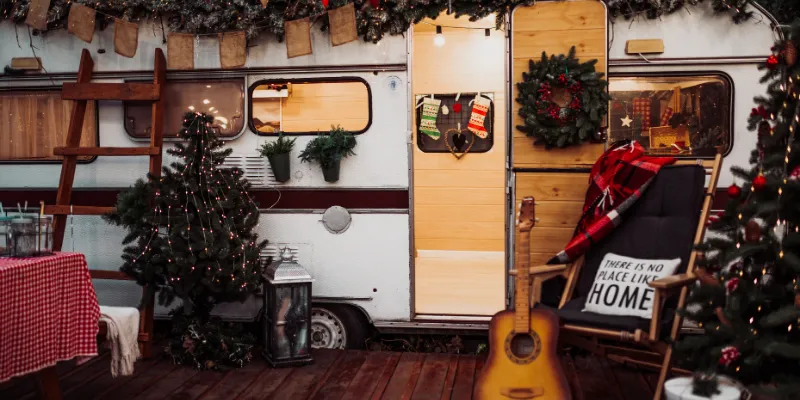
This guide draws from industry research, real RVer experiences, and practical testing across nine states. Whether you’re planning your first RV vacation or you’re a seasoned road warrior, these 10 tips will help you navigate holiday travel with confidence and joy.
Want all these tips in one printable checklist?
Download our free Ultimate Holiday RV Travel Planner with packing lists, winterization checklists, and budget trackers.
Pre-Trip Planning & Preparation
Tip 1: Book Campgrounds 3-6 Months in Advance
The single biggest mistake holiday travelers make is waiting too long to secure campsites. Popular campgrounds in warm-weather destinations like Joshua Tree National Park, Big Bend National Park, and Everglades National Park book solid for Christmas week months in advance. Recreation.gov’s booking system opens reservations six months out, and the most desirable sites disappear within hours.
Here’s the booking timeline that works:
Six months out: National park campgrounds and state park reservations open. Book immediately if you want specific sites.
Three months out: Private RV parks and popular commercial campgrounds fill up. This is your last window for traditional options.
One month out: Slim pickings at conventional campgrounds. Time to explore alternatives.
This is exactly why we built HookHub. Our network of private properties across nine states offers flexibility that traditional RV parks can’t match. Hosts often accommodate last-minute bookings because they’re not dealing with the same volume constraints. I’ve seen families find beautiful, private spots with full hookups just weeks before Christmas when every RV park showed “no vacancy.”
Explore HookHub properties in: Arizona | Texas | Montana | All 9 States
Pro tip: If you’re using a rental from companies like Cruise America or RVshare, book your vehicle and campsite simultaneously. Rental company availability tightens during holidays, and you don’t want an RV without a place to park.
Tip 2: Create a Detailed Packing Checklist
Holiday RV trips require more than your standard camping gear. You’re packing for winter weather, extended stays, and special celebrations. The key is systematic organization that maximizes your limited space while ensuring you have everything you need.
Essential Packing Categories
| Category | Must-Have Items | Storage Location |
| Kitchen | Holiday meal ingredients, extra propane, insulated containers, coffee supplies | Overhead cabinets, refrigerator |
| Bathroom Essentials | Toilet chemicals, extra toilet paper, toiletries, medications, first aid | Bathroom cabinets, under-sink storage |
| Clothing & Linens | Layered clothing, extra blankets, holiday outfits, towels, sheets | Bedroom storage compartment, overhead bins |
| Safety & Emergency | Toolkit, tire pressure gauge, jumper cables, flashlights, weather radio | Exterior storage compartment |
| Holiday-Specific | Decorations, gifts, special food items, entertainment | Dining table area, pass-through storage |
| Outdoor Gear | Campfire supplies, chairs, outdoor lights, hoses (heated for winter) | Exterior compartments |
Weight distribution matters. Your vehicle’s handling changes when you load one side heavier than the other. Place heavy items low and centered. Use your RV’s storage compartments strategically: frequently needed items in accessible drawers, seasonal items in harder-to-reach spaces.
I learned this the hard way during HookHub’s first winter. I packed everything I thought I needed for a week-long property tour, but I put all the heavy items on the passenger side. My motorhome pulled right constantly, and I wore out my arms correcting. Now I weigh and balance everything before I hit the road.
Tip 3: Winterize and Prep Your RV
Holiday travel often means cold weather, even in southern states. A single night below freezing can damage your RV’s plumbing system, costing thousands in repairs. Proper winterization isn’t optional, it’s essential.
RV Winterization Checklist (Before Holiday Departure)
| System | Action Item | Status |
| Plumbing | Insulate exposed pipes with foam sleeves | ☐ |
| Plumbing | Test all faucets and check for leaks | ☐ |
| Plumbing | Purchase heated water hose | ☐ |
| Plumbing | Know location of wastewater tank drains | ☐ |
| Heating | Test furnace operation | ☐ |
| Heating | Check propane tank levels (fill if below 50%) | ☐ |
| Heating | Inspect windows/doors for drafts | ☐ |
| Heating | Pack backup electric space heater | ☐ |
| Electrical | Fully charge house batteries | ☐ |
| Electrical | Test battery capacity under load | ☐ |
| Electrical | Clean battery terminals (remove corrosion) | ☐ |
| Electrical | Pack backup power bank/generator | ☐ |
| Exterior | Inspect roof seals and seams | ☐ |
| Exterior | Check tire pressure (adjust for cold weather) | ☐ |
| Exterior | Test all exterior lights | ☐ |
| Exterior | Clean and adjust side mirrors | ☐ |
Winter-related damage is one of the most common, and most preventable, RV problems. If you’re renting an RV for your holiday trip, ask the rental company specifically about their winterization procedures. Don’t assume it’s been done.
On-the-Road Strategies
Tip 4: Plan Shorter Driving Days
Holiday road trips aren’t about covering maximum distance, they’re about creating memories. The most common complaint I hear from families is that they spent more time driving than enjoying their destination.
Experienced RVers typically plan for 150-200 miles per travel day during regular season, but holiday travelers should aim even lower: 100-150 miles. Here’s why:
Winter driving conditions: Snow, ice, and reduced visibility slow travel significantly. That four-hour summer drive becomes six hours in December.
Large vehicle handling: If you’re new to RVing, maneuvering a motorhome or travel trailer in holiday traffic requires extra time and attention. Side mirrors become your best friends, but they take practice to use effectively.
Family-friendly pacing: Kids (and adults) need breaks. Shorter days mean less stress, more time outside at rest stops, and better attitudes when you reach your campsite.
Flexibility for discoveries: Some of my best HookHub host relationships started because I had time to explore an area I was passing through. Shorter driving days create space for spontaneity.
Build buffer time into your travel plans. If you’re meeting family for Christmas dinner, arrive a day early. This single decision eliminates the anxiety of “will we make it on time?” and transforms potential stress into relaxed exploration.
Tip 5: Master Campsite Setup Efficiency
After hours on the road in an RV, the last thing you want is a complicated campsite setup. Efficient systems turn a 45-minute ordeal into a 15-minute routine.
The 15-Minute Campsite Setup System
Step 1: LEVEL YOUR RV ⚖️Use leveling blocks on low side. Check with bubble level. Everything depends on this.
Step 2: ENGAGE PARKING BRAKE 🅿️Secure vehicle before any other setup tasks.
Step 3: CONNECT ELECTRICAL ⚡Check voltage (30A vs 50A). Plug in shore power. Test connection.
Step 4: HOOK UP WATER 💧Attach pressure regulator → Connect hose → Turn on water → Test all faucets.
Step 5: SET UP SEWER 🚽Connect sewer hose → Ensure downhill slope → Secure connections → Leave valves CLOSED until ready to dump.
Step 6: DEPLOY STABILIZER JACKS 🔧Lower all four jacks until snug. Don’t over-tighten.
Step 7: EXTEND AWNING ☂️Check for overhead obstacles. Extend slowly. Secure arms.
Step 8: SET UP OUTDOOR SPACE 🪑Chairs, table, outdoor rug, lights. Create your living area.
Step 9: INTERIOR CHECK ✓Open vents, turn on water heater, adjust thermostat, check refrigerator operation.
TOTAL TIME: 15-20 minutes with practice
Keep your toolkit and essential hoses in the same exterior storage compartment every time. Muscle memory develops, and setup becomes automatic. I can now set up a full hookup site in under 20 minutes, even in the dark, because everything has a system.
For boondocking situations (camping without hookups), your setup simplifies: level, stabilize, and you’re done. Focus your energy on managing your power source (solar panels, generator) and conserving water.
Tip 6: Maximize Small Space Living
RVs offer plenty of room for adventure but limited space for stuff. Holiday travel amplifies this challenge because you’re adding gifts, decorations, and special meal ingredients to your normal load.
Space Optimization Strategies
Vertical storage: Use hanging organizers on doors and walls. Magnetic strips hold knives and tools. Hooks support everything from coats to dish towels.
Multi-functional furniture: Your dining table isn’t just for meals. It’s your workspace, game center, and gift-wrapping station. Invest in table covers that protect the surface and add holiday atmosphere.
Drawer organization: Small containers and dividers prevent the “junk drawer avalanche” that happens when you’re moving from one place to another. Label everything.
Collapsible items: Choose cookware, storage containers, and decorations that fold flat. A collapsible dish rack, folding chairs, and nesting bowls save tremendous space inside your camper.
Exterior storage maximization: Use your RV’s exterior storage compartments for items you don’t need daily. Winter gear, tools, and backup supplies live outside, freeing interior space for living.
The transition from house to motorhome requires letting go of “just in case” items. After two years of RV life while building HookHub, I’ve learned that you need far less than you think. The freedom of simplified living is one of the best things about RVing.
For more ideas on decorating your RV for the holidays, check out our guide to Christmas decorating in small spaces.
Tip 7: Manage Wastewater Tanks Properly
Let’s talk about the least glamorous but most critical aspect of RV travel: your wastewater tanks. Poor tank management ruins more holiday trips than any other single factor.
Understanding Your System
Black water tank: Holds waste from your RV bathroom toilet. Requires chemical treatment and careful monitoring.
Gray water tank: Collects water from sinks and shower. Less problematic but still needs regular dumping.
Tank Management Rules
Never let black water tanks get more than 2/3 full. Holiday travel means more people using your RV bathroom, which fills tanks faster than usual.
Use plenty of water with each flush. This prevents solid waste from building up and creating clogs.
Add appropriate chemicals. These break down waste and control odors. Follow manufacturer recommendations for cold weather formulations.
Dump black water first, then gray water. The gray water helps rinse your sewer hose.
Know where dump stations are located. Apps like Sanidumps and RV Parky show locations along your route.
Carry extra hose length. Not all dump stations are conveniently located near your RV’s connection.
At HookHub properties, we ensure hosts understand RVers’ needs, including proper dump facilities or clear directions to nearby stations. This is one of the things that sets private land camping apart: hosts who understand RV life.
Experience Enhancement & Safety
Tip 8: Embrace Boondocking and Alternative Camping
Traditional campgrounds fill up fast during holidays, but boondocking (camping without hookups) opens up thousands of additional options. Public lands, private properties through platforms like HookHub, and Bureau of Land Management areas provide roomier, more peaceful alternatives to crowded RV parks.
Benefits of Boondocking During Holidays
Privacy and space: No neighbors parked three feet away. Your campsite becomes your own winter retreat.
Cost savings: Most boondocking is free or low-cost. Spend your budget on experiences instead of nightly fees.
Flexibility: Less competition for spots means more spontaneous travel.
Authentic experiences: Boondocking puts you closer to nature and further from commercialized campgrounds.
Boondocking Requirements
You need self-sufficiency when camping without hookups. Your RV becomes a true motorhome, relying entirely on its own systems:
- Power source: Solar panels, generator, or robust battery bank
- Water management: Carry sufficient fresh water; conserve gray water
- Waste disposal: Plan dump station stops every 3-4 days
- Heating: Propane furnace or alternative heat sources
I’ve spent some of my favorite nights boondocking on HookHub properties where hosts offer primitive sites alongside full-hookup options. There’s something special about waking up on a working farm or ranch, surrounded by open land, knowing you’re supporting local landowners while enjoying a trip that feels authentically connected to place.
Browse our collection of boondocking-friendly properties with primitive and full-hookup options.
Tip 9: Build Community Around the Campfire
One of the best things about RV holiday travel is the instant community you find at campsites. RVers are among the friendliest travelers you’ll meet, and the holidays amplify that spirit.
Creating Connection
Campfire gatherings: Invite neighbors to share hot cocoa or holiday treats around the campfire. These spontaneous conversations often become lasting friendships.
Potluck dinners: Coordinate with fellow campers for a shared meal. Everyone brings one dish, and suddenly you’re enjoying a feast at the dining table with new friends.
Holiday traditions: String lights on your awning, play music, share stories. Your festive spirit becomes contagious.
Help each other: RV life means occasional challenges. The community that forms when someone needs a tool from your toolkit or advice on wastewater tanks creates bonds that last beyond a single night.
During HookHub’s first holiday season, I watched a group of five RV families who didn’t know each other create an impromptu Christmas celebration on a host’s property in Texas. They decorated together, shared meals, and the kids played while adults swapped RV travel tips. That’s the magic of this lifestyle: your motorhome takes you to places where community forms naturally.
Tip 10: Prepare for Weather and Emergencies
Holiday travel means winter weather, and winter weather means preparation. Your emergency kit needs seasonal upgrades for cold-weather road trips.
Winter Emergency Kit Essentials
Vehicle-Specific:
- Tire chains (know how to install before you need them)
- Ice scraper and snow brush
- Sand or kitty litter for traction
- Jumper cables (cold drains batteries fast)
- Spare fuses and bulbs
- Tire pressure gauge (check daily in cold weather)
Safety & Communication:
- Weather radio with NOAA alerts
- Fully charged cell phones and backup power banks
- Flares or reflective triangles
- Flashlights with extra batteries
- First aid kit with cold-weather medications
Comfort & Survival:
- Extra blankets and sleeping bags
- Hand and foot warmers
- High-calorie snacks
- Water (stored inside to prevent freezing)
- Matches and fire starters
RV-Specific:
- Spare propane tank
- Pipe insulation materials
- Sewer hose support and extra fittings
- Water pressure regulator
- Leveling blocks
Weather Monitoring Strategy
Check forecasts daily and have backup travel plans. If a storm is approaching, arrive at your campsite early or delay departure. No destination is worth risking safety. Modern weather apps provide hour-by-hour predictions; use them to time your driving during the safest windows.
I keep a laminated card in my RV with emergency contacts, including my insurance company, roadside assistance, and the nearest RV repair facilities along my route. This simple preparation has saved me hours of stress when problems arise.
Ready to Book Your Holiday RV Adventure?
Find private, spacious properties where you can celebrate Christmas without the crowded campground chaos. Browse HookHub’s network of host locations across nine states and discover your perfect holiday destination.