If you’re considering RV living full-time, you’re probably asking:
Exactly how much does it cost to live in an RV full-time?
The truth is, full-time RV living can vary dramatically depending on travel pace, type of RV, campground choices, and lifestyle preferences.
Some full-time RVers live comfortably on $1,500 per month. Others spend $3,000 or more.
Let’s break down the real cost of RV living so you can build a realistic monthly budget.
Upfront Costs Before You Live in an RV Full-Time
Before you hit the road, there are initial investments to consider.
Buying an RV
The type of RV makes a major difference in overall cost.
- Travel trailers: $15,000–$50,000
- Fifth wheels: $30,000–$80,000
- Motorhomes (gas or diesel): $50,000–$200,000+
Buying an RV is often the largest upfront cost associated with the RV lifestyle. According to the RV Industry Association, RV ownership continues to grow across North America.
Setup & Equipment
Additional upfront costs may include:
- Solar power system
- Power surge protectors
- Sewer hoses and leveling blocks
- Registration fees
- RV insurance setup
Depending on your setup, initial expenses can range from $5,000 to $20,000 beyond the RV purchase.
Monthly RV Living Costs Breakdown
Now let’s talk about ongoing monthly expenses.
Living full-time in an RV requires budgeting across several categories.
1️ Campground Fees
Campground fees are typically the largest monthly cost.
- Private campgrounds: $35–$80 per night
- National and state parks: $20–$40 per night
- Monthly RV park rates: $500–$1,200 per month
Many full-time RVers reduce costs by mixing paid campgrounds with boondocking.
Boondocking on public BLM land can cost $0 per night.
If you’re looking to reduce campground fees without sacrificing safety or comfort, staying on private rural land through structured platforms can also lower your average monthly expense.
Platforms like Hookhub connect RVers with landowners offering dedicated places to park, often at lower nightly rates than crowded RV parks.
2️ Fuel Cost
RV fuel expenses depend on:
- MPG
- Diesel vs gas engine
- How frequently you move
- Distance traveled
Average monthly fuel cost:
$300–$800
Traveling long distances frequently increases expenses on the road. Slowing down and staying longer in one location significantly reduces your overall cost.
3️ RV Insurance
RV insurance costs may range:
$100–$300 per month
Insurance costs vary based on:
- Type of RV
- Coverage level
- Driving history
- Whether you live in your RV full-time
4️ Propane & Utilities
Propane powers:
- Heating
- Cooking
- Refrigeration
Propane costs typically range:
$30–$100 per month
If you boondock frequently and install a solar power system, you can reduce reliance on campground utility hookups.
5️ RV Maintenance
RV maintenance is unavoidable.
Budget:
$100–$300 per month
Many full-time RVers recommend setting aside:
$1,000–$2,000 per year for unexpected repairs.
Roof resealing, tire replacement, brake maintenance, and appliance issues are common long-term expenses.

Average Monthly Budget for Full-Time RV Living
Here’s a realistic example:
| Expense | Average Monthly |
| Campground Fees | $600 |
| Fuel | $500 |
| Insurance | $200 |
| Propane & Utilities | $75 |
| Maintenance | $200 |
| Food & Miscellaneous | $600 |
| Total | $2,175 |
Some RVers spend less by boondocking extensively. Others spend more depending on travel pace and RV type.
The cost of living full-time in an RV depends heavily on your choices.
Smart Ways to Save Money While RVing
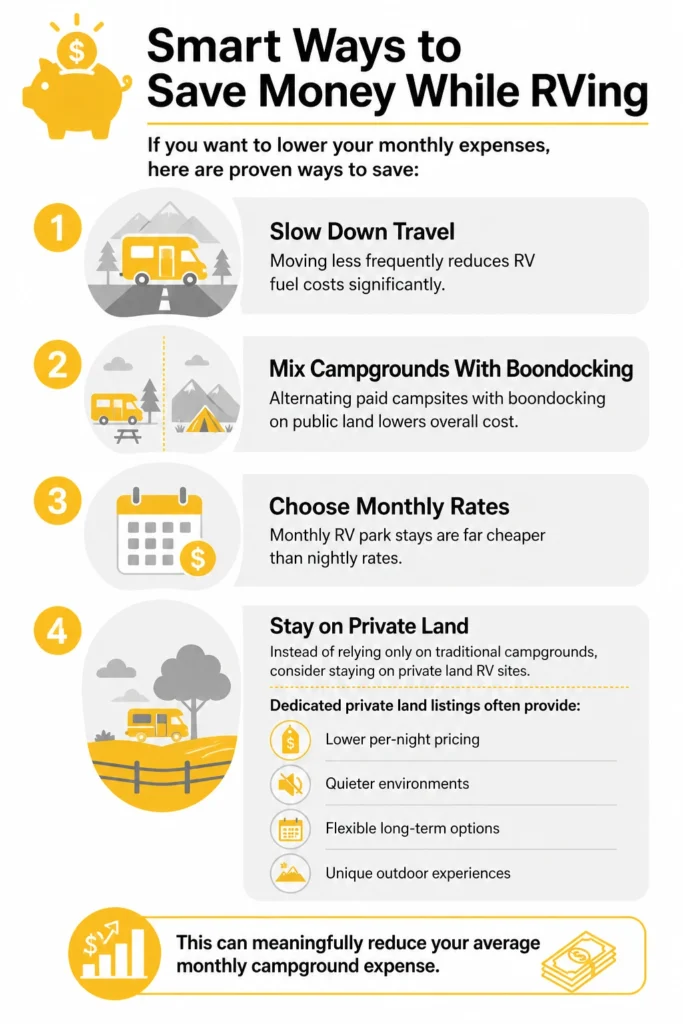
If you want to lower your monthly expenses, here are proven ways to save:
Slow Down Travel
Moving less frequently reduces RV fuel costs significantly.
Mix Campgrounds With Boondocking
Alternating paid campsites with boondocking on public land lowers overall cost.
Choose Monthly Rates
Monthly RV park stays are far cheaper than nightly rates.
Stay on Private Land
Instead of relying only on traditional campgrounds, consider staying on private land RV sites.
Dedicated private land listings often provide:
- Lower per-night pricing
- Quieter environments
- Flexible long-term options
- Unique outdoor experiences
This can meaningfully reduce your average monthly campground expense.
Is RV Living Actually Cheaper Than Traditional Housing?
RV life removes:
- Mortgage payments
- Property taxes
- Utility bills tied to a fixed home
But it introduces:
- Fuel cost
- RV maintenance
- Insurance
- Campground fees
For many full-time RVers, the RV lifestyle is about flexibility and freedom, not just saving money.
When managed carefully, RV living can be financially comparable to or cheaper than renting in many urban areas.
Who Is Full-Time RV Living Right For?
RV full-time living works well for:
- Remote workers
- Retirees
- Minimalists
- Adventure-focused travelers
- Those seeking a flexible way to live
Living in an RV full-time requires budgeting discipline and planning. But for many, it offers a sustainable alternative to traditional housing.
Final Thoughts: What Does RV Living Really Cost?
Full-time RV living is not automatically cheap. It is flexible.
Your cost of RV living depends on:
- How often you move
- Where you park your RV
- The type of RV you choose
- How well you manage maintenance and fuel expenses
- Whether you mix campground stays with boondocking or private land options
For many full-time RVers, one of the biggest variables is campground fees. Choosing quieter, dedicated places to park on private land can sometimes reduce nightly costs compared to traditional RV parks.
Hookhub makes it easier to find private land stays that offer space, flexibility, and competitive pricing, especially for RVers who prefer less crowded environments.
For some travelers, the monthly budget ends up lower than traditional housing. For others, the overall cost is similar, but the lifestyle offers mobility, simplicity, and adventure.
The key to living comfortably on the road is not eliminating expenses entirely. It is controlling the costs associated with travel pace, campground choices and where RVs can park overnight, and long-term maintenance.
When planned carefully, RV living can be both financially manageable and deeply rewarding.
FAQ
How much does it cost to live in an RV full-time?
Most full-time RVers spend between $1,500 and $3,000 per month depending on travel pace and campground choices.
What is the biggest expense in RV living?
Campground fees and fuel typically make up the largest portion of monthly expenses.
Can you live in an RV for free?
Boondocking on public land can reduce campsite fees to $0, but fuel, insurance, and maintenance still apply.
Is RV living cheaper than renting?
It can be, especially if you manage travel frequency and campground expenses strategically.