

Traveling in an RV is exciting. But dealing with extreme weather is especially important for comfort and safety. It is known that RVs are often lacking in insulation, making them sensitive to temperature changes. RV goers all faced nights too cold or days too hot, hoping pipes won’t freeze.
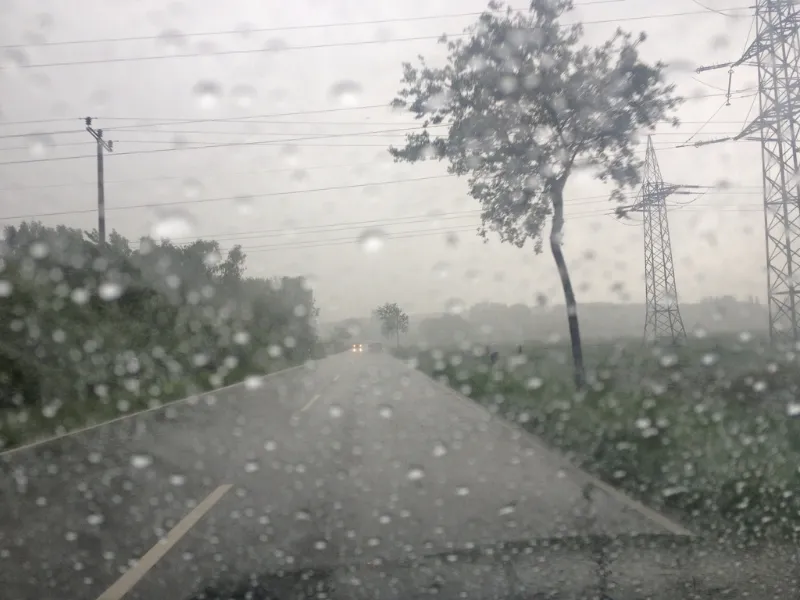
To make RV living cozy and safe, we must prepare for long-term stays in different climates. There are many ways to make our RVs ready for any weather, and we’re here to discuss them.
Common Weather Threats to RVs
Extreme weather can harm RVs in several ways. Know the risks, the warning signs, and what to do.
High Winds
Risks: Roof and wall damage, torn awnings, slide-topper tears, flying debris, sway or rollover while driving.
Watch for: Wind advisories, rocking while parked, flapping fabric, nearby trees leaning or shedding branches.
What to do:
- Retract awnings, slide toppers, and stabilizers that can act like sails.
- Park with the nose/tail to the wind and away from trees or loose items.
- Lower your profile (bring slides in if winds get strong).
- If driving, slow down or pull off at the next safe exit; avoid bridges and open spans.
Heavy Rainfall
Risks: Roof/window leaks, water intrusion in slide seals, saturated floors, flash flooding around low campsites.
Watch for: Drips around fixtures, damp cabinet corners, musty smells, pooling water under the rig.
What to do:
- Inspect and reseal roof seams, vents, and window caulking regularly.
- Use gutter spouts and keep roof drains clear.
- Choose higher ground; avoid sites near dry washes or rivers during storms.
- Keep a small moisture detector or paper towels handy to catch new leaks fast.
Extreme Temperatures
Heat (hot days): Overworked A/C, softening sealants, tire blowout risk, fridge struggling.
Cold (freezing): Frozen pipes, cracked fittings, battery performance drop, condensation/mold.
What to do (heat):
- Use reflective shades, awnings (when winds are calm), and park with afternoon shade.
- Run A/C early; add fans for airflow. Check tire pressure before travel.
- Bonus tip: These simple tricks to keep your RV cool in summer help reduce A/C strain and protect your rig.
What to do (cold):
- Insulate exposed plumbing; use heated hoses or disconnect and fill the onboard tank.
- Add skirting or foam boards; run the furnace to protect underbelly lines.
- Ventilate lightly to reduce condensation; use a dehumidifier if needed.
- Extra step: Follow these tips to keep moisture out of your RV in winter to prevent mold and water damage.
Other Weather Hazards to Watch
Hail: Can dent aluminum, crack skylights. Cover skylights with protective domes; use hail blankets if available.
- Lightning: Risk to electronics. Use a quality surge protector/EMS and unplug during severe storms.
- Snow & Ice Loads: Weight on the roof can damage seams. Sweep off safely; don’t let ice dam around vents.
- Wildfire Smoke & Ash: Clogs filters, affects health. Close intakes, use interior air filtration, relocate early if air quality worsens.
- Dust/Sand Storms: Scratches finishes, fouls filters. Close everything, place towels at door gaps, wait it out.
- Salt Air (coastal storms): Corrosion over time. Rinse the exterior and undercarriage after exposure.
Quick Prep Checklist and Safety Tips
- Inspect roof, seals, and slide gaskets every month; fix cracks before storms arrive.
- Stow loose gear (chairs, grills, mats). Retract awnings at the first sign of wind.
- Keep emergency gear: plastic sheeting/tape, spare fuses, tire gauge, dehumidifier, surge protector.
- Know your park’s evacuation routes and nearest high ground.
- Track weather with alerts on your phone; move early rather than late.
How Weather Impacts Long-Term vs. Short-Term RV Stays
Weather affects RV life differently depending on how long you stay. Short trips usually mean quick weather checks and light prep. Long-term stays require a deeper strategy—planning for seasonal changes, ongoing maintenance, and protecting your RV from gradual wear.
Importance of Weather Monitoring Tools
Monitoring the weather is essential for all RVers, but it’s especially critical for long-term stays. With the right tools, you can stay ahead of extreme conditions and keep both your RV and your family safe.
Helpful tools include:
- Weather apps for daily forecasts and severe weather alerts
- Radar apps to track approaching storms in real time
- Emergency alert systems for warnings about tornadoes, floods, or high winds (see Ready.gov’s severe weather preparedness guide for detailed tips)
By staying informed and acting early, you can avoid costly damage and enjoy a more comfortable RV lifestyle.
Exterior Modifications for Weather Resilience
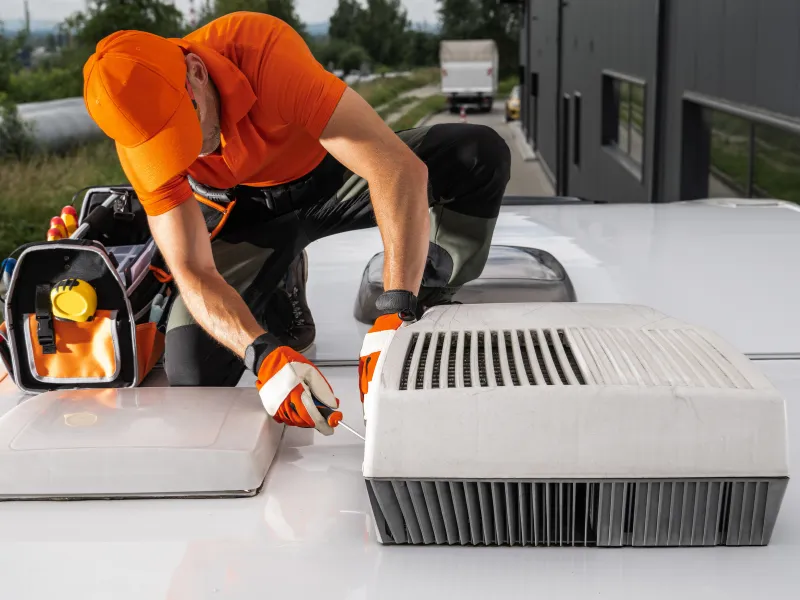
Your RV’s exterior is the first line of defense against weather. Making smart modifications will protect your rig from leaks, drafts, and other damage—especially if you’re living in it long-term.
Reinforcing the Roof and Seals
The roof is one of the most vulnerable parts of an RV. Regular inspections and sealing are crucial to prevent leaks.
- Inspect the roof monthly for cracks, tears, or worn seals
- Apply a high-quality roof sealant suited to your RV’s roof material
- Ensure vents, skylights, and A/C units are properly sealed
Weatherproofing Windows and Doors
Strong seals around windows and doors help keep water out and regulate indoor temperature.
- Check weatherstripping regularly and replace if worn
- Use clear plastic insulation kits for extra warmth in cold weather
- Apply waterproof sealant around frames to stop leaks
Skirting and Underbelly Protection
Skirting and underbelly protection reduce cold air exposure and protect your RV’s systems.
- Use durable, waterproof skirting to block drafts and keep pipes from freezing
- Inspect the underbelly for cracks, holes, or damage
- Add protective covers or plates to shield the underbelly from road debris
Securing Exterior Components
Loose exterior items can turn into hazards during storms.
- Inspect storage compartments, awnings, and racks regularly
- Secure or remove loose items before strong winds or heavy storms
- Reinforce exterior attachments with sturdy materials
Extreme Weather RV Living: Interior Adaptations
Living in an RV during extreme weather requires more than just parking in the right spot—it means adapting the interior so it stays safe, comfortable, and efficient. Small changes to insulation, moisture control, and climate systems can make a big difference in everyday comfort.
Insulation Upgrades for Temperature Control
Insulation is one of the best defenses against extreme heat and cold. It helps stabilize indoor temperatures and reduces the strain on heating and cooling systems.
Reflective insulation works well in hot climates, bouncing heat away and keeping interiors cooler.
Foam board insulation is ideal for cold weather because of its high R-value and durability.
Spray foam insulation can be used in different climates, sealing gaps and boosting overall efficiency.
Sealing windows and doors with weatherstripping or caulk prevents heat loss in winter and keeps out humid air in summer.
| Insulation Type | Climate Suitability | Benefits |
| Reflective Insulation | Hot climates | Reduces heat gain, improves energy efficiency |
| Foam Board Insulation | Cold climates | High R-value, long-lasting protection |
| Spray Foam Insulation | All climates | Seals gaps, strong overall insulation |
Moisture Management Systems
Moisture is a major issue in RVs, especially in humid or rainy regions. If not managed, it can lead to mold, mildew, and even structural damage.
Dehumidifiers help control moisture levels in humid climates.
Roof and wall vents improve airflow and reduce condensation.
Fans assist with circulation and prevent damp spots from forming.
“Proper ventilation is key to preventing moisture buildup in RVs. Using a combination of vents, fans, and dehumidifiers can significantly improve the interior air quality and prevent damage.” – Caylee Shea Harrington, CEO of Hookhub
Space-Efficient Heating and Cooling Solutions
RVs have limited space, so choosing the right heating and cooling equipment is essential for both comfort and energy efficiency.
Heating options: Portable electric heaters work for mild winters, while diesel heaters provide stronger, fuel-efficient warmth in colder regions.
Cooling options: Roof-mounted A/C units cool entire rigs, while portable units are flexible for smaller spaces or specific zones.
Efficiency tips: Choose equipment sized correctly for your RV, and use fans or reflective window covers to help your systems work less.
Power and Weather Resilience for RV Living
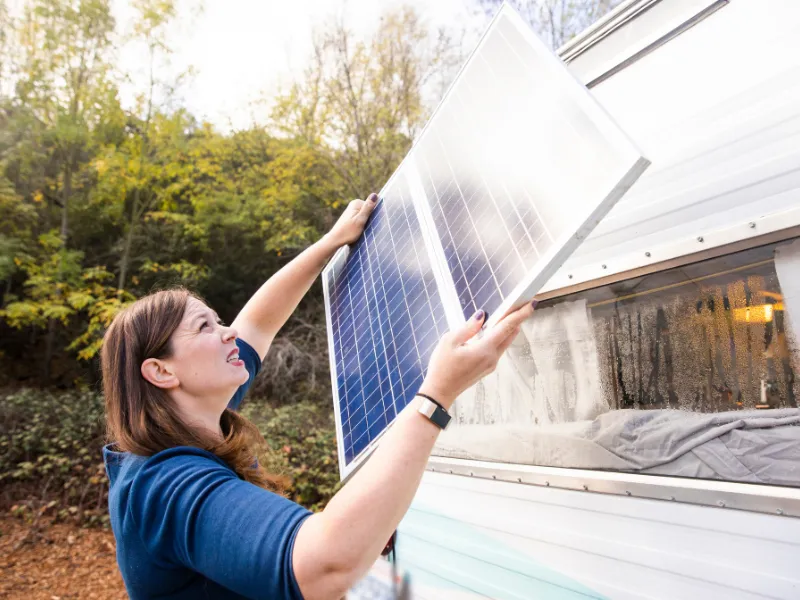
In extreme weather, keeping your RV powered and your water system protected is essential for comfort and safety. By maintaining reliable energy sources, adapting your water setup, and preparing for each season, you can handle almost any weather challenge that comes your way.
A dependable power system is the backbone of RV living in harsh conditions. Whether you’re facing freezing temperatures, scorching heat, or stormy skies, consistent power keeps your heating, cooling, and safety systems running.
Battery Maintenance in Extreme Temperatures
RV batteries are especially sensitive to temperature swings.
- In cold weather, use a battery blanket or heater to prevent freezing and keep batteries at peak performance.
- In hot weather, ensure good ventilation to avoid overheating.
- Check electrolyte levels, clean terminals, and monitor charge regularly.
- Use a battery monitor to track consumption, since energy demands often rise during extreme weather.
Solar Panel Considerations
Solar is an excellent renewable option, especially for boondocking or during outages.
To get the most out of your setup:
- Choose durable, weather-resistant panels that can handle rain, hail, and strong UV rays.
- Install panels at the correct angle for maximum sun exposure.
- Clean them often—dust, pollen, and water spots reduce efficiency.
Generator Options and Safety
Generators provide reliable backup power when the sun is scarce or weather disrupts hookups.
- Look for models with strong power output, fuel efficiency, and lower noise levels.
- Always follow safety protocols: keep the generator outside, use carbon monoxide detectors, and store extra fuel safely.
- Stick to the manufacturer’s maintenance schedule to ensure dependability when you need it most.
Power Conservation Strategies
Even the best systems can get strained in extreme weather.
Smart conservation stretches your power further:
- LED lighting, efficient appliances, and solar panels can help cut power usage—and pairing these with a clear understanding of RV park hookups ensures you make the most of available power.
- Use fans or reflective covers to reduce A/C strain.
- Turn off devices when not in use.
Adapting your habits is just as important as the hardware—smart power use ensures electricity is available when you need it most.
Water System Adaptations for Severe Weather
Weather extremes can wreak havoc on an RV’s water system. Preparing your setup for freezing, storms, and shortages protects your rig and keeps water safe to use.
Preventing Frozen Pipes and Tanks
Freezing temps can crack pipes and damage tanks.
To prevent this:
- Wrap exposed pipes with insulation or foam sleeves.
- Use heated hoses for water lines.
- Add RV antifreeze to plumbing when storing your rig or winterizing.
- Water Conservation During Storms
Heavy storms can disrupt campground water supply or sewer systems. Conserving water reduces the strain:
- Turn off taps while brushing teeth or washing dishes.
- Install low-flow showerheads and faucets.
- Keep extra fresh water on hand in case of outages.
Filtration and Purification for Emergencies
Clean drinking water is critical during disasters.
- Invest in a high-quality RV water filter.
- Keep portable filtration or purification systems for emergency use.
- Boil or sanitize water if supply lines are compromised.
Managing Humidity and Condensation
Severe weather often leads to high humidity inside RVs, which can cause condensation, mold, and musty odors.
- Run a dehumidifier or use moisture absorbers.
- Open vents and use fans for airflow.
- Regularly check for leaks around windows, seals, and the roof.
Seasonal-Specific RV Preparations
Each season brings its own set of challenges. Preparing ahead ensures your RV stays comfortable and protected year-round.
Winter Weatherization Techniques
- Insulate pipes, tanks, and windows to retain heat.
- Apply heat tape where needed.
- Drain water lines or use antifreeze for storage periods.
- Seal gaps around doors, vents, and windows.
- Test your heating system before cold sets in.
Summer Heat Management
- Use awnings, reflective film, or window shades to block sunlight.
- Park in shaded areas or set up canopies.
- Clean A/C filters regularly and check refrigerant levels.
- Use roof fans or cross-ventilation to improve airflow.
Hurricane and Tornado Readiness
- Secure outdoor gear—chairs, mats, bikes, and grills can become dangerous projectiles.
- Park in safe locations away from flood zones, trees, or weak structures.
- Inspect roof and seals before storm season to prevent leaks.
- Keep a plan for relocating if warnings escalate (see NOAA’s hurricane preparedness resources for official safety guidelines).
Monsoon and Heavy Rain Adaptations
- Maintain your roof, gutters, and drainage system.
- Seal windows, doors, and vents to block leaks.
- Use tarps or waterproof covers for extra protection.
- Park on well-drained ground to prevent flooding (see the American Red Cross flood safety guide for more tips).
Strategic Location Selection for Long-Term Stays
When staying in one place for months, where you park is just as important as how you prepare.
Researching Climate Patterns
- Study long-term forecasts and historical weather data.
- Watch for regions prone to extreme weather like hurricanes, floods, or wildfires.
- Ask locals and RV communities for insights on seasonal conditions.
Campground Features That Enhance Weather Safety
Certain campground features can make a huge difference in safety and comfort:
| Feature | Weather Benefit |
| Secure Hookups | Prevents damage during high winds |
| Adequate Drainage | Reduces flood risk |
| Shaded Areas | Provides natural cooling in hot climates |
| Proximity to Emergency Services | Faster response in emergencies |
Building a Local RV Network
Connecting with nearby RVers and campground staff gives you an inside track on weather updates, safe spots, and community support. Local advice often proves more valuable than apps alone.
Following the unwritten rules of RV parks also helps you build stronger connections and become part of a supportive community.
When to Relocate
Even with careful planning, sometimes moving is the safest choice.
- Monitor weather alerts and radar daily.
- Relocate early if a hurricane, tornado, or severe storm is predicted.
- Keep a “go bag” and plan routes to higher ground or safer regions.
Weather-Ready RV Living: The Key Takeaways
Weather is one of the biggest variables in RV living, and how you prepare makes all the difference. From quick checks on short trips to full seasonal strategies for long-term stays, every RVer needs to think ahead. By monitoring conditions, reinforcing your RV’s exterior, adapting the interior for comfort, and maintaining reliable power and water systems, you can turn extreme weather from a threat into a manageable challenge.
Each season—and each location—brings its own risks, but with the right tools, modifications, and community support, your RV can handle them all. The goal isn’t just to survive the elements, but to keep your travels safe, comfortable, and enjoyable no matter where the road takes you.