
Quick Answers
- Red Rock State Park is a 286-acre nature preserve and environmental education center along Oak Creek — distinct from Sedona’s high-intensity scrambling trails and crowded vortex sites
- The park has no camping — all overnight stays require a base camp in Cornville, West Sedona, or Cottonwood
- Guided nature walks run daily at 10 am; moonlight hikes are offered April through October; over 150 bird species have been recorded in the Oak Creek riparian corridor
- No pets are permitted anywhere inside the park
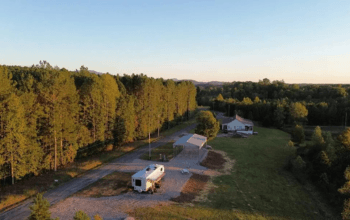
- High Desert Ranch Petting Farm in Cornville is on Hookhub with full hookups, approximately 5 miles from the park entrance, at $90 per night
Sedona has no shortage of dramatic trails. What it does not have in abundance is quiet — and Red Rock State Park is the exception to that. While Cathedral Rock and Bell Rock draw crowds of scrambling hikers and vortex seekers, Red Rock State Park sits 5 miles southwest of downtown Sedona in a low valley where Oak Creek bends through cottonwood groves and red sandstone canyon walls rise on both sides. The park’s mandate is environmental education, not athletic achievement. The trails are interpretive. The rangers lead daily guided walks. The emphasis is on understanding the riparian habitat along the creek rather than gaining elevation or reaching a summit.
For families, birders, and RV travelers who want direct access to Sedona’s red rock landscape without the vortex tour buses and packed trailhead parking, Red Rock State Park is the Verde Valley destination worth building a morning around.
What Is Red Rock State Park?
The park covers 286 acres in the foothills west of Sedona, owned and administered by the Arizona State Parks Board as a riparian habitat and center for environmental education. Oak Creek — a perennial stream fed by springs above Sedona — flows through the park year-round, creating a lush corridor of cottonwood, Arizona sycamore, and willow trees that stands in direct visual contrast to the surrounding high-desert chaparral and exposed red-sandstone formations.
The sandstone that makes Sedona famous worldwide formed approximately 300 million years ago when this region alternated between ancient seas and desert environments. Iron oxide in the rock rusts the surface, giving it the characteristic red and orange colors visible from every trail in the park. The Eagle’s Nest Trail climbs to the highest point in the park for views of Cathedral Rock and the Seven Warriors formation — some of the most expansive scenery in all of northern Arizona — reached via a family-friendly path rather than a technical scramble.
Red Rock State Park was designated a Monarch Waystation in 2016 — one of thousands of stations across the country supporting monarch butterfly habitat. The hummingbird and butterfly garden near the visitor center draws pollinators from across the surrounding area during spring and fall migration.
What Can You Do at Red Rock State Park?
Hiking: The park has a 5-mile network of interconnected trails ranging from easy creekside walks to moderate overlook routes. The Smoke Trail follows Oak Creek for approximately half a mile and serves as one of two self-guided interpretive routes — trail guides with numbered points are available from the visitor center on a returnable deposit. The Eagle’s Nest Trail is the most rewarding single hike, covering 2.5 miles round trip through juniper and manzanita foothill terrain to a panoramic viewpoint overlooking Cathedral Rock and the full Sedona canyon system. All trails require staying on the marked path — this is a nature preserve with fragile riparian vegetation.
Birdwatching: Over 150 bird species have been recorded in the park, making it one of the most productive birdwatching sites in the entire Verde Valley corridor. Vermilion flycatchers, great blue herons, Cooper’s hawks, and black phoebes are year-round residents along Oak Creek. Winter brings exceptional diversity as migratory songbirds, raptors, and waterfowl move into the riparian habitat. Twice-weekly ranger-led bird walks start at the visitor center — check the current schedule at the park.
Guided programs: Daily ranger-led nature walks depart at 10 am. An afternoon activity — varying between speaker presentations, nature walks, and educational programs — runs daily at 2 pm. Moonlight hikes take place from April through October. Star parties, geology hikes, and archaeology walks are offered seasonally. The House of Apache Fire cultural program introduces visitors to Indigenous history in the Sedona canyon country. The Junior Ranger program serves children up to age 6.
Horseback riding and mountain biking: Horses and bikes are permitted on designated routes within the park — not all trails, but specific routes are marked for equestrian and bicycle access. Cornville and West Sedona have several stables and trail riding outfitters that can arrange guided horseback tours to the park area.
Wildlife viewing: Mule deer move through the creek corridor at dawn and dusk. Javelina — the peccary native to the Sonoran Desert — travel in family groups and are common sights near the creek banks and in the chaparral at the park edges. Coyotes are active in the early morning. The creek itself supports a population of native fish and amphibians visible from the footbridges on the lower trail network.
Important park rules: No pets are permitted anywhere inside the park. This is strictly enforced as a nature preserve regulation. Plan accordingly if you are traveling with dogs. The park is carry-in, carry-out — there are no trash cans on site. Bring all the water you need, as there are no water stations on the trail network itself.
When Is the Best Time to Visit?
Spring (March through May) is the most rewarding season at Red Rock State Park. Wildflowers bloom in the canyon meadows, migratory birds return to the Oak Creek corridor, and the creek runs full from winter rains. The morning light in spring illuminates the red sandstone formations with a warmth that midday and summer light cannot replicate.
Fall (September through November) is the second peak season. The cottonwood trees along Oak Creek transition to yellow and gold in October, providing fall color that surprises most Arizona visitors. Winter birding is exceptional — the park sees its highest bird species counts from November through February when migratory populations supplement the year-round residents.
Summer visits are comfortable in the early morning before 10 am. Afternoon temperatures in the canyon can reach the 90s in July and August. Monsoon storms bring afternoon rain from July through September — the trails become wet, the creek rises, and the park may close temporarily during active flash flood conditions. The moonlight hikes in summer offer a genuinely different experience of the canyon at night.
Is Red Rock State Park Worth Building a Multi-Day RV Trip Around?
Red Rock State Park itself can be explored in a single day, but many RV travelers use it as part of a broader Verde Valley itinerary rather than treating it as a standalone destination. The park’s location places visitors within easy driving distance of Sedona, Cornville, Cottonwood, Jerome, Tuzigoot National Monument, and the Verde Valley wine region.
For travelers staying a week or longer, the park becomes one piece of a larger experience. A morning bird walk along Oak Creek can be followed by an afternoon wine tasting in Page Springs, a sunset visit to Sedona, or a day trip to Jerome’s historic district. This flexibility is one reason many RV travelers choose to base camp in the Verde Valley rather than moving between multiple campgrounds.
Longer stays are especially appealing for retirees, snowbirds, remote workers, and full-time RVers who prefer slower travel. Instead of rushing through Sedona’s major attractions in a weekend, visitors can explore the region gradually while enjoying quieter destinations like Red Rock State Park during less crowded weekday periods.
Where to Park Your RV Near Red Rock State Park
Red Rock State Park is a day-use-only nature preserve. No camping or overnight parking is permitted inside the park boundary.
Choosing the Right Base Camp Near Red Rock State Park
One of the advantages of visiting Red Rock State Park is the number of RV base camp options available within a short drive. The best choice depends on what kind of trip you want to have.
Travelers who prioritize restaurants, galleries, shopping, and walkability often choose to stay in Sedona itself. The convenience is hard to beat, but campsites and accommodations typically command premium prices.
Cornville offers a quieter alternative. The area is more rural, traffic is lighter, and visitors remain close to both Red Rock State Park and the Verde Valley wine region. Many RV travelers prefer Cornville when they want a slower pace and more space between neighboring sites.
Cottonwood provides another option, particularly for longer stays. Grocery stores, restaurants, medical services, and other everyday conveniences are easily accessible, while Sedona and Red Rock State Park remain a short drive away.
Travelers staying only a night or two often prioritize proximity to Sedona. Travelers spending a week or longer frequently prioritize convenience, privacy, and access to the broader Verde Valley instead.
For many RV travelers, choosing the right base camp has a greater impact on the overall trip than choosing the exact attraction they visit each day.
Commercial base camps near the park:
Rancho Sedona RV Park in central Sedona is the primary full-service RV option for travelers who want to be in Sedona itself and day-trip to Red Rock State Park. The park has 67 creekside sites along Oak Creek with full hook-ups including 30 and 50-amp electric, water, sewer, cable TV, and Wi-Fi. Sites accommodate rigs up to 45 feet. Within walking distance of Tlaquepaque and central Sedona galleries and restaurants. Approximately 5-7 miles from Red Rock State Park via Lower Red Rock Loop Road.
Verde Ranch RV Resort in Camp Verde provides full hookups, a pool, a splash pad, and a dog park approximately 15-20 minutes east of the park — a good option for large rigs and travelers with pets who cannot enter the park itself.
High Desert Ranch Petting Farm — Cornville via Hookhub
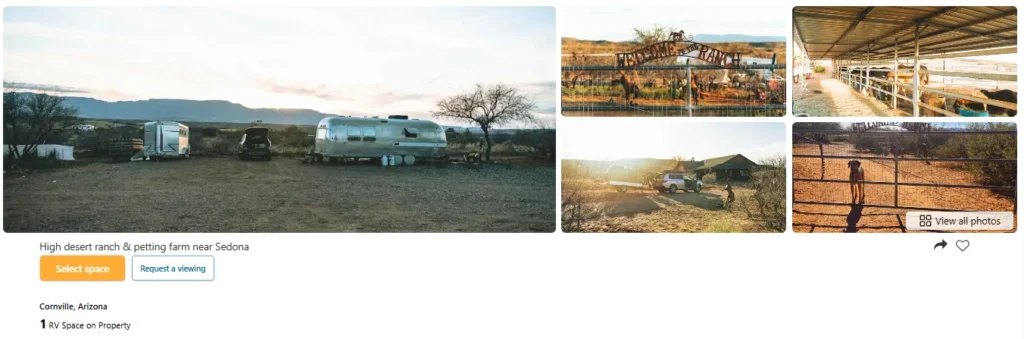
Red Rock State Park does not allow pets. High Desert Ranch Petting Farm does — and it sits approximately 5 miles from the park entrance on the same Lower Red Rock Loop Road corridor, making it the closest confirmed private land option to any Arizona state park in the Hookhub inventory. Listed on Hookhub, which produced this guide.
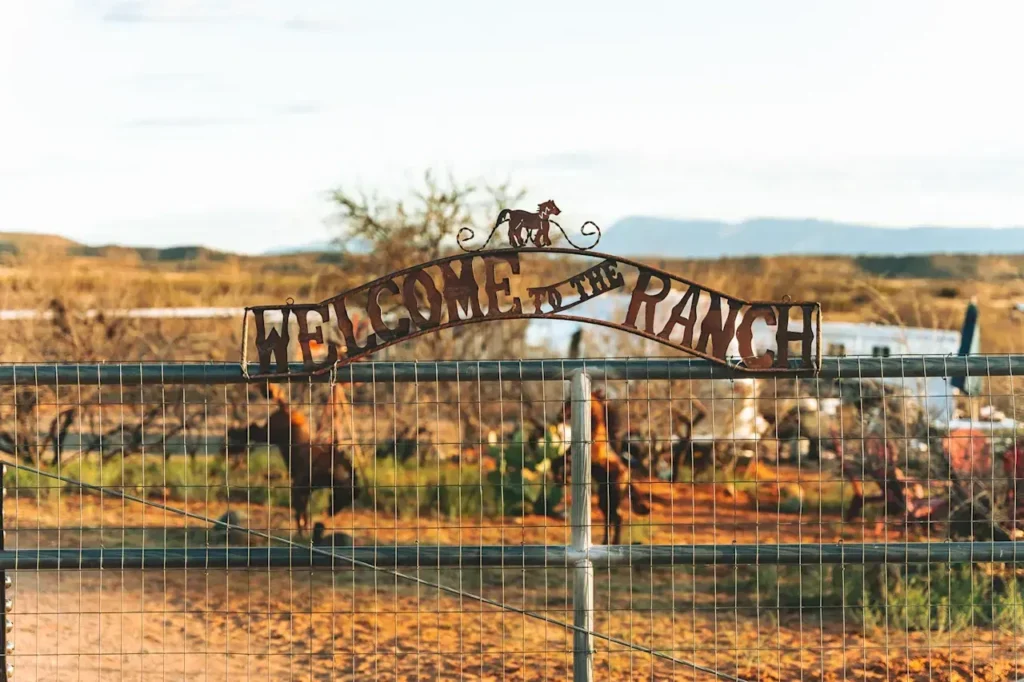
The irony is deliberate: the park that bans your dog is a 5-minute drive from a working farm where goats, chickens, and rescue animals are part of the daily scenery. Leave the dog at the farm in the morning, walk the Smoke Trail and Eagle’s Nest without worrying about the no-pets rule, and return to a rural property with mountain views and sunset colors over the Sedona foothills.
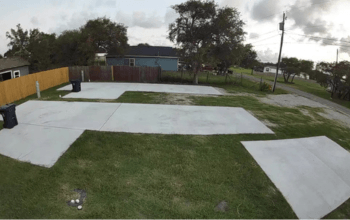
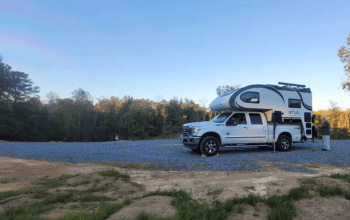
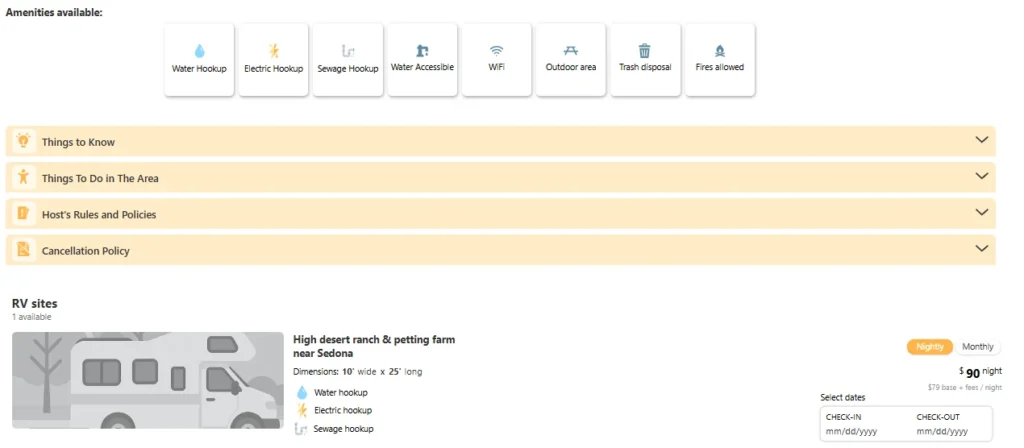
One site, 10 feet wide by 25 feet long, full hookups — water, electric, and sewer — at $90 per night. Class B and smaller Class C rigs only. Rigs over 25 feet will not fit — confirm dimensions with the host before booking. WiFi included.
Search for current private RV parking near Cornville for availability.
What Most Visitors Get Wrong About Red Rock State Park
Many first-time visitors arrive expecting the dramatic climbing routes and strenuous hikes that have made Sedona famous. Red Rock State Park offers a different experience. The trails are designed around environmental education, wildlife viewing, photography, and quiet exploration rather than technical hiking or elevation gain.
Another common mistake is bringing pets. Unlike many Arizona parks, Red Rock State Park prohibits pets throughout the preserve. Travelers visiting with dogs should plan ahead and arrange a suitable base camp where pets can remain comfortably while they explore the park.
Visitors also tend to underestimate how much time the park deserves. While the trail network is relatively small, the guided walks, birdwatching opportunities, scenic overlooks, and creekside environment reward a slower pace. Many travelers discover that a half-day visit provides a far better experience than trying to rush through the park between other Sedona attractions.
Finally, some visitors focus exclusively on Sedona and miss how much there is to explore throughout the wider Verde Valley. Red Rock State Park works best as part of a broader regional trip rather than a quick stop between Sedona attractions.
Practical Trip Planning
Getting there: From Sedona: Take Hwy 89A west from the Hwy 179 intersection. Turn left onto Upper Red Rock Loop Road. After 2.7 miles, turn right onto Red Rock Loop Road. Continue to the park entrance on Some Trail Lane. The approach road is paved and accessible for passenger vehicles and smaller RVs. Do not attempt the park entrance road in a large rig — park in Sedona or Cornville and drive a smaller vehicle to the park.
Fuel and groceries: Sedona has fuel and full grocery options on Hwy 89A. Cottonwood, approximately 18 miles southwest, offers a larger selection of commercial options. Cornville has limited local options — plan resupply before arriving.
Dump station: No dump station at Red Rock State Park. Rancho Sedona RV Park has a dump station for registered campers. Plan dump stops in Sedona or Cottonwood before heading to the Cornville listing.
Cell coverage: Good in the Sedona-Cornville corridor. Coverage may be reduced inside the canyon trails at the park’s lower sections near the creek.
FAQ
Can I bring my dog to Red Rock State Park?
No. Pets are not permitted anywhere inside the park — on trails, in the visitor center area, or in the parking lot. This rule applies to all animals regardless of size or temperament. It is a nature preserve regulation. If you are traveling with a dog, plan your visit accordingly — leave pets in the rig at the base camp or with a sitter while you visit the park. Verde Ranch RV Resort in Camp Verde is a dog-friendly commercial option with a dog park on-site for exercise before or after your visit.
What makes Red Rock State Park different from other Sedona hiking destinations?
The park’s mandate is environmental education rather than athletic recreation. Where Cathedral Rock and Camelback Mountain reward vertical effort, Red Rock State Park rewards patience — the best experiences here are a slow walk along Oak Creek watching for vermilion flycatchers and great blue herons, a ranger-led bird walk at dawn, or an evening moonlight hike in April. The trails are easy to moderate and family-friendly. There is no scrambling, no chains, and no technical terrain. It is the quiet version of Sedona’s red rock country, and for many visitors, it becomes their favorite.
Are there campgrounds near Red Rock State Park?
No campground exists inside the park, and the closest campgrounds to the park entrance are in the Sedona-Cottonwood corridor rather than adjacent to the park itself. Rancho Sedona RV Park in central Sedona is the nearest commercial full-hookup RV option, approximately 5-7 miles from the park via Lower Red Rock Loop Road. Private land through Hookhub at the High Desert Ranch Petting Farm in Cornville is the closest confirmed private camping option to the park entrance.
Ready to plan your Red Rock State Park trip?
Find private RV parking near Cornville and the Verde Valley and check current host availability.