Quick Answer
- Hookhub is a two-sided marketplace connecting RV travelers with private landowners for confirmed parking, long-term stays, and storage
- Campspot is cloud-based campground reservation and management software for commercial RV parks, campgrounds, and glamping resorts
- Campspot serves 2,700 campgrounds across the US and Canada and powered 3.7 million reservations in 2025
- Hookhub hosts are private individuals earning income from personal property without staff or commercial infrastructure
- For RV travelers, Hookhub is a direct booking platform. Campspot processes reservations at established campgrounds through those campgrounds’ own booking pages
- For property owners, the right choice depends on whether you are running a formal campground operation or listing private land for individual RV guests
The US outdoor recreation economy reached $696.7 billion in 2024, representing 2.4% of gross domestic product, according to the Bureau of Economic Analysis data reported by Modern Campground. That scale reflects genuine demand from tens of millions of travelers and property owners looking for ways to participate in outdoor hospitality. For property owners specifically, the question of which platform to use is not always obvious — Hookhub and Campspot appear in overlapping searches but are built for fundamentally different situations.
RV travelers can earn income from private land through simple RV hosting without ever needing campground management software. Commercial campground operators need a full reservation system but are not the target audience for a private land marketplace. Knowing which category you are in before choosing a platform saves time and avoids building the wrong operation from the start.
What Is the Core Difference Between Hookhub and Campspot?
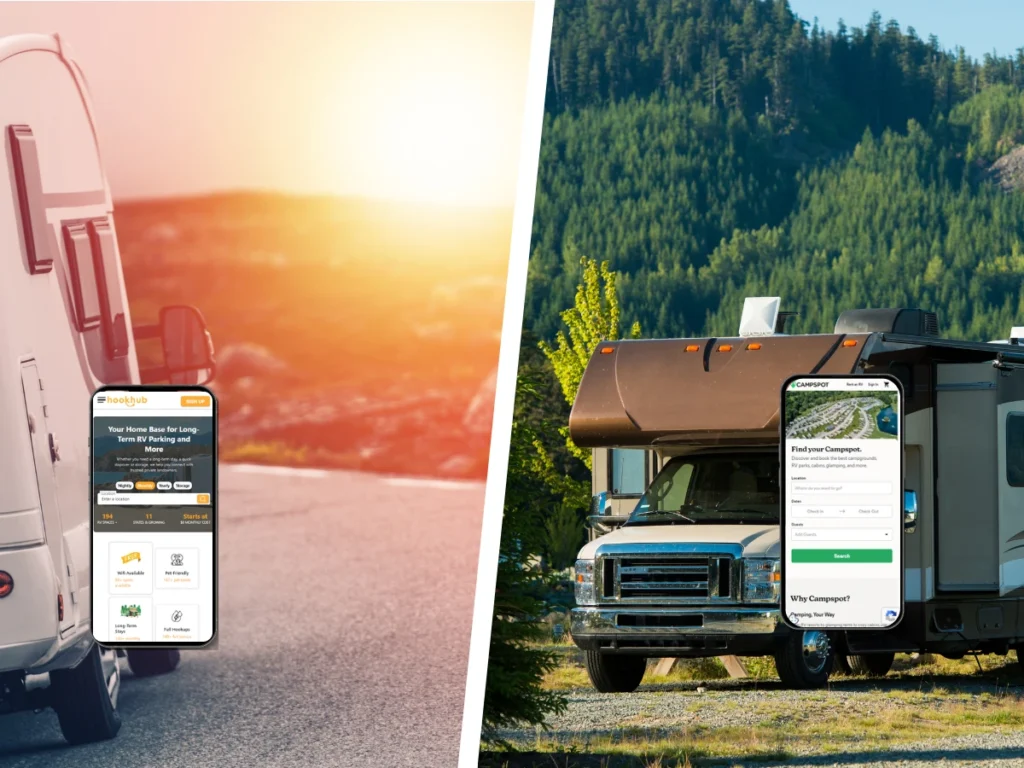
Hookhub is a marketplace and Campspot is software. Hookhub is a consumer-facing destination where RV travelers search and book private land stays directly with individual landowners. Campspot is an operational platform that commercial campground and RV park operators use to manage their businesses. The platforms do not compete directly because they serve different users at different stages of property development.
What Campspot Does
Campspot is a cloud-based campground reservation and management platform serving more than 2,700 public and private campgrounds across the United States and Canada. Operators use Campspot to manage online reservations, run dynamic pricing, process payments, handle housekeeping, manage a point-of-sale system, automate guest communications, and analyze performance data through customizable dashboards.
Campspot’s proprietary grid optimization algorithm addresses one of the most persistent revenue problems in campground management: reservation gaps. The system updates availability in real time as guests search, automatically prioritizing configurations that maximize site occupancy rather than allowing gaps that reduce total revenue. In 2025, campgrounds using Campspot’s dynamic pricing tools earned an average of 70% more revenue than those without it. Campgrounds using Campspot Analytics generated nearly 62% more revenue than parks that did not.
The platform includes an OTA marketplace that introduced more than 127,000 new campers to campgrounds in 2025, with approximately three-quarters booking a property they had never visited before. Third-party integrations connect Campspot to tools like QuickBooks for accounting, Mailchimp for email marketing, and SimpleTexting for two-way guest messaging. The integrations portal lists dozens of compatible applications.
Campspot was built by campground owners for campground owners. The decision-making, feature priorities, and operational logic are calibrated for operators running established commercial properties with multiple sites, seasonal pricing variations, staff workflows, and revenue targets. It is not designed for a private landowner listing a single parking space on rural property.
What Hookhub Does
Hookhub is a private land marketplace where Hookhub serves as the destination where both sides of the transaction meet. Landowners with unused rural property list available space for RV parking, extended stays, and storage. RV travelers search by location and amenities, read host listings, and book confirmed stays directly through the platform before leaving home.
Hookhub produced this guide and is included here because the genuine confusion between marketplace platforms and campground management software affects real decisions for both travelers and property owners. The comparison is made honestly.
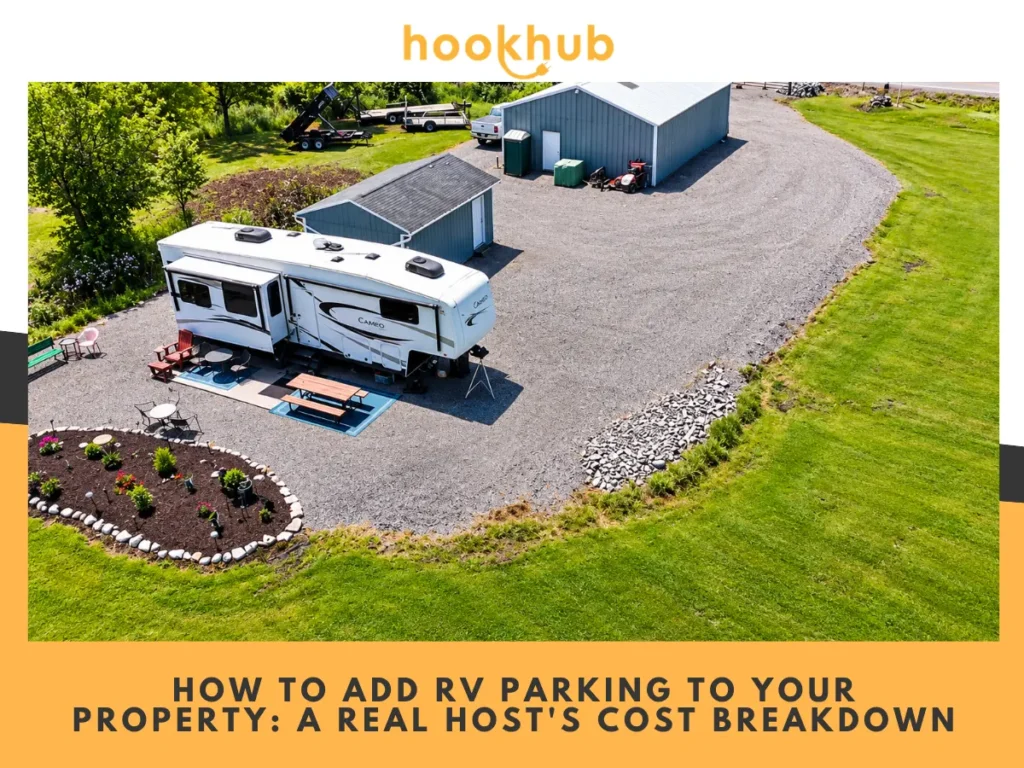
The model differs from commercial campground software in a specific way. Hookhub hosts are private individuals generating income from personal property. A farmer with five cleared acres, a ranch owner with unused land along a rural route, or a rural homeowner with space for a rig can list on Hookhub without building a formal campground operation. The income potential from small property RV hosting does not require dynamic pricing algorithms, POS systems, or housekeeping dashboards. It requires a listing, confirmed availability, and a host willing to welcome guests.
For RV travelers, Hookhub listings include stays from a single overnight to monthly arrangements. Amenity filters cover hookup availability, rig length compatibility, pet-friendly properties, and dump station access. Long-term private RV parking options are available across the United States, with monthly pricing that consistently undercuts commercial campground rates for the same duration.
How the Two Platforms Compare
| Feature | Hookhub | Campspot |
|---|---|---|
| Platform type | Private land marketplace | Campground management software |
| Primary user | RV travelers + private landowners | Commercial campground operators |
| RV traveler booking path | Search and book directly on Hookhub | Book through campground's own page (Campspot-powered) |
| Private land listings | Yes | No |
| Long-term / monthly stays | Yes | Depends on campground policy |
| RV storage | Yes | No |
| Dynamic pricing tools | No | Yes—proprietary engine |
| Grid optimization | No | Yes—core feature |
| Analytics dashboards | No | Yes—Campspot Analytics |
| POS system | No | Yes |
| Third-party integrations | No | Yes—QuickBooks, Mailchimp, SimpleTexting, more |
| OTA marketplace distribution | No | Yes—largest private campground OTA |
| Suitable for informal private landowners | Yes | No |
| Suitable for commercial campground operators | No | Yes |
| Setup complexity | List a property, set availability | Full software onboarding, staff training |
| Pricing model | Commission per booking | Subscription plus commission |
| Coverage | United States | US and Canada |
Which Platform Is Right for an RV Traveler Searching for a Place to Book?
RV travelers use Hookhub as a direct search and booking destination. Searching by state, filtering by hookup availability, reviewing host listings, and confirming a booking before departure all happen within Hookhub. The host relationship is transparent from the first message.
Campspot is not a platform travelers search directly. When you book a campground that runs on Campspot, you are using that campground's own reservation page, which Campspot powers behind the scenes. The traveler experience is determined by the campground, not by Campspot directly. Travelers searching for private land, confirmed stays with individual hosts, or monthly arrangements will not find that type of inventory through a campground management platform.
Which Platform Is Right for a Property Owner Who Wants to Host RVers?
The right platform depends on the type of property and the operational model you are building.
A rural landowner with unused acreage, no staff, and no formal campground infrastructure belongs on Hookhub. Listing is free to set up, the platform manages booking and payment, and income generates from individual stays without overhead. A new California farmland owner exploring hosting opportunities now has a clear regulatory pathway through AB 518, as Modern Campground reported on the Low-Impact Camping Areas Act, which allows up to nine campsites on parcels of two acres or more. That type of small-scale, informal hosting is exactly what Hookhub accommodates.
A campground operator with 30 or more sites, seasonal staff, dynamic demand across peak and off-peak periods, and a need to manage inventory across multiple booking channels belongs on a platform like Campspot. The operational complexity of a commercial property requires grid optimization, reporting tools, and integration with accounting and marketing software that a marketplace listing cannot provide.
The line between these two scenarios blurs as properties scale. A landowner who starts with one Hookhub listing, adds infrastructure over time, and eventually builds toward a multi-site operation should read what starting a formal RV park actually involves before deciding whether to remain in the private land marketplace model or transition to a commercial operation that benefits from dedicated management software.
Is There a Scenario Where Both Make Sense?
The transition point is a landowner who has grown beyond informal private hosting but has not yet fully committed to a commercial campground operation. During that scaling period, maintaining Hookhub listings for direct private land bookings while evaluating campground management software for a more structured expansion is a reasonable approach.
For most private landowners generating hosting income from personal property, Hookhub covers the full booking and payment workflow without additional software. For established campground operators, Campspot provides the operational infrastructure that a marketplace listing does not offer. The two platforms belong at different stages of the same property's development.
FAQ
Does Campspot have a public marketplace where RV travelers can discover campgrounds?
Campspot does maintain a marketplace listing feature that gives campgrounds added exposure to travelers searching for outdoor stays. However, Campspot's primary product is campground management software for operators. The marketplace is a distribution channel for campgrounds that already use Campspot's software, not a standalone booking destination comparable to a private land marketplace. Travelers searching for confirmed stays with individual private landowners, long-term RV parking, or rural property access will not find that type of inventory through Campspot's channels.
What type of property qualifies for listing on Hookhub?
Hookhub is designed for private landowners with unused outdoor space suitable for RV parking. Farms, ranches, rural homesteads, and properties with cleared land or existing parking areas are common listing types. The property does not need to be a formal campground, and no staff or operational infrastructure is required. Landowners set their own pricing, availability, and house rules. Individual listings can accommodate a single RV or multiple spaces depending on the property. Hookup availability is listed as an amenity when present but is not required to list.
Which platform is better for generating monthly RV hosting income on private land?
For monthly or extended stays on private land with confirmed booking, direct host communication, and flexible stay lengths, Hookhub is the purpose-built platform. Campspot manages reservation systems for established commercial campgrounds and does not offer a direct-to-host private land booking model. Monthly pricing for private land stays through Hookhub consistently comes in below commercial campground rates for comparable durations. Search private long-term RV parking near you to see current availability across the country.
Hookhub and Campspot solve different problems for different people at different stages of RV hosting. If you are an RV traveler searching for confirmed private land parking or a landowner ready to start earning income from unused property without building a campground business, Hookhub is where that starts.
List your land as a Hookhub host or find private RV parking near you and see what hosts are available across the country.