Running a campground or RV park is not just about offering campsites. It is about visibility, trust, and frictionless booking.
Many owners assume marketing requires paid ads. It does not.
What it requires is:
- Strategic positioning
- Search visibility
- Clear differentiation
- Operational credibility
Free marketing works when it aligns with how RV travelers actually search and book.
If you are a campground owner, RV park owner, or private land host, these seven free RV park marketing strategies can increase bookings, improve occupancy stability, and strengthen long-term property value.
This is not theory. These are execution-level strategies.
Key Takeaways
- You do not need paid ads to grow campground occupancy.
- Google visibility drives a large percentage of RV bookings.
- Reviews influence booking decisions more than photos.
- Booking friction reduces conversion.
- Seasonality strategy impacts occupancy more than most owners realize.
- Structured systems like Hookhub reduce administrative friction and improve listing clarity for private landowners.
Understanding Today’s RV Market
RV travel continues to grow across North America, according to the RV Industry Association.
Modern RV travelers:
- Search on mobile
- Filter by “full hookups”
- Compare reviews before price
- Expect instant confirmation
- Avoid manual inquiry-only listings
There are three major guest profiles:
1. Weekend Campers
Search for:
“RV park near me”
“Campground with full hookups”
Many travelers prioritize RV campgrounds with full hookups when planning longer stays.
2. Extended Stay RVers (30–90 nights)
Search for:
“Monthly RV parking”
“Long term RV sites with hookups”
They prioritize:
- Utility clarity
- Quiet environment
- Reliable infrastructure
- Clear cancellation policies
3. Remote Workers and Snowbirds
Search early.
Compare multiple properties.
Care about:
- 50 amp service
- WiFi or cellular strength
- Site privacy
If buyers are evaluating your property as an investment, consistent occupancy backed by organized marketing increases valuation multiples.
Marketing is no longer optional. It is infrastructure.
Strategy 1: Optimize Your Google Business Profile
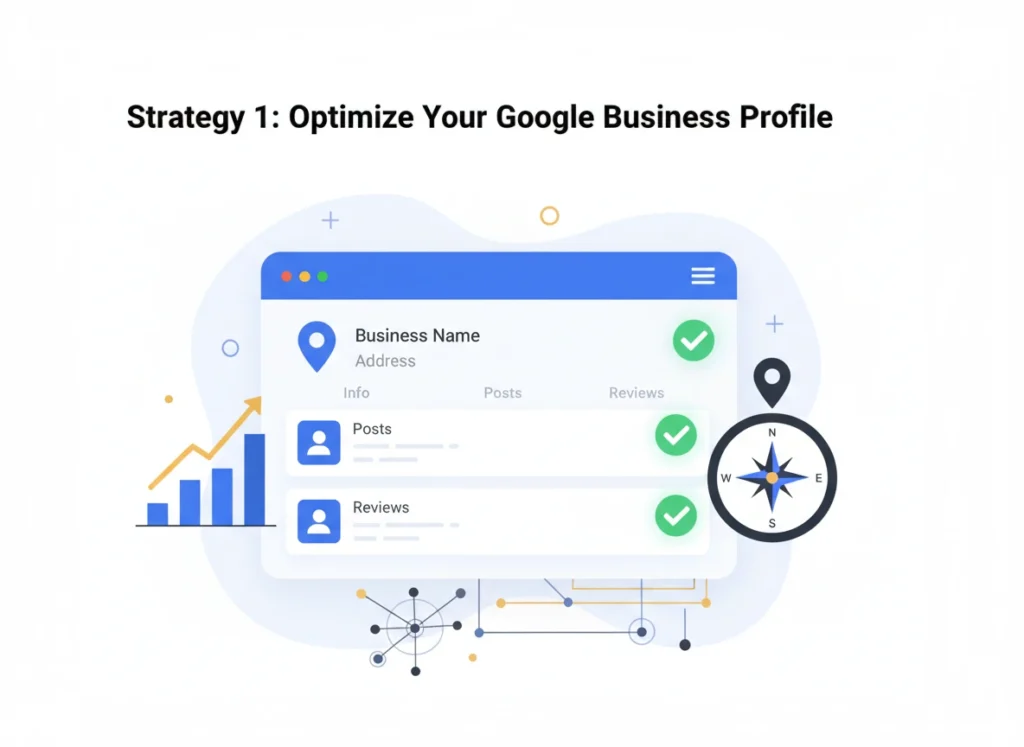
This is the highest-leverage free tactic available. Your Google Business Profile is one of the most powerful free marketing tactics available to campground and RV park owners.
When someone searches “RV park near me” or “campground with full hookups,” your profile helps you appear in search engine results and on Google Maps.
Google Maps visibility drives immediate traffic.
What Most Owners Miss
Your profile must include:
- “RV park” category
- Full hookups mentioned in description
- 30 amp and 50 amp service specified
- Accurate rig length limits
- Seasonal availability
- Clear phone number
- Updated hours
Photo Strategy
Upload:
- Wide-angle site photos
- Electrical pedestal close-ups
- Sewer connection photos
- Level pad visuals
- Entrance signage
Photos reduce booking hesitation.
Review Strategy
Reviews influence bookings more than amenities.
Encourage guests to mention:
- “Full hookups”
- “Level site”
- “50 amp”
- “Quiet”
- “Easy booking”
These keywords improve search relevance organically.
Strategy 2: Strengthen Your Online Presence
Your website is your conversion layer.
It should clearly state:
- Exact site dimensions
- 30 amp vs 50 amp availability
- Water and sewer details
- Utility inclusion or metering
- Monthly pricing structure
- Cancellation terms
Remove Booking Friction
Friction examples:
- “Call for availability only”
- “Email to reserve”
- Unclear rate charts
- No cancellation explanation
Each step of friction reduces occupancy.
If you are a private landowner who does not want to build complex booking infrastructure, structured systems like Hookhub simplify listing clarity, reservation management, and communication without requiring custom development.
Clarity converts.
Strategy 3: Use Social Media Marketing Consistently
Most RV park social accounts are inconsistent.
That is an opportunity.
You do not need daily posts. You need predictable presence.
Post Categories That Work
- Before-and-after site improvements
- Seasonal readiness updates
- Guest rig highlights (with permission)
- Local event reminders
- Weather updates
- Sunset views
- Infrastructure upgrades
Avoid:
- Generic quotes
- Overpromising
- Posting once and disappearing
Consistency creates recognition. Recognition reduces booking hesitation.
Strategy 4: Build an Email Marketing List
Email is your occupancy stabilizer.
Repeat guests are:
- Less price sensitive
- Easier to convert
- More likely to leave reviews
Collect emails during booking and send:
- Off-season rate reminders
- Early access to snowbird openings
- Infrastructure upgrades
- Site expansion announcements
Occupancy Math Example
If you have:
20 sites
70% annual average occupancy
That equals 14 sites filled on average.
If email retention increases occupancy by even 5%:
That is one additional site filled consistently.
Over 12 months at $800/month average:
That is $9,600 in incremental revenue.
Free email tools can produce measurable returns. Tools like Mailchimp allow campground owners to manage guest email lists, send seasonal updates, and track engagement without needing complex software.
Strategy 5: List Your Campground in Relevant Directories
Directories expand visibility.
But there is risk in overdependence.
Some charge high commissions. Others control guest data.
Your listing should:
- Mirror your direct booking clarity
- Maintain accurate availability
- Include full hookup details
- Highlight 50 amp if available
- Specify monthly options
If you want centralized visibility without surrendering control, platforms like Hookhub allow private landowners to maintain booking structure while expanding reach.
Many RV travelers also research overnight RV parking options before choosing where to stay.
The key principle:
Visibility should support your systems, not replace them.
Strategy 6: Showcase What Sets Your Campground Apart
Differentiation is strategic, not decorative.
Ask:
- Are your sites wider than average?
- Is your park lower density?
- Do you allow extended stays?
- Are you pet-friendly without breed restrictions?
- Do you offer 50 amp across all sites?
- Are you quieter than resort-style parks?
Most RVers do not need luxury. They need predictability and comfort.
Clearly state:
“This property offers full hookup RV sites with 50 amp service, level gravel pads, and low-density spacing.”
That statement converts.
Strategy 7: Focus on Systems That Build Trust
Marketing attracts attention.
Systems close bookings.
Modern RV travelers expect:
- Transparent pricing
- Defined cancellation windows
- Clear extension policy
- Written policies
- Secure payment handling
If you advertise heavily but lack clarity, you create disputes.
Common friction points:
- Utility overages
- Early departure refunds
- Security deposit confusion
- No-show disagreements
Structured booking systems reduce those conflicts and reinforce professionalism.
Property owners may also evaluate hosting RV travelers on private land before expanding their sites.
For private landowners, frameworks like Hookhub integrate listing clarity, payment handling, and communication structure into one workflow.
When operations are stable, marketing becomes easier.
Measuring the Success of Your Marketing Efforts
You do not need enterprise software.
Track:
- Monthly occupancy rate
- Average length of stay
- Inquiry-to-booking conversion rate
- Review count growth
- Repeat guest percentage
- Website traffic trend
If occupancy is strong during peak but weak during shoulder seasons, adjust messaging around:
- Off-season discounts
- Extended stay packages
- Utility-included pricing
Marketing success is measured in stable occupancy, not social media likes.
Frequently Asked Questions
How can I market my RV park without paid advertising?
Optimize your Google Business Profile, maintain a clear website, collect reviews, use consistent social media updates, build an email list, and list your campground in relevant directories. These strategies improve visibility without ad spend.
What marketing strategy increases RV park occupancy fastest?
Improving search visibility through Google Maps and strengthening review volume typically drives the fastest occupancy improvements.
How important are reviews for RV park marketing?
Very important. RV travelers compare reviews before booking. Mentions of full hookups, level sites, and easy booking influence trust significantly.
Should I list my campground on multiple directories?
Yes, but maintain centralized booking clarity and avoid relying solely on commission-heavy platforms. Visibility should support your systems.
Does marketing impact campground resale value?
Yes. Strong occupancy, positive reviews, organized booking systems, and visible brand presence support higher valuations and attract more qualified buyers.
Final Thoughts
Marketing your RV property does not require paid ads.
It requires:
- Visibility
- Clarity
- Consistency
- Operational credibility
When guests can find you easily, trust your listing, and book without friction, occupancy stabilizes.
Free strategies work when executed systematically.
Focus on infrastructure clarity.
Strengthen search presence.
Build trust through reviews.
Maintain organized systems.
Do that consistently, and marketing compounds over time.