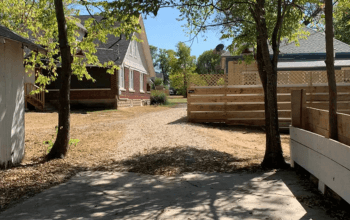
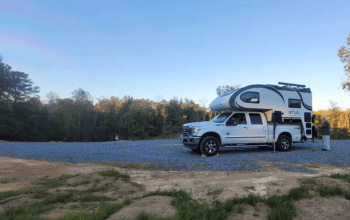
If you have usable space on your property, monthly RV hosting in Arizona can turn that underused site into stable, predictable income without running a campground or managing constant turnover.
Unlike nightly bookings, monthly stays are built around longer commitments, fewer transitions, and clearer expectations. For many Arizona landowners, one well-designed monthly RV site outperforms multiple short-term stays while requiring far less effort.
This is not about maximizing chaos.
It’s about compressing work while stabilizing income.
Why Arizona Is Ideal for Monthly RV Stays
Arizona naturally attracts long-stay RVers.
Each year, thousands of travelers arrive looking to:
- Escape winter weather
- Work remotely for 1–3 months
- Stay near Phoenix, Tucson, Flagstaff, or Sedona for seasonal work or lifestyle reasons
- Slow down rather than bounce from campground to campground
These guests aren’t shopping like weekend campers. They are looking for temporary housing, not a vacation novelty.
That demand shows up consistently as:
- Requests for monthly rates
- Questions about utilities and internet
- Inquiries about quiet, privacy, and long-term comfort
For hosts, this creates a rare opportunity: high demand paired with low turnover.
The Real Math Behind Predictable Monthly Income
Nightly hosting can look lucrative on paper, but it’s operationally noisy.
Each short stay creates:
- New arrivals and departures
- Repeated messaging
- Repeated walkthroughs
- Repeated chances for mismatched expectations
Monthly hosting compresses all of that.
Instead of four weekend bookings, you manage:
- One arrival
- One set of expectations
- One payment cycle
- One departure
You can plan maintenance.
You can plan cash flow.
You can stop reacting.
That’s where predictability comes from. Not higher nightly rates, but fewer transitions.
What Long-Stay RV Guests Actually Care About
Monthly guests aren’t comparing pools or shuffleboard courts. They are evaluating whether your site can support daily life.
The details that matter most:
- Clear utility setup (power, water, sewer or defined waste plan)
- Internet expectations (Wi-Fi, hotspot-friendly, or bring-your-own)
- Pet clarity (what’s allowed, where pets can be)
- Quiet hours and site boundaries
- Simple, enforceable rules
Listings that answer these questions directly convert better and produce fewer problems later.
If you want a proven structure, the long-stay listing framework removes guesswork.
Utilities: Where Monthly Hosts Win or Lose Money
Utilities are the single most common source of confusion for new monthly hosts.
You only need one clean approach:
- Include utilities with a defined allowance, or
- Bill electricity separately and lower the base rate
What matters is clarity.
Spell out exactly what you offer:
- Full hookups
- Power and water only
- Dry site with a defined waste solution
If sewer isn’t available, say what guests should do instead. Monthly guests are used to this. Vagueness causes disputes, not limitations.
For a deeper breakdown, the monthly RV pricing guide shows how to price confidently without guessing.
Deposits, Cancellations, and Long-Stay Stability
You don’t need complex policies. You need visible ones.
A simple, host-friendly structure:
- Monthly stays priced per 30 days
- A refundable deposit tied to rules and site condition
- A one-sentence cancellation policy with clear dates
When expectations are written clearly, enforcement becomes rare.
Why You Don’t Need Resort Amenities to Win Monthly Guests
Many long-stay RVers have already tried large resorts.
What they’re choosing now is different:
- Quiet
- Space
- Privacy
- A site that feels safe and predictable
Private land doesn’t compete with campgrounds on amenities.
It wins by offering livability.
A single, well-prepared site near where guests want to be consistently outperforms sprawling but impersonal parks.
What Makes Monthly Hosting Truly Low-Risk With Hookhub
This is where many landowners hesitate. Not because of income, but because of risk.
Hookhub is built specifically to remove the common failure points of long-term RV hosting.
With Hookhub:
- Monthly payments are guaranteed, even if a renter pays late
- Damage protection and insurance are built in
- Unruly renters are handled for you, not left to personal confrontation
- Squatter-style risks are prevented through proper agreements and enforcement
- Communication and renter management support keeps things calm and documented
You’re not acting as a landlord alone.
You’re hosting with structure, backup, and enforcement already in place.
That’s what allows private landowners to say yes to longer stays with confidence.
What to Set Up So Income Stays Predictable
Predictable income comes from predictable operations.
Strong monthly sites clearly define:
- Where the RV parks and how it enters
- What hookups exist and how they’re used
- What areas are shared vs private
- What behavior is expected and enforced
In Arizona, many hosts also adjust availability seasonally. Monthly hosting doesn’t require year-round access. It requires honest availability.
Monthly RV Hosting Is Already Normal
Longer RV stays are not a niche behavior. Industry data consistently shows growth in extended stays as more people travel, work, and live on the road.
The KOA North American Camping Report reflects this shift clearly. RV use is evolving from short trips toward longer, more residential stays.
Private landowners who adapt early benefit most.
Final Thought: One Site Can Change Everything
You don’t need acreage.
You don’t need amenities.
You don’t need constant bookings.
One well-run monthly RV site can generate steady income, reduce workload, and fit naturally into your property when supported by the right system.
Hookhub exists to make that version of hosting possible.
If you want to see whether your land is a fit, start with the 15-Minute Property Assessment and get a clear, realistic picture of what monthly hosting could look like for you.
The KOA North American Camping Report is a useful snapshot of how people are using RVs, including longer stays.
References
- KOA North American Camping Report (industry report on RV travel trends)