




Living in an RV offers freedom and flexibility, but outdated appliances can quickly turn convenience into frustration. Whether parked at a full-service RV park or off-grid boondocking, modern appliances can significantly improve daily life on the road.
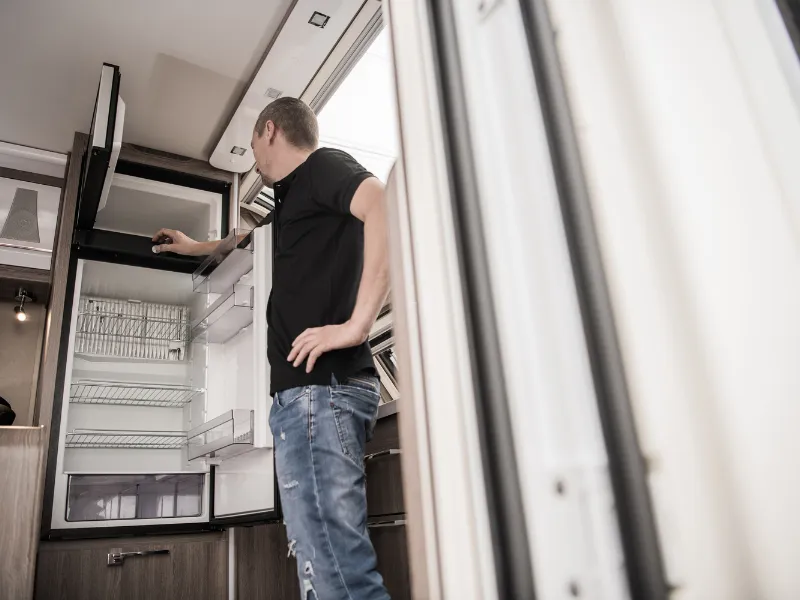
Upgraded appliances not only enhance comfort but also improve efficiency. Older models often consume more energy, are prone to breakdowns, and may not meet today’s safety or environmental standards. For example, ENERGY STAR–certified appliances can reduce energy consumption by 10–50% compared to non-certified models, saving both power and money over time (U.S. Department of Energy)
Key benefits of upgrading RV appliances include:
- Better energy efficiency – essential for conserving battery power or generator fuel.
- Improved reliability – reducing the risk of breakdowns during trips.
- Enhanced comfort – modern refrigerators, air conditioners, and microwaves are designed with RV living in mind.
- Increased resale value – updated appliances can make an RV more attractive to future buyers.
Investing in modern appliances ensures a smoother, more comfortable RV lifestyle, no matter where the road leads.
Why Upgrade Your RV Appliances for Long-Term Stays
For those embracing the RV lifestyle long-term, upgrading appliances is essential. It not only enhances comfort but also improves energy efficiency and reliability. While factory-installed equipment works for short trips, extended stays often highlight its limitations.
Limitations of Factory-Installed RV Appliances
Most factory-installed RV appliances are designed to be compact and lightweight rather than durable or high-performing. This trade-off becomes more noticeable over time, especially in challenging conditions.
For example:
- Refrigerators in many RVs may struggle to keep food consistently cold in extreme temperatures, leading to food waste.
- Heaters often lack the efficiency and reliability of residential models, making it harder to stay warm in colder climates.
- Air conditioners can be noisy and less energy-efficient, consuming more power than necessary.
Common Limitations Include:
- Low energy efficiency – increasing utility costs or draining batteries faster when off-grid.
- Reduced performance over time – appliances wear down more quickly than residential-grade options.
- Limited functionality – compact designs can restrict storage, heating, or cooling capabilities.
According to the U.S. Department of Energy, energy-efficient appliances not only lower consumption but also reduce strain on power systems—an important factor for RVers relying on solar setups or generators.
Upgrading to modern, RV-specific or energy-rated appliances ensures better comfort, reliability, and sustainability for long-term living.
Benefits of Residential-Grade Appliances for Extended RV Living
Switching to residential-grade appliances can transform long-term RV living. These appliances deliver superior performance, greater energy efficiency, and enhanced durability compared to standard RV equipment. For example, a high-efficiency refrigerator maintains consistent temperatures, helping to preserve food longer while using less power.
Key Benefits of Residential-Grade Appliances
| Appliance | Residential-Grade Benefits |
| Refrigerator | Precise temperature control, better energy efficiency, less food waste |
| Heater | Reliable warmth, improved efficiency in colder climates |
| Cooking Appliances | Wider range of cooking options, modern safety features |
By upgrading to residential-grade appliances, RVers enjoy a more comfortable, reliable, and self-sufficient lifestyle—especially during extended stays. Modern appliances also reduce strain on energy systems and can add value to the RV overall.
Essential Kitchen Appliance Upgrades
RV living doesn’t mean giving up home comforts, like kitchen appliances. Upgrading your kitchen can make cooking and cleaning easier. It makes your RV home more comfortable.
Essential Kitchen Appliance Upgrades for RV Living
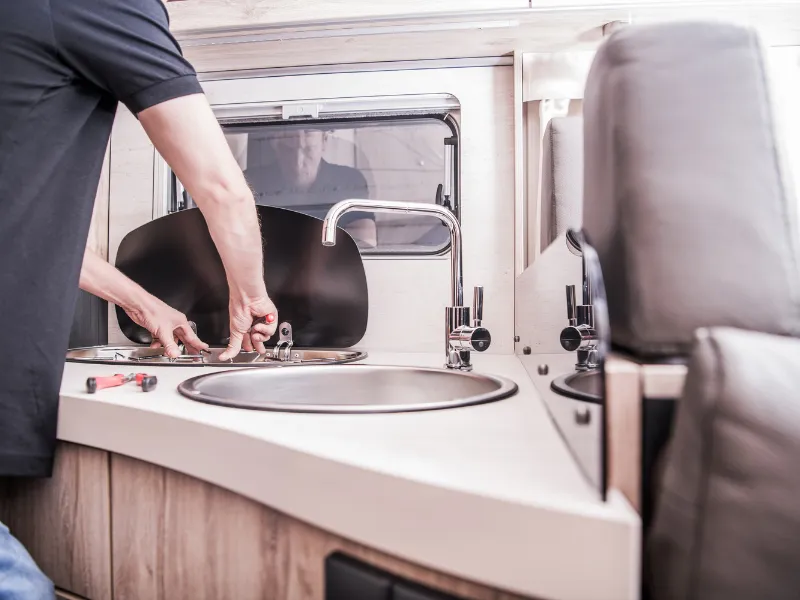
Living in an RV doesn’t mean sacrificing the comforts of home—especially in the kitchen. Upgrading key appliances can make cooking, cleaning, and daily life more convenient, efficient, and enjoyable.
Residential vs. RV-Specific Refrigerators
RVers typically choose between residential-style refrigerators and RV-specific models:
- Residential Refrigerators – Larger, with more storage space and features such as ice dispensers and precise temperature control. However, they require modifications, draw more power, and take up more room. Popular models include the Whirlpool 16 cu. ft. Top-Freezer Refrigerator, which fits many Class A and fifth-wheel RVs.
- RV-Specific Refrigerators – Compact and energy-efficient, designed to run on propane or electricity. While smaller, they’re ideal for conserving space and power during long trips. Well-known options include the Dometic Americana II and Norcold Polar Series, both designed specifically for RV use.
Choosing the right refrigerator depends on lifestyle: full-time RVers at powered campsites may benefit from residential fridges, while boondockers often prefer RV-specific units for efficiency.
Space-Efficient Cooking Options
Cooking in an RV requires smart, versatile appliances.
Two top upgrades include:
- Convection Microwaves – Combine microwave and oven functions, allowing for reheating, baking, and roasting in one space-saving unit. The Toshiba EC042A5C-SS Convection Microwave is a popular choice among RVers for its multi-function design.
- Induction Cooktops – Heat food quickly and evenly while using less energy. They’re also safer since the cooktop itself stays cool to the touch. Portable options like the Duxtop 1800W Portable Induction Cooktop are favorites for RV kitchens.
Compact Dishwashers for Full-Time RV Living
Hand-washing dishes can be tiring for those living on the road long-term.
Compact RV dishwashers offer a convenient solution:
- Designed to fit in tight spaces.
- Use significantly less water than full-sized dishwashers.
- Make daily cleanup faster and easier, especially for families or full-time RVers.
Popular options include the Farberware FDW05ASBWHA Countertop Dishwasher, which fits small RV kitchens, and the Fisher & Paykel DishDrawer Dishwasher, a premium space-saving unit for larger rigs.
Quick Comparison: Kitchen Appliance Upgrades
| Appliance Type | Best For | Pros | Cons | Example Models |
| Residential Refrigerator | Full-time RVers at campgrounds with hookups | Large capacity, precise temperature control, features like ice dispensers | Higher power use, requires modifications | Whirlpool 16 cu. ft. Top-Freezer, Samsung RF18 |
| RV-Specific Refrigerator | Boondocking, smaller rigs | Runs on propane/electric, energy efficient, compact | Less storage, slower cooling | Dometic Americana II, Norcold Polar Series |
| Convection Microwave | Small RV kitchens needing versatility | Combines oven + microwave, space-saving | Limited oven capacity | Toshiba EC042A5C-SS, Breville Combi Wave 3-in-1 |
| Induction Cooktop | Energy-conscious RVers, safe cooking | Fast heating, energy efficient, safe surface | Requires induction-ready cookware | Duxtop 1800W, Nuwave Flex Precision |
| Gas Stove / Cooktop | Traditional cooking, boondocking | Works off-grid with propane, familiar cooking style | Less energy efficient, generates heat indoors | Atwood Drop-In Cooktop |
| Compact Dishwasher | Full-time RVers, families | Saves water vs. hand-washing, convenient | Takes counter or cabinet space | Farberware FDW05ASBWHA, Fisher & Paykel DishDrawer |
Climate Control Upgrades for Year-Round RV Comfort
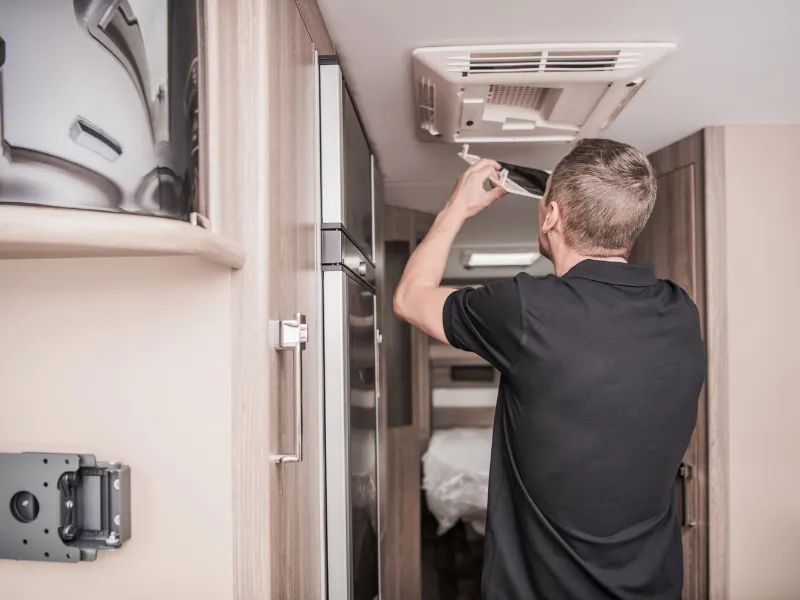
For full-time RV living, reliable climate control is essential. Whether dealing with sweltering summers or freezing winters, the right upgrades ensure comfort, protect your RV’s interior, and make long-term stays more enjoyable.
Energy-Efficient RV Air Conditioners and Dehumidifiers
A modern, high-efficiency air conditioner can dramatically improve comfort while using less power. Look for units with programmable thermostats, variable-speed fans, and ducted systems for even airflow throughout the RV. Popular choices include the Dometic Brisk II Rooftop AC and the Coleman-Mach 15 Series, both known for reliable cooling in hot climates.
Humidity management is equally important. Excess moisture leads to condensation, mold growth, and added strain on cooling systems. A compact dehumidifier, such as the Frigidaire FFAD223W1 or the Eva-Dry Renewable Mini Dehumidifier, can help maintain healthy air quality while reducing wear on your AC unit.
For more options, explore our guide on the best RV air conditioner heater combos to find models designed for efficiency and comfort in every season
Improved Heating Options for Cold-Weather Camping
Cold-weather RVing requires a dependable heating system.
Options include:
- Propane Furnaces – Efficient and widely used for boondocking. Brands like Suburban NT Series are designed for RVs and offer reliable performance.
- Electric Heaters – Ideal when plugged into shore power, portable ceramic or oil-filled units can provide supplemental warmth without draining propane.
- Diesel Heaters – Popular among vanlifers and off-grid RVers, models like Webasto Air Top deliver powerful, fuel-efficient heat.
The Importance of Insulation
Even the best heating and cooling systems can underperform without proper insulation. Upgrading window treatments, adding thermal curtains, sealing air leaks, and installing insulated skirting around the RV can drastically reduce energy loss. This makes climate control systems more effective and cost-efficient.
Quick Comparison: Climate Control Upgrades
| Upgrade Type | Best For | Pros | Cons | Example Models |
| Rooftop AC (ducted) | Large RVs, hot climates | Even cooling, efficient airflow | Requires roof space, higher cost | Dometic Brisk II, Coleman-Mach 15 |
| Portable AC (non-ducted) | Smaller rigs or budget setups | Lower upfront cost, easy install | Less efficient, uneven cooling | Black+Decker BPACT08WT |
| Dehumidifier | Humid regions, preventing condensation | Improves air quality, protects RV | Uses electricity, takes space | Frigidaire FFAD223W1, Eva-Dry Mini |
| Propane Furnace | Boondocking, cold-weather trips | Powerful, efficient off-grid | Requires propane refills, venting | Suburban NT Series |
| Electric Heater | Campgrounds with shore power | Cheap, portable, no propane use | Not off-grid friendly | Lasko Ceramic Heater |
| Diesel Heater | Off-grid, vanlifers, cold climates | Very efficient, long runtime | Higher upfront cost | Webasto Air Top |
| RV Insulation Upgrades | All RVs, year-round efficiency | Cuts energy costs, improves comfort | Time/labor intensive | Thermal curtains, RV skirting |
Water and Sanitation Appliance Improvements for RV Living
Self-sufficiency on the road starts with reliable water and sanitation appliances. Upgrading these systems not only adds convenience but also makes long-term RV living more comfortable and sustainable.
Tankless Water Heaters: Unlimited Hot Water on Demand
Traditional RV water heaters often store only 6–10 gallons, which means hot water runs out quickly. Tankless water heaters solve this by heating water on demand, providing a continuous supply. This is especially valuable for families or anyone who enjoys longer showers.
Benefits include:
- Endless hot water – no waiting between showers.
- Energy efficiency – heats only when needed.
- Compact design – frees up storage space.
Popular RV-ready options include the Girard 2GWHAM Tankless Water Heater and the Furrion 2.4GPM Tankless Heater, both designed for RV installation.
Compact Washer/Dryer Combinations for On-the-Go Laundry
Laundry on the road no longer requires frequent trips to laundromats. Compact washer/dryer combo units allow RVers to wash and dry clothes in one machine, saving both time and space.
Key benefits:
- Space-saving design – combines two appliances into one.
- Water and energy efficiency – optimized for smaller loads.
- Convenience – do laundry anywhere, anytime.
Well-reviewed RV-friendly models include the Splendide WD2100XC Combo Washer/Dryer and the Equator 4400N Combo Unit, both popular among full-time RVers.
Quick Comparison: Water & Sanitation Upgrades
| Feature | Tankless Water Heater | Compact Washer/Dryer Combo |
| Energy Efficiency | Heats water only on demand | Uses less energy than separate units |
| Space Savings | Compact, wall-mounted design | Combines washer and dryer in one unit |
| Convenience | Endless hot water for showers/dishes | Laundry without relying on laundromats |
Power Considerations for RV Appliances in Long-Term Stays
Reliable power is the backbone of comfortable RV living. When upgrading appliances, it’s essential to plan how they will be powered—whether off-grid, at campgrounds, or a mix of both. Understanding energy demands ensures that appliances run smoothly without overloading your system.
Solar and Battery Systems for Off-Grid Comfort
A robust solar and battery setup allows RVers to stay self-sufficient. Solar panels capture energy during the day, storing it in deep-cycle lithium or AGM batteries for later use. This setup reduces reliance on generators and shore power.
Key considerations:
- System size – Match solar panel output and battery storage to appliance needs. Large appliances like refrigerators or air conditioners require significantly more capacity.
- Battery type – Lithium-ion batteries (e.g., Battle Born LiFePO4) last longer and charge faster than lead-acid batteries.
- Solar brands – Reliable panel options include Renogy and Zamp Solar, both popular in RV setups.
Generator Requirements for High-Demand Appliances
Some appliances, especially air conditioners and microwaves, draw more power than solar/battery systems can consistently provide. A generator ensures these high-demand appliances run without draining batteries.
Tips for choosing a generator:
- Fuel type – Propane generators (e.g., Champion Dual Fuel Inverter Generator) are cleaner and often quieter than gasoline options.
- Capacity – Match generator output (measured in watts) to appliance needs, with extra capacity for startup surges (common in AC units).
- Noise level – Inverter generators are quieter and campground-friendly.
Not sure which generator to choose?
Check out our recommendations for the best generators for camping to find fuel-efficient models that can handle RV appliances with ease.
Balancing Propane and Electric Usage
At campsites, using propane for heating and cooking frees up electrical capacity for appliances like refrigerators, microwaves, and air conditioners. This balance reduces strain on the electrical system while ensuring reliable performance across all appliances.
Average Appliance Power Consumption
| Appliance | Average Power Consumption (Watts) | Recommended Power Source |
| Refrigerator | 100–200 | Solar/Battery or Generator |
| Air Conditioner | 1,000–1,500 (with surges up to 3,000) | Generator or Shore Power |
| Microwave | 600–1,000 | Generator or Shore Power |
| Induction Cooktop | 1,200–1,800 | Shore Power or Generator |
| Washer/Dryer Combo | 1,000–1,500 | Generator or Shore Power |
Make Your RV Living Comfortable and Sustainable
Upgrading RV appliances transforms long-term stays from basic to truly comfortable. With the right kitchen, climate control, water systems, and power setup, RV living becomes more efficient, reliable, and self-sufficient. The right upgrades don’t just add convenience—they create a home on wheels that’s ready for any adventure.
For more tips, reviews, and guides on RV living, explore Hookhub’s RV resource center.