

Reliable internet access is no longer optional for many RVers. Whether you work remotely, run Zoom calls, upload content, manage client meetings, or simply want to stream after a long day outdoors, connectivity matters.
Starlink for RV, powered by SpaceX, promises high-speed satellite internet in remote areas where cell towers barely exist.
But is Starlink worth the price for full-time travelers?

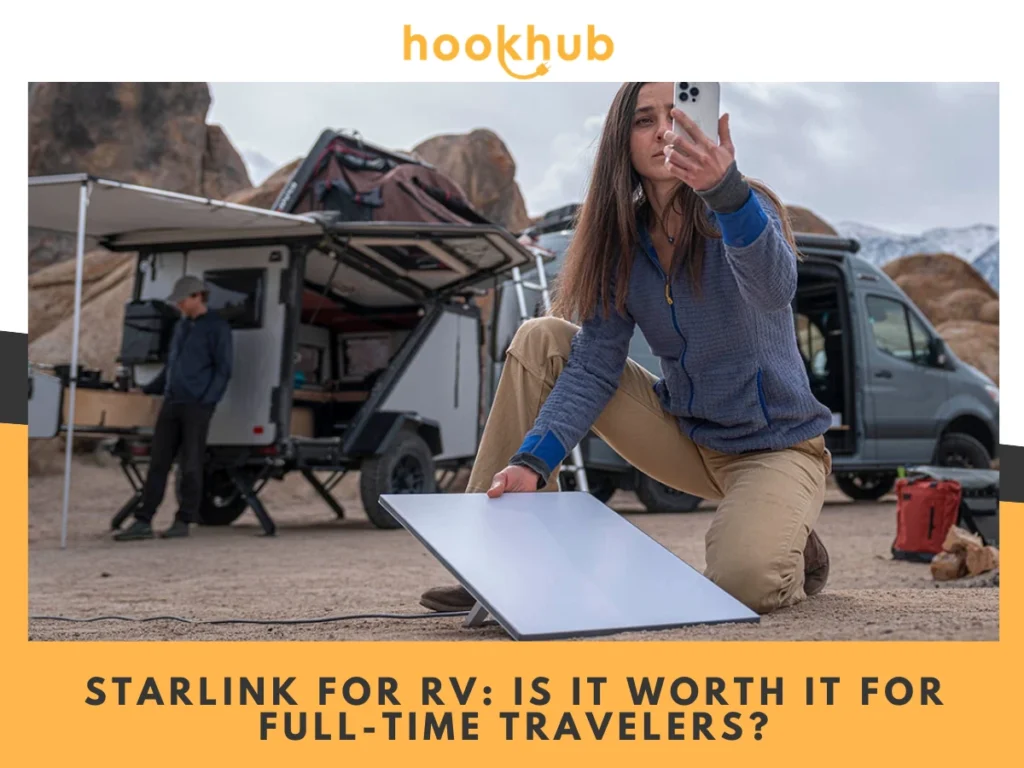
Image source: Starlink
This expanded guide breaks down real-world performance, cost math, power requirements, limitations, and when it makes sense — and when it doesn’t.
Here’s what you need to know before investing.
Key Takeaways
- Starlink Roam provides satellite internet designed for RV travel.
- It performs well in remote locations and off-grid campsites.
- Initial cost starts around $599 for equipment.
- Monthly plans allow pause and unpause flexibility.
- It outperforms park WiFi and many cellular options in rural areas.
- A clear view of the sky is critical for performance.
- For remote workers, it can be a game changer.
- Power draw and mounting strategy matter for boondockers.
Why Internet Has Become Essential for RVers
Ten years ago, campground WiFi was “nice to have.”
Today, many RVers:
- Work full-time from the road
- Run online businesses
- Attend video meetings
- Upload large files
- Stream entertainment nightly
- Homeschool kids
Internet is now infrastructure — not a luxury.
That’s why Starlink has become such a major topic in the RV community.
What Is Starlink for RV?
Starlink for RV, officially called Starlink Roam, is a satellite internet service built for mobility.
Instead of connecting to cell towers like AT&T, Verizon, or T-Mobile, Starlink connects to a network of low-earth-orbit (LEO) satellites. These satellites orbit much closer to Earth than traditional satellite internet providers, which reduces latency dramatically.
That’s why Starlink can support:
- Zoom calls
- File uploads
- Streaming
- Real-time collaboration
In places where cell signal is weak or nonexistent.
Starlink Roam vs Standard Starlink
Starlink Roam
- Designed for RV travel
- Allows pause/unpause billing
- Portable hardware
- Works across the U.S.
Residential Starlink
- Intended for one fixed address
- No mobility priority
- Lower cost, but not built for travel
For full-time RVers, Roam makes more sense.
Equipment and Setup: What You’ll Need
The standard Starlink kit includes:
- Starlink dish (Gen 2 hardware in most cases)
- Starlink router
- Power supply
- Cables
Setup is generally straightforward:
- Place dish with a clear sky view
- Open Starlink app
- Run obstruction test
- Connect
Obstruction matters more than many people realize.
Even partial tree cover can:
- Cause brief dropouts
- Interrupt video calls
- Reduce upload speeds
The app helps visualize this before committing to a campsite setup.
Power Requirements for RVers (Important for Boondocking)
Starlink draws roughly:
- 50–75 watts average
- Up to 100+ watts during startup
If running 24 hours per day:
75W × 24 hours = 1,800Wh per day
That’s significant.
For solar users:
- You may need 200–400Ah lithium just to comfortably support Starlink
- Or shut it off overnight to conserve power
For off-grid campers, this is a critical consideration.
Starlink is internet infrastructure — and infrastructure consumes energy.
Mounting Options: Portable vs Permanent
Many RVers start with portable setup:
- Place dish on ground
- Move to avoid trees
- Store when driving
Full-time travelers often upgrade to:
- Roof mounts
- Ladder mounts
- Flagpole mounts
Permanent mounting reduces setup time but sacrifices flexibility when trees block signal.
There is no one-size-fits-all solution.
Cost Breakdown: Is It Pricey?
Initial Cost
Equipment: ~$599
Monthly Cost
Typically around $150/month (subject to plan updates)
You can pause service when not traveling.
Real Annual Cost Example
If you travel full-time:
$150 × 12 = $1,800 per year
If you travel 6 months per year:
$150 × 6 = $900 per year
Compared to:
- Premium cellular plan: $80–$120/month
- Mobile hotspot add-ons: $20–$60/month
- Boosters: $400–$700 equipment
Starlink is expensive — but it often replaces multiple cellular plans.
Performance: Speed, Latency, and Real-World Use
Remote Areas & Boondocking
Typical speeds:
- 30–150 Mbps download
- 5–20 Mbps upload
- 25–50 ms latency
That supports:
- HD streaming
- Zoom calls
- File uploads
- Cloud work
In remote BLM land, Starlink often dramatically outperforms cellular.
Campgrounds & Dense Areas
In densely populated areas:
- Speeds may fluctuate
- Network prioritization may occur
- Peak evening slowdowns can happen
Still, most RVers report better consistency than campground WiFi.
Weather Performance
Heavy rain or storms may cause:
- Brief signal drops
- Temporary speed reduction
Unlike older satellite systems, outages are usually short.
Comparing Starlink to Other RV Internet Options
Cellular Data (Verizon, AT&T, T-Mobile)
Strengths:
- Excellent in cities
- Lower upfront cost
- Lower power consumption
Weaknesses:
- Dead zones in national forests
- Tower congestion
- Throttling
Campground WiFi
Strengths:
- Free (sometimes)
- Easy access
Weaknesses:
- Unreliable
- Often overloaded
- Poor for remote work
Starlink vs 5G: Quick Comparison
| Feature | Starlink Roam | 5G Cellular |
| Remote coverage | Excellent | Limited by towers |
| Speed | 30–150 Mbps | Area dependent |
| Latency | 25–50 ms | Lower in strong coverage |
| Unlimited data | Yes (deprioritized possible) | Often throttled |
| Initial cost | Higher | Lower |
| Power draw | Higher | Lower |
Many full-time RVers use both Starlink and cellular for redundancy.
The Hybrid Approach: Starlink + Cellular Backup
Many remote workers carry:
- Starlink for primary connectivity
- Cellular hotspot as backup
This prevents single-point failure.
For serious remote professionals, redundancy equals peace of mind.
Real Experience With Starlink: What RVers Say
Common praise:
- Stable Zoom calls in national forests
- Reliable internet where phones show “No Service”
- Smooth streaming
- Freedom to choose more remote campsites
Common complaints:
- Power consumption
- Clear sky requirement
- Equipment storage
- Higher cost
For those working full-time, the tradeoff is usually worth it.
Is Starlink Worth It for Full-Time RVers?
Starlink is likely worth it if you:
- Work remotely
- Attend regular video meetings
- Boondock often
- Travel through rural regions
- Depend on upload speeds
It may not be necessary if you:
- Stay mostly in urban RV parks
- Travel occasionally
- Have strong 5G coverage everywhere you go
It depends on your lifestyle.
Who Should NOT Buy Starlink?
Starlink may not be ideal if:
- You camp under heavy tree canopy frequently
- You rarely leave urban areas
- You don’t work online
- You’re on a tight monthly budget
For some RVers, a strong cellular plan is sufficient.
Planning Smart RV Travel With Reliable Internet
Internet is part of the equation.
Location flexibility is the other half.
If you’re no longer dependent on campground WiFi or cell towers, you gain access to:
- Remote campsites
- Private land stays
- Dispersed camping
- Less crowded areas
When campground reservations fall through, alternative RV parking options can keep your trip moving smoothly.
Reliable connectivity plus flexible location planning changes the way you travel.
Final Thoughts: Confident Investment or Overkill?
Starlink for RV is not cheap.
But for full-time travelers, remote workers, and serious boondockers, it often pays for itself in stability, productivity, and stress reduction. When paired with flexible trip planning tools like Hookhub, you gain both connectivity and location freedom.
It transforms RV travel from “hope the signal works” to “I know I can connect.”
That confidence is powerful.
If reliable internet access is critical to your RV lifestyle, Starlink Roam is often worth the investment.
It’s not just about speed.
It’s about freedom.
Frequently Asked Questions
Is Starlink unlimited?
Yes, but deprioritization may occur during congestion.
Does Starlink work while driving?
In-motion support depends on hardware version and current policies.
How fast is Starlink for RVers?
Most report 30–150 Mbps download speeds.
Can weather affect service?
Yes, but disruptions are typically short.
Is Starlink better than Verizon or AT&T?
In remote areas, often yes. In strong urban 5G areas, cellular may perform similarly for less cost.